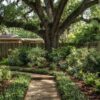
A layered garden starts with its tallest trees and shrubs at the back, then steps down through the middle and foreground. In Houston, bed depth depends on the available space and each plant’s mature size, not one fixed measurement. Ground covers and turf should stay no more than 12 inches tall, while foreground plants are typically one to two feet tall.
It’s easy to focus on flower color first, but foliage, plant form, and spacing shape a garden’s depth throughout the year. A well-planned ground layer can shade the soil, helping it retain moisture and leaving less open space for weeds.
This guide explains how professionals determine bed depth, choose background trees and shrubs, and arrange the middle and lower layers for visual interest. You’ll also see how texture, color, and mature plant size work together to create a landscape that feels balanced from the house, path, and yard.
Key Takeaways
- Set bed depth around the mature size and spacing needs of the plants, so each layer has room to develop without crowding.
- Build visual depth with contrasting plant heights, foliage textures, and repeated colors and forms.
- Choose background trees and shrubs to suit the site’s sun and shade, while considering the shade, privacy, or screening they can provide.
- A professional plan maps existing plants, available space, and site conditions before selecting trees and arranging the planting layers.
What’s a Good Depth for a Layered Garden Bed?
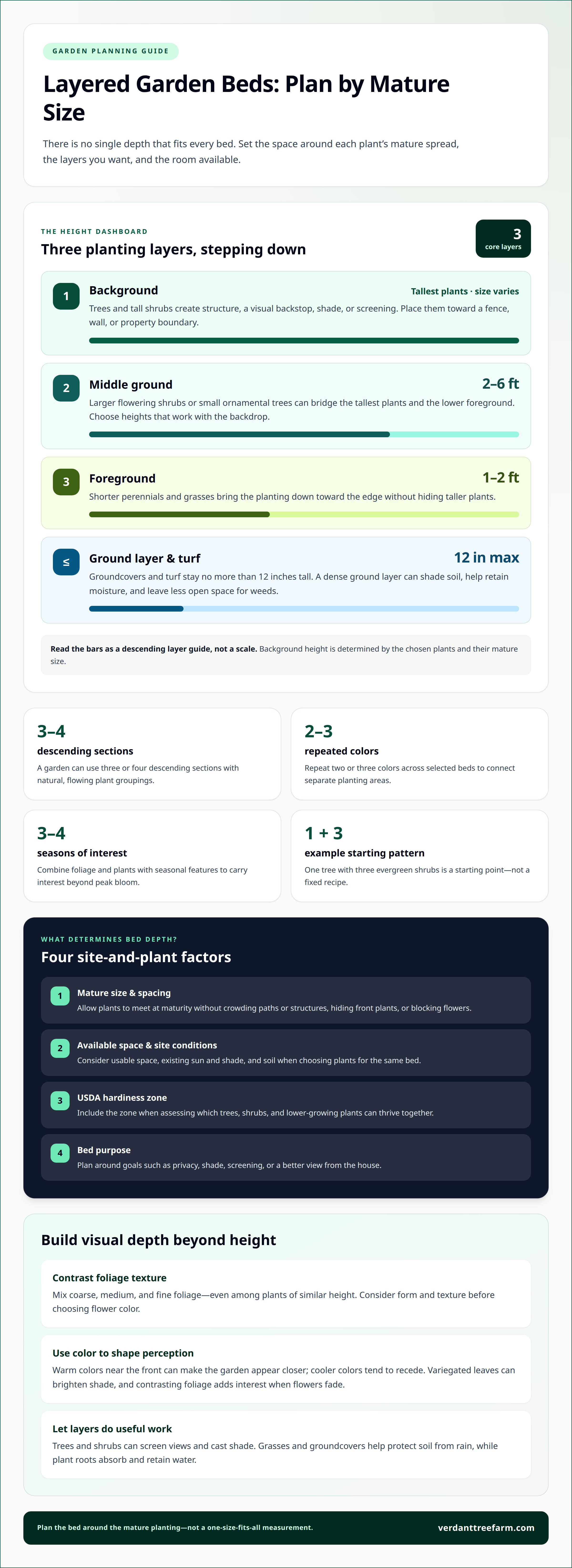
There’s no single bed depth that suits every layered garden. A professional sizes the bed around the mature spread of its trees, shrubs, perennials, grasses, and groundcovers. The design typically has three layers: background, middle ground, and foreground. Each needs room to grow without hiding the plants in front or crowding nearby paths and structures.
Height helps define each layer. The background may include trees and tall shrubs, such as an oak or evergreen that creates shade or a visual backstop. Midground plants can range from two to six feet tall, depending on the height behind them. Foreground plants are typically one to two feet tall, while ground-cover plants and turf should be no more than 12 inches tall.
When choosing plants for each landscape layer, consider the USDA hardiness zone along with the site’s sun and shade, soil, available space, and each plant’s mature size. Together, these factors help determine which trees, shrubs, and lower-growing plants can thrive in the same bed.
For example, a bed might have a tall tree at the back, large flowering shrubs or small ornamental trees in the middle, and shorter perennials and grasses near the front. Grasses, sedges, and groundcovers can soften the edge and create a buffer near a sidewalk or foundation. Their mature spread helps determine how much horizontal space the design needs.
Spacing is an essential part of the plan. Position plants so their foliage can meet at maturity, creating a connected planting instead of isolated gaps. Group foreground plants to fill spaces between midground plants and guide the eye toward the ground layer. This creates a fuller effect without letting taller growth block flowers.
A dense ground layer can shade the soil, helping retain moisture and suppress weeds. Bed depth depends on mature plant sizes, the intended layers, and the space available. Professional installation puts the plan into practice, arranging trees, shrubs, perennials, grasses, and low groundcover so each layer works with the others.
Using height, texture, and color for depth
Height gives a layered garden its structure, while form and texture keep it interesting between flowering seasons. A design can have three or four descending sections, with natural, flowing plant groupings. Coarse, medium, and fine foliage create contrast even when plants are a similar height.
How do landscape layers provide privacy, shade, erosion control, and year-round interest? Background trees and shrubs can screen views and cast shade, while grasses and groundcovers help protect soil from rain and hold it with their roots. A mix of plants with different forms and seasonal features keeps the garden engaging beyond its flowering periods.
For balance, consider form and texture before adding flower color. Repeating two or three colors across selected beds can connect separate planting areas. Warm colors near the front can make a garden appear closer, while cooler colors tend to recede and create a sense of distance. A focal plant can draw the eye, with simpler shapes and colors around it.
Foliage color matters as much as blooms. Variegated leaves can brighten a shady planting, while contrasting foliage adds interest when flowers fade. Combining leaf colors with plants that offer interest across three or four seasons can extend the garden’s appeal beyond peak bloom. A Bracken’s Brown Beauty Magnolia may serve as a background tree, with its placement guided by the overall design.
Layered planting can also connect beauty with function. Trees, shrubs, grasses, and herbaceous plants soften the impact of rain, and their roots absorb and retain water. A dense ground layer shades soil and helps limit weed growth. For guidance on integrating trees into a layered planting design, consider how their mature form, foliage, and position will work with the surrounding layers.
Professional selection of background trees and shrubs
The background layer sets the garden’s structure, so start by deciding what it needs to do. A tree or tall shrub can screen a view, provide shade, or anchor a property line. The tallest plants usually go along a fence, wall, or boundary, with the planting plan built forward from there. Account for existing sun and shade, since a canopy changes conditions for smaller plants.
Evergreen shrubs can provide a consistent visual screen throughout the year, while deciduous trees change the amount of shade and add seasonal color. A raised berm planted with trees, shrubs, grasses, and perennials can define an edge and support privacy. Choose plants with mature sizes suited to the space; otherwise, the background may hide middle-layer textures or restrict light.
A simple garden layering pattern might begin with one tree and three evergreen shrubs. Treat this as a starting point, not a fixed recipe. Consider the property’s dimensions, screening goals, and the light reaching the bed before choosing plants. Repeating compatible forms creates unity, while varied foliage colors and textures keep the background from feeling flat.
Background planting can also support habitat. Trees and shrubs of different heights offer shelter and nesting sites, and some provide fruit or nuts for birds and small mammals. Grasses and other plants below them can extend the layered cover. Choose background plants first for their mature form and function, then select smaller plants suited to the shade and space they create. This makes the tallest layer a working framework, not simply a screen.
How does a landscape professional create a landscape design plan step by step?
For homeowners wondering how to create layers in a landscape design, start with the property, not a plant list. Map existing trees, shrubs, paths, patios, and other hardscapes, then identify planting gaps. A property plat or landscape sketch can clarify the usable space. Note priorities such as privacy, shade, or a better view from the house.
- Assess the site. The designer considers sun, shade, existing vegetation, and the intended use of each area. A shaded foundation bed, for example, calls for a different arrangement than a sunny property edge.
- Measure the available space. Bed dimensions are compared with the mature spread of proposed trees and shrubs. This helps keep a large background tree from crowding a path or limiting room for smaller plants.
- Plan hardscapes and circulation. Existing or planned patios and walkways shape where planting can go. The design preserves access while connecting beds to the yard.
- Arrange the layers. The professional positions taller trees and shrubs, then fits midground plants and lower cover into the plan. Each selection reflects the site’s light, purpose, and mature plant size.
Once the layout is established, check how the planting works across the yard. Repeated forms or textures can connect separate beds, while a focal tree can frame a view from a window or patio. When considering how to create layers in a landscape design, plan one area at a time to keep priorities and plant choices organized.
A finished plan brings together site conditions, hardscape placement, spacing, and the intended visual effect. If the layout is ready to move from plan to planting, discuss professional landscape installation as the next step.
Verdant Tree Farm
Verdant Tree Farm can help move a layered landscape from planning toward plant selection. If your design needs a background tree, its Live Oak, Shumard Oak, Mexican White Oak, and Drummond Red Maple options provide several species to consider. The right choice depends on the site’s available space, light, and the role the tree will play alongside shrubs and lower planting layers. A cohesive plan accounts for mature size and placement before installation, so the background works with the rest of the bed rather than overwhelming it. Contact Verdant Tree Farm to discuss your landscape design and tree options.
Move Your Landscape Plan Forward
The next step is to connect the planting plan to how you want to use your outdoor space. Consider the views you want to frame, the areas where you’d value more shade, and how the landscape should feel as it matures. These priorities help keep plant selection focused and make the design feel intentional rather than assembled one plant at a time.
Verdant Tree Farm offers Live Oak, Shumard Oak, and Mexican White Oak for background planting. A professional can help match a tree to the broader planting plan and its intended role in your yard. This practical discussion can turn ideas about how to create layers in a landscape design into a cohesive plan for your property.
Contact Verdant Tree Farm to plan your next landscape step. A thoughtful design can give your yard room to grow into a more inviting place.
Frequently Asked Questions
What are the main layers of a landscape design?
The main layers are the background, middle ground, and foreground. The background establishes the garden’s structure, the middle ground connects it to nearby features, and the foreground creates a finished edge. A landscape professional also considers how these layers read from key viewpoints, such as a window or patio, so plants frame the view rather than obscure it.
How does a landscape professional arrange trees, shrubs, perennials, and groundcovers in layers?
Place plants according to their mature size, site conditions, and role in the composition. A tree can anchor the background, shrubs can soften the transition to a walkway, and perennials can add seasonal detail near the front. Groundcovers finish the edge. Leave clear access to paths and outdoor features.
How does a landscape professional determine spacing for trees, shrubs, and other plants?
Base spacing on each plant’s mature spread and the room available in the bed. Account for nearby walls, paths, and neighboring plants so growth won’t block access or overwhelm smaller specimens. Plan how plant groupings will meet over time. The aim is a connected composition that still gives each plant room to develop.
How do you assess a yard’s soil, sunlight, drainage, and climate before planting?
Assess the site’s sun and shade, soil, available space, intended use, and USDA hardiness zone. Note boggy areas when choosing plants, since moisture-loving plants may suit those spots.
What tools and materials are needed to build layered garden beds?
Use a landscape sketch or property plat to map existing plants and gaps. Keep garden photos on a mobile device for reference, and compare the available space with plants’ mature spread. Choices may include trees, shrubs, perennials, grasses, sedges, and groundcovers.
What common mistakes and risks should you avoid when creating landscape layers?
Avoid choosing plants without considering mature size, spacing needs, and the site’s sun and shade. Overcrowding can block paths, hide smaller plants, restrict light, or leave gaps. Plan hardscapes and circulation before arranging the layers.