A bare tree can still be alive. Knowing how to tell if a tree is dormant or dead means looking beyond its missing leaves: flexible twigs, firm buds, and green, moist tissue beneath the bark can all point to life. Dry, brittle branches and widespread trunk damage raise greater concern.
It’s understandable to worry when a tree looks lifeless, especially if you’re deciding whether it needs more time or attention. Dormancy is a normal pause in growth, and appearance alone may not tell you whether a tree is dormant or dead.
This guide explains how to assess buds and branches, check bark and trunk damage, and consider roots and surrounding soil. You’ll also learn why trees go dormant, how seasonal timing matters in Houston, and which warning signs call for a closer look. These practical checks can help you make a more informed decision before taking action.
Key Takeaways
- Use seasonal timing and compare the tree with others of the same kind nearby before judging bare branches.
- Look for signs of living tissue and flexible twigs, but treat a scratch test as one clue rather than a verdict on the whole tree.
- Check for cavities, deep cracks, peeling bark, fungal growth, and root damage that may point to declining health.
- Take sudden leaning, exposed roots, or cracked ground seriously, and avoid rushing to remove a tree based on leaf loss alone.
Can a Tree Look Dead but Still Be Alive?
Yes. A tree may look bare during dormancy, but dead branches can fall and injure people or damage utility lines. A sudden lean, exposed roots, or cracked ground calls for immediate safety inspection.
-
Account for Seasonal Leaf Loss
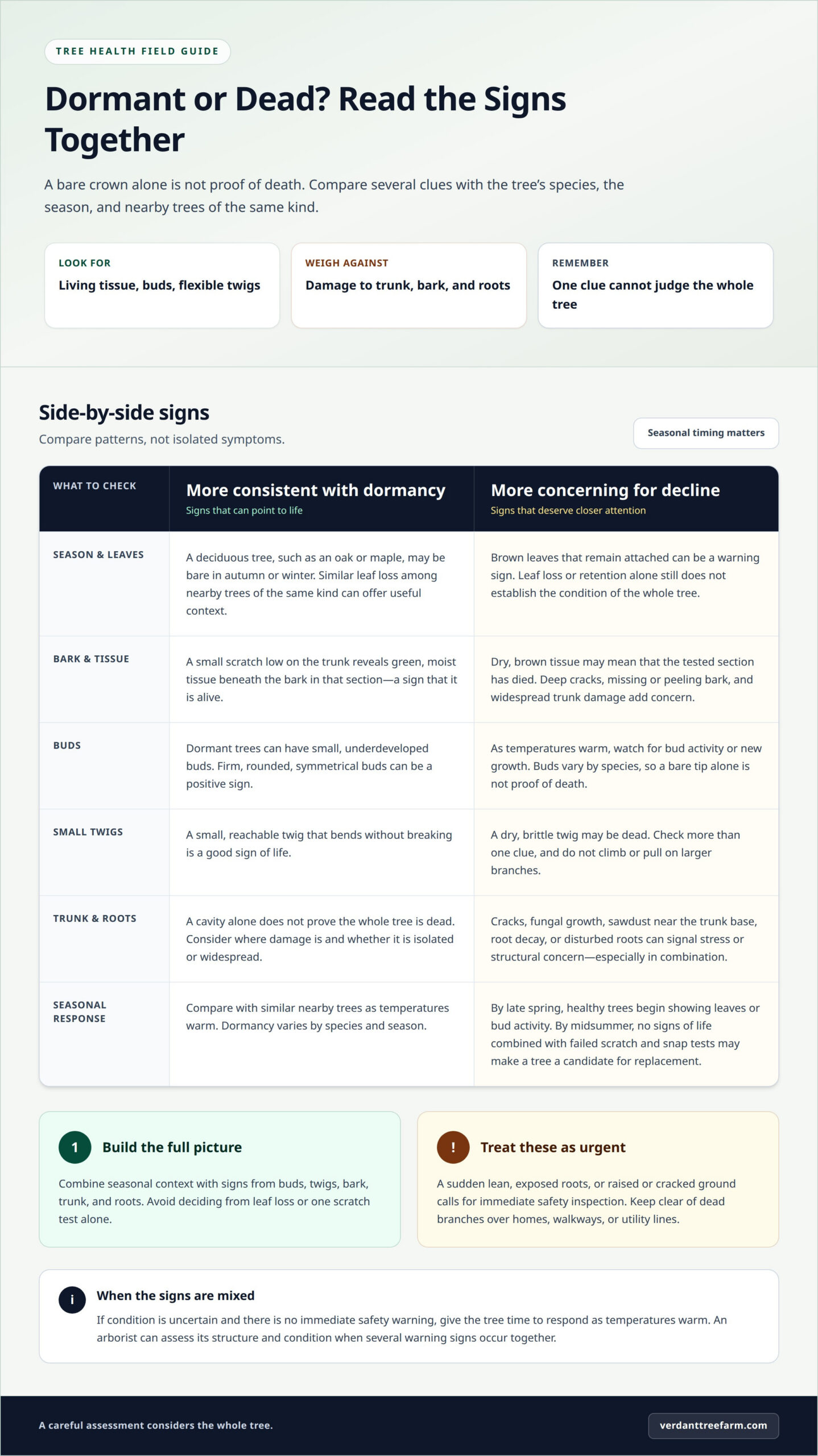
Compare the tree’s appearance with its species and the current season before judging its condition. Deciduous trees, including oaks and maples, may lose their leaves in autumn and winter as they enter dormancy. A bare crown alone doesn’t prove the tree is dead. Check whether similar trees nearby have also shed their leaves, and don’t prune simply because the branches look empty.
-
Consider Dormancy and Tree Death
Allow for the tree’s seasonal cycle, but remember that dormancy doesn’t prevent death. Drought, unusual weather, and temperature conditions can stress trees, and a tree can die while dormant. Note whether brown leaves remain attached, since dead trees may retain them instead of dropping them. Dormancy varies in length, so consider the season and species before deciding that leafless growth means the tree has died.
-
Watch for Immediate Safety Signs
Keep clear of a tree that suddenly leans, has exposed roots, or shows raised or cracked ground around its base. These changes call for immediate inspection. Also look for dead branches above a home, walkway, or utility lines. Falling limbs can injure people or knock down lines, so don’t stand beneath them to examine the crown.
-
Decide Whether Removal Is Needed
Don’t remove a tree based on seasonal leaf loss alone. First consider its condition and any hazards near the home. A sudden lean or disturbed ground needs prompt attention, and dead branches near people or utility lines pose a risk. If the tree’s condition is uncertain but there’s no immediate safety warning, give it time to respond as temperatures warm. Avoid extra watering or pruning without a clear reason, since neither action confirms whether the tree is alive.
Checking the trunk for cavities and cracks
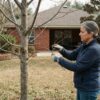
Inspect the trunk and branches for structural damage, and weigh several signs together rather than relying on one clue. Green tissue, buds, and flexible twigs can indicate living growth, even when the crown looks bare.
Assess signs of life in step with local spring conditions. Across U.S. regions, the timing varies by climate and species, so compare the tree with nearby trees of the same kind as temperatures warm.
- Look over the trunk for cavities, cracks, splits, missing bark, and lightning damage. These can signal injury or declining health, especially when paired with fungal growth. A cavity alone doesn’t establish that the whole tree is dead. Note its location and consider it alongside the rest of the trunk.
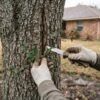
- Make a small scratch on a lower part of the trunk to check the cambium. Green, moist tissue beneath the bark means that section is alive; dry, brown tissue may mean that section has died. Start near the base because the lower trunk and roots may remain viable even when upper branches are dead. Keep the scratch small.
- Examine branch tips for buds. Dormant trees can have small, underdeveloped buds, while healthy buds are often firm, rounded, and symmetrical. Buds are less prominent on some species, so compare several branches and consider the tree’s natural features rather than treating one bare tip as proof of death.
- Gently bend a small branch within easy reach. A flexible twig that bends without breaking is a good sign of life; a dry, brittle twig may be dead. Don’t climb or pull on larger branches. Dormancy, drought, and unusual weather can all affect growth, so interpret this test alongside signs from the trunk and buds.
Inspecting bark, trunk, and roots for signs of health
- Examine the bark along the trunk, especially where it peels, splits, or is missing. A declining tree may struggle to regenerate damaged bark, while deep cracks and fungal growth can indicate serious stress. Note whether damage is isolated or extends across the trunk. A small patch and widespread peeling tell different stories, so record the location before drawing conclusions.
- Look at the base for mushrooms or other fungal growth. Fungus growing directly beside the trunk can indicate decomposition inside the wood, even if part of the crown still has leaves. Also check for sawdust around the trunk base. It can point to termites or ants and a possible risk of collapse. Keep people clear if the trunk appears unstable.
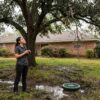
- Inspect visible roots and the surrounding ground for damage, decay, or signs that roots have been disturbed. Damaged or rotten roots can contribute to a tree’s death by undermining its support and ability to sustain growth. Consider root condition alongside the whole tree: a sparse crown with deteriorating roots is more concerning than one damaged branch alone.
- Check branch tips and the crown for buds or new growth as the weather warms. Buds can be present on a dormant tree, so their presence alone does not establish that a tree is healthy. Some species have less prominent buds, so compare similar trees nearby. Healthy trees begin showing leaves or bud activity by late spring; by midsummer, a tree with no signs of life that also fails scratch and snap tests may be a candidate for replacement.
- Use the combined signs to decide whether the tree needs closer assessment. A cavity, cracked trunk, fungal growth, root decay, and absent growth together warrant attention, particularly near a home. Avoid removing a tree based on one symptom alone. An arborist can assess its structure and condition, then explain whether damaged wood can be addressed or the tree needs removal.
How to distinguish a dormant tree from a dead tree
Assess several signs together, weighing them against the tree’s species and the season. No single bare branch or missing leaf tells you whether the whole tree is alive.
-
Compare Dormancy with Tree Death
Compare the tree with others of the same species and consider the season. Dormant deciduous trees pause growth, while evergreens usually retain foliage and grow more slowly. Look for buds, living tissue, and new growth as temperatures warm. By late spring, most trees should show leaves or bud activity, though some oaks leaf out later.
-
Check for Brittle Branches and Missing Buds
Test only a small, reachable twig with a gentle bend. A flexible branch is a positive sign; a brittle, dry branch points to dead wood. Check several stems for buds, since one dead branch doesn’t mean the entire tree is dying. A tree with no buds anywhere and brittle growth deserves closer assessment.
- Combine the scratch test with checks for branches and buds. Green, moist tissue beneath scratched bark shows that the tested area is alive; dry, brown tissue suggests it has died. Test near the base as well as on higher growth. Viable roots and lower trunk tissue can remain even when much of the crown has died, so don’t judge the entire tree from one scratch.
- Use timing to guide your decision. A bare tree in winter can still be dormant; by midsummer, a tree with no signs of life that fails both scratch and snap tests may be a replacement candidate. Drought and unusual weather can stress growth, so consider recent conditions alongside visible damage. If a tree suddenly leans or has exposed roots, treat it as a safety concern rather than waiting for buds.
- Distinguish a declining tree from a fully dead one. Several dead branches, absent buds, dry tissue, and trunk damage together are more concerning than any single sign. Keep people clear of hazardous limbs while assessing the whole tree.
Verdant Tree Farm
Verdant Tree Farm offers a practical next step when your assessment points toward replacing a tree, rather than simply waiting for seasonal growth. Choosing a replacement depends on the space and the kind of tree you want to establish. Available options include Shumard Oak, Mexican White Oak, and Drummond Red Maple.
If you’re still unsure whether a tree is dormant or dead, consider its visible signs and seasonal changes before deciding on replacement. When you’re ready to discuss tree choices for your property, contact Verdant Tree Farm in Houston.
Choose the Next Step for Your Landscape
Learning how to tell if a tree is dormant or dead gives you a clearer basis for deciding what your yard needs next. If replacement is the right direction, treat it as part of your landscape plan, not simply a one-for-one swap. Consider the space available, the role you want the tree to play, and how new planting will fit with walkways, structures, and existing greenery.
If you’re weighing whether to wait or plan for a replacement, a conversation can help you consider the next move without rushing. Verdant Tree Farm can help you explore tree options for your property. When you’re ready, contact Verdant Tree Farm to discuss your next step.
A thoughtful choice can give your landscape a stronger sense of purpose and help you feel confident about what comes next. Take time to choose a direction that works for your property and the outdoor space you want to create.
Frequently Asked Questions
Why Do Trees Go Dormant?
Trees enter dormancy to conserve energy when seasonal conditions limit active growth. For deciduous trees, shorter days and cooler weather can trigger leaf drop and a pause in visible growth. The tree hasn’t stopped functioning; dormancy helps it endure the season and resume growth when conditions become suitable. Evergreen trees respond differently and generally retain their foliage.
Can part of a tree die while the rest stays alive?
Yes. A branch can die while the trunk, roots, and other branches remain alive. For example, damage to one limb may leave the rest of the canopy growing normally. Look for new growth elsewhere and whether the affected area is isolated or spreading. One dead branch alone doesn’t establish that the entire tree is dead, but widespread decline deserves closer attention.
How Can You Tell if a Tree Is Dead or Dormant?
Look for several signs across the tree rather than relying on appearance alone. Check whether buds are developing, twigs remain flexible, and tissue beneath a small bark scratch is green and moist. Then consider the species and season. A deciduous tree can be bare during dormancy, while an evergreen may retain foliage and simply grow more slowly.
Is a tree dead if it doesn’t leaf out in spring?
Not necessarily. Leaf-out timing varies by species and local conditions, and some oaks produce leaves later than nearby trees. Compare the tree with others of the same kind and watch for bud activity as spring progresses. If it remains without signs of life by late spring, examine other indicators, such as branch condition and living tissue, before deciding what the absence of leaves means.
When Should You Have a Dying or Dormant Tree Evaluated by an Arborist?
Arrange an evaluation when the tree presents a safety concern or several signs point to decline. A sudden lean, exposed roots, or raised or cracked ground calls for immediate inspection. Also seek an assessment if trunk damage, fungal growth, or dead branches are extensive, especially near a home or utility lines. An arborist can consider the whole tree’s structure and condition.
How can you tell if a tree is dormant or dead?
To tell whether a tree is dormant or dead, combine seasonal timing with signs from different parts of the tree. Buds or moist green tissue show that the tested area is alive, while dry, brittle growth and absent buds across the tree raise concern. A single test isn’t a whole-tree diagnosis. Compare your findings with the same species nearby and reassess as growing conditions change.