A bare canopy after a freeze doesn’t prove a tree is dead. For a post-freeze tree assessment in Houston, allow 7-14 days after the freeze for damage to develop before making major recovery decisions, and have a professional assess a frost-damaged tree before trimming. Freeze cracks in bark may take a month or two to appear, so early signs don’t always show the full extent of injury.
It’s understandable to worry about a damaged tree, especially when it anchors your landscape or provides valuable shade. Acting too soon can mean removing growth that might recover, while overlooking serious damage can leave a safety concern unresolved.
This guide explains what a professional looks for, how bark cracks and other signs can help indicate a tree’s condition, and how Houston homeowners can judge whether a landscape may recover or need replanting. You’ll also learn why assessment timing matters and what to consider before deciding on next steps.
Key Takeaways
- Professionals use signs beneath the bark to help distinguish living tissue from freeze damage before recommending next steps.
- Recovery can take time to become clear, so early appearance alone may not tell you whether a tree needs replanting.
- Bark cracks can emerge after the freeze, making continued observation part of a sound damage assessment.
- Allow damage to develop before making major landscape decisions, and have a professional assess trees before trimming.
1. Using the scratch test to assess plant damage
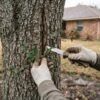
A professional checks beneath a small area of outer bark for green tissue, a sign that a tree or shrub is alive. The assessment may compare several branches because one damaged twig doesn’t establish the whole tree’s condition. A cut twig with a hole down its center may be a sign of freeze damage. Professionals weigh these signs alongside the canopy, bark, and branch structure before recommending pruning or removal.
Freeze injury may show as wilted foliage, darkened tissue, dead branch tips, or bark damage. To distinguish it from drought, disease, or normal dormancy, professionals consider where symptoms appear, the plant’s condition before the freeze, and whether damage is widespread or localized. Dormancy alone doesn’t prove a tree has died. A post-freeze tree assessment in Houston should consider multiple signs, not just one bare branch.
After a hard freeze, survival depends on living tissue and the extent of injury. A professional assesses several parts of the tree instead of judging by bare branches alone. Queen palms and sago palms are among Houston’s cold-sensitive palms. If a palm has trunk damage, it ideally needs attention within 2 weeks. A post-freeze tree assessment Houston professionals conduct can also help identify concerns that need timely attention.
Removal rules can depend on a property’s location and the tree’s circumstances. An assessment should establish whether removal is warranted before that decision is made. Assessment and emergency-service costs depend on factors such as tree size, access, hazards, urgency, and the work involved.
Freeze-damaged limbs can fall and threaten people, homes, or nearby power lines. Professionals assess limb stability and the tree’s position before corrective work. For frost-damaged turf, avoid fast-release and synthetic fertilizers, which can trigger a pathogenic fungal attack. These separate checks help guide safe next steps for trees and lawns.
2. Recovery and replanting timelines
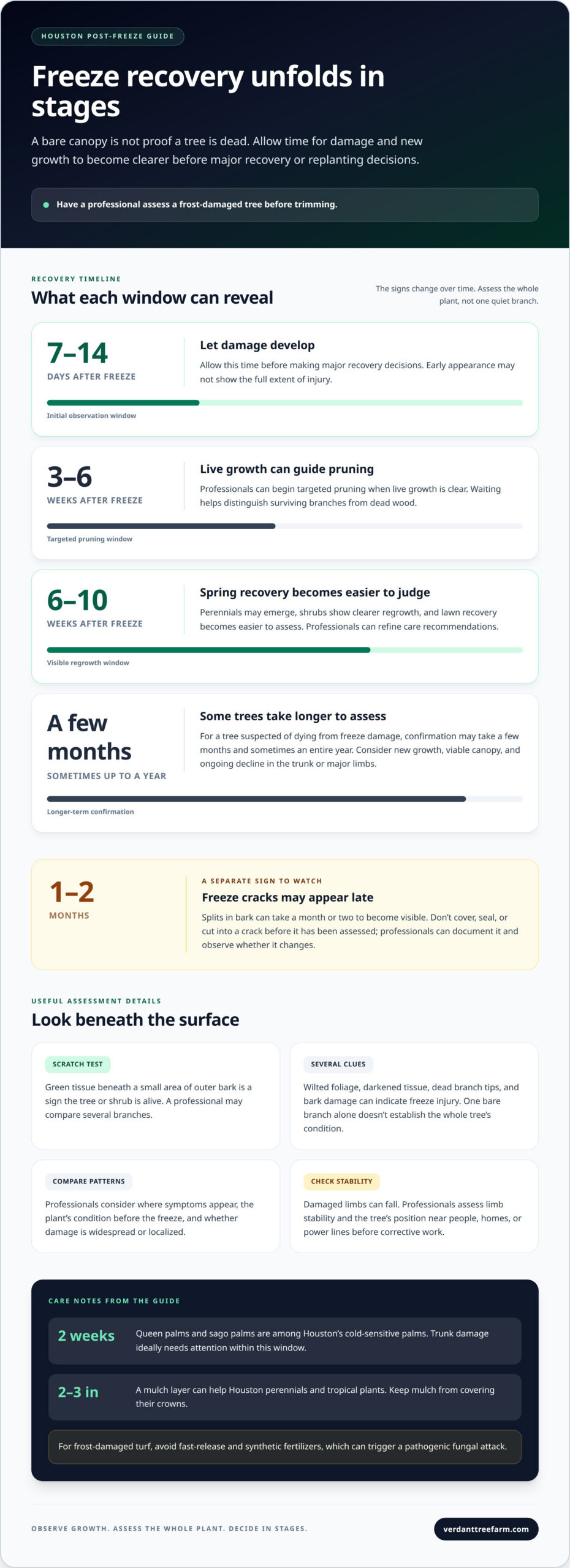
Houston landscapes reveal freeze recovery in stages, not all at once. During weeks 3-6 after a freeze, professionals can begin targeted pruning when live growth is clear. Waiting for that growth helps distinguish surviving branches from dead wood, reducing the chance of removing tissue that may recover. A tree’s condition can vary between branches, so an early trim may not reflect its eventual canopy.
In weeks 6-10 after a freeze, spring growth accelerates across Houston landscapes. Perennials may emerge, shrubs show clearer regrowth, and lawn recovery becomes easier to judge. These changes help professionals refine care recommendations and identify plants with limited recovery. A quiet branch early in the season doesn’t settle the question; visible growth and the condition of the plant over time matter.
For a tree suspected of dying from freeze damage, confirmation may take a few months and sometimes as long as an entire year. Professionals consider whether new growth appears, how much of the canopy remains viable, and whether the trunk or major limbs show ongoing decline. Replanting is a more informed decision when these signs indicate the tree isn’t recovering, rather than when its canopy first looks bare.
After a freeze, professionals can support recovery by protecting roots and avoiding premature pruning. A 2-3 inch layer of mulch can help Houston perennials and tropical plants, but it shouldn’t cover their crowns. For trees, corrective pruning is best handled by an experienced professional once live growth can be identified. The care plan should reflect each plant’s condition and location, not apply one treatment across the whole landscape.
Replanting also calls for attention to placement and establishment. Ground conditions, drainage, available space, and the replacement tree’s mature size all shape a suitable choice. If an assessment indicates a tree won’t recover, professional tree installation can help put a replacement plan into action. A staged assessment keeps recovery care and replanting decisions tied to what the landscape actually shows.
3. Freeze cracks in tree bark
A freeze crack may appear on a trunk well after the coldest night has passed. In Houston, these splits can take a month or two to become visible. The bark may separate along a lengthwise line, sometimes exposing inner wood. A crack that appears later can still relate to winter freeze stress, so timing alone doesn’t show how much injury the tree sustained.
Professionals examine the crack’s position, length, edges, and surrounding bark. They also consider whether the split is fresh or an older wound that has reopened. A single line on the trunk doesn’t tell the whole story. The condition of nearby bark, the main stem, and the canopy helps put the visible damage in context.
Cracks matter because bark protects the living tissues beneath it. If a split is deep or extends through a major part of the trunk, the tree’s structural condition deserves careful attention. Location matters too: a damaged trunk near a walkway, driveway, or building may pose a different concern than a similar crack in an open area. Professionals assess these factors together rather than judging by appearance alone.
Don’t cover, seal, or cut into a bark crack before its condition has been assessed. Those actions can hide the edges and make follow-up observation harder. A professional can document the crack and compare its appearance over time, while examining the trunk and major limbs for related damage. That record helps show whether the wound is stable or widening and affecting the tree’s structure.
For a Houston tree showing a new split after winter, include the crack’s location and when it first appeared in the assessment. Freeze cracks can take a month or two to show, so continued observation can add useful context. The decision to retain, prune, or remove a damaged tree should account for the full trunk and canopy, not just one visible line.
4. Post-freeze landscape assessment timing
In Houston, allow 7-14 days after a freeze for damage to develop before major recovery decisions. During the first 1-2 weeks, a professional assesses affected plants, clears truly dead mushy material, and protects plants from dehydration. This early visit can separate urgent hazards and soft, decaying tissue from woody growth that needs more time to show its condition.
Freeze-damaged trees should not be trimmed before professional assessment. For most woody plants, waiting helps reveal which branches are alive and which are dead. Targeted pruning can begin in weeks 3-6 after a freeze, once live growth is clear. Professionals leave uncertain branches in place rather than removing potentially viable tissue too early.
Houston’s spring timing matters, too. Frost can occur as late as mid-April, so pruning azaleas before then risks exposing them to further damage. A professional considers the plant species and local frost risk before recommending work. For lawns, the first cleanup mow should wait until nighttime lows are reliably above the mid-50s, rather than following a fixed date on the calendar.
Assessment timing also depends on the kind of damage. Truly dead, mushy material on soft plants should be removed because decay can spread into the plant. A tree with uncertain branch damage needs a different approach: observe its growth and structure before corrective pruning. These distinctions help prevent applying one cleanup method to every plant in a Houston landscape.
Use the first assessment to identify immediate concerns, then plan follow-up around visible growth and weather. If a tree cannot recover and replanting is appropriate, plan the next step for your landscape with installation in mind. The right timing helps preserve viable growth while making room for informed decisions about damaged trees, shrubs, and lawn areas.
Verdant Tree Farm
Verdant Tree Farm helps Houston property owners move from a confirmed tree loss to choosing a replacement. If an assessment indicates that a tree won’t recover, consider the site’s space, conditions, and the landscape you want before selecting a replacement. Options include Shumard Oak, Mexican White Oak, Drummond Red Maple, October Glory Maple, and Mexican Redbud.
Choosing a suitable replacement is a chance to plan for your property’s long-term landscape, rather than simply fill the space left behind. The right fit depends on the planting location and the role you want the tree to serve. Contact Verdant Tree Farm to discuss replacement tree options for your landscape.
Plan your landscape’s next season
A damaged tree can leave more than an empty planting spot; it can change shade, privacy, and how you use your yard. A professional post-freeze tree assessment in Houston helps clarify the path forward, whether that means preserving the existing tree or rethinking the landscape. Consider more than a replacement’s appearance. The planting area, room for future growth, and nearby features all shape how a new tree will fit.
Once the tree’s condition is understood, the next decision can focus on the landscape you want to build. A professional can help match replacement choices to the site and the tree’s long-term role in your yard. That approach makes the planting plan part of the whole property, not just a response to a lost tree.
For help moving from assessment toward a thoughtful replacement plan, contact Verdant Tree Farm. A considered next step can help your Houston landscape move forward with confidence.
Frequently Asked Questions
When is it safe for a professional to assess freeze damage to trees in Houston?
A professional can assess a Houston tree after freezing weather has passed, but major recovery decisions should account for how symptoms develop. Allow 7-14 days after a freeze before deciding on extensive recovery work. If the tree has a visible structural concern, an assessment can help evaluate its condition and guide safe next steps without premature pruning.
Which tree symptoms after a freeze require immediate attention?
Loose or hanging limbs, a split major branch, or damage near a home or power line deserves prompt attention because failing wood can create a hazard. Palm trunk damage also calls for timely care, ideally within 2 weeks. Keep people clear of unstable limbs and avoid attempting to cut or move large damaged branches; their weight and position can make them dangerous.
How can a professional test whether a branch or trunk is still alive after a freeze?
A professional may check beneath a small area of outer bark for green tissue, which can indicate living growth, and compare findings across more than one location. On a cut twig, a hole down the center may indicate freeze-killed tissue. One test point may not represent the whole tree, so the professional also considers how the tested branch relates to the trunk and surrounding canopy.
When should a certified arborist assess a freeze-damaged tree in Houston?
Have an arborist assess a tree before corrective pruning or removal, especially if major limbs, trunk cracks, or nearby structures are involved. If freeze damage suggests the tree may have died, confirmation can take a few months and sometimes as long as an entire year. An ISA Certified Arborist can also report on tree health, drainage, soil condition, fertilization, and watering needs.