In Houston, a beautiful landscape shouldn’t feel like a gamble against the next deep freeze or a brutal summer heatwave. Most locals have felt the frustration of watching a “perfect” nursery find wither in our heavy clay soil or snap during a sudden February chill. It’s a common struggle to find flowering trees that thrive in Houston while still delivering the vibrant color you want. We believe your yard should be a source of pride and property value, not a constant source of worry or high-maintenance chores.
This guide simplifies your selection process by focusing on the most resilient species for our updated USDA Zone 9b climate. You’ll learn which trees possess the biological grit to handle extreme humidity and the occasional hard freeze. We’ll preview native stars like the Texas Mountain Laurel and Mexican Redbud, along with ornamental staples like the Natchez Crape Myrtle. By matching the right tree to our local environment, you can ensure your landscape remains a colorful, low-maintenance asset for years to come.
Key Takeaways
- Learn how to navigate Houston’s shift to USDA Zone 9b and select species that maintain vibrant color even during the late-summer heat.
- Identify the top flowering trees that thrive in Houston, from the fragrant evergreen canopy of a Magnolia to the long-lasting blooms of a Natchez Crape Myrtle.
- Discover why native stars like the Desert Willow and Texas Redbud are the most reliable choices for surviving the local humidity and freeze cycles.
- Master the technical side of planting in heavy clay soil and learn how to avoid the common depth errors that often lead to tree failure.
- Understand the value of purchasing direct from a regional leader and how professional installation services secure your property’s long-term growth.
The Houston Flowering Tree Calendar: Year-Round Color in Zone 9
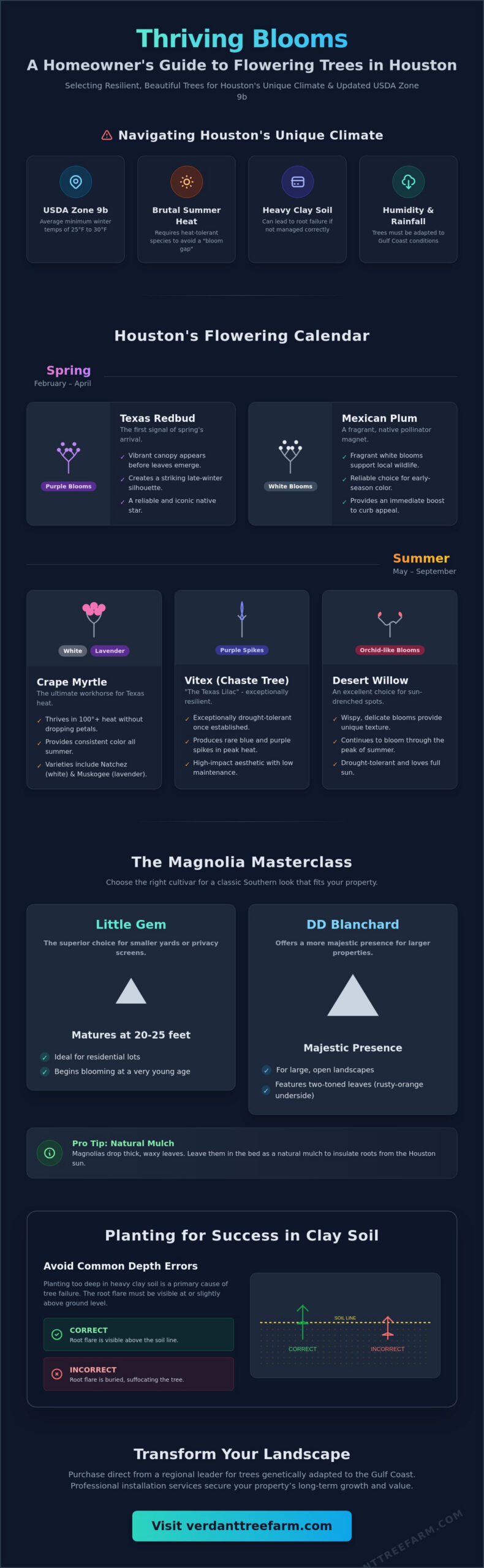
Successful landscaping in the Bayou City starts with understanding our unique climate footprint. As of the 2023 USDA update, most of Houston has transitioned into Hardiness Zone 9b. This means our average minimum winter temperatures now hover between 25 and 30 degrees. Selecting flowering trees that thrive in Houston requires a strategy that accounts for these warmer winters while preparing for the inevitable summer “bloom gap.” Integrating a variety of species ensures your yard doesn’t go dormant just because the temperature rises.
Local provenance is a critical factor for long-term health. Trees grown right here on the Gulf Coast are genetically adapted to our heavy humidity and erratic rainfall. We recommend balancing your yard with a mix of evergreen anchors and deciduous bloomers. This approach ensures your property maintains its structure during the winter while offering explosive color throughout the growing season. It’s about building a landscape that works for you every month of the year.
Spring Showstoppers: February to April
The Texas Redbud is often the first to signal spring’s arrival. Its vibrant purple canopy appears before its leaves even emerge, creating a striking silhouette against the late winter sky. For those seeking a fragrant, white-blooming native, the Mexican Plum is a reliable choice that supports local pollinators. These early bloomers are essential for setting the tone of your landscape after a dormant winter. Using these species helps you maximize the “shoulder season” before the intense humidity of June takes over. They provide an immediate boost to curb appeal when most other plants are still waking up.
Summer Heat-Seekers: May to September
When the thermometer hits triple digits, many plants start to fail. This is where Crape Myrtle varieties truly earn their reputation. From the pristine white of the Natchez to the deep lavender of the Muskogee, these trees provide consistent color through the harshest months. They don’t just survive the heat; they thrive in it. Choosing flowering trees that thrive in Houston means picking plants that can handle 100-degree days without dropping their petals.
If you want a different texture, consider the Vitex, also known as the Chaste Tree. It produces upright purple spikes and remains exceptionally drought-tolerant once established. The Desert Willow is another excellent option for sun-drenched spots. It offers wispy, orchid-like blooms that continue through the peak of summer. These selections ensure your yard doesn’t lose its luster during the hottest weeks of the year. They are the workhorses of the Texas summer landscape.
Houston’s Iconic Bloomers: Magnolias, Crape Myrtles, and Vitex
The Vitex, or Chaste Tree, is often called the “Texas Lilac” for good reason. It provides rare spikes of blue and purple when most other plants are struggling with the heat. It stands out as one of the most resilient flowering trees that thrive in Houston because it requires almost no intervention once the root system is established. This tree is a favorite for homeowners who want a high-impact aesthetic without the constant maintenance schedule.
For those seeking a classic Southern look, Magnolias provide an evergreen anchor for any property. These trees offer a dense canopy of glossy leaves and fragrant, dinner-plate-sized blooms. While they are a staple of flowering trees found in Texas, choosing the right cultivar is essential for residential success. We prioritize varieties that balance beauty with manageable growth patterns for modern suburban lots.
The Magnolia Masterclass: Little Gem vs. DD Blanchard
Size is the biggest factor when selecting a Magnolia. The Little Gem Magnolia is the superior choice for smaller yards or privacy screens. It typically matures at 20 to 25 feet and begins blooming at a very young age. If you have a larger property, the DD Blanchard Magnolia offers a more majestic presence. It features dark green leaves with a distinct rusty-orange underside that adds a two-toned effect to your landscape.
Managing the “mess” is a common concern. Magnolias are evergreen, but they do drop thick, waxy leaves and seed pods throughout the year. We suggest leaving these leaves in the bed as natural mulch. They break down slowly and provide excellent insulation for the roots against the Houston sun. Keeping your Magnolias lush requires consistent hydration, especially in high-humidity neighborhoods where soil can become compacted.
Crape Myrtle Selection: Beyond Just Color
Crape Myrtles are the workhorses of the Texas summer. However, not all varieties are created equal. We recommend mildew-resistant types like the Natchez (white) and the Tuscarora (coral-pink) to ensure your foliage stays clean and healthy. Integrating Natchez Crape Myrtles into your design creates a sophisticated look with its cinnamon-colored peeling bark and bright white flower clusters.
Proper pruning is the key to a long-lived tree. Avoid “Crape Murder,” which is the aggressive topping of the tree that results in weak, spindly growth. Instead, focus on removing crossing branches and thinning the interior to allow for better airflow. If you need help determining the best placement for these icons, our team provides maintenance consultations to ensure your investment pays off for decades.
Native Stars: Texas Redbuds, Desert Willows, and Beyond
Native species are your best defense against the unpredictable weather patterns of the Gulf Coast. These trees have spent centuries adapting to our cycles of heavy rainfall and sudden dry spells. Integrating flowering trees that thrive in Houston into your landscape provides more than just aesthetic value. It creates a vital habitat for local bird populations that rely on these specific species for food and shelter. The Texas Mountain Laurel is a prime example of this regional grit. Its dense, evergreen foliage offers year-round privacy, while its spring blooms fill the air with a distinct “grape soda” fragrance. It is a reliable, slow-growing investment that won’t outgrow a standard suburban lot.
Choosing the right variety often comes down to your specific sun exposure. While both are hardy, the Mexican Redbud typically handles the intense Houston sun better than its Texas cousin. Its leaves are smaller, glossier, and more ruffled, which helps the tree retain moisture during the peak of July and August. If your planting site has little to no shade, the Mexican variety is the more resilient choice. Both trees offer spectacular purple flowers in late winter, but matching the leaf type to your sun levels ensures the tree stays healthy once the blooms fade.
Redbuds: The First Sign of Spring
Texas Redbuds are easily recognized by their broad, heart-shaped leaves. They are perfect for residential lots where you want early color without a massive footprint. However, these trees are sensitive to “wet feet.” Since most of our area consists of heavy clay, you must ensure your Redbud has adequate drainage. We often recommend planting these as understory trees. Placing them near the canopy of a larger Live Oak protects the delicate blooms and mimics their natural forest environment. This placement provides the dappled shade they need to stay lush throughout the summer.
Desert Willow: The Xeriscape Champion
If you prefer a lighter, more wispy aesthetic, the Desert Willow is a standout choice. It brings an airy, Mediterranean feel to your yard without the high water requirements of other ornamental species. It is a top performer on Texas A&M AgriLife’s list of native and adapted plants for its ability to handle erratic weather. Once these trees are established, they thrive on a “less is more” watering schedule. This makes them ideal for homeowners looking for high-impact color from late spring through autumn with minimal effort. They are the definition of a “can-do” tree for the Texas heat.
Planting for Success: Soil, Hydration, and Freeze Protection
Houston’s heavy clay, often called “gumbo,” is the biggest hurdle for flowering trees that thrive in Houston. This soil holds onto water too long during our rainy seasons, potentially rotting roots, yet it turns into a concrete-like block during a dry July. Success starts with managing this drainage. We also see many homeowners make the mistake of planting too deep. You must keep the root flare, the point where the trunk widens at the base, visible at the soil line. Burying this flare suffocates the tree and leads to a slow decline that many people mistake for disease.
Hydration strategies also need to shift as the tree matures. While new plantings need consistent moisture, established flowering trees benefit from deep, infrequent watering. This encourages the root system to grow deeper into the cooler soil layers. To protect those roots during 100-degree August days, apply a three-inch layer of organic mulch. Ensure the mulch doesn’t touch the trunk itself, as “mulch volcanoes” trap moisture against the bark and invite pests. Proper mulching regulates soil temperature and keeps your investment stable through the peak of summer.
Amending Houston Clay for Better Drainage
For sensitive bloomers like the Texas Redbud or Magnolia, we recommend creating a planting mound. Dig a hole twice as wide as the root ball but no deeper. Mix your native clay with expanded shale or high-quality compost to improve aeration. By placing the tree so the top of the root ball sits two inches above the surrounding grade, you allow excess water to shed away from the trunk. Because large specimens are difficult to level and stabilize in shifting clay, professional installation is critical. It ensures your tree is positioned for optimal drainage from the start.
Freeze Protection for Flowering Trees
Our weather has become increasingly unpredictable, with “Blue Northers” capable of dropping temperatures by 40 degrees in a single afternoon. Following the historic 2021 freeze and our transition to USDA Zone 9b, we’ve updated our protection protocols. Before a forecasted hard freeze, water your trees thoroughly. Moist soil acts as a heat sink, protecting the roots better than dry earth. Wrap the trunks of younger or more tropical-leaning species with breathable frost cloth. If you notice brown foliage after a freeze, don’t rush to prune. Wait until late spring to see where new growth emerges; pruning too early can expose sensitive tissue to a secondary chill. If you’re unsure about the health of your canopy after a winter storm, contact us for a maintenance consultation to evaluate your landscape.
Transforming Your Landscape with Verdant Tree Farm
Choosing the right specimen is only half the battle. To ensure your yard reaches its full potential, you need a partner who understands the local dirt. Verdant Tree Farm is Houston’s largest independent tree nursery. We are veteran-owned and operated, bringing a level of discipline and regional pride to every project. Buying direct from us means skipping the middleman and the big-box store risks. Our trees are grown and acclimated to the specific humidity and soil conditions of the Gulf Coast. This ensures you receive flowering trees that thrive in Houston from the moment they are planted on your property.
Our end-to-end service model removes the guesswork from landscaping. We don’t just sell you a tree and leave you to figure out the rest. From initial selection to the final professional installation, our team manages every detail. We also provide the Verdant Warranty, giving you peace of mind that your flowering tree investment is protected for the long haul. This isn’t just a transaction; it’s a reliable investment in your home’s value and your neighborhood’s canopy.
Visualize Your Blooms with 3D Landscape Design
Proper placement is the difference between a cluttered yard and a professional landscape. Many homeowners struggle to imagine how a small sapling will look a decade from now. Our design team uses 3D modeling to help you see exactly how your new additions will fit your space. We can visualize tree growth at the five, ten, and twenty-year marks. This prevents common mistakes, like placing a DD Blanchard Magnolia where it might eventually crowd your roofline. We help you customize a plant palette that ensures year-round color, strategically layering early spring bloomers with summer heat-seekers for maximum curb appeal.
Nursery-Direct Value and Expert Installation
Big-box stores often stock trees that were grown in different climate zones. These plants often struggle or fail in our unique 9b environment. Our locally grown stock is tougher and more resilient because it’s already used to the Texas sun. Once you’ve made your selection, our professional planting process takes over. We handle the heavy clay and drainage adjustments required for flowering trees that thrive in Houston. We ensure every specimen is set at the correct depth with the right amendments to encourage deep root growth. Ready to bloom? Visit Verdant Tree Farm today!
Start Your Houston Landscape Transformation Today
Building a landscape that withstands our unique Gulf Coast climate is a smart investment in your property’s beauty and value. You’ve now got the knowledge to navigate the transition to Zone 9b and master the gumbo soil challenge. By selecting native stars or iconic ornamental staples, you ensure your yard remains vibrant through triple-digit heat and sudden winter chills. Choosing flowering trees that thrive in Houston is simple when you prioritize local provenance and professional installation.
As the largest independent tree nursery in Houston, Verdant Tree Farm provides high-quality, locally grown stock. We are veteran-owned and operated. We take pride in every project we complete. We also offer a three-month warranty on all trees and installations. This ensures your investment is protected from the very first day. Our team is ready to help you find the perfect match for your specific lot.
Browse Our Inventory of Flowering Trees in Houston
Your dream yard is within reach. Let’s plant a legacy that grows for generations.
Frequently Asked Questions
What is the best flowering tree for a small Houston yard?
The Little Gem Magnolia is the top choice for compact residential spaces. It reaches a manageable height of 20 to 25 feet and begins blooming at a much younger age than standard Southern Magnolia varieties. Its evergreen leaves provide year-round privacy without overwhelming a small suburban lot.
How often should I water my newly planted flowering tree in Houston?
Newly planted trees require daily watering for the first two weeks to establish roots in our heavy clay. After this initial period, you should transition to a deep soak two to three times per week depending on recent rainfall. This method ensures moisture reaches the entire root ball rather than just sitting on the soil surface.
Are Magnolia trees messy to have in a residential yard?
Magnolias do produce leaf and seed pod litter throughout the year since they are broadleaf evergreens. However, their thick, waxy leaves decompose slowly and make for excellent natural mulch in your flower beds. If you prefer a cleaner look, choosing a smaller cultivar like the Little Gem minimizes the volume of debris you’ll need to manage.
Which flowering trees are the most freeze-resistant for Zone 9?
Native species like the Texas Redbud and Texas Mountain Laurel are the most resilient against our unpredictable hard freezes. These flowering trees that thrive in Houston have evolved to handle sudden temperature swings and “Blue Northers” better than tropical imports. They typically show signs of new growth much faster after a severe winter event.
When is the best time of year to plant trees in Houston?
The ideal window for planting flowering trees that thrive in Houston is during the fall months of October and November. Planting during this time allows the root system to establish itself in cooler soil before the intense summer heat arrives in June. Early spring, specifically February and March, is the next best option for local homeowners.
Do I need to fertilize my flowering trees every year?
Annual fertilization isn’t always necessary if you maintain a healthy layer of organic mulch or compost around the base. Over-fertilizing can actually lead to excessive leaf growth at the expense of the blooms you want. It’s better to perform a soil test before applying high-nitrogen products to ensure you aren’t disrupting the local soil balance.
Can I grow a Dogwood tree in Houston?
Growing traditional Flowering Dogwoods in our area is a significant challenge due to the alkaline clay soil and intense summer sun. These trees often struggle with leaf scorch and root rot in the Houston environment. We suggest the Mexican Plum as a reliable alternative that offers similar white spring blossoms with much higher heat tolerance.
What flowering trees grow the fastest in the Texas heat?
Crape Myrtles and Desert Willows are among the fastest growers for our specific region. A Natchez Crape Myrtle can grow several feet per year once its root system is established in a sunny spot. These trees prioritize vertical growth during the summer months, providing quick shade and color for new landscapes with minimal wait times.