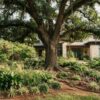
You don’t have to choose between a tree that grows fast and one that survives a Houston August. While many quick-growing varieties are brittle or short-lived, the Drake Elm tree Houston homeowners are choosing in 2026 proves you can have rapid shade without the typical risks. It’s a common frustration in Harris County. You spend time and money planting only to see the “gumbo” clay soil and intense summer heat kill off young saplings before they can even take root.
We agree that your backyard should be a place of relief, not a source of constant maintenance or pool cleaning headaches. This guide will show you why the Drake Elm is the premier choice for achieving a graceful, weeping aesthetic and reliable shade in our unique climate. We’ll walk you through essential planting techniques for heavy clay, local city regulations for residential lots, and the simple care routines that ensure your investment thrives. You will discover how this resilient tree provides year-round interest with its unique exfoliating bark and stays tough against local pests.
Key Takeaways
- Learn how the Drake Elm tree Houston climate favors remains semi-evergreen, providing lush foliage long after other trees have dropped their leaves.
- Discover why this cultivar’s high resistance to Dutch Elm Disease and triple-digit heat makes it a superior long-term investment for your property.
- Master the “wide and shallow” planting method to ensure your tree’s root system can successfully navigate and thrive in heavy “gumbo” clay.
- Compare growth habits to understand why the Drake Elm is the faster, more graceful alternative to the native Cedar Elm for backyard shade.
- Find out how choosing nursery-direct specimens with professional installation simplifies the process and protects your landscaping investment.
What is a Drake Elm (Ulmus parvifolia ‘Drake’)?
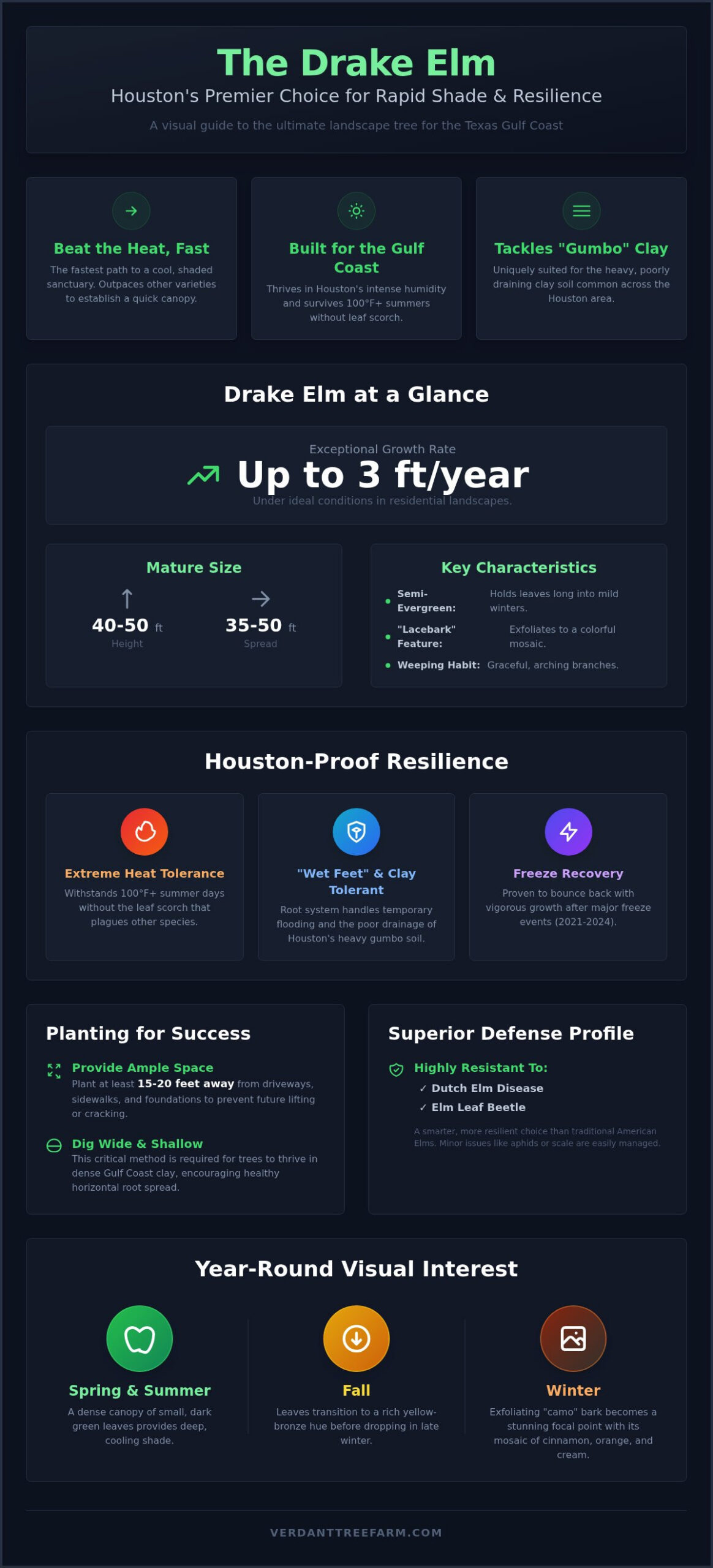
The Drake Elm is a specific cultivar of the Chinese Elm, known botanically as Ulmus parvifolia ‘Drake’. While many people associate elms with the towering, vase-like structures of the north, this variety is uniquely suited for the Gulf Coast. It stands out in Southeast Texas because it doesn’t follow the rules of a typical deciduous tree. In our local USDA Zones 9a and 9b, the Drake Elm tree Houston homeowners prefer acts as a semi-evergreen. It keeps its canopy lush and green long into the winter months while other varieties are standing bare.
Its most striking feature is the “Lacebark” texture. As the tree matures, the outer bark naturally peels away in small, irregular flakes. This process reveals a beautiful mosaic of cinnamon, cream, and olive colors underneath. This exfoliating bark provides a “camo” look that adds significant character to your landscape. Unlike the stiff, upright branches of common native elms, the Drake variety features a distinct weeping habit. Its long, slender branches arch gracefully toward the ground, creating a soft silhouette that looks elegant even in smaller suburban lots.
Growth Habits and Size in East Texas
In our managed Houston landscapes, you can expect a Drake Elm to reach a mature height of 40 to 50 feet with a nearly equal spread of 35 to 50 feet. It’s a true “fast-grower,” often adding up to 3 feet of height per year under optimal conditions. This rapid growth makes it an excellent choice for new construction homes where shade is needed immediately. While the root system is generally well-behaved, it’s strong. We recommend planting at least 15 to 20 feet away from sidewalks and driveways to give the roots plenty of room to expand without causing surface tension. To see how professional hardscaping can be enhanced with the right greenery, check out Bayside Pavers for ideas on planting between walkway joints.
Visual Appeal Through the Seasons
This tree offers a changing palette that keeps your yard looking fresh throughout the year. The leaves are small, dark green, and finely serrated, providing a dense canopy that blocks the harsh Texas sun. During late fall, these leaves transition into shades of yellow and bronze before eventually thinning out. Even in the peak of winter, the tree remains a focal point. The combination of its weeping structure and the colorful, exfoliating bark ensures your property never looks dormant or dull.
The Drake Elm is a highly adaptable, fast-growing shade tree perfect for Houston’s urban heat island.
Why Drake Elms Thrive in the Houston Climate
Survival in Southeast Texas requires more than just looking good. A tree must endure relentless humidity, sudden flash floods, and the occasional hard freeze. The Drake Elm tree Houston residents plant today is chosen specifically for this durability. While other shade trees might wilt or suffer from leaf scorch when temperatures stay above 100°F for weeks, the Drake Elm maintains its vibrant green canopy. It’s biologically programmed to thrive in the high-intensity light and heat of our urban island.
The recent weather patterns between 2021 and 2024 tested every species in our inventory. During the historic 2021 freeze, established Drake Elms proved their mettle. While they are semi-evergreen, a hard freeze may cause them to drop leaves entirely to protect their core. However, we saw these trees bounce back with vigorous new growth as soon as the spring thaw hit. This resilience makes them a safer long-term investment than more sensitive ornamental varieties that often struggle to recover from temperature swings.
Adapting to Harris County Gumbo
The heavy clay soil found in neighborhoods like West University and Sugar Land is often called “gumbo” for its sticky, oxygen-poor consistency. Many trees struggle with root rot in these conditions. The Drake Elm is different. It’s frequently used in local rain gardens because it can tolerate “wet feet” during a heavy downpour while remaining remarkably drought-tolerant once the sun returns. Compared to the Silver Maple or other fast-growers, it handles the shrink-swell cycle of Houston clay without structural failure.
Pest and Disease Profile
Health is a major factor in tree longevity. The Drake Elm offers high natural resistance to Dutch Elm Disease, a condition that devastated the American Elm population decades ago. It’s also less attractive to the Elm Leaf Beetle. In our high-humidity months, you might occasionally spot aphids or scale, but these are easily managed with standard horticultural oils. The dense, semi-evergreen canopy doesn’t just look healthy; it provides year-round privacy that deciduous trees can’t match. If you want to ensure your new sapling has the best start in this climate, consider our professional installation services to manage the initial transition into your yard’s specific soil profile.
Planting and Caring for Your Drake Elm in Houston
Successful growth starts with a shovel and a plan. When you bring home a Drake Elm tree Houston climate demands, your first priority is location. Give this tree at least 15 to 20 feet of clearance from your foundation, driveway, or swimming pool. Its canopy will eventually spread up to 50 feet, so planning for that footprint now prevents costly structural issues or messy leaf drop in your pool later.
Digging the hole correctly is where most homeowners go wrong in Southeast Texas. Never dig a deep, narrow pit; this creates a “bathtub effect” where water sits and drowns the roots in our dense clay. Instead, use the wide and shallow method. Dig the hole twice as wide as the root ball but no deeper than the root ball itself. In fact, we recommend leaving the top inch of the root ball slightly above the soil line to ensure oxygen reaches the root flare.
Backfilling should involve mostly native soil. While it’s tempting to use only bagged potting soil, your tree needs to get used to the “gumbo” it will live in forever. Mix in a small amount of compost to provide initial nutrients, but avoid heavy fertilizers in the first few months. Once the tree is in the ground, apply a 2 to 3-inch layer of mulch around the base. Keep the mulch a few inches away from the trunk. If mulch touches the exfoliating bark, it traps moisture against the wood and can lead to fungal rot on that beautiful Lacebark finish.
Establish a deep soak watering schedule for the first year. Rather than a quick daily sprinkle, give the tree a slow, thorough soaking twice a week. This encourages the roots to grow deep into the earth rather than staying near the surface where they are vulnerable to summer heat.
Overcoming Poor Drainage
Houston is flat, and drainage is often a challenge. If your yard holds water for more than 24 hours after a storm, you need to modify the planting site. Incorporating expanded shale or gypsum into the backfill helps break up heavy clay particles and improves aeration. Planting on a slight mound or “high” ensures that the most sensitive part of the root system stays out of standing water during our frequent flash floods.
Pruning for Hurricane Resilience
Storm season is a reality here. Proper pruning makes your tree more aerodynamic and less likely to suffer branch failure. Late winter is the best time to prune your elms because the tree is dormant and the branching structure is clearly visible. Focus on thinning the inner canopy to allow wind to pass through the branches rather than pushing against them like a solid sail. If you are unsure where to start, our team offers maintenance consultations to help you develop a long-term health plan for your landscape.
Professional pruning is a skill that ensures the long-term safety of your property; for instance, the comprehensive approach taken by Statement Tree Care illustrates how expert trimming and health assessments can prevent storm damage before it occurs.
Drake Elm vs. Cedar Elm: Which is Best for Your Yard?
Deciding between these two elms often comes down to your specific landscape goals and aesthetic preferences. While the Cedar Elm is a legendary native survivor, the Drake Elm tree Houston families often choose offers a level of refined elegance that the native variety lacks. Cedar Elms feature a rugged, deeply furrowed bark that looks right at home in a wilder, naturalistic setting. In contrast, the Drake Elm provides that iconic “Lacebark” look with exfoliating plates of color and a softer, weeping crown that feels more like a deliberate landscape focal point.
Growth speed is another major differentiator for homeowners in a hurry. If you’ve just moved into a new construction home and need shade fast, the Drake Elm is typically your winner. In the right conditions, it can outpace the Cedar Elm by nearly a foot of growth per year. The leaves also tell a different story. Cedar Elm leaves have a small, rough, sandpaper-like texture. Drake Elm leaves are smooth, shiny, and dark green, maintaining their color much longer into the winter season before the late transition to bronze.
Choosing the Right Fit
Drake Elms are the perfect choice for focal points near patios or entryways where you can appreciate the colorful bark up close. Their weeping habit creates a beautiful dappled shade that is perfect for outdoor living spaces. If your goal is a strictly native landscape with the absolute maximum drought tolerance for an unattended back acre, the Cedar Elm is hard to beat. You can read our Cedar Elm Guide to see if that rugged native fits your vision better. Both trees are excellent, but they serve different aesthetic purposes in a professional landscape design.
The Maintenance Trade-off
Maintenance is a key consideration for long-term satisfaction. Cedar Elms are unfortunately quite susceptible to mistletoe, a parasite that can stress the tree over decades. Drake Elms show much higher resistance to this common local issue. Regarding leaf drop, both trees will require a cleanup, but the Drake Elm’s semi-evergreen nature means you might be raking in February or March rather than November. This delayed drop is great for keeping your yard green while the rest of the neighborhood looks bare. The Drake Elm is the refined alternative to native elms, offering Houstonians faster shade and a graceful weeping habit without sacrificing the toughness required for Harris County soil.
Ready to see the difference in person? You can browse our massive inventory of elms and pick out the exact specimen that will transform your backyard.
Where to Buy a Drake Elm in Houston
Sourcing your tree from a local expert is the most important step in ensuring its long-term survival. When you search for the best Drake Elm tree Houston has to offer, you’ll find that big-box retailers often stock trees grown in different climates. These specimens frequently struggle to adapt to our specific humidity and soil. At Verdant Tree Farm, we provide nursery-direct trees that are already acclimated to Southeast Texas conditions. This direct-from-farm approach doesn’t just ensure a healthier plant; it offers significant savings by cutting out the middleman.
As Houston’s largest independent nursery, we maintain a massive inventory of 45-gallon and 95-gallon Drake Elms ready for immediate transition to your landscape. Our veteran-owned and operated team takes immense pride in the quality of our stock. We don’t just sell you a tree and send you on your way. We provide a professional partnership rooted in reliability and local expertise. Every professional installation we perform comes with a 3-month warranty, giving you the peace of mind that your investment is protected during its most critical establishment phase.
The Verdant Tree Farm Experience
We invite you to walk our rows and hand-pick the exact specimen that speaks to you. Every tree has a unique character, especially with the weeping habit and “Lacebark” texture of the Drake Elm. If you are planning a larger project, our professional 3D landscape design service can help you visualize exactly how your new trees will look alongside your existing structures. This is a vital part of our comprehensive landscaping services in Houston, ensuring that spacing and aesthetics are perfect before the first hole is dug.
Get a Quote Today
Ready to add rapid shade and graceful beauty to your backyard? You can visit our location to see our current stock of Drake Elms in person and speak with our knowledgeable staff. We make the purchase process straightforward and uncomplicated. Once you’ve selected your tree, we can schedule professional delivery and installation that fits your timeline. Our team handles the heavy lifting, including the specialized techniques required for our heavy clay soil. Contact us today to request a quote or to set up a maintenance plan that ensures your new Drake Elm thrives for decades to come.
Transform Your Houston Landscape with a Drake Elm
Choosing the right tree for your property is a long-term investment in your home’s value and comfort. The Drake Elm offers a unique combination of rapid growth and high heat tolerance that few other species can match. By following the wide and shallow planting method and ensuring proper spacing, you can avoid the common pitfalls of our local clay soil. This tree doesn’t just survive the Texas summer; it thrives. It provides dense shade and stunning winter bark interest that will enhance your yard for years to come.
Verdant Tree Farm is proud to be Houston’s largest independent tree nursery, offering high-quality, nursery-direct specimens that are ready for our climate. As a veteran-owned and operated business, we stand behind our work with a 3-month warranty on all professional installations. We are here to help you handle the entire process, from selection to long-term maintenance. Your dream backyard is within reach, and the Drake Elm tree Houston families trust is the perfect place to start. Browse our Drake Elm inventory and request a quote today! We look forward to helping you grow a legacy on your property.
Frequently Asked Questions
How fast does a Drake Elm grow in Houston?
A Drake Elm tree Houston homeowners plant can grow up to 3 feet per year in optimal conditions. This rapid growth rate makes it one of the most efficient ways to establish a shade canopy in a new backyard. Regular watering and proper mulching during the first two years are essential to maintaining this pace and ensuring the tree reaches its mature height quickly.
Is the Drake Elm messy in the fall?
No, the Drake Elm is considered a low-mess tree compared to native oaks or maples. Its leaves are quite small and tend to decompose quickly once they hit the ground. Because it holds its foliage late into the winter, you won’t deal with a massive leaf drop during the peak of autumn, making it a favorite for those with swimming pools.
Will a Drake Elm survive a Houston freeze?
Yes, Drake Elms are hardy enough to survive the typical freezes seen in Southeast Texas. While a severe event like the 2021 freeze might cause temporary leaf scorch or early defoliation, the tree’s core is resilient. They typically bounce back with full vigor once the spring temperatures return, showing better recovery than many other ornamental shade trees.
How far should I plant a Drake Elm from my house or driveway?
You should plant your Drake Elm at least 15 to 20 feet away from any permanent structures. This includes your home’s foundation, driveways, and swimming pools. Giving the tree this space allows the 50-foot mature canopy to spread naturally without requiring aggressive pruning. It also ensures the root system has plenty of room to expand without interfering with hardscaping.
Is the Drake Elm resistant to Dutch Elm Disease?
The Drake Elm is highly resistant to Dutch Elm Disease. This resistance is one of the primary reasons it has become a staple in professional Houston landscaping over the last several decades. It also shows excellent durability against the Elm Leaf Beetle, which often plagues other varieties in our high-humidity environment during the summer months.
Do Drake Elms lose their leaves in the winter in Houston?
In our local climate, these trees are semi-evergreen rather than fully deciduous. They often keep their dark green leaves through December and January. You’ll usually see a brief period of leaf drop in late February or early March just before the new spring buds appear. This keeps your landscape looking green while most other trees are bare.
What is the difference between a Drake Elm and a Chinese Elm?
The Drake Elm is a specific cultivar of the Chinese Elm (Ulmus parvifolia). While all Drakes are Chinese Elms, not all Chinese Elms have the Drake’s specific characteristics. This variety was selected specifically for its more graceful, weeping branch structure and its particularly beautiful, multi-colored exfoliating bark, which provides superior winter interest in residential yards.
How much water does a Drake Elm need during a Houston summer?
During the peak of a Houston summer, a newly planted tree needs a deep soak twice a week. Once the tree is established after its first two years, it becomes remarkably drought-tolerant. It can handle our dry spells well, though an occasional deep watering during extended droughts helps maintain its lush canopy and prevents unnecessary stress on the root system.