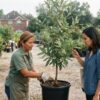
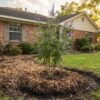
The best tree for your yard isn’t simply the one that looks healthiest on the lot. Understanding why to buy from a local tree nursery starts with regional fit: a tree’s chances of thriving depend on how well it suits your soil, weather, and planting space. A Houston nursery can help you make that choice with local conditions in mind.
A big-box garden center can be convenient, with familiar varieties in one place. But a broad, standardized selection may not come with the same guidance on how a particular tree may perform in your yard or what it needs as it grows.
Local expertise can inform tree selection, planting plans, and ongoing care. You’ll also see how buying from a nearby Houston nursery differs from shopping at a national retailer, helping you choose with greater confidence.
Key Takeaways
- Choose trees with your yard’s soil, sun, drainage, and available space in mind, not just their appearance at purchase.
- Local nursery guidance can help you understand how regional weather and seasonal timing shape planting and ongoing care.
- Ask how a nursery cares for its plants; individualized watering and practical care advice can make choosing and maintaining trees easier.
- Big-box retailers prioritize convenience and broad distribution, while shopping locally supports nearby businesses and offers a more region-focused buying experience.
Why Choose a Local Plant Nursery?
A local nursery can help match trees to regional weather, site conditions, and practical care needs. In Houston, considering local conditions helps connect a tree to the place where it will grow.
Choosing Regionally Suited Plants
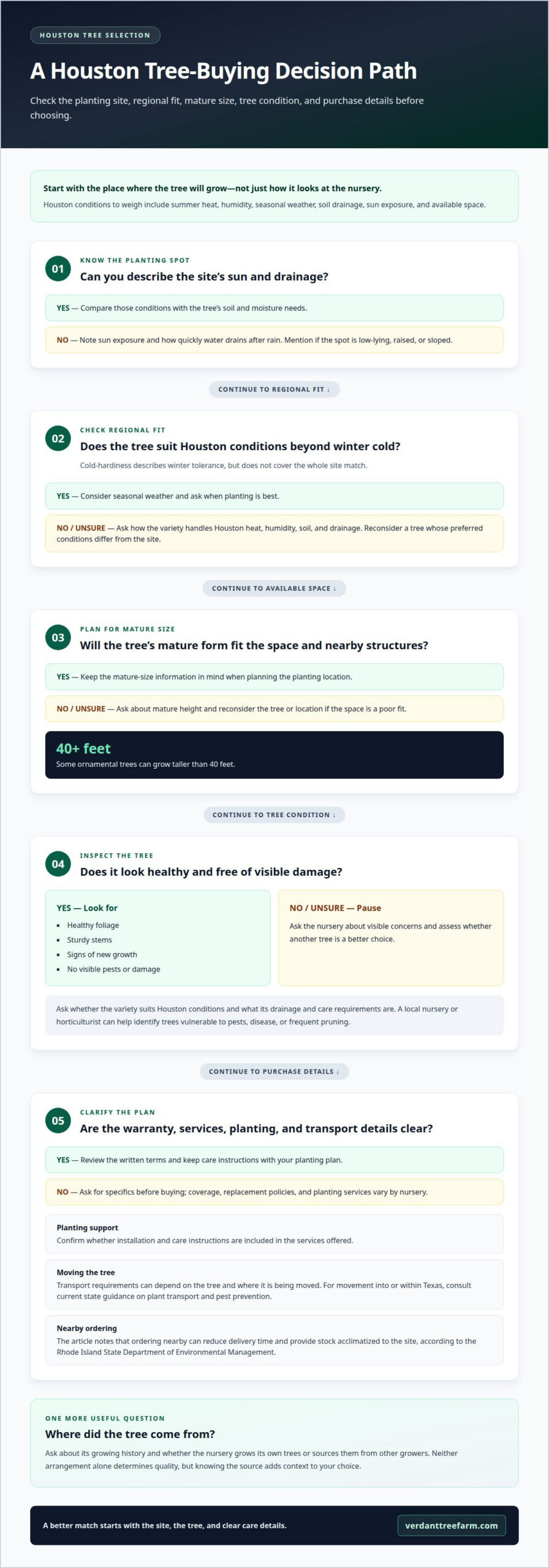
Regionally suited plants are selected with local climate and growing conditions in mind. Houston gardeners need to consider summer heat, humidity, soil drainage, and seasonal weather when choosing trees. A tree sourced from outside Texas may have faced different growing conditions and can experience added transport stress before planting. Ask how a variety suits your site and when it’s best planted. Matching the tree to Houston’s climate and your yard’s conditions helps you plan for establishment, rather than choosing by appearance alone.
Tree Quality and Purchase Questions
Tree quality means assessing visible condition and whether the variety fits your planting site. Look for healthy foliage, sturdy stems, and signs of new growth; inspect the tree for visible pests or damage. Ask about its mature size, drainage needs, care requirements, and suitability for Houston conditions. Some ornamental trees can grow taller than 40 feet, so plan for mature height and nearby structures. The U.S. Environmental Protection Agency notes that a local nursery or horticulturist can help identify trees vulnerable to pests, disease, or frequent pruning. Clear, specific answers and practical regional guidance help you assess a nursery’s expertise.
Warranties, Services, and Tree Transport
Warranty coverage, replacement policies, and planting services vary by nursery, so review the written terms before buying. Planting support can include installation and care instructions, depending on the services offered. Transport requirements may depend on the tree and where it is being moved. For movement into or within Texas, consult current state guidance on plant transport and pest prevention. Ordering nearby can reduce delivery time and provide stock acclimatized to the site, according to the Rhode Island State Department of Environmental Management. These details help you plan a purchase that fits your property and planting needs.
Regional soil, climate, and wildlife conditions
In Houston, a tree’s fit depends on more than its species name. Soil drainage, sun exposure, local climate, and nearby wildlife all shape how it establishes and grows. A low-lying planting site, for example, can hold water differently from a raised or sloped area. A nursery familiar with regional conditions can help connect those site details to suitable tree choices and care practices.
Cold-hardiness information describes a tree’s ability to withstand winter temperatures, but it doesn’t tell the whole story for a Houston yard. Summer heat, humidity, soil, and drainage also affect performance. A tree selected for cold tolerance may still be a poor match if its preferred growing conditions differ from the site. During buying, consider the full seasonal pattern, not winter survival alone. Planting during an appropriate season can support establishment and survival.
Local soil guidance is useful because the same tree can respond differently to a wet, compacted spot and a well-drained planting area. Describe the intended location, including its sun exposure and how quickly water drains after rain. Regional nursery experience can help interpret those conditions and suggest choices suited to them. It can also help account for wildlife. Native plants can support pollinators, improve soil health, and reduce the need for chemicals or excessive watering.
These details make local selection a practical part of sustainable landscape planning. Ask how a tree’s mature form fits the available space, what soil and moisture conditions it prefers, and how seasonal care may change. Then consider how its needs align with the rest of the planting area. This helps narrow your selection to trees suited to Houston’s conditions, rather than relying on a cold-hardiness label or appearance alone. It’s one reason to buy from a local tree nursery: regional context connects the plant to the place where it will grow.
Supporting local businesses
Buying from a nearby nursery supports a business rooted in the community where you garden. That connection can make the purchase more than a single transaction: the nursery serves local homeowners, while customers help sustain a business focused on plants and landscape needs. Choosing a locally available tree keeps your purchase with a Houston business rather than directing it through a national chain.
Local businesses can build relationships through repeat visits. A homeowner might return for another tree, ask about a different planting area, or seek guidance as a landscape changes. Those conversations help connect nursery advice to local customers’ needs. Buyers can share practical details, such as a shaded front yard or a planting plan for a new home, and support an ongoing local exchange.
Ask how a tree’s growing history informs its care. A nursery’s answer can help you understand the path from grower to planting site. Knowing whether a business grows its own trees or sources them from other growers adds useful context. Neither arrangement alone determines quality, but understanding the source helps you make a considered purchase rather than choosing by appearance alone.
Local buying can also make environmental choices easier to discuss. If you’re considering a native tree, ask how it fits your planting goals and what care it needs after installation. A Houston nursery can explain its selection and recommendations in the context of your landscape. Supporting a nearby nursery doesn’t guarantee a tree’s long-term success, but informed selection and clear care guidance can help you plan responsibly while supporting a community business.
Spending at Verdant Tree Farm helps support small businesses in our region, giving shoppers another reason to consider why buy from a local tree nursery instead of a distant corporate supplier.
Local nurseries compared with big-box retailers
Big-box retailers serve broad regions with standardized selections and distribution schedules. That can make shopping convenient, but the inventory may not reflect a particular neighborhood’s soil, drainage, or planting conditions. A Houston nursery can bring regional growing knowledge into the selection conversation. Describe your landscaping goals and site, then discuss which trees suit those conditions. The difference is not simply store size; it’s how much regional context shapes the choice.
A locally sourced tree does not automatically have a higher survival rate than one from a big-box store or online seller. Survival depends on the tree’s health, regional fit, handling, planting conditions, and care after planting. Online buyers can’t assess a tree’s condition until it arrives, while a nearby nursery lets you discuss its stock and growing or sourcing process. Ask how the tree was handled and what conditions support establishment.
Local nursery purchases generally cost more than big-box purchases, though care guidance and healthier stock may help justify the difference. National retailers often focus on popular varieties and convenience; local nurseries may offer less common selections and advice connected to the region. Ask whether the nursery grows its own trees, and how it sources stock when it doesn’t. Understanding that process gives useful context for your purchase, without treating one sales model as a guarantee of quality.
For a practical comparison, weigh more than the listed price. Consider whether the retailer can explain mature size, drainage needs, planting timing, and ongoing maintenance for the tree you’re considering. Check whether the selection suits your region and landscaping plan, and whether you can assess the individual plant before taking it home. Those details can make local guidance especially useful for gardeners choosing a long-term addition to their property. Explore trees suited to your landscape to take the next step with regional choices in mind.
Verdant Tree Farm
Verdant Tree Farm can help connect Houston growing conditions with tree choices for your landscape. If you’re weighing soil, sun exposure, drainage, or mature size, discussing those details can make the selection more practical. Shumard Oak, Mexican White Oak, Drummond Red Maple, October Glory Maple, and Mexican Redbud are among the trees to consider for your planting plans.
Turn to Verdant Tree Farm when you’re ready to narrow your choices or want guidance on how a tree may fit your site. Share your landscape goals and planting conditions, then discuss suitable trees and care considerations.
Contact Verdant Tree Farm to discuss your tree selection and planting plans.
Make Your Next Tree Choice With Confidence
A tree purchase shapes how your landscape develops over time. Before choosing, picture the space as it matures: how the tree will fit your home, what role it will play, and how you want the yard to feel in future seasons. That long-term view is a practical reason why buying from a local tree nursery can make the decision more considered.
Verdant Tree Farm offers Live Oak, Shumard Oak, and Mexican White Oak for landscape plans. The right choice depends on your goals and planting site, not simply on a tree’s name or appearance. Start with the space you want to improve, then explore options that suit your plans.
Contact Verdant Tree Farm today to discuss your tree selection. A thoughtful choice can help you build a landscape you’ll enjoy as it grows.
Frequently Asked Questions
What are the benefits of buying trees from a local nursery?
Buying locally gives you a chance to discuss your plans and tree choices before deciding. For example, a nursery conversation can help distinguish a tree intended for screening from one meant to anchor an open lawn. One reason to buy from a local tree nursery is that the decision can account for your property’s purpose, not just a label or photograph. Your purchase also supports a nearby business.
How do local nurseries choose trees suited to the region’s climate and soil?
Local nurseries consider regional weather alongside the planting site’s soil and drainage. In Houston, those factors help frame which trees merit consideration, but conditions vary across yards. A tree in a sunny, exposed area may face different growing conditions from one near a building or in a low spot. Nursery guidance connects a tree’s needs with the site, rather than relying on a broad climate label alone.
How can a local nursery help select the right tree for a yard?
A nursery can help narrow choices by discussing what you want the tree to do and where it will grow. Describe whether you’re planning a focal point, screening, or shade, and share the planting area’s constraints. In Houston, Live Oak, Shumard Oak, and Mexican White Oak are specific options to discuss. The conversation can help align your landscape goals with a considered selection.