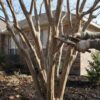
To learn how to properly prune a crape myrtle, wait until mid-February, before new growth begins. Remove only dead, crossing or rubbing, and obstructive branches, cutting at the branch collar. Topping is a common, damaging mistake that spoils the tree’s natural shape and can encourage excessive sucker growth. A well-established tree with a sound structure may not need annual pruning.
It’s easy to assume a hard cut will create a neater tree or produce more flowers. But crape myrtles bloom on new growth, and pruning isn’t necessary for flowering. Preserve the tree’s natural framework and make selective cuts only where needed. This guide covers when to prune, which branches to remove, how to shape multi-trunk trees, and why severe cutting can cause problems. You’ll also learn how to manage suckers and heavy branches without leaving stubs or damaging bark, helping your crape myrtle retain its form and thrive in your landscape.
Key Takeaways
- Remove young shoots when they’re about the size of a pencil, and make heavy-branch cuts in three steps to help protect the trunk.
- Leave last year’s seed heads in place if you like; they can remain all year without preventing blooms.
- For a multi-trunk tree, preserve three to five main trunks and keep the leafy crown in proportion to the trunks.
- Choose a crape myrtle that fits its planting space; cultivars can range from 3 to 30 feet at maturity.
Avoiding severe pruning or “crepe murder”
There’s no fixed amount to remove each year: a well-established, well-structured crape myrtle may not need annual pruning. Make selective cuts instead of topping the canopy.
-
Build Structure Through Early Pruning
Choose the strongest upright stems as a young crape myrtle develops its framework. Remove competing shoots selectively rather than cutting every stem to the same height. Before each cut, consider how the branch contributes to the tree’s natural form. Topping an older tree can leave large wounds and encourage excessive sucker growth, so guide its structure early by removing selected branches.
-
Prune Well-Established Plants
Inspect a mature tree before pruning, then remove only branches that disrupt its structure or interfere with nearby space. Don’t cut back sound limbs simply to produce more blooms: crape myrtles flower on new wood, but pruning isn’t necessary for flowering. Dwarf and semi-dwarf cultivars are an exception to the general warning against severe pruning. They can be cut back each year to basal branches 6 to 12 inches long.
-
Address Cold Damage and Severe Pruning
After winter freeze damage, assess affected branches instead of cutting the whole canopy to a uniform height. Severe pruning removes stored carbohydrates and energy reserves, which can weaken the tree and increase its susceptibility to disease and insect infestations. In colder areas, freeze damage may prompt severe cuts, but routine topping is not a sound substitute for selective pruning. Focus cuts on damaged growth and preserve healthy branches.
-
Determine How Much to Prune Each Year
Limit annual pruning to branches that need removal; there’s no required yearly cutback for every crape myrtle. As a guide, prune shoots when they’re about the size of a pencil, rather than waiting until they become large limbs. Cultivars range from 3 to 30 feet at maturity, so consider the plant’s natural size before cutting to control its height. Choose a suitably sized tree rather than repeatedly topping an oversized one.
Removing dead, crossing, and obstructive branches
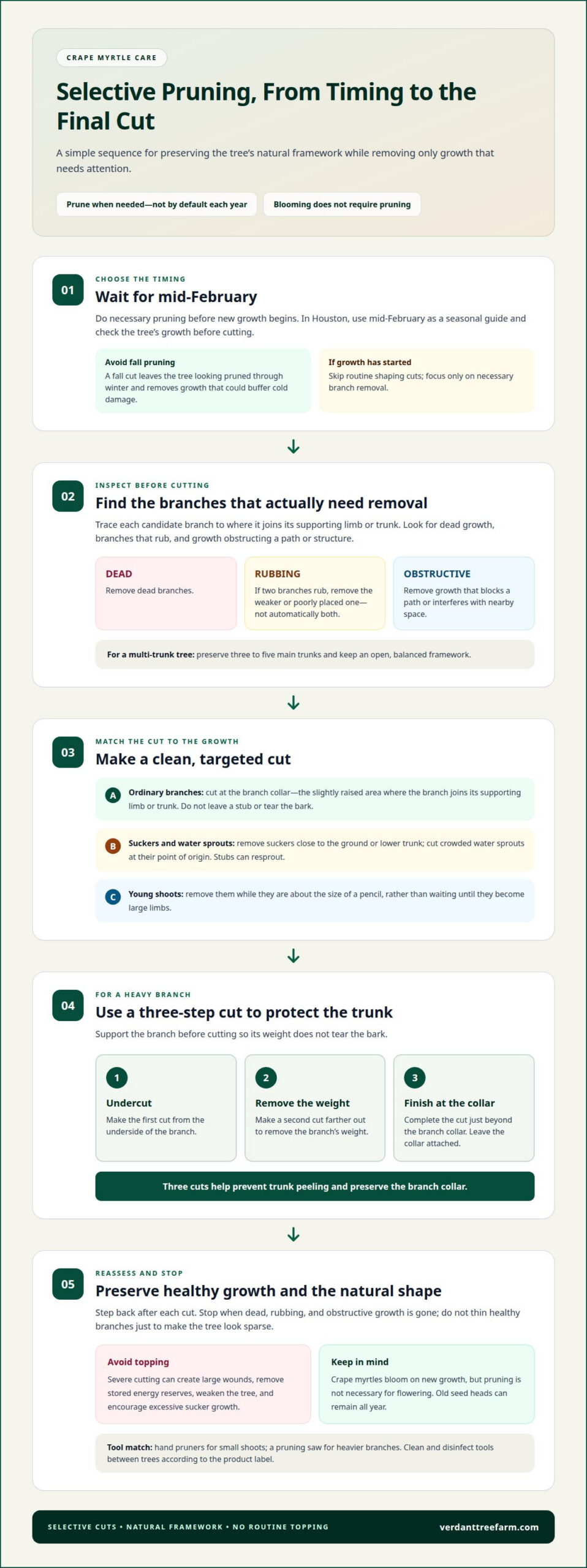
Remove dead, crossing or rubbing, and obstructive branches at the branch collar. For suckers and water sprouts, cut close to the ground or lower trunk because stubs resprout.
- Inspect the canopy for dead branches, rubbing limbs, and growth blocking a path or structure. Follow each unwanted branch to its attachment point before cutting. The branch collar is the slightly raised area where a branch joins its supporting limb or trunk. Cut there without leaving a stub or tearing the bark.
- Distinguish crossing branches from limbs that simply grow close together. If two branches rub, remove the weaker or poorly placed one, then make sure the remaining branch has room to grow. Don’t automatically cut both. A selective cut reduces crowding while preserving more of the tree’s framework.
- Trace water sprouts and suckers to where they emerge. Remove suckers as close to the ground or lower trunk as possible, since a short stub can resprout. Cut water sprouts at their point of origin when they crowd the canopy or disrupt its structure. Don’t shear their tips into a dense cluster.
- Support a heavy branch before cutting so its weight doesn’t tear the bark. Use a three-step cut: make an undercut, make a second cut farther out to remove the branch’s weight, then finish just beyond the branch collar. This sequence helps prevent trunk peeling and preserves the collar, which should remain attached to the tree.
- Step back after each cut and reassess the canopy before removing another limb. Stop when dead, rubbing, and obstructive growth is gone; don’t thin healthy branches just to make the tree look sparse. If you’re planning a new planting, consider crape myrtle selections suited to the space.
When to prune
Use sharp hand pruners for small shoots and a pruning saw for heavier branches. Clean and disinfect tools between trees according to the product label. Deadheading isn’t necessary: crape myrtles bloom on new growth, and last year’s seed heads can remain all year.
- Schedule necessary pruning for mid-February, before new growth begins. This timing helps avoid winter injury while giving the tree time to develop flowering shoots during the growing season. In Houston, use mid-February as a seasonal guide, then check the tree’s growth before cutting.
- Skip fall pruning. A fall cut leaves the crape myrtle looking pruned through winter and removes growth that could buffer potential cold damage. If a branch can safely wait, leave it until the mid-February pruning period rather than reshaping the canopy in autumn.
- Leave old seed heads in place unless you want to remove them for appearance. They can remain on the plant all year, and the tree can still bloom well. Cutting them in winter doesn’t save the plant energy, so seed-pod removal isn’t necessary care.
- Match the tool to the branch before cutting. Use hand pruners for small shoots and a pruning saw for a heavier limb. Remove soil and sap from the blades, then disinfect them between trees according to the product label. Clean cuts help prevent ragged edges and bark tears.
- Check for new growth before starting. Crape myrtles flower on new wood, so complete necessary pruning before that growth begins. If buds and fresh shoots are already developing, avoid routine shaping cuts. Focus on necessary branch removal rather than cutting just to tidy the crown.
Maintaining a tree’s natural shape
Use the crape myrtle’s existing framework as your guide. Keep its trunks, crown, and canopy balanced instead of forcing a uniform outline.
- For a multi-trunk crape myrtle, retain three to five main trunks. Select stems that create an open, balanced framework, then remove competing growth that crowds them. Check the tree from several sides before cutting. Aim for a sturdy arrangement where each main trunk remains visible, not a tightly packed cluster.
- Keep the leafy, flowering crown in proportion to the trunks. A useful shape guide is a crown about 1 ½ times the height of the trunks. Step back and compare the crown’s depth with the visible trunk section. If the canopy looks compressed above tall bare stems, avoid removing more lower branches.
- Raise the canopy gradually when you need clearance. Remove side branches up to about four to six feet high, but don’t extend the clearance beyond half the tree’s total height. Check the tree’s full height before cutting. Removing too many low limbs can leave the trunk dominating the tree and disrupt its natural proportions.
- Thin crowded limbs selectively every few years. Choose branches that cross the crown or block light and remove them individually, preserving the outline and main framework. Don’t shear the canopy into a rounded shape. Selective thinning can encourage new growth and blooming while keeping the tree’s branching pattern visible.
- If a crape myrtle has outgrown its planting space, reconsider the tree’s size rather than repeatedly cutting back its crown. Replace an oversized tree with a suitable selection, or cut it to the ground so it can regrow with its cultivar’s natural shape. This avoids forcing a tall tree into a form it can’t maintain.
Verdant Tree Farm
Verdant Tree Farm can help you plan a Houston landscape with trees suited to the space and your long-term goals. Careful pruning preserves a crape myrtle’s natural form, while thoughtful tree selection helps shape the rest of the property. Options include Live Oak, Shumard Oak, Mexican White Oak, and Drummond Red Maple.
If your crape myrtle has outgrown its location, consider another tree for the planting area. Matching the tree to the available space can help you avoid repeated severe cuts to control its growth. Contact Verdant Tree Farm to discuss your landscape plans and tree options.
Plan for a Stronger Landscape
Thoughtful care of a crape myrtle can shape more than one season of growth. As you plan future landscape changes, consider how each tree will fit its space as it matures. This perspective helps you make sound choices before a crowded canopy or awkward planting position calls for major changes.
Knowing how to properly prune a crape myrtle is one part of caring for a lasting landscape. The next is choosing trees that suit the space and your plans. Verdant Tree Farm can help you explore tree options and consider how new plantings will fit your Houston property.
Contact Verdant Tree Farm today to discuss your landscape plans. A considered next step can help you create a yard that feels balanced, welcoming, and ready to grow.
Frequently Asked Questions
What is the incorrect method?
Topping means cutting upper branches back to blunt ends or a uniform height, and it’s a common mistake. It replaces the tree’s branching structure with abrupt stubs, often followed by vigorous shoots that crowd the crown. If a crape myrtle looks like a row of cut-off knobs, topping has likely changed its natural form. Avoid repeating those cuts to control regrowth.
When should I prune?
Prune in mid-February, before new growth starts. Use the buds as a cue: once fresh shoots are opening, limit work to necessary removals rather than routine shaping. For example, a branch blocking a walkway may still need attention, while old seed heads alone don’t require a winter cut. Avoid fall pruning, which leaves the tree visibly cut through winter.
When is the best time to prune crape myrtles in the United States?
Prune before spring growth begins. In Houston, the recommended timing is mid-February. Conditions vary across the United States, so the same calendar date won’t suit every region. In cooler areas, consulting regional lawn and grounds specialists such as Yardworx Lawn & Landscape can help homeowners align their landscape maintenance and shrub care with local climate cycles. Use local seasonal patterns to judge when buds are about to break, and avoid fall pruning. This timing helps preserve growth that can buffer winter injury.
How do you prune crape myrtles without topping them?
To understand how to properly prune a Crape Myrtle without topping it, select individual branches rather than cutting across the canopy. Follow each branch to its attachment, then make a selective cut that preserves the remaining limb’s natural direction. Remove a branch that disrupts the outline, but don’t shorten every stem into a flat top. Step back between cuts and stop before the crown loses its shape.
How to thin crape myrtle branches for better airflow and flowering
Thin the canopy by removing selected limbs that crowd or cross its interior. Work from the outside inward, pausing to check whether each cut opens space without stripping the crown. Thinning every few years can encourage new growth and blooming. Avoid removing many healthy branches at once. Crape myrtles bloom on new wood, but heavy cutting isn’t needed to produce flowers.
How do you prune a young crape myrtle to establish its shape?
Learning how to properly prune a Crape Myrtle starts with selecting the main trunks that will form its framework, then removing competing shoots selectively. For a multi-trunk form, aim to retain three to five main trunks. As the young tree develops, check that branches don’t crowd or rub. Avoid cutting every stem to one height, which can create a topped appearance instead of a natural crown.