What if the tree you plant today is destined to fail the moment its short warranty expires? It is a common fear for Houston homeowners who have watched a beautiful specimen wither after just one season. You deserve a landscape that grows with your family, not a recurring expense that disappears into our heavy clay soil. To get the best results, you need to know the specific questions to ask a tree nursery before you sign a contract or pull out your wallet.
We believe that buying a tree should be a straightforward, rewarding experience. You shouldn’t have to guess which species can handle “gumbo” soil or feel anxious about the long term health of your purchase. This guide will help you master the art of tree shopping with an expert led list of questions to ensure your Houston landscape thrives for years to come. We will cover everything from root structure and local climate resilience to the clear details of professional installation and maintenance.
Key Takeaways
- Learn why sourcing trees from a local independent farm ensures your landscape handles Houston’s unique environment better than a generic big-box garden center.
- Discover the specific questions to ask a tree nursery regarding their fertilization schedules and how long a tree has been in its current container.
- Identify which native and adapted species, such as Shumard Oaks or Bald Cypress, are best suited for Houston’s heavy clay soil and extreme weather patterns.
- Understand exactly what a professional installation should include and how to verify the terms of a nursery warranty to protect your long-term investment.
- See how buying direct-to-consumer from a veteran-owned nursery provides higher quality specimens and more reliable personal accountability for your property.
Why Your Choice of Tree Nursery in Houston Matters
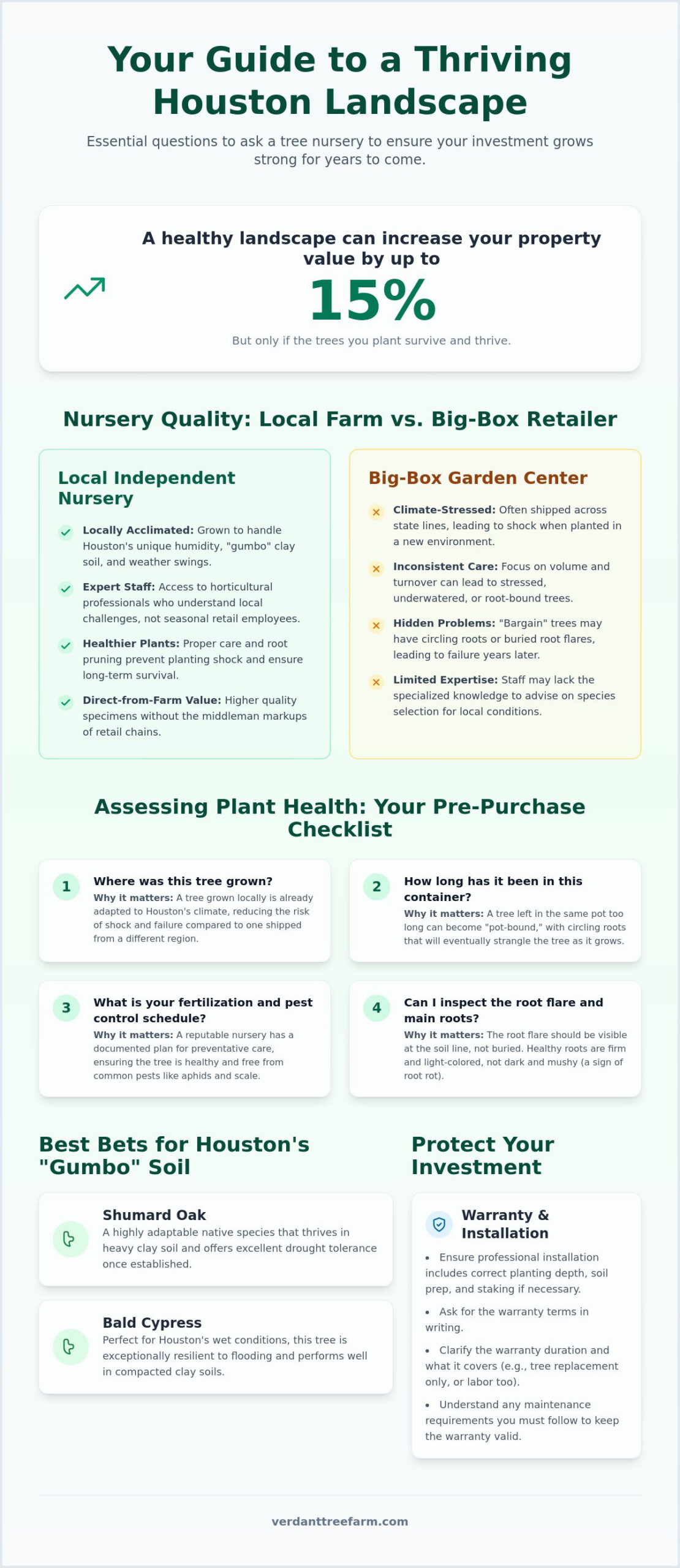
A tree is a living investment in your property’s equity. In Houston, where temperatures swing from blistering summer heat to sudden winter freezes, where you buy matters as much as what you buy. Choosing a local independent nursery over a big-box retailer can be the difference between a thriving canopy and a dead stump in three years. Understanding what is a plant nursery and how its management affects plant health helps you see why specialized care is non-negotiable for our region. High-quality landscaping can increase property value by up to 15%, but that value only grows if the trees survive. This is why having a list of questions to ask a tree nursery is your best defense against a failed landscape.
Nursery Quality vs. Big-Box Retailers
Big-box garden centers focus on volume and turnover. They ship trees across state lines, often exposing them to different climates and pests before they ever reach a shelf in Texas. These trees are frequently root-bound or stressed by inconsistent watering in a parking lot environment. A local farm grows stock that is already acclimated to our humidity and “gumbo” clay. You get access to expert staff who live and work in your community. They aren’t seasonal retail employees; they are horticultural professionals. When you have specific questions to ask a tree nursery, you want answers from someone who understands the local soil, not someone who was working in the plumbing aisle yesterday.
The Long-Term Value of Horticultural Expertise
Cheap trees often come with hidden costs. A bargain-bin maple might save you a few dollars today, but if it hasn’t been properly root-pruned or fertilized for our environment, it will likely suffer from planting shock. Replacing a mature tree is an expensive headache. It costs more in labor, disposal fees, and the lost years of growth. By working with a local expert, you benefit from:
- Direct-from-the-farm value: You skip the middleman markups found at retail centers.
- Planting shock prevention: Better early-stage care ensures the tree’s vascular system is robust.
- Species accuracy: Experts ensure you don’t plant a tree that will eventually buckle your sidewalk or die in a drought.
A professional nursery acts as a long-term partner for your landscape. They provide the guidance needed to navigate Houston’s unique environmental challenges. This level of service ensures your purchase is a permanent improvement to your home rather than a temporary decoration.
Assessing Plant Health: Questions to Ask About Growing Practices
Before you load a tree into your truck, you must look past the green leaves. A tree’s history determines its future in your yard. One of the first questions to ask a tree nursery is where the specimen was grown. If a tree spent its life in a cooler, drier climate, it will struggle to adapt to Houston’s 2026 humidity levels. You also need to know how long it has sat in its current container. A tree that has stayed in the same pot for too long often develops structural issues that aren’t visible from the surface. Knowing involves checking the trunk for mechanical damage and ensuring the branch structure is balanced.
Ask about the nursery’s fertilization and pest management schedule. In our region, aphids and scale can weaken a young tree quickly. A reputable grower will have a clear, documented plan for preventative care and nursery-wide sanitation. You should also ask how they handle irrigation during peak summer months. In Houston, container-grown trees can dry out in a matter of hours. Consistent watering prevents the fine root hairs from dying off. This is critical for the tree’s survival once it moves to your property. If you’re already concerned about your yard’s current health, our team offers maintenance consultations to help you evaluate your existing landscape.
The Root of the Matter: Pot-Bound vs. Healthy Roots
Roots are the engine of the tree. Circling roots are a silent killer; they eventually girdle the trunk and cut off water and nutrients as the tree grows. Don’t be afraid to ask for a root flare inspection before you buy. The root flare is where the trunk begins to spread out at the soil line. If it’s buried too deep in the pot, the bark will rot over time. Healthy roots should be firm and light-colored. Mushy, dark, or foul-smelling roots are a major red flag for root rot.
Pest and Disease History
Houston’s high humidity is a breeding ground for fungal infections. Ask if the tree has been treated for powdery mildew or leaf spot recently. A professional nursery maintains strict sanitation by cleaning tools between prunings. This prevents the spread of pathogens from one batch of trees to another. Verify that the specimen is free from active infestations before it leaves the lot. Bringing a pest-ridden tree home can endanger every other plant in your landscape. High-quality nurseries will be transparent about their treatments and the health history of their stock.
Survival in the Gulf Coast: Questions About Climate Resilience
Houston weather is a true test of endurance for any living thing. Between the swampy humidity of August and the sudden “Blue Northers” that drop temperatures by thirty degrees in a few hours, your plants need to be tough. One of the most vital questions to ask a tree nursery is whether their stock is truly adapted to our local microclimates. A tree grown in a different part of the state might technically be in the same hardiness zone, but it won’t have the same resistance to our specific fungal pressures or soil chemistry. You need a tree that has already “learned” how to survive in the Gulf Coast environment.
Drought and Freeze Resistance
Ask the nursery staff how their inventory handled the last major freeze. You want to see specimens that have already proven they can survive a Texas winter without catastrophic damage. For ultimate resilience, many homeowners choose the Live Oak, which is a staple of the Houston landscape for its legendary durability. If you are looking for a tropical aesthetic, ask about cold-hardy options like the Windmill Palm or Pindo Palm. These varieties offer the look of the coast without the high risk of dying during a standard frost. Hardiness zones are a helpful starting point, but they don’t account for the rapid temperature drops common in our region. A local expert will tell you which species actually stay green when the thermometer hits twenty degrees.
Soil Adaptability and Drainage
Houston is famous for its “gumbo” clay. This heavy soil holds water like a sponge, which can lead to root rot for many popular species if they aren’t positioned correctly. Ask if the species you like can handle poor drainage or if it requires a raised planting bed to keep the root ball out of the water table. For example, a Bald Cypress thrives in wet areas where other trees might struggle. Proper establishment is key to long-term success. Cornell Cooperative Extension advice on watering new trees emphasizes that consistent, deep watering is more effective than frequent light sprinkles, especially in heavy soil that resists water penetration.
Don’t forget to ask about soil amendments. Adding organic matter during the initial planting phase can help break up clay and improve aeration for young roots. This is a critical step for long-term health. A knowledgeable nursery will guide you on the right mix for your specific neighborhood. They should also be able to tell you if a tree needs full sun or if the high Gulf Coast humidity requires a species with better airflow to prevent leaf diseases. Getting these answers early prevents the frustration of watching an expensive investment fail after the first heavy rain.
Beyond the Sale: Questions About Delivery, Installation, and Warranties
The transaction doesn’t end when you pay for your tree. The most critical phase of a tree’s life is the transition from the nursery row to your backyard. If a tree is handled roughly or planted incorrectly, its chances of survival drop significantly. This is why the logistics of delivery and the specifics of setup are essential questions to ask a tree nursery before you finalize your purchase. You need to know if the team delivering your 45-gallon specimen has the equipment and experience to move it without damaging the root ball or the trunk’s vascular system.
Professional Installation Standards
Planting a tree involves more than just digging a hole. You must verify if the nursery’s installation crew handles the technical details that ensure long-term health. Ask if their service includes professional staking to protect against Houston’s high winds and whether they apply a proper layer of mulch to regulate soil temperature. A vital part of this process is checking for underground obstacles. Reliable nurseries will coordinate utility line marking before they arrive. Professional installation is the best way to protect your investment because it ensures the tree is planted at the correct depth. Burying the root flare too deep is a leading cause of tree failure in our region’s heavy clay.
Our team at Verdant Tree Farm takes this process seriously. We provide end-to-end service to ensure your new addition has the best start possible. If you want to ensure your landscape is set up for success from day one, you can learn more about our professional installation services.
Understanding the Warranty Safety Net
A warranty is only as good as its terms. When you are compiling questions to ask a tree nursery, be sure to get the specifics of their guarantee in writing. There is a significant difference between a standard 30-day “tailgate” warranty and a more robust 3-month guarantee. You should ask exactly what actions might void your coverage. Common exclusions often include:
- DIY Installation Mistakes: Many nurseries won’t cover a tree if it wasn’t planted by their own professional crew.
- Lack of Maintenance: Failure to follow a provided watering schedule can void your protection.
- Extreme Weather: Some warranties exclude damage from “Acts of God” like hurricanes or record-breaking freezes.
Ask if the nursery provides a written care guide or offers maintenance consultations to help you stay within the warranty requirements. It’s a good practice to document the tree’s health with photos immediately after planting. This creates a clear baseline if you need to make a claim later. A reputable nursery will be transparent about these terms because they want your tree to thrive just as much as you do. They should view the warranty as a partnership in the tree’s success, not just a legal disclaimer.
Why Verdant Tree Farm is Houston’s Trusted Nursery Partner
Finding the right trees for your property shouldn’t feel like a gamble. While having a solid list of questions to ask a tree nursery is a smart way to start, the final result depends on the integrity of the farm you choose. Verdant Tree Farm is Houston’s largest independent, veteran-owned nursery. This means we don’t just sell plants; we grow them with the personal accountability of a hardworking neighbor. We cut out the middleman to provide direct-to-consumer value that big-box retailers simply cannot match. When you buy from us, you’re investing in a legacy of regional growth and a 3-month warranty that provides immediate peace of mind for your new landscape.
Comprehensive Landscaping Solutions
Our landscaping services in Houston go far beyond a simple transaction. We offer advanced 3D landscape design to help you visualize your project before a single shovel hits the ground. This technology is a game-changer for complex residential layouts or commercial properties looking to maximize curb appeal and property value. We believe in getting it right the first time. Beyond the initial planting, we provide expert maintenance consultations. These sessions help you protect your green investment by teaching you exactly how to care for your specific species in our local environment. We take the guesswork out of tree care so your investment thrives for decades.
Visit Us and See the Quality Firsthand
We invite you to walk our farm and experience the quality of our inventory for yourself. You can personally tag the specific Live Oak or Shumard Oak that will soon shade your patio. If you are looking for a tropical touch that can survive a Texas winter, we maintain a massive selection of palm trees for sale in Houston. Our stock includes everything from freeze-resistant Windmill Palms and Pindo Palms to majestic Medjool Date Palms. We are committed to native Texas beauty and long-term sustainability. Our team is ready to handle projects of any scale with the “can-do” attitude you expect from a veteran-led operation. We provide the technical expertise of a large-scale grower with the approachable warmth of a family-run enterprise.
Our inventory is deep and diverse, featuring everything from Drummond Red Maples to Cedar Elms. We ensure every tree is acclimated to our local weather patterns before it reaches your yard. This dedication to quality is why we remain the top choice for both homeowners and professional contractors across the region. When you have questions to ask a tree nursery, our team provides straightforward, honest answers rooted in years of local experience. Visit us today to see why we are Houston’s most reliable partner for a beautiful, resilient landscape.
Start Growing Your Houston Legacy Today
Your landscape is more than just curb appeal; it’s a long-term investment in your property’s value and your family’s enjoyment. By using this expert list of questions to ask a tree nursery, you have the tools to avoid common pitfalls like root rot or freeze damage. You now know how to verify plant health, understand installation standards, and ensure your new trees are truly acclimated to Houston’s unique climate.
Verdant Tree Farm is here to make the process simple and reliable. As Houston’s largest independent, veteran-owned nursery, we take pride in providing direct-to-consumer value and personal accountability. Whether you need a single Live Oak or a complete 3D landscape design for a commercial project, our team has the inventory and the expertise to deliver results. We handle the technical details so you can focus on enjoying your beautiful, resilient yard.
Browse Our Houston Tree Inventory & Request a Quote
We look forward to helping you plant something that thrives for generations to come.
Frequently Asked Questions
What is the best time of year to plant trees in Houston?
The ideal time to plant trees in the Houston area is from late fall through early spring, specifically between November and March. Planting during these cooler months allows the root systems to establish themselves before the onset of intense summer heat. This head start is crucial for the tree’s survival and long term health in our Gulf Coast climate.
Do I need a permit to plant or remove trees on my Houston property?
You should consult the City of Houston Tree and Shrub Ordinance, found in Chapter 33, to see if your project has specific requirements. While most residential planting doesn’t require a permit, new developments and certain commercial landscapes must meet minimum planting standards. It’s always best to check local regulations before removing large, established trees from your property.
How often should I water a newly planted tree in the Texas summer?
A newly planted tree typically needs a deep soaking every day for the first two weeks during a Houston summer. After this initial period, you can usually move to a schedule of three times per week. You should focus on slow, deep irrigation that reaches the bottom of the root ball rather than frequent, light sprinkles that only wet the surface.
What is the difference between a container-grown tree and a ‘ball and burlap’ tree?
Container-grown trees are raised entirely within a pot, which keeps the root system intact and makes them easier to plant year round with less shock. Ball and burlap trees are grown in the ground and then dug up, a process that can remove a large portion of the root mass. We specialize in high quality container stock to ensure the best survival rates for your landscape.
Can you help me choose trees that won’t interfere with my foundation or power lines?
We provide expert guidance to help you select species with appropriate mature heights and non-invasive root systems. Choosing the right spot for a Live Oak or a smaller Mexican Redbud is one of the most important questions to ask a tree nursery to prevent future property damage. Our 3D design services can also help you visualize the proper spacing for your project.
Does your tree nursery offer wholesale pricing for large residential projects?
We provide direct-to-consumer value by growing our own inventory, which eliminates the markups found at middleman retail centers. For large scale residential or commercial projects, our farm-direct model ensures you receive the most competitive rates available in the region. We are Houston’s largest independent nursery and are fully equipped to supply projects of any size with premium stock.
What happens if my tree dies within the warranty period?
If a tree fails within our 3-month warranty period, we work with you to evaluate the situation and provide a replacement. This protection is most reliable when you utilize our professional installation services to ensure the tree starts in the best possible conditions. We recommend keeping basic maintenance records and photos to help us quickly process any potential warranty claims.
How do I prepare my yard for a professional tree installation?
You should start by calling 811 to have all underground utility lines clearly marked before our crew arrives. Clear the planting site of any old stumps, heavy weeds, or debris that might interfere with the dig. It’s also helpful to ensure our team has a wide, clear path to move large specimen trees or palms from the delivery truck to the final planting spot.