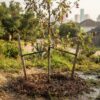
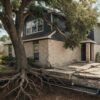
If you’re asking what happens if my new tree dies, the first step is to determine whether it is dead or showing stress it may recover from. Weather extremes, damaged roots, and poorly drained soil can all cause decline, and early symptoms may not tell the whole story. If more than half the tree is dead, removal may be the best way to reduce the risk of falling branches.
Watching a newly planted tree struggle is frustrating, especially after choosing a spot and caring for it. Heat, drought, frost, and wind can add stress, while watering habits and planting conditions can make it harder for roots to establish.
This guide explains the signs that help distinguish temporary stress from serious decline, how root damage and drainage affect recovery, and what to do if the tree appears dead. You’ll also learn how deep, infrequent watering and a 2-4 inch layer of mulch can support a young tree in Houston’s changing conditions.
Key Takeaways
- Learn how heat, drought, frost, wind, and poor drainage can stress a newly planted tree, and which care adjustments may help.
- Understand why root damage can take months or even years to show, so early symptoms don’t always reveal the full extent of the problem.
- Compare warranty terms carefully: coverage, replacement, and refund conditions depend on the specific agreement and what caused the tree to decline.
- Use the tree’s overall condition to guide next steps. If more than 50% is dead, removal may be the best option to reduce falling hazards.
- Find out how tree selection and professional installation can support a healthier start when you’re ready to plant again.
Heat, drought, frost, and wind stress
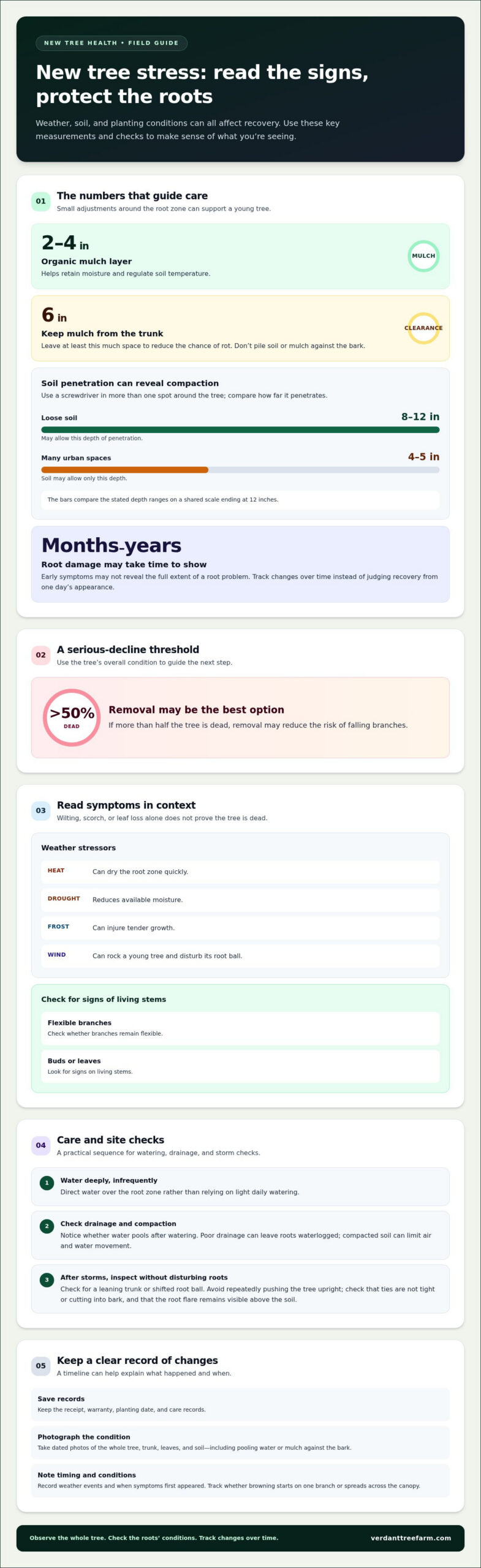
A newly planted tree may wilt, scorch, or lose leaves when weather stress outpaces its roots’ ability to take up water. Houston heat can dry the root zone quickly, and drought reduces available moisture. Frost can injure tender growth, while strong wind can rock a young tree and disturb its root ball. Symptoms alone do not prove the tree is dead. Check whether branches remain flexible and whether buds or leaves appear on living stems.
Watering matters because a small root system cannot yet draw moisture from a wide area. Use deep, infrequent watering rather than light daily watering, and direct water over the root zone. A 2-4 inch layer of organic mulch can help retain moisture and regulate soil temperature. Keep mulch at least 6 inches from the trunk to reduce the chance of rot. Don’t pile soil or mulch against the bark.
Planting conditions also shape how a tree handles weather. Poor drainage can leave roots waterlogged, while compacted soil limits the air and water moving through it. A screwdriver can help assess compaction: loose soil may allow penetration of 8 to 12 inches, while soil in many urban spaces may allow only 4 or 5 inches. Check more than one spot around the tree, and notice whether water pools after watering.
Can improper planting or watering affect a tree replacement warranty? It can if the written warranty excludes damage linked to planting or care. Compare the warranty conditions with the planting and watering history before making a claim.
Who is responsible if a newly planted tree dies, the homeowner or landscaper? Responsibility depends on the agreement and the cause of decline. Installation problems and aftercare obligations are separate issues, so compare the written terms with what happened to the tree.
Do tree replacement rights or warranties vary by state or local law? They can. Applicable rules and written warranty terms may differ by location. Review the agreement and any conditions stated for your area.
How much does it cost to replace a dead newly planted tree? The cost depends on the replacement tree, removal needs, site access, installation work, and whether soil or drainage problems need correction. These factors determine the scope of the replacement.
What evidence should I collect before requesting a tree replacement? Keep the receipt, warranty, planting date, and care records. Take dated photos of the whole tree, trunk, leaves, and soil, including any pooling water or mulch against the bark. Note weather events and when symptoms first appeared.
Check for wind damage after storms. If the trunk leans or the root ball shifts, avoid repeatedly pushing the tree upright, which can disturb the roots further. Check whether ties are tight or cutting into the bark, and whether the root flare remains visible above the soil. Root damage may take months or even years to show visible effects, so track changes over time rather than judging recovery from one day’s appearance.
Does a tree warranty cover a newly planted tree that dies?
Whether a dead tree qualifies for replacement may depend on the written warranty and the circumstances surrounding its decline. The document controls, not a general assumption that every newly planted tree qualifies. For example, a warranty might distinguish a tree that fails after installation from one damaged by neglect, severe weather, or site conditions. Read the actual terms before assuming replacement is automatic.
Check what the warranty covers. It may apply to the tree, installation work, or both, which are separate promises. A tree warranty might describe replacement, while installation terms might address planting defects. Look for the covered plant, coverage period, exclusions, and remedy. If the document names a particular tree or project, match it to your receipt and planting records.
Care requirements can affect a claim. The terms may require appropriate watering, proper maintenance, or prompt notice when the tree shows decline. Records of regular care help explain what happened. For example, photos of yellowing leaves after standing water can document symptoms and drainage conditions. Without care records, it may be harder to distinguish a warranty issue from a care-related cause.
- Coverage: Identify whether the terms apply to the tree, installation, or both.
- Exclusions: Look for weather damage, pests, neglect, and site conditions.
- Remedy: Check whether the agreement describes replacement, repair, or another response.
- Claim steps: Note required notice, documentation, and any inspection process.
Timing matters because root problems can appear long after planting. Root-system damage may take months or even years to show visible effects. Keep the original purchase and installation records, then document changes as they appear. Dated photos can show whether browning began on one branch or spread across the canopy. That timeline helps connect symptoms with care and weather conditions.
Distinguish a warranty claim from a request for goodwill. If the written terms exclude a particular cause, the agreement may not require replacement, even if the tree dies. A seller or installer may still offer another remedy, but that differs from coverage stated in the warranty. Keep the conversation factual: share the tree’s condition, planting date, care history, and relevant documents.
Before submitting a claim, compare the tree’s symptoms with the agreement’s requirements. Note when the decline began, whether the trunk or branches remain alive, and whether water drains from the planting area. Preserve the tree’s condition until you understand the claim process, unless it poses an immediate hazard. These details can help distinguish an installation concern from environmental stress.
For a future planting, match tree choice and site conditions before selecting a replacement. Explore tree selection and planting guidance as you plan the next step.
How long do nurseries and landscapers guarantee new trees?
There is no single guarantee period for every nursery or landscaper. The written terms set the coverage period, what it applies to, and the remedy if a tree dies. Check whether the period begins on the purchase, delivery, or planting date. Those dates can differ, especially when a tree is bought before installation.
Separate the tree warranty from the installation agreement. A nursery may cover the supplied tree, while a landscaper’s terms may address planting work. One document might offer replacement under specific conditions; another might describe corrections to installation. Read both together and note whether coverage applies to the tree, the labor, or each separately.
Root damage may take months or even years to show visible effects. A tree may leaf out after planting, then decline as damaged roots struggle to support new growth. That delay can matter if symptoms appear after the stated coverage period. Record the planting date and photograph changes over time, rather than relying on memory to establish the timeline.
Look for the exact start and end dates in the agreement. A phrase such as “after installation” should be read alongside the document’s definition of installation and any receipt date. Check whether the terms require prompt notice of symptoms, too. A dated message about browning leaves can help establish when the concern first appeared.
Coverage often depends on care and cause, not just elapsed time. The agreement may describe watering responsibilities, maintenance expectations, or exclusions for weather, pests, and site conditions. A watering log can help explain aftercare. Photos showing standing water, trunk damage, or changes in foliage can help connect the decline with the tree’s surroundings.
- Find the dates: Identify when coverage begins and when it ends.
- Identify what is covered: Distinguish the tree from planting labor.
- Read the conditions: Note care duties, exclusions, and notice requirements.
- Keep records: Save the receipt, agreement, care notes, and dated photos.
If the tree declines near the warranty’s end, follow the agreement’s claim process promptly. Describe the symptoms, when they began, and how the tree was cared for. Do not assume visible decline automatically establishes a covered failure. The written terms and documented cause guide how the request is assessed.
For example, a tree that wilts after missed watering may raise different coverage questions from one that declines despite documented care. Root damage can also cause symptoms long after planting. Share the timeline and records together, then compare the problem with the warranty’s actual wording. This keeps the discussion focused on the agreement rather than assumptions about a universal guarantee period.
Ropes around a maple left indentations about a half inch radially on some trees; most trees prefer soil with a pH of 6.0-7.0. Retaining live trees is necessary to ensure future dead wood in forests.
What are the typical replacement or refund terms for a dead tree?
Replacement and refund terms come from the written agreement, not a universal rule for every dead tree. Start with the receipt, warranty, and installation paperwork. Together, these documents show what was purchased, who planted it, and which remedy applies. A tree purchase and planting service can have separate terms, so review each document rather than assuming one covers both.
Replacement terms describe the conditions that qualify for a new tree. Check whether coverage applies if the tree dies, becomes irreversibly damaged, or develops a specific defect. The agreement should also explain whether the replacement is the same species and size or an equivalent option. A dead oak and a damaged planting stake, for example, are different issues with different remedies.
Read refund terms separately. An agreement may offer replacement without a cash refund, or describe a refund only in a specific situation, such as an order canceled before planting. Find the exact remedy language and note any exclusions. Weather damage, improper care, pests, or unsuitable site conditions can affect how the agreement treats a claim.
Separate the cost of the tree from installation work. A replacement clause may cover the plant but not removal, delivery, or labor. Another agreement may address corrective planting work without replacing the tree itself. If the paperwork lists separate services, compare them with the remedy being requested. This helps clarify what the stated coverage includes.
- Covered item: Identify whether the terms name the tree, planting labor, or both.
- Trigger: Find the condition that qualifies, such as death or a defined defect.
- Remedy: Distinguish replacement, refund, repair, or a credit.
- Exclusions: Read conditions involving care, weather, pests, and site drainage.
- Claim process: Note how to report the problem and what records to provide.
Document the tree’s condition before removal. Take dated photos of the canopy, trunk, root flare, and planting area. Save the receipt, agreement, care notes, and messages about symptoms. If a landscaper planted the tree, record the planting date and describe what changed. These details help connect the request to the contract’s stated coverage.
For example, a tree that declines after standing water calls for different evidence than one with a broken trunk after a storm. Keep observations factual, including when symptoms began and how they progressed. Root damage can take months or even years to become visible, so a later decline alone does not establish the cause. The agreement and documented history determine whether replacement or refund terms apply.
The cost depends on the written agreement. It may cover only the replacement tree, with removal, delivery, or labor charged separately.
What steps should I take when a newly planted tree dies
If you’re asking what happens if my new tree dies, first determine whether it is dead or severely stressed. Look for living buds, flexible twigs, and green tissue beneath a small bark scratch. Avoid repeated cuts or removing healthy branches to test it. Leaf loss or browning alone does not prove the whole tree has died.
Document the tree before pruning or removal. Photograph the canopy, trunk, root flare, and surrounding soil. Capture cracked bark, leaning, dry branches, or pooled water. Note when symptoms began and how they changed. Keep the receipt, warranty, care notes, and installation messages together.
Review the purchase and planting terms before requesting a remedy. Check which tree is covered, the coverage period, exclusions, and claim process. Record the planting date and care history, including relevant weather or drainage changes. A clear timeline helps explain the tree’s condition without assuming its cause.
Assess safety before deciding what to do. If large branches are dead or the trunk is unstable, keep people away. If more than 50% of the tree is dead, removal may be the best option to prevent falling hazards. Don’t climb or cut large limbs yourself.
A qualified tree-care professional can assess the tree and recommend appropriate care. They can examine the canopy, trunk, root zone, planting depth, drainage, and signs of pests or disease. Root damage may take months or even years to become visible, so share the planting history. This assessment can help distinguish a recoverable setback from severe decline.
- Inspect: Look for live buds, flexible twigs, and instability.
- Document: Photograph symptoms and note when they change.
- Review: Compare warranty conditions with your records.
- Assess: Seek an arborist’s evaluation if the cause or risk is unclear.
Knowing what happens if my new tree dies also means avoiding rushed pruning. For a young maple with a dead leader, remove the dead leader to the next live lateral and let the tree develop its own crown. Cut back to the first live lateral without cutting into live tissue. This example applies to that situation, not every species.
Once you understand the likely cause, decide whether to monitor, seek care, or remove the tree. Correcting planting depth or damaging ties may support recovery, but new growth takes time. Let the tree’s condition and a professional assessment guide the next step.
Some advice suggests that removing constricting ropes and correcting planting depth may help a tree recover, but only time will tell. Treat recovery as a possibility, not a promise: making these changes does not prove the tree has recovered. Its response remains uncertain, so do not assume either that it is beyond help or that it will certainly recover.
Verdant Tree Farm: Live Oak
Verdant Tree Farm can help you choose a replacement tree after you assess why the previous one declined. The right selection depends on the planting site, drainage, sunlight, and the conditions that stressed the original tree. Options include Shumard Oak, Mexican White Oak, Drummond Red Maple, October Glory Maple, and Mexican Redbud. Matching the species to the site helps you make a more informed choice for the next planting.
Bring observations about the former tree’s location and decline to your selection process. That context can help guide a practical replacement decision. Contact Verdant Tree Farm to discuss your next tree.
Plan the next planting with confidence
Understanding what happens if my new tree dies can help you make a more considered choice for the next planting. Before choosing a replacement, assess the site: how water drains, how much sun reaches it, and whether nearby construction or foot traffic may affect the roots. Matching a tree to those conditions gives your next decision a stronger foundation.
Verdant Tree Farm offers Live Oak, Shumard Oak, and Mexican White Oak. Consider these options in light of your property’s planting conditions and the kind of tree you want to establish. A thoughtful choice is a practical way to move forward after a disappointing loss.
Contact Verdant Tree Farm for help choosing your next tree. With a clear plan for the site and the species, you can approach the next planting with renewed confidence.
Frequently Asked Questions
Final Thoughts: Can My Tree Be Saved?
Yes, a struggling tree can recover if it still has living tissue and the underlying stress is addressed. Check for healthy buds or flexible growth on several branches, then consider whether the trunk and root area remain stable. A tree with isolated dead branches differs from one with widespread canopy decline. If the tree is large, leaning, or hazardous, keep clear and arrange a professional assessment before attempting pruning.
How can I determine whether a new tree is dead or just dormant?
Look for signs of life on several branches before deciding. Dormant trees may have bare branches, but their buds remain attached, and a small scratch on a twig can reveal moist green tissue beneath the bark. Dead twigs are usually dry and brittle, with brown tissue under the bark. Compare the tree with others of the same species nearby, since seasonal leaf loss varies by tree type.