What if the best alternative to a grass lawn isn’t one replacement, but a mix of options for different parts of your yard? In Houston, heat, humidity, shade, soil, and drainage can make lawn care demanding, and alternatives to grass lawns in Houston won’t all perform the same way.
It makes sense to want less mowing and a landscape that better fits your property. But replacing turf without considering how you use each area can trade one maintenance headache for another. Groundcover may soften a sunny space, while a shaded or poorly drained area may need a different approach. If you need room for play or pets, appearance isn’t the only factor to weigh.
This guide compares lawn alternatives by look, use, and upkeep, then explains how to match them to your yard’s conditions and plan a manageable transition from turf. You’ll also see where planting beds, hardscape, and trees can contribute to a thoughtfully designed landscape without having to serve as a substitute for every lawn use. Verdant Tree Farm’s 3-D landscape design and professional tree installation can help bring a broader yard plan together.
Key Takeaways
- Alternatives to grass lawns in Houston include groundcovers, native grasses and sedges, planting beds, hardscape, and artificial turf, each with different uses and upkeep.
- Match each option to the area’s function, sun exposure, drainage, and desired appearance before choosing a replacement.
- Low mowing and low water use aren’t the same goal. Compare both when weighing long-term maintenance.
- Plan the transition in stages, and account for existing turf’s potential to regrow as you decide how to remove it.
- For a landscape that combines trees, planted areas, and non-lawn surfaces, explore how 3-D design can help shape the overall plan.
Why Houston homeowners are looking beyond grass lawns
A lawn alternative isn’t one particular plant or surface. It’s a planned substitute for some or all of the turf, chosen to suit the space and the way your household uses it. One yard might keep open grass for play while adding groundcover along a path and planting beds near the house. Another might use more non-lawn surfaces where turf is difficult to maintain. The goal is a landscape that works as a whole, not simply a different covering.
The reasons for reconsidering grass are practical. Mowing takes time, irrigation can be demanding, and household needs change. A yard once used mostly as open play space may now need a seating area or more visual interest. Houston’s heat and humidity, periods of intense rain, and variation in drainage make it important to think beyond appearance. Any replacement still needs to suit the site and receive appropriate care as it establishes.
Some homeowners are drawn to water-wise design, but changing the groundcover doesn’t automatically mean less watering or maintenance. Xeriscaping is a planning approach focused on using water efficiently, not a promise of a care-free yard or a landscape made only of rock. Xeriscaping principles and benefits offer useful context as you consider how plant choices and layout can work together.
Which Houston yard conditions should shape the decision?
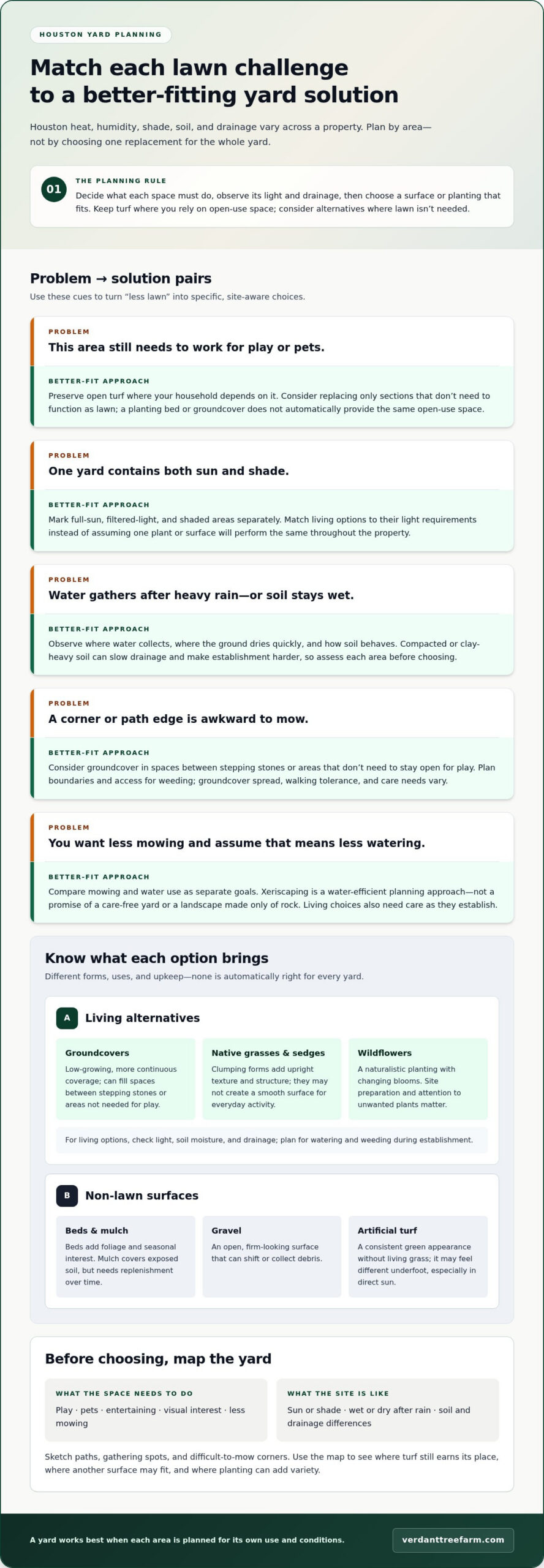
Start by separating full-sun areas from filtered light and shade. After heavy rain, note where water gathers, where soil stays wet, and where the ground dries quickly. Compacted or clay-heavy soil can slow drainage and make establishment more difficult, so don’t assume the entire yard has the same conditions. Observe how each area responds to both downpours and dry stretches before comparing options.
What should a lawn alternative do for your household?
List the jobs the yard needs to do: provide play space, accommodate pets, support entertaining, add visual interest, or reduce mowing. A planted groundcover and a garden bed aren’t interchangeable. A bed creates a defined planting area, while groundcover may create a continuous low-growing surface. Neither automatically provides the same open-use space as turf. Keep grass where you rely on it, and consider replacing sections that don’t need to function as lawn.
Walk the property and sketch the areas you use, including paths, gathering spots, and awkward corners that are difficult to mow. Then mark the sun, shade, and drainage differences you’ve observed. This simple site map turns a broad wish for less lawn into specific decisions: where turf still earns its place, where another surface may work better, and where planting can add variety. It also helps avoid a common mismatch: choosing an attractive option before deciding what the space must handle.
Houston lawn alternatives: understand the main landscape options
The best alternatives to grass lawns in Houston depend on what each area needs to do and the conditions it must handle. Compare options by appearance, intended use, establishment, and ongoing care. A living groundcover, for example, needs time and attention to establish; gravel or artificial turf creates a different surface with different comfort, heat, and drainage considerations. No category is right for every yard, and none should be treated as automatically maintenance-free.
Water use is another factor, but it’s only one part of the decision. Houston Public Works shares Houston’s water conservation initiatives, which can help homeowners consider water use as they plan. A landscape designed to use water thoughtfully still needs choices suited to the site and care during establishment.
Living alternatives: groundcovers, grasses, sedges, and wildflowers
Living options bring seasonal change and planting variety, but their growth forms and uses differ. Low-growing groundcovers create a more continuous surface, while ornamental grasses and sedges add upright texture in clumps. Wildflowers create a more informal, flowering planting rather than a uniform lawn. Match any plant to its light, soil moisture, and drainage needs before using it, and plan for watering and weeding as it establishes.
- Groundcovers: These can fill spaces between stepping stones or cover areas that don’t need to stay open for play. Their spread, walking tolerance, and care needs vary, so plan boundaries and access for weeding.
- Native grasses and sedges: Clumping forms can add structure to borders or planted areas. They won’t necessarily create a smooth surface for everyday activity, and their appearance and upkeep differ from closely mown turf.
- Wildflower plantings: These offer changing blooms and a naturalistic look. Site preparation and ongoing attention to unwanted plants matter, and the right species depend on the specific site. Check local suitability and light and moisture requirements before selecting named plants.
Non-lawn surfaces: beds, mulch, gravel, and artificial turf
Non-lawn choices can define paths, gathering areas, or planting zones, but they aren’t interchangeable. A planted bed adds foliage and seasonal interest; mulch covers its soil surface and needs replenishment over time. Gravel provides a firm, open look but can shift or collect debris. Artificial turf offers a consistent green appearance without living grass, yet it isn’t a planted landscape and may feel different underfoot, especially in direct sun.
- Planting beds and mulch: Beds require plant selection and care. Mulch helps cover exposed soil but doesn’t prevent all weeds or eliminate watering.
- Gravel and similar surfaces: Consider edging, how the surface will drain, and whether it suits walking or seating areas. A surface that looks permeable doesn’t guarantee good drainage in compacted soil.
- Artificial turf: Weigh its uniform appearance against heat, comfort, drainage, and cleaning needs at the specific location. It won’t provide the living growth or seasonal variation of planted options.
For a cohesive plan that combines planted areas with trees, Verdant Tree Farm offers 3-D landscape design. Trees such as Bald Cypress and Montezuma Cypress can be considered as landscape elements, with placement planned around the rest of the yard.
How to compare grass alternatives for your Houston yard
A useful comparison starts with the site, not a trend or a plant photo. For each area, record its main use, sunlight, drainage, and the care you’re prepared to provide. Then compare options across the same factors. The alternatives to grass lawns in Houston that suit a sunny front strip may not work for a shaded, wet corner or an active play area.
Use this table as a first screen, not a guarantee of performance. Plant light and moisture tolerances vary by species, and Houston-area horticultural guidance should inform specific plant choices. The West Houston Association discusses the benefits of native plants in Houston, including potential water-conservation and ecosystem benefits.
| Option | Typical function | Sun and drainage | Establishment and upkeep | Visual character |
|---|---|---|---|---|
| Groundcover | Cover areas with limited foot traffic | Choose by plant-specific light and moisture needs | Requires establishment care; may need edging, weeding, or trimming | Low, connected greenery with varied texture |
| Grasses and sedges | Add structure to borders and planted zones | Match species to site conditions | Plan for establishment and seasonal maintenance | Upright or clumping forms |
| Planting beds | Showcase a mix of plants and seasonal interest | Plant selection should reflect sun and drainage | Needs planting, watering during establishment, and ongoing weeding | Layered and changeable |
| Hardscape or gravel | Create paths, seating areas, or defined surfaces | Plan the base and water movement for the site | May need cleaning, edging, or surface adjustment | Structured, with little or no living cover |
| Artificial turf | Maintain a consistent green surface | Consider exposure, drainage, and comfort in the intended location | Doesn’t establish like a plant, but still needs surface care | Uniform green appearance |
Match the alternative to sunlight, soil, and drainage
Map the yard in zones: full sun, filtered light, shade, places that stay wet, and spots that dry quickly. Houston’s heavy rainfall makes it worth observing where water flows or lingers before planting. Note compacted soil and areas where runoff crosses the yard. Check each plant’s tolerance against reliable local guidance rather than assuming that “native” means suitable for every exposure or soil condition.
Balance appearance, maintenance, and how you use the yard
Decide what needs to be walkable, comfortable for play, or attractive through changing seasons. Mowing less doesn’t necessarily mean using less water: a planted area may need irrigation while establishing, and a low-growing surface still needs care. Turf also has upkeep needs. Compare the work involved in each option for your actual conditions, then give each yard zone a clear role.
A mixed design can preserve open turf where household activities call for it, while using planted areas, paths, or trees elsewhere. That approach avoids forcing one surface to serve every purpose. For a larger plan that brings trees and other landscape elements together, Verdant Tree Farm’s 3-D landscape design can help you visualize how the parts fit.
How to plan a grass-to-alternative transition in Houston
A successful conversion starts before any turf is removed. Make a plan for the whole yard, then decide which areas to tackle first. This helps protect access, account for drainage, and match each surface to its intended use. For alternatives to grass lawns in Houston, the transition also needs to account for local weather and the establishment needs of the chosen planting or surface.
- Map how you use the yard. Mark play areas, pet routes, entertaining spaces, paths, and places where grass serves no regular purpose. Keep needed access in the plan.
- Assess the site. Note sun and shade, soil conditions, water flow after rain, and areas that stay damp or dry out quickly. Mark existing trees and anything that must remain undisturbed.
- Choose surfaces by zone. Decide where turf should stay and where a planted area, groundcover, or non-lawn surface makes sense. Check plant requirements against reliable Houston-area horticultural guidance.
- Prepare the removal and installation plan. Identify the existing turf and consider its potential to regrow when planning removal. Site preparation, grading, and soil work depend on the replacement surface and the site’s condition.
- Establish and monitor. Plan for the care each new area needs as it settles in, including watering and weeding for plantings. Check progress and adjust care based on the selected option and local guidance.
Assess and prepare the site before removing turf
Walk the area and mark drainage paths, existing trees, utilities, and routes that need to stay usable during the work. Don’t treat turf removal as a one-size-fits-all task. Different grasses may regrow differently, so identify what’s already in place and account for that in the plan. Grading and soil preparation should suit both the site and what will replace the lawn.
Timing matters, too. Houston’s heat, rainfall, and seasonal dry stretches can affect planting and establishment. Rather than rely on a universal calendar, base timing and early care on current local horticultural guidance for the specific plants and site conditions. If you’re unsure how a design will work day to day, convert a manageable section first. A small trial area lets you observe appearance, access, and upkeep before extending the approach across the yard.
Phase the conversion and plan establishment care
Divide a large project into zones so the household can keep using key parts of the yard while work progresses. A front border, a side-yard strip, or a corner that’s difficult to mow can be a practical first phase. Set expectations for each zone: living plantings may need establishment watering and weeding, while other surfaces have different cleaning or upkeep needs. Monitor new areas and respond to their actual condition, not an assumption that every alternative needs the same care.
For ongoing Houston yard-care context, see the Houston lawn care guide. If your plan includes trees as part of a broader landscape change, explore Verdant Tree Farm’s landscape design and tree installation, which includes delivery, planting, staking, and initial mulching.
Plan a Houston lawn alternative with Verdant Tree Farm
Replacing part of a lawn often means coordinating several elements: planted areas, trees, paths, and places that still need open ground. A clear landscape plan helps these pieces work together instead of feeling like separate projects. Verdant Tree Farm serves Houston homeowners with 3-D landscape design, tree sales, professional installation, and maintenance consultations. These services can support a broader yard plan while keeping the choice of surfaces and plants tied to the property.
For more context on planning a project, the Houston landscaping services guide explains the landscape design and installation process. If you’re weighing tree choices as part of the plan, the Houston tree nursery guide offers related guidance. Together, these resources can help you think through how trees fit alongside the alternatives to grass lawns in Houston, rather than treating them as a replacement for every use of turf.
Where trees fit into a lawn-replacement plan
Trees can contribute height, structure, and shade, but they don’t provide the same open, walkable space as a lawn or serve every household need. Placement should account for the site and how the surrounding areas will be used. Verdant’s inventory includes Bald Cypress and Montezuma Cypress. A 3-D plan can help show how trees relate visually to planting areas and non-lawn surfaces before the overall design is put into place.
Tree selection is one part of a larger decision. Consider the intended role of each yard zone, existing trees, available space, and site conditions rather than assuming a particular species will solve drainage or shade concerns. Verdant’s Houston-focused nursery and landscape expertise can help connect tree choices to the broader layout. The aim is a coordinated plan, with each element chosen for its role and location.
Turn the plan into a clear next step
Explore Verdant’s 3-D landscape design when you’re planning a coordinated change that includes trees and other landscape elements. For tree installation, Verdant provides delivery, planting, staking, and initial mulching. Maintenance consultations can also help homeowners think through ongoing care as the landscape develops. The right plan can start with one defined section or address several areas together.
If you’re ready to discuss a Houston landscape project, talk with Verdant Tree Farm about your yard plan. Bring a simple sketch of the areas you want to change, note where trees and existing features sit, and describe how your household uses the space. That gives the conversation a practical starting point for shaping a landscape around your property and priorities.
Take the next step toward a yard that fits
Your first move doesn’t have to be a full-yard conversion. Choose one area you’d like to change, note what you want it to do, and bring those priorities into a landscape plan. A clear starting point makes it easier to turn ideas into a design that suits your property and the way you live outdoors.
For alternatives to grass lawns in Houston, the strongest long-term choice is one shaped around your yard, not simply the latest look. Verdant Tree Farm brings Houston-focused nursery and landscape expertise to 3-D design and professional installation. Installation includes delivery, planting, staking, and initial mulching, helping connect the plan to the work on site.
Explore landscape design and installation with Verdant Tree Farm and take the next step toward a landscape that feels considered, practical, and distinctly yours.
Frequently Asked Questions
What is the best alternative to grass in Houston?
The best option depends on the job each part of your Houston yard needs to do. For a side strip that’s rarely walked on, a planted area may make more sense than keeping turf; a frequently used play space may still need a durable open surface. Compare sunlight, drainage, access, and the care you’re prepared to provide. The best alternatives to grass lawns in Houston are site-specific, not one-size-fits-all.
Can groundcover replace a lawn in Houston?
Groundcover can replace some lawn areas, especially spaces that don’t need to support frequent walking or active play. Before selecting a plant, check its mature spread, light and moisture requirements, and tolerance for foot traffic. Also decide how you’ll define its edges, since spreading plants can move into paths or nearby beds. A small trial section can reveal how the groundcover looks and what upkeep it needs in your yard.
Are native grasses a good alternative to a Houston lawn?
Native grasses can suit some Houston landscapes, particularly where a naturalistic or structured planting is desired rather than a close-cropped lawn. Many grow in clumps, so they may not create a continuous surface for play or regular foot traffic. Choose species only after checking local guidance for sunlight, soil moisture, drainage, and mature size. Think about seasonal appearance and how you’ll manage the planting as it grows.
Is artificial turf a good choice for a Houston yard?
Artificial turf may work where a consistently green appearance is a priority, but it’s a manufactured surface rather than a living landscape. Consider how it will feel in direct sun, how water will drain through the prepared base, and how the area will be cleaned and maintained. It may not suit every spot, especially where you want seasonal plant growth or a natural surface underfoot. Compare it with the yard’s intended use first.
How do I replace St. Augustine grass with a lawn alternative?
Start by mapping the area and identifying the St. Augustine turf before choosing a removal approach. Account for the grass’s potential to regrow, and plan the sequence so paths, trees, and needed access remain protected. Removal and soil preparation depend on the replacement surface and site conditions, so avoid assuming one method suits every yard. Once prepared, install the chosen alternative and follow locally appropriate establishment guidance for watering and weed monitoring.
What should I plant instead of grass in a shady Houston yard?
Choose plants based on how much direct or filtered light the area receives, along with its soil moisture and drainage. Shade can vary under trees and beside buildings, so observe the space at different times rather than treating the whole yard as uniformly dark. Check reliable Houston-area horticultural guidance for plant suitability before buying. If a shady area stays wet after rain, factor that condition into selection instead of choosing for shade alone.
Do lawn alternatives need watering in Houston?
Yes, many planted alternatives need watering while they establish, though ongoing needs depend on the plant, site, and weather. A low-mowing option isn’t automatically a low-water option. Observe soil moisture, account for rainfall, and use guidance suited to the selected planting rather than applying the same schedule everywhere. Non-living surfaces don’t need plant irrigation, but their drainage and surrounding plantings still need to be considered in the overall landscape plan.