After the historic freeze of February 2021, thousands of Houston homeowners watched their expensive landscapes turn into brittle, brown sticks overnight. If you are tired of replacing “hardy” plants that cannot handle a sudden drop in temperature, it is time to choose a local legend. The yaupon holly is the most resilient native evergreen available for our unique Gulf Coast climate. At Verdant Tree Farm, we believe your yard should be a source of pride, not a constant cycle of replanting and frustration.
We know the struggle of trying to grow a lush garden in heavy clay soil that refuses to drain. You want a green, private sanctuary without spending every weekend fertilizing or watering. This guide shows you exactly why this native holly is the top choice for Houston landscapes. You will learn expert tips for planting in local soil, how to create a maintenance-free privacy screen, and why this plant is a smart investment for your property value. As Houston’s Premier Tree Farm, we offer wholesale to the public to ensure your long-term landscaping success is both affordable and hassle-free.
Key Takeaways
- Learn why the yaupon holly is the only native evergreen capable of thriving through Houston’s unpredictable freezes and intense summer heat.
- Discover which specific cultivars offer the best berry production and uniform growth patterns to suit your unique privacy or shade needs.
- Compare the performance of native varieties against other popular hollies to see which handles Houston’s high humidity and soil conditions best.
- Master professional planting techniques specifically designed to help your trees overcome the drainage challenges of heavy Houston clay soil.
- Understand the long-term benefits of sourcing specimen trees directly from a local, family-owned farm for superior survival rates and value.
What is Yaupon Holly? Houston’s Premier Native Evergreen
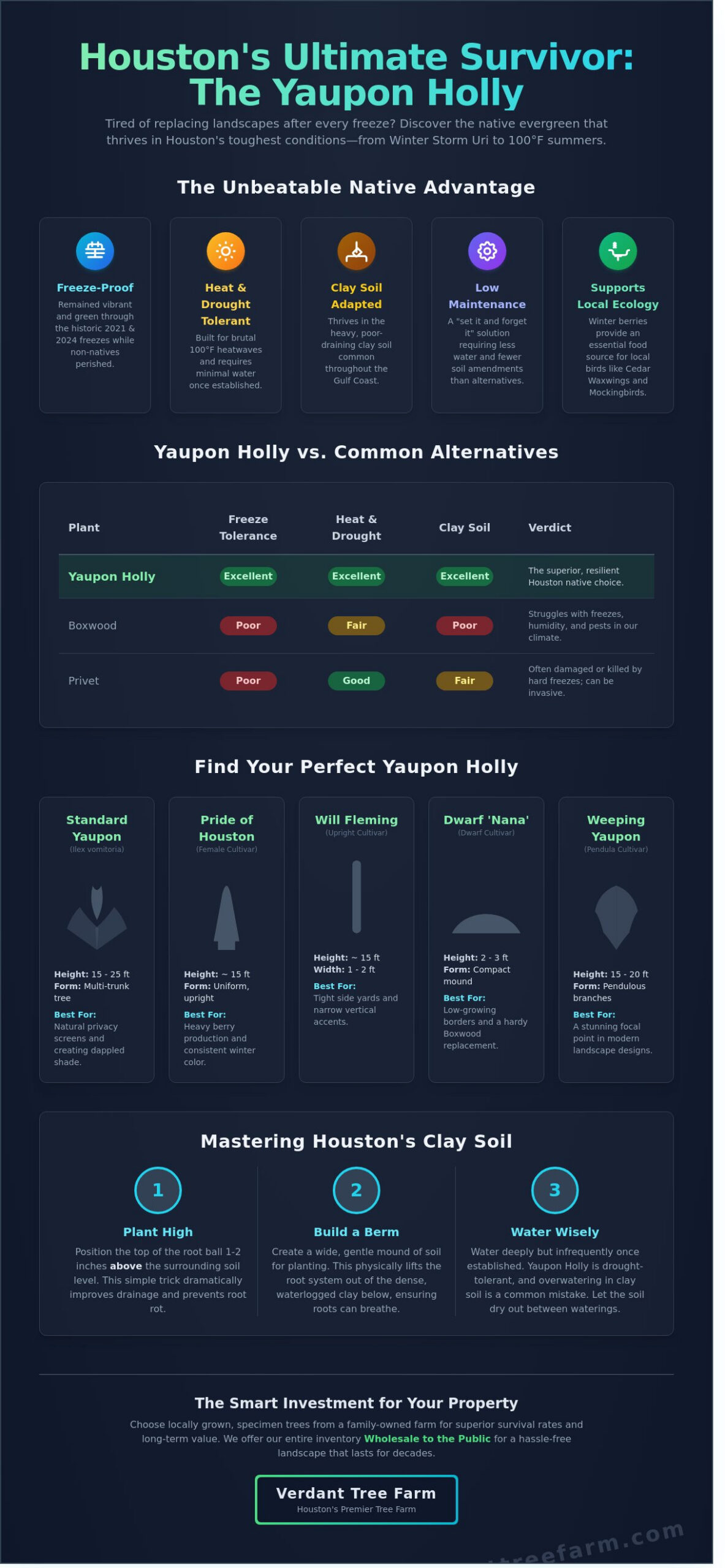
The Yaupon Holly (Ilex vomitoria) stands alone as the only holly species native to the Houston area. It’s the backbone of sustainable Texas landscaping. While exotic plants often struggle with our unpredictable Gulf Coast climate, this hardy evergreen thrives. It solidified its reputation as a “freeze-proof” survivor during the historic 2021 Winter Storm Uri and the 2024 freezes. While many non-native hedges turned brown and died, the yaupon holly remained vibrant and green. It’s a resilient choice for any property owner.
Visually, the plant is a standout. It features small, oval leaves with a leathery texture and slightly serrated edges. The bark is smooth and light gray, providing a clean aesthetic. During the winter, female plants produce a heavy crop of bright red berries. These berries add a splash of color to an otherwise dormant winter landscape. We grow these plants to meet the highest standards of quality and durability. They’re a smart, long-term investment for your home or commercial project.
The Role of Yaupon Holly in Texas Ecology
Houston’s local ecosystem relies on native species to function correctly. The yaupon holly provides essential support for pollinators and birds. During the lean winter months, the berries serve as a primary food source for local bird populations. These plants don’t just handle the cold; they’re built for the brutal 100-degree heatwaves of July and August. They’re incredibly drought-tolerant once established. Historically, the plant has deep roots in Texas. Native Americans used the caffeine-rich leaves to brew the “Black Drink” for ceremonial purposes. It’s a plant with a story and a purpose.
Why Houston Homeowners are Switching to Yaupon
Many local homeowners are tired of replacing frost-sensitive hedges like Boxwoods and Privets every time a cold front hits. They’re making the switch to Yaupons for several practical reasons:
- Superior Hardiness: They don’t require covering during typical Houston freezes.
- Extreme Versatility: You can use them as tight, formal hedges or let them grow into large, multi-trunk specimen trees.
- Low Maintenance: They require less water and fewer soil amendments than non-native alternatives.
As Houston’s Premier Tree Farm, we see these plants as the perfect solution for busy suburban homeowners. Our team handles the growing, delivery, and installation to ensure your project is successful. Because we’re Family Owned & Operated, we take pride in providing plants that actually belong in our local soil. We offer our entire inventory Wholesale to the Public, giving you access to professional-grade landscaping at a better value. It’s a hassle-free way to build a landscape that lasts for decades.
Top Yaupon Holly Cultivars for Houston Landscapes
Houston homeowners need plants that handle 100 degree summers and heavy clay soil. The yaupon holly is a top performer because it offers a variety of shapes for every landscape need. At Verdant Tree Farm, we grow these varieties to ensure they’re acclimated to our specific Gulf Coast environment. Because we’re family owned and operated, we select cultivars that we know will thrive in your neighborhood. Our inventory includes options for privacy, structure, and seasonal interest.
- Standard Yaupon: This is the classic multi-trunk tree. It reaches heights of 15 to 25 feet and creates a dense, evergreen screen. It’s an excellent choice for homeowners who want a natural look that provides dappled shade for outdoor living spaces.
- Pride of Houston: This cultivar is a standout for its heavy berry production. It maintains a uniform, upright shape and grows to about 15 feet. It’s a reliable performer for those who want consistent winter color.
- Will Fleming (Upright): Often called a “pencil” holly, this variety stays 1 to 2 feet wide while reaching 15 feet in height. It’s the perfect solution for tight side yards where space is a premium.
- Dwarf Yaupon (Nana): These stay compact, typically topping out at 2 to 3 feet tall. They’re the ideal low-growing replacement for boxwoods, which often struggle with local humidity and pests.
- Weeping Yaupon: This specimen tree features dramatic, pendulous branches that can reach 15 to 20 feet. It serves as a stunning focal point in modern 3D landscape designs.
Choosing the Right Shape for Your Yard
Selecting the right variety depends on your specific goals. If you’re looking to block the view of a neighbor’s second story, the Will Fleming provides a narrow, vertical solution without taking up your entire lawn. For formal foundation plantings, dwarf varieties provide a clean, rounded border that requires minimal pruning. If you have a large patio, a standard tree can be limbed up to create a canopy that offers relief from the Texas sun. For those researching specific growth habits and cold hardiness, the NC State Extension provides excellent data on Yaupon Holly cultivars and care to help you plan your layout.
Berry Production: Male vs. Female Plants
Only female yaupon holly plants produce the iconic red berries that brighten Houston winters. If berries are your priority, the ‘Pride of Houston’ is a guaranteed female selection that ensures a heavy crop. These berries provide vital food for local birds from December through February. You should consider placement when planting berry-heavy varieties. We recommend avoiding high-traffic walkways or pool decks to manage berry drop during the late winter months. If you’re ready to add these resilient natives to your property, you can view our current inventory at our Houston farm. We offer wholesale to the public pricing, making it easy to complete large-scale privacy projects without the retail markup.
Yaupon Holly vs. Other Popular Houston Hollies
Choosing the right evergreen for your landscape often involves comparing the yaupon holly against popular alternatives like Eagleston or Nellie R. Stevens. Eagleston hollies are prized for their pyramidal shape and softer leaf texture, but they often struggle in the alkaline soils found in many Houston neighborhoods. The Yaupon is far more forgiving. While an Eagleston might grow 18 to 24 inches a year, the Yaupon offers a more controlled 12 to 18 inches of growth. This results in a much denser privacy screen that requires less frequent structural pruning over time.
Nellie R. Stevens is another common choice, known for its large, glossy leaves. However, it lacks the sheer toughness of our native variety. In the peak of a Houston summer, Nellie R. Stevens can show signs of heat stress and leaf scorch. The native Yaupon remains vibrant even when temperatures exceed 100 degrees for weeks at a time. From a cost perspective, choosing a native plant is a smart financial move. You spend less on soil amendments, specialized fertilizers, and replacement costs. As Houston’s Premier Tree Farm, we provide these hardy specimens Wholesale to the Public to ensure every homeowner has access to high quality, resilient greenery.
Performance in Houston’s High Humidity
Houston’s humidity often peaks above 90 percent, creating a perfect environment for fungal diseases. Many ornamental hollies, particularly the Savannah variety, are highly susceptible to leaf spot. This fungus causes unsightly brown patches and can lead to total defoliation. The yaupon holly is naturally resistant to these pathogens. Its small, leathery leaves and open branching structure promote superior airflow. This is a vital trait when planting dense privacy hedges. This resilience is a key highlight in the University of Florida’s guide to Yaupon Holly, which notes the plant’s ability to thrive in diverse environments. In the Houston urban heat island, where concrete retains heat overnight, the Yaupon continues to breathe and grow while imported varieties often stall.
Growth Rate and Long-Term Maintenance
Maintaining a beautiful landscape shouldn’t be a full time job. A Yaupon Holly typically grows between 1 and 2 feet per year in Southeast Texas. This steady pace allows you to maintain a formal hedge with just two light trimmings per year, usually in late spring and early fall. If you prefer a natural look, you can leave it alone entirely and simply enjoy the winter berries. We are Family Owned & Operated, and we understand that a tree is a long term commitment. A healthy Yaupon is a 50 plus year investment for your property. It provides consistent value and curb appeal for decades. Whether you need a single specimen or a full row for screening, our team can handle the delivery and professional installation to get your project started right.
Planting and Caring for Yaupon Holly in Houston Clay
Houston’s “black gumbo” clay holds water like a sponge. This creates a drainage nightmare for most root systems, yet the yaupon holly remains a local champion due to its natural adaptability. While this species is tough, proper installation in heavy soil is the difference between a struggling shrub and a thriving specimen. In USDA Zone 9, the best window for planting is from October through early March. Planting during these cooler months allows the root system to settle before the 100-degree heat arrives in June.
Maintain vibrant green foliage by following a consistent fertilization schedule. Apply a balanced, slow-release fertilizer, such as a 13-13-13 blend, in early March just as new growth begins. For pruning, wait until late winter. Yaupons handle heavy shearing remarkably well. Whether you want a formal hedge or a natural, multi-trunk shape, timing your cuts before the spring flush ensures a quick recovery and dense growth.
Installation Secrets for Heavy Soil
Success in Houston starts with the “high-planting” technique. Never bury the root ball level with the ground. Instead, set the top of the root ball 1 to 2 inches above the surrounding soil grade. This prevents water from pooling around the trunk base and causing root rot. Mix 30% expanded shale into your backfill to create permanent air pockets in the clay. Finish with a 3-inch layer of organic hardwood mulch. This layer is vital for moisture retention during those brutal August droughts that can bake the soil hard as concrete.
Watering Requirements for Newly Planted Trees
Forget frequent, light sprinkles. They don’t reach the deep roots. Use the “Deep Soak” method by delivering 5 to 7 gallons of water directly to the root zone twice a week during the first growing season. Houston’s rain patterns are erratic; you might see 5 inches of rain in one afternoon followed by three weeks of dry heat. Always check the soil moisture 2 inches below the surface before watering. If leaves become brittle and brown, the tree is thirsty. If they turn yellow and drop, the roots are likely sitting in stagnant water.
Professional Maintenance Consultations
Even the hardiest native plants face occasional challenges. Keep a close watch for minor pests like leaf miners or scale insects, which can appear during humid spring cycles. Most issues are easy to manage if caught early. If you notice stunted growth or unusual leaf spotting, it’s a good idea to seek a professional opinion. Our team offers expert Maintenance Consultations to help you protect your landscape investment. We’ve spent years growing trees specifically for the Texas Gulf Coast, and we know exactly what it takes to keep them healthy.
Ready to upgrade your curb appeal with Houston’s best native evergreens? Contact Verdant Tree Farm today for expert delivery and professional installation services.
Where to Buy Specimen Yaupon Hollies in Houston
Choosing the right source for your yaupon holly makes the difference between a thriving landscape and a costly mistake. Buying direct from a local tree farm ensures your new evergreen is already acclimated to the specific humidity and soil conditions of Southeast Texas. At Verdant Tree Farm, we take pride in being the largest independent nursery in Houston. Our Texas-grown stock is raised to withstand local heat, meaning survival rates are significantly higher than trees shipped in from out-of-state climates.
We operate on a “Wholesale to the Public” model. This approach allows homeowners to access premium, contractor-grade trees at the same rates typically reserved for professional landscapers. Because we’re family owned and operated, we maintain strict quality control over every specimen on our lot. We back this quality with a 3-month warranty on our trees. This guarantee reflects our confidence in the health and vigor of our nursery stock. When you invest in your property, you deserve the peace of mind that comes from a reliable, local partner.
Delivery and Professional Installation Services
Installing a specimen tree requires more than just a shovel. A mature root ball is heavy and delicate; handling it incorrectly can lead to transplant shock or root damage. Our professional installation teams use specialized equipment to transport and place your tree with precision. This turn-key service includes more than just digging a hole. We ensure every yaupon holly is staked securely to resist Houston winds and mulched correctly to retain moisture. This professional start protects your investment and encourages rapid root establishment from day one.
Visit Our Houston Nursery Today
There’s no substitute for walking the farm and hand-picking the exact tree for your yard. You can inspect the structure and berry production of each specimen to find the perfect match for your home. Our veteran-owned team is available to consult on your specific landscape goals, whether you need a single accent tree or a 50-foot privacy screen. For homeowners planning a major overhaul, our 3D landscape design service provides a digital preview of your project. This tool helps you visualize exactly how your new hedge will transform your outdoor living space before the installation begins.
Elevate Your Landscape with Houston’s Toughest Native Evergreen
Choosing the right greenery for our local climate doesn’t have to be a guessing game. The yaupon holly stands out as a top performer because it’s naturally adapted to the heavy clay soils found throughout Harris County. Whether you need a 15 foot privacy screen or a compact foundation shrub, these native evergreens provide year round color without the constant maintenance required by non-native species. You’re investing in a durable specimen that survives our unpredictable freezes and intense summer droughts.
As Houston’s Premier Tree Farm, we make it easy to find the perfect addition to your property. We are a Veteran-Owned & Operated business and the largest independent nursery in the city. We offer wholesale to the public, ensuring you get professional grade quality at a fair price. Every tree we sell comes with a 3-month warranty to give you peace of mind from the moment it hits the ground. Our family owned and operated team is ready to help you grow a legacy on your land.
Visit Houston’s Largest Tree Farm to Pick Your New Trees Today!
We look forward to helping you pick out the perfect plants for your home soon.
Frequently Asked Questions
Is Yaupon Holly invasive in Houston?
No, the yaupon holly isn’t invasive in Houston because it’s a native species to the 10-county Gulf Coast region. Since it evolved in our local ecosystem, it provides essential habitat for native birds like Cedar Waxwings. It can form thickets through root suckers if left unmanaged in wild areas. For residential landscapes, regular maintenance keeps it contained as a tidy specimen or hedge. We’ve seen it thrive in local soil for decades.
How fast does a Yaupon Holly grow per year?
You can expect a growth rate of 12 to 24 inches per year under ideal conditions. This moderate pace makes it a reliable choice for homeowners who want a quick privacy screen without the constant pruning required by faster species. Proper irrigation and fertilization during the first 2 years of establishment help maximize this growth. Our team at Houston’s Premier Tree Farm ensures every plant starts with a robust root system.
Are Yaupon Holly berries poisonous to pets?
Yes, yaupon holly berries are toxic to dogs and cats if ingested. The fruit contains saponins and methylxanthines that cause vomiting, diarrhea, and lethargy in domestic pets. While birds safely consume the berries during winter months, keep your pets away from the fallen fruit. If you suspect your pet ate the berries, contact a veterinarian immediately. We recommend planting them in areas where pets don’t typically forage for food.
Can I grow Yaupon Holly in full shade in Houston?
You can grow this native evergreen in full shade, but the canopy will be less dense. While it survives in low light, it needs at least 2 to 4 hours of sunlight to produce a heavy crop of red berries. In deep shade, the plant often takes on a more open, architectural form. For a thick, lush hedge, aim for partial to full sun exposure in your Houston yard.
Do I need more than one Yaupon Holly to get berries?
Yes, you need both a male and a female plant to produce berries because this species is dioecious. Only the female plants produce the bright red fruit, but they require a nearby male for pollination. One male plant can typically pollinate 5 to 10 female plants within a 50 foot radius. As a family owned and operated nursery, we help you select the right mix for your landscape to ensure seasonal color.
What is the difference between a Yaupon Holly and a Boxwood?
The primary difference lies in their fruit and environmental resilience. These hollies produce vibrant red berries and tolerate Houston’s alkaline soil better than most boxwoods. Boxwoods are often more susceptible to blight and root rot in our 90 percent humidity. Native hollies also feature slightly serrated leaves that reach 0.5 to 1.5 inches in length. We offer both options wholesale to the public for various landscaping needs and budget requirements.
How tall does a standard Yaupon Holly get?
A standard specimen typically reaches heights of 15 to 25 feet at maturity. It usually maintains a spread of 8 to 12 feet, making it an excellent choice for a tall privacy screen or a small ornamental tree. If you have limited space, dwarf cultivars are available that stay under 3 feet tall. Our experts can help you determine which size fits your specific property dimensions and landscaping goals.
When is the best time to prune my Yaupon Holly in Texas?
The best time to prune is in late winter, specifically from late February to early March before new growth begins. Pruning during this window allows the plant to recover quickly as the spring growing season starts. You can perform light shaping throughout the year to maintain a formal hedge. Avoid heavy pruning in late fall, as this can stimulate new growth that might be damaged by a winter freeze.