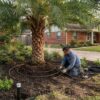
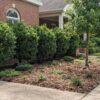
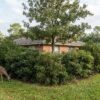
A water-wise landscape doesn’t have to trade lushness for restraint. The most useful water-wise landscaping ideas for Houston bring together drought-tolerant trees, efficient irrigation, and layered plants that keep the yard interesting through changing seasons.
It’s understandable to focus first on using less water, but plant selection and layout shape how a property looks and functions. A well-placed tree can add shade, while varied foliage, grasses, and flowering plants bring texture and color. This guide to water-wise landscaping ideas for Houston covers how to assess a site and choose trees suited to its space, adapt irrigation to planting needs, and replace turf with plantings or other landscape features. It also explores ways to create year-round interest without treating every part of the yard the same. The result is a practical starting point for planning a Houston landscape that balances visual appeal with thoughtful water use.
Key Takeaways
- Choose trees for the space they’ll occupy as well as their water needs, so shade and mature size suit the property.
- Professionals can adapt spray irrigation to drip delivery, directing water closer to plants and reducing evaporation.
- Replace turf where it isn’t needed for recreation with layered plantings or landscape features to create a more water-conscious yard.
- Combine varied foliage, grasses, and flowers to bring texture and seasonal color to the landscape.
How professionals choose drought-tolerant trees for the site
Choose a tree for the planting area, not just its drought-tolerant label. Assess sun exposure, drainage, overhead clearance, nearby structures, and the tree’s mature canopy. A compact front garden needs a different fit from an open lawn. Considering these factors helps prevent a tree from outgrowing its space and places shade where it can benefit the yard.
Houston’s heat, clay soil, flooding, and dry spells call for a site-specific plan. Look at where water collects after rain, where soil dries quickly, and how roots can spread. Adding organic matter to a compacted planting area can support moisture retention, while careful placement helps avoid persistently saturated roots. Trees can also provide shade that cools nearby soil and air.
Native and drought-tolerant plants can create an attractive, functional landscape, but they still need water while establishing. Group trees with shrubs, flowers, and drought-tolerant annuals or perennials according to their light and moisture needs. For example, a sunny border might combine flowering perennials with shrubs, while a shaded area uses foliage plants suited to lower light. A considered mix maintains structure between flowering periods.
There is no fixed amount of water saved by native landscaping in Houston. Savings depend on how much turf is replaced, which plants are selected, and the existing irrigation demand. Replacing water-intensive areas and watering plants according to their needs can reduce landscape water use.
To capture rainwater and reduce runoff, shape planting beds to receive water from surrounding surfaces, then select plants suited to those wetter areas. Assess slopes and drainage paths so water can soak into the landscape rather than collect beside structures. A rain garden can manage runoff while adding planted texture.
Houston-area nurseries with native trees, drought-tolerant shrubs, and perennial flowers are useful sources for these plant choices. Match nursery selections to the property’s sun, soil, drainage, and available planting space, rather than choosing by appearance alone. This helps ensure the planting plan suits Houston conditions.
How professionals convert spray irrigation to drip irrigation
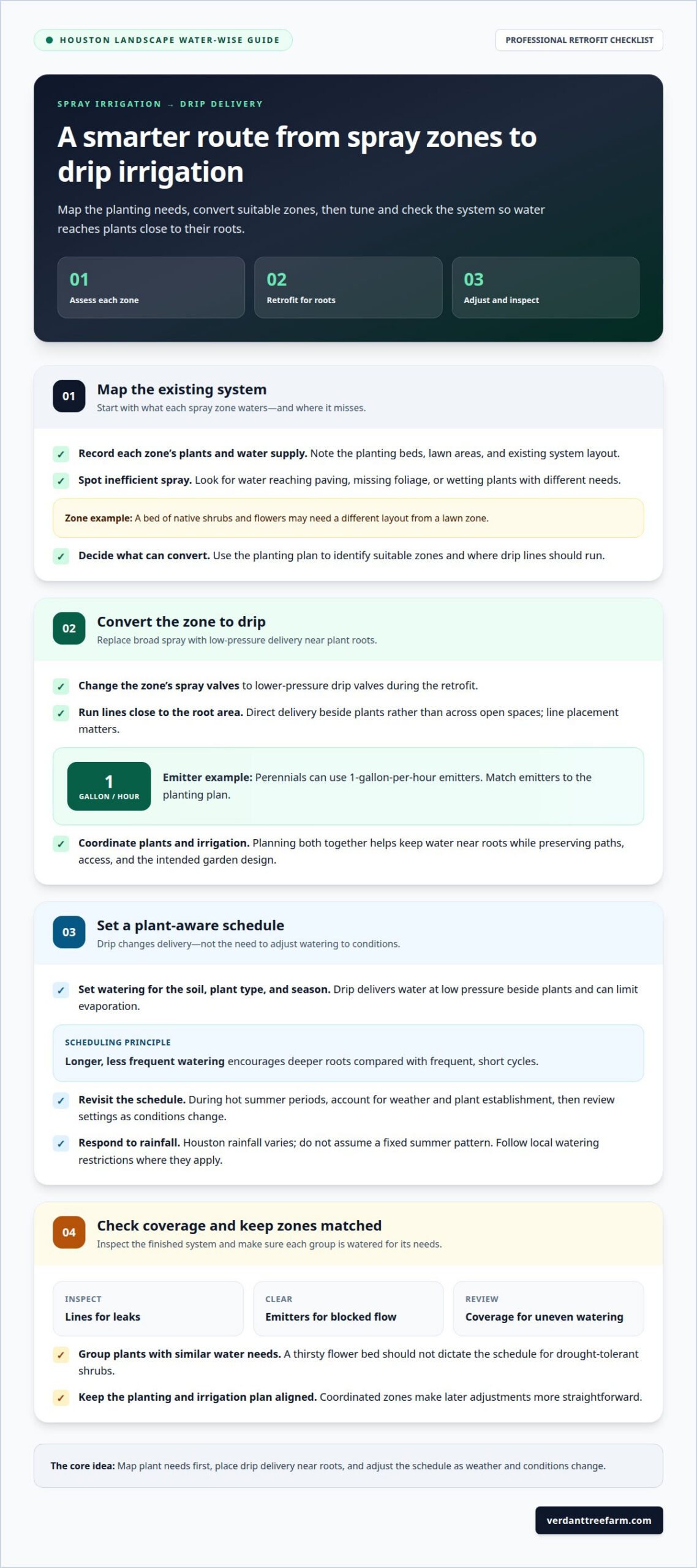
Professionals begin by mapping each spray zone, its plants, and the existing water supply. They identify areas where spray reaches paving, misses foliage, or wets plants with different needs. A bed of native shrubs and flowers, for example, may need a different layout from a lawn zone. This assessment helps determine which zones can be converted and where drip lines should run.
During the retrofit, each zone’s spray valves are changed to lower-pressure drip valves. The system is then arranged to deliver water close to plant roots, instead of spraying across open spaces. Emitters are matched to the planting plan; perennials can use 1-gallon-per-hour emitters. Line placement matters too. A line near the root area can water a plant more directly than one laid along a bed’s edge.
Drip irrigation can limit evaporation because it delivers water beside plants at low pressure. It still needs a schedule suited to the soil, plant type, and season. Longer, less frequent watering encourages deeper roots than frequent, short cycles. During hot summer periods, professionals adjust the schedule to account for weather and plant establishment, then review it as conditions change.
Houston rainfall varies, so schedules should respond to rainfall rather than assume a fixed summer pattern. Where local watering restrictions apply, follow them and adjust system settings accordingly.
After installation, check lines and emitters for leaks, blocked flow, and uneven coverage. Group plants with similar water needs so a thirsty flower bed does not dictate the schedule for drought-tolerant shrubs. Coordinating planting zones with drip delivery from the outset makes later adjustments more straightforward.
For established beds, professional landscape installation can bring plant placement and irrigation layout together. That coordination helps keep water near roots while preserving clear paths, access, and the intended garden design.
How professionals replace turf with a lush, water-wise landscape
Professionals begin by mapping which lawn areas serve a real purpose, such as play or a clear route through the yard. Grass beyond those zones can become planting beds, paths, or a patio. This gives the remaining turf a defined role and creates space for a more water-wise garden without sacrificing everyday use.
For a living replacement, the design can combine shrubs, ornamental grasses, groundcovers, and flowering perennials. Low-growing wildflowers and perennials add color, while shrubs create structure and privacy. A professional plans plant groupings around sun, drainage, and mature size, then coordinates installation with irrigation. The result can look beautiful through changing seasons, including winter, when foliage and plant form provide interest between blooms.
Hardscape offers another option for areas that don’t need planting. Paths, seating areas, or stonework can shape how people move through the yard. Permeable paving lets water drain between surfaces and flow toward other garden areas. Rock-covered areas can become hotter, so balance hard surfaces with planted beds rather than covering every former lawn area in stone.
For large-scale lawn replacement, the plan connects each zone to its purpose. A side yard could become a raised garden bed, while a patio edge gains taller ornamental grasses for screening. Professionals coordinate bed shapes, pathways, plants, and irrigation before installation, so access and water delivery fit the finished layout. Clover, succulents, and flowering groundcovers offer distinct alternatives to conventional turf.
There’s no single cost for converting a Houston lawn to native plants or xeriscaping. Project scope, lawn removal, soil preparation, plant selection, hardscape, and irrigation changes all affect the work involved.
Houston rebate eligibility depends on the specific program and its terms. Include an incentive in your plan only when the relevant program’s eligibility requirements are met, rather than treating a rebate as guaranteed project savings.
How professionals select plants for year-round texture and color
Year-round color comes from more than flowers. Professionals build a planting plan around foliage, form, and bloom timing, so the garden remains visually engaging between flowering periods. Repeating swaths of color creates rhythm, while contrasting leaf shapes and plant heights keep a bed from feeling flat. This selection process turns water-wise planting into practical design inspiration.
Texture gives a landscape structure across seasons. A professional might layer ornamental grasses with broad-leaved plants, then use flowering perennials to add seasonal color. Grasses bring movement and upright form; evergreen groundcovers can soften the edges of flagstones or gravel. Each plant has a defined role, such as adding height, filling a gap, or drawing attention to a path.
Professionals also plan for how the view changes through the year. Trees, cacti, and ornamental grasses can provide lasting visual interest, while flower color and foliage contrast shift the focus as plants grow. Repeating a small palette across separate beds creates a calm, connected effect. A contrasting accent plant can then mark an entry or turn in a walkway.
Plant height matters near windows, paths, and property boundaries. One landscape design approach keeps plants under 3 feet tall where open views to and from the house are important. Taller grasses can instead define a patio edge or provide a screening effect. Professionals account for mature size during selection, so plants have room to develop without crowding nearby features.
For groundcover, place creeping plants between flagstones and along gravel edging, where evergreen foliage fills spaces over time. Balance these areas with flowering plants and grasses, rather than relying on flowers alone for color. This combination gives a water-wise landscape seasonal interest and a clear, cohesive design.
Ready to shape a planting plan around texture and seasonal color? Plan professional landscape installation for your property.
Verdant Tree Farm
Verdant Tree Farm, the largest independently owned and operated tree farm in Houston, can help you carry a water-wise landscape plan into tree selection. Its Houston-area choices include Shumard Oak, Mexican White Oak, and Drummond Red Maple. The right fit depends on planting space, sunlight, drainage, and the mature form you want in the landscape. Considering these factors alongside the rest of your planting plan helps keep a new tree from feeling like an afterthought.
Turn to Verdant Tree Farm when you’re ready to narrow down tree options for your property. Share what you want a tree to contribute, such as shade, seasonal color, or a focal point, and discuss how it fits the site and surrounding plants. Contact Verdant Tree Farm to talk through your landscape plans.
Verdant Tree Farm offers Houston-area tree choices for a water-wise landscape, including Shumard Oak, Mexican White Oak, and Drummond Red Maple.
Shape a landscape plan around how you live
The best water-wise landscaping ideas for Houston begin with a clear sense of how you want to use your outdoor space. Consider where you want shade, which areas need to stay open, and what views you want from inside the home. Those priorities give a landscape plan a practical foundation, instead of treating water reduction as the only goal.
Think of the property as connected spaces. A front entry may call for a welcoming focal point, while a side yard could serve a different purpose. Planning around these uses helps each planting area, pathway, and open space feel intentional. It also gives you a helpful way to discuss design choices with a landscape professional.
You don’t need to settle every detail before taking the next step. Start with the change that matters most to your property, then discuss how it can fit into a cohesive long-term plan. Contact Verdant Tree Farm to discuss your landscape goals and take the first step toward a yard designed around your priorities.
Frequently Asked Questions
What drought-tolerant native plants grow well in Houston?
Houston planting plans can include native and drought-tolerant plants selected for the property’s sun, soil, drainage, and available space. For tree choices, examples available locally include Live Oak, Mexican White Oak, Cedar Elm, and Texas Redbud. A professional can match species to the site instead of assuming every plant suits every yard. Newly planted selections still need water while they establish, especially during dry weather.
What are the best water-wise landscaping ideas for Houston homes?
Start by deciding which outdoor areas need to stay open for play, access, or seating. Then plan planting beds and paths around those uses. A small front yard might gain structure from a carefully placed tree and layered shrubs, while a sunny patio border could use flowering plants and grasses. Grouping plants with similar water needs makes the layout easier to irrigate consistently.
How do mulch, compost, and soil amendments help conserve water in Houston?
Compost adds organic matter that can help soil retain moisture, while mulch shades the soil surface and slows evaporation. A mulch layer also helps limit weeds that compete with landscape plants for water. Professionals consider soil condition before amending a bed, since compacted areas may need attention too. Keeping soil covered between plants can further reduce moisture loss from exposed ground.
What irrigation systems are most water-efficient for Houston landscapes?
Drip irrigation is useful for planted beds because it delivers water near roots rather than spraying broad areas. Its effectiveness depends on suitable zoning, working emitters, and schedules that reflect plant needs and weather. Sprinklers may still suit lawn areas that remain in use. Professionals can separate turf and planting zones so watering one area doesn’t force an unsuitable schedule on another.
What steps do professionals follow to create a low-water landscape in Houston?
Professionals assess the property’s sun, drainage, soil, existing irrigation, and how each outdoor area is used. They then shape a planting and surface plan, match plants to site conditions, and coordinate irrigation with the layout. After installation, they review plant establishment and system performance. During drought, even a water-conscious landscape may need periodic watering to support plant health.