What if the difference between a resilient landscape and a costly property disaster is just a few inches of mulch and a smarter watering schedule? It’s no secret that growing trees in our region is a challenge. You’ve likely felt the frustration of watching a beautiful Drummond Red Maple struggle through a brutal August heatwave or worried about a towering Cedar Elm during hurricane season. Between the heavy clay soil and our increasingly unpredictable weather cycles, keeping your canopy healthy can feel like a full-time job.
We understand that you want a vibrant, safe yard without the constant guesswork. This guide provides the expert-backed strategies you need to master tree maintenance Houston homeowners can rely on to protect their investment and boost property value. We’ll walk you through a seasonal care calendar, specific watering techniques for our unique soil, and how to identify early signs of stress before they become expensive problems. From native oaks to specialty palms, you’ll gain the confidence to keep your landscape thriving and resilient all year long.
Key Takeaways
- Understand how Houston’s “black gumbo” clay soil and sudden temperature swings require specialized hydration techniques to prevent root stress.
- Learn the “Three Pillars” of tree maintenance Houston residents use to move beyond surface watering and reach the critical root zone.
- Discover species-specific care tips for everything from native Live Oaks to Medjool Date Palms, including how to protect the “heart” of your specialty trees.
- Follow a detailed 2026 maintenance calendar to time your fertilization and pruning perfectly for the local growing season.
- See how proactive health consultations and 3D landscape design can prevent expensive removals and help you plan a low-maintenance, resilient property.
The Houston Climate Challenge: Why Tree Maintenance is Different Here
Houston isn’t just hot; it’s volatile. Our environment creates a unique set of stressors that can catch even experienced gardeners off guard. We frequently deal with “flash droughts,” where a week of torrential rain is immediately followed by blistering sun and zero humidity. This rapid swing causes the ground to bake and crack, pulling moisture out of root systems faster than the tree can adapt. The science of arboriculture tells us that trees need stability to thrive, but our local weather provides anything but that.
The infamous “black gumbo” clay soil adds another layer of difficulty. This heavy soil compacts easily, which physically blocks oxygen from reaching the roots. Traditional maintenance techniques used in other states often fail here because they don’t account for this lack of aeration. If your soil is as hard as a brick, your tree is effectively suffocating. This is a hidden cost of tree maintenance Houston homeowners must address to prevent long-term decline. High humidity also brings intense fungal pressure. Without proper canopy thinning to improve airflow, species like the Live Oak can quickly fall victim to leaf blister or powdery mildew.
We are also still managing the legacy of the 2021 and 2024 freezes. Many established trees survived the initial cold but suffered internal vascular damage that is only now becoming apparent. If you notice thinning canopies or sections of a Cedar Elm that refuse to leaf out, your tree might still be struggling with that past trauma. Identifying these signs early is the only way to save the specimen.
Managing Heat Stress and Urban Heat Islands
Concrete driveways and brick homes act like giant heat sinks. They radiate warmth long after the sun goes down, which increases the transpiration rate of nearby trees. This means your Drummond Red Maple or October Glory Maple is losing water through its leaves at an exhausting pace. Look for “heat scorch,” which appears as dry, brown edges on the leaves. It’s often mistaken for a lack of water, but it’s actually about the speed of evaporation. A thick, three inch layer of organic mulch is your best defense. It acts as an insulator, keeping the soil significantly cooler during those brutal 100 degree days.
Freeze Protection and Recovery Strategies
Preparing for a freeze starts long before the temperature drops. Hydrating your trees deeply before a cold snap is vital because wet soil holds more heat than dry soil. This moisture creates a thermal blanket that protects delicate roots from the frost. After a sudden cold snap, you might notice bark splitting on your Texas Redbud or Mexican White Oak. This happens when sap freezes and expands inside the trunk. Don’t rush to prune these damaged areas immediately. It’s better to wait for the spring bud break to see exactly which limbs are dead and which are just dormant. This patience ensures you don’t remove wood that is still capable of recovery.
The Three Pillars of Proactive Houston Tree Care
Proactive care is the backbone of a resilient property. To support Houston’s urban forests, we focus on three essential pillars: deep-root hydration, soil health, and structural integrity. These aren’t just chores; they’re investments in your home’s safety and value. In our heavy clay environment, traditional surface-level care isn’t enough to sustain long-term growth.
The first pillar is deep-root watering. We move beyond surface sprinklers to target the Critical Root Zone (CRZ). The second pillar involves soil amendments to balance pH and improve aeration in “black gumbo” clay. Finally, we prioritize structural pruning. Training a young Drake Elm or Shumard Oak early creates a strong central leader, which is vital for surviving hurricane-force winds. We also utilize Integrated Pest Management (IPM) to monitor for Pine Bark Beetles in Loblolly Pines and the spread of Oak Wilt in our native oaks.
Mastering the Art of Deep-Root Hydration
Surface sprinklers are for grass, not trees. For effective tree maintenance Houston residents should use soaker hoses or professional deep-root injections. A soaker hose should be coiled around the CRZ and run on a low drip for several hours. This slow delivery allows water to penetrate the clay rather than running off into the street. Newly planted trees need this every two to three days during a hot summer. Established giants might only need a deep soak once or twice a month during a drought, but that soak must be thorough.
Mulching for Soil Health and Protection
Never build a “mulch volcano.” Piling mulch directly against the trunk traps moisture against the bark, which leads to rot and fungal infections. Instead, keep the mulch a few inches away from the root flare. In Houston, hardwood mulch or pine straw works best for our climate. As these organic materials break down, they naturally cycle nutrients back into the soil, which reduces the need for heavy chemical fertilizers. This process also improves the soil’s texture over time, making it more hospitable for root expansion. If you’re unsure where to start, a professional maintenance consultation can identify exactly what your landscape needs to thrive.
Species-Specific Care: Hardwoods vs. Houston Palms
Every tree in your yard has a different personality and set of requirements. A one-size-fits-all approach to tree maintenance Houston landscapes often leads to struggling specimens or wasted effort. While a Cedar Elm is a native workhorse built for drought, a Little Gem Magnolia requires a delicate balance of high moisture and perfect drainage. Understanding these nuances is the secret to a landscape that looks professional and stays healthy through the decades. Cedar Elms are incredibly resilient; however, they still benefit from occasional thinning to reduce wind resistance before hurricane season.
Live Oaks and Shumard Oaks are the anchors of many local properties. For these giants, managing canopy density is a top priority. Overly thick canopies trap humidity, which creates a breeding ground for fungal infections. Following the Houston tree care guidelines helps you time your thinning to avoid the Oak Wilt window. Never prune your oaks between February and June when the sap-sucking beetles that spread the disease are most active. For your Drummond Red Maple, watch for iron chlorosis. If the leaves turn yellow while the veins stay green, your soil pH is likely too high for the tree to absorb iron. Magnolias like the DD Blanchard or Bracken’s Brown Beauty need consistent moisture, but they won’t tolerate standing water. In our heavy clay, this means planting them on a slight mound to ensure the root flare stays dry while the deeper roots stay hydrated.
Maintaining the Houston Palm Oasis
Specialty palms like the Medjool Date Palm or Sylvester Palm require a different toolkit. Potassium deficiency is a common threat; look for yellow spotting or “frizzle top” on the oldest fronds of your Queen Palms. This yellowing is a clear signal that your soil nutrients are depleted. When it’s time to prune, stick to the 9-to-3 rule. Only remove fronds that hang below a horizontal line. Over-pruning into a “hurricane cut” actually weakens the tree and makes it more vulnerable to wind damage. Protecting the “heart” or central bud of your Medjool is critical during extreme weather. For those interested in year-round color, check out our guide on the Best Evergreen Trees for Houston to see which species pair best with your palms.
Cold-hardy palms like the Windmill and Sabal Palm are generally lower maintenance but still need winter preparation. Deep watering before a freeze provides the thermal mass needed to protect the root ball. You don’t want to over-fertilize in late fall, as this encourages tender new growth that the frost will easily kill. By focusing on these species-specific needs, you ensure your investment grows in value every year.
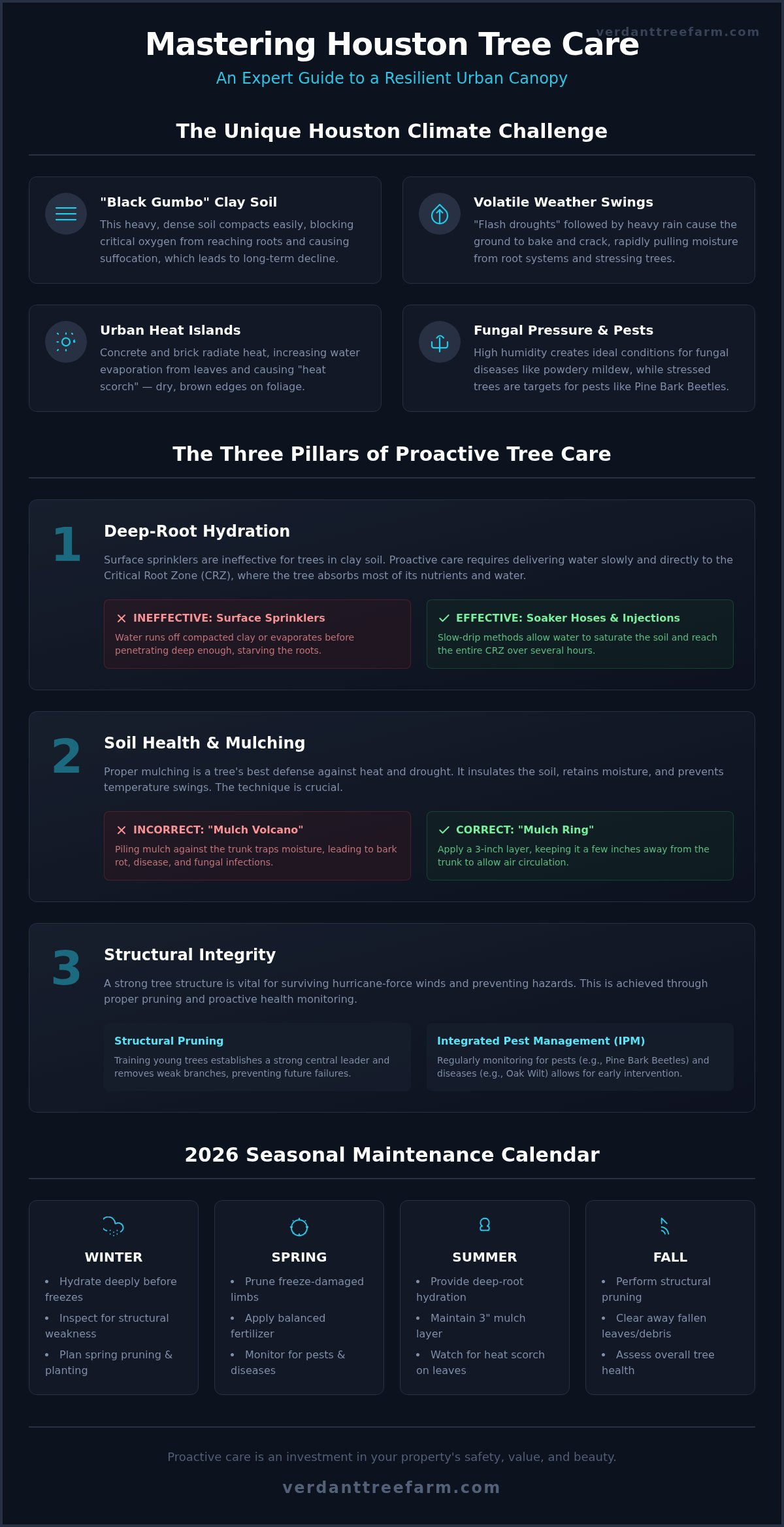
The 2026 Houston Tree Maintenance Calendar
Success in the garden starts with a plan. In our region, tree maintenance Houston residents perform must be timed perfectly to match the rapid shifts in local weather. A healthy tree in May can become a liability by August if you aren’t prepared for the transition. Use this 2026 calendar to stay ahead of environmental stressors and keep your property value high. Consistency is the secret to a landscape that survives the Gulf Coast’s unpredictable cycles, and Year Round Lawn can help you maintain that standard with expert landscape maintenance through every season.
Spring is the season of observation. Step 1: Inspect for damage. As the sap begins to rise in early March, check your hardwoods for bark splitting or limbs that failed to leaf out after winter. This is also the peak time for growth monitoring and checking for early-season pests like aphids. Step 2: Apply slow-release fertilizers. You want to provide essential nutrients before the summer heat hits. A high-quality, slow-release fertilizer supports root development and helps trees like the Drummond Red Maple build the energy reserves they need for the coming months.
Step 3: Pruning deciduous trees. When the leaves fall in late October or November, it’s the perfect time for structural pruning. Pruning Cedar Elms or Drake Elms while they are dormant reduces the risk of pest infestation and disease transmission. This fall window is also the ideal time for new installations. The combination of cooler air and warm soil encourages rapid root establishment before the next growing season begins.
Summer Survival and Winter Prep
The heat of July and August is the ultimate test for your landscape. Step 4: Use the 3-2-1 watering rule. For the hottest weeks of the year, water newly planted trees three times a week, established trees twice a week, and your toughest natives once a week. This method ensures deep-root saturation rather than just surface-level dampness. Step 5: Refresh your mulch. By November, your summer mulch has likely thinned out or decomposed. Re-applying a three-inch layer insulates the roots of your specialty palms and hardwoods against the first sudden cold snap of the winter.
Step 6: Holistic care. Your trees and turf work together to manage groundwater and soil health. To ensure your entire property is resilient and beautiful, check out our Lawn Care Houston guide. If you want to skip the guesswork and ensure your canopy is ready for whatever 2026 throws at us, schedule a maintenance consultation with our veteran-owned team today. We’ll provide a site-specific plan that covers everything from soil pH to structural safety.
Professional Maintenance Consultations: Avoiding the Cost of Neglect
Most homeowners only call a tree service when a limb has already fallen. By that point, the cost of removal and property repair is significantly higher than the price of proactive care. There is a massive difference between a “free estimate” and a professional health consultation. A free estimate is typically a sales pitch for a removal service. In contrast, a health consultation is a diagnostic deep dive into the physiological state of your landscape. It identifies nutrient deficiencies, soil compaction issues, and early-stage pest infestations before they become terminal.
This diagnostic approach is the core of tree maintenance Houston families use to protect their homes. Identifying “Hazard Trees” before hurricane season is a vital safety measure. Our veteran-owned team looks for subtle signs of internal decay, root heaving, or poor branch unions that could lead to failure during a storm. We provide an honest evaluation of your property’s risks, helping you decide which trees need structural support and which might require a proactive removal to protect your roofline. We treat your property like a long-term investment, not a one-time transaction.
Leveraging 3D Design for Maintenance Success
Maintenance-friendly landscapes don’t happen by accident. They are planned. One of the biggest mistakes in Houston is planting high-value species like the Drummond Red Maple or Cedar Elm too close to structures or other trees. Overcrowding leads to canopy competition and root interference, which increases your pruning costs over time. Our 3D landscape design service allows you to visualize the mature height and spread of every tree before it goes into the ground. This ensures you select the right species for your specific soil type and sunlight levels. For a comprehensive look at how we combine nursery-direct stock with expert planning, explore our Landscaping Services Houston guide.
The Verdant Tree Farm Guarantee
We take pride in being Houston’s largest independent nursery. Because we grow our own stock, we know exactly what it takes for these trees to thrive in our “black gumbo” soil. Our three-month warranty is a direct reflection of this nursery-grown quality. We stand behind our product because we’ve raised it to be resilient. Our professional installation service further guarantees success by ensuring the root flare is at the correct depth and the soil is properly amended from day one. If you have an existing landscape that needs a professional eye, don’t wait for a storm to reveal a problem. Request a maintenance consultation today to ensure your trees remain a vibrant, valuable asset to your property for years to come.
Securing Your Houston Landscape’s Future
Mastering tree maintenance Houston requires more than just occasional watering; it demands a deep understanding of our unique clay soils and volatile weather patterns. By following a structured seasonal calendar and implementing deep-root hydration, you transform your yard into a resilient oasis. Whether you’re managing the specific needs of a Medjool Date Palm or ensuring your Live Oaks are thinned before hurricane season, proactive care is the only way to avoid the high costs of property neglect. You’ve invested in your home, and your canopy should reflect that same level of commitment.
As the largest independent tree nursery in Houston, our veteran-owned and operated team is here to help you navigate every challenge. We provide expert consultations for both residential and commercial properties to ensure your landscape thrives for generations. Don’t wait for the next extreme weather event to test your trees’ strength. Request a professional tree maintenance consultation from Verdant Tree Farm today. Let’s work together to build a healthy, vibrant landscape that stands the test of time.
Frequently Asked Questions
When is the best time to prune trees in Houston?
The best time to prune most deciduous trees in Houston is during their dormant season, typically from late October through February. This period reduces stress on the tree and minimizes the risk of pest infestations. For oaks, you must strictly avoid pruning between February and June to prevent the spread of Oak Wilt. Pruning during dormancy allows the tree to heal quickly once the spring growth cycle begins in March.
How much water does a newly planted tree in Houston need?
Newly planted trees generally require deep watering three times a week during their first year, especially in our hot summer months. You should aim for approximately five to ten gallons of water per inch of trunk diameter during each session. Using a soaker hose ensures the moisture reaches the root ball instead of running off the surface. Consistent hydration is the most critical factor for establishing nursery-grown stock in our heavy clay soil.
What are the signs of Oak Wilt in Houston trees?
The most distinct sign of Oak Wilt is veinal necrosis, where the leaf veins turn yellow or brown while the rest of the leaf remains green. You might also notice rapid wilting and leaf drop starting at the top of the canopy and moving downward. This fungal disease spreads through root grafts and sap-sucking beetles. If you suspect your tree is infected, it’s vital to seek a professional health consultation immediately to protect neighboring oaks.
Can palm trees survive a Houston freeze?
Many palm varieties can survive a Houston freeze if they are cold-hardy species like the Windmill, Sabal, or Pindo palm. Specialty varieties like the Medjool date palm are also resilient but benefit from deep watering before a cold snap to provide thermal insulation for the roots. During extreme freezes, protecting the “heart” or central bud of the palm is essential. We select and grow species specifically designed to withstand our region’s rapid temperature swings.
Why is my tree losing leaves in the middle of a Houston summer?
Summer leaf drop is usually a survival mechanism triggered by extreme heat stress or a lack of deep-root moisture. When the transpiration rate exceeds the tree’s ability to pull water from the soil, it sheds leaves to reduce its surface area. This is common during “flash droughts” where temperatures spike rapidly. Effective tree maintenance Houston homeowners practice involves deep-root watering and refreshing mulch to regulate soil temperature and prevent this premature defoliation.
How do I know if my tree needs deep-root fertilization?
You can tell your tree needs deep-root fertilization if you notice stunted twig growth, unusually small leaves, or yellowing foliage known as chlorosis. These signs indicate that the tree isn’t accessing enough nutrients through our dense clay soil. Deep-root fertilization injects liquid nutrients directly into the root zone, bypassing the compacted surface. This method is much more effective than surface applications for established hardwoods and specialty palms in the Houston area.
What should I do if my tree was damaged by a hurricane or storm?
What should I do if my tree was damaged by a hurricane or storm?
A balanced landscape often includes both native Texas trees and specialty varieties to maximize property value and resilience. Native species like the Cedar Elm or Live Oak are naturally adapted to our clay soil and weather cycles. However, specialty trees like the Medjool date palm or Drummond Red Maple offer unique aesthetic appeal and can thrive with the right care. Our 3D design service helps you choose the perfect mix of species for your specific soil conditions.