Your dream of a lush, private backyard doesn’t have to disappear the moment the first cold front hits. While many neighbors settle for trees that leave their yards bare all winter, the Montezuma Cypress Houston homeowners are now planting offers a better way forward. It’s frustrating to watch your summer privacy vanish every November. You deserve a landscape that stays vibrant and provides a cooling canopy even when the temperature swings.
This guide reveals why this fast-growing evergreen is the premier choice for our unique Texas climate. You’ll learn the key differences between this giant and the common Bald Cypress, specifically why it won’t produce invasive knees in your lawn. We’ll also provide professional guidance on navigating Houston’s heavy clay soil and surviving local freezes. By the end, you’ll know exactly how to establish a majestic, year-round sanctuary that thrives for generations. Whether you’re looking to block out a two-story view or add immediate value to your property, this evergreen giant is the reliable solution you’ve been searching for.
Key Takeaways
- Learn why the Montezuma Cypress Houston homeowners choose is the premier fast-growing shade tree for maintaining a lush, green landscape all winter long.
- Understand the “knee factor” and why this species provides a majestic canopy without the invasive surface roots that typically disrupt lawn mowers.
- Get professional strategies for amending heavy clay soil and using the “Deep Soak” method to ensure your tree thrives in the local climate.
- Master pruning techniques that raise the canopy, creating a high, walkable shade area that adds immediate value to your property.
- Discover the peace of mind that comes with professional installation from a veteran-owned nursery, including a three-month warranty on every tree.
Why Montezuma Cypress is Houston’s Top Choice for Fast-Growing Shade
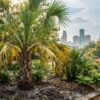
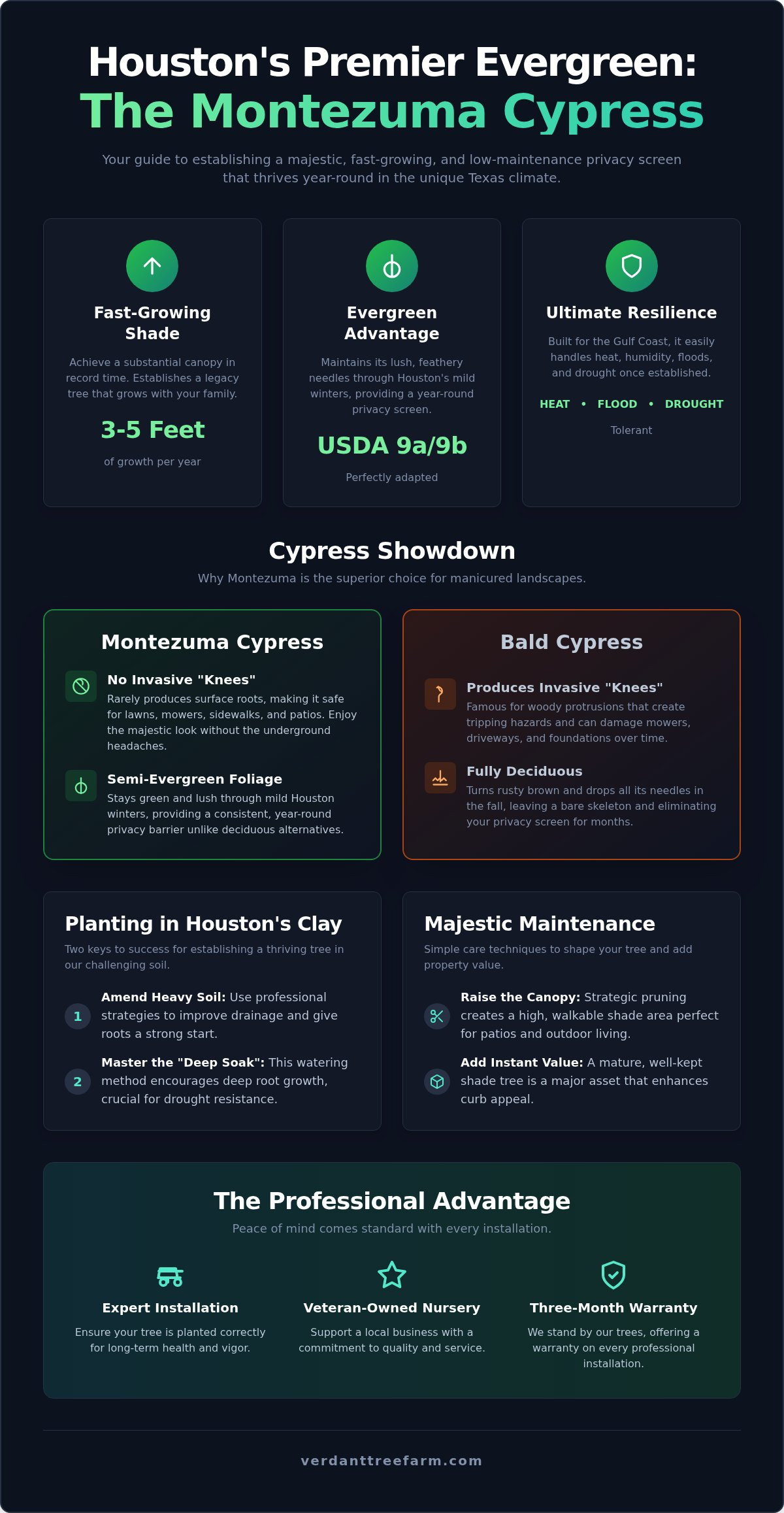
The Taxodium mucronatum, commonly known as the Montezuma Cypress, is a resilient giant built for the Gulf Coast. While many trees struggle with our intense humidity, this species thrives. It features unique weeping branchlets and a distinctive shaggy bark that adds immediate texture to any yard. Homeowners love it for its speed. You can watch a young sapling transform into a substantial shade canopy in record time. It’s not uncommon for these trees to put on three to five feet of height in a single growing season when planted correctly. This rapid development makes it a favorite for new construction where yards often feel bare and exposed. You aren’t just planting a tree; you’re establishing a legacy that grows with your family.
The Evergreen Advantage in Southeast Texas
Houston sits comfortably in USDA Zones 9a and 9b. This location allows the Montezuma Cypress to showcase its semi-evergreen nature. In our typically mild winters, the tree retains its soft, feathery needles long after other species have dropped theirs. You won’t have to stare at a skeleton of a tree for four months out of the year. Instead, your landscape remains lush and vibrant. The Montezuma Cypress Houston residents prefer serves as the best year-round privacy screen because its dense, needle-like foliage maintains a thick barrier even during the coldest months of the local calendar. This consistency is a major upgrade over traditional deciduous trees that leave your property feeling empty during the winter.
Resilience Against Houston Weather Extremes
Our weather is unpredictable, but this tree is ready for anything the Gulf throws at it. It handles 100-degree August days without scorching or leaf drop. It’s also a champion of flood resistance. If your yard holds standing water after a heavy Houston downpour, this cypress won’t drown; it actually enjoys the extra moisture.
- Heat Tolerance: Thrives in high humidity and intense Texas sun without the stress seen in northern species.
- Flood Survival: Ideal for low-lying areas or properties with drainage challenges where other trees might rot.
- Drought Resistance: Once the root system is established in our deep clay, it can withstand extended dry spells.
This combination of durability and beauty makes it a smart, long-term investment for your property. It provides the shade you need in summer and the green screen you want in winter. By choosing a tree that is naturally adapted to our specific environment, you ensure a landscape that stays healthy with less effort.
Montezuma Cypress vs. Bald Cypress: Which Fits Your Yard?
Choosing between these two giants often comes down to maintenance and winter aesthetics. While they share a similar look, their behavior in a residential setting differs significantly. The Montezuma Cypress Houston families prefer often wins out because it solves the two biggest complaints people have about the Bald Cypress: messy leaf drop and invasive root knees. Both trees are incredibly tough, but the Montezuma offers a more refined experience for a manicured landscape.
The Mystery of the Cypress Knees
Bald Cypress trees are famous for “knees,” or pneumatophores. These woody protrusions grow upward from the roots and can wreak havoc on lawn mowers, sidewalks, and pool decks. According to the U.S. Forest Service Fire Effects Information System, the Montezuma Cypress rarely produces these knees, especially when planted in typical garden soil rather than a swamp. This makes it a much safer bet for smaller residential lots. You won’t have to worry about tripping hazards or cracked concrete as the tree matures. If you have a tight space near a patio or driveway, the Montezuma is the clear winner for long-term property integrity. It provides the majestic look of a cypress without the underground headaches.
Visual Comparison for Seasonal Interest
Spring brings a flush of delicate, fern-like emerald foliage to both species. However, the experience changes as the year ends. Bald Cypress is strictly deciduous. It turns a rusty brown and drops every needle, leaving you with a bare skeleton for several months. In contrast, the Montezuma Cypress is semi-evergreen. It stays green much longer and often maintains its foliage through a mild Houston winter. This year-round presence makes it an excellent backdrop for the flowering trees Houston homeowners use to add pops of color. The deep green of the cypress provides the perfect contrast for the pinks and whites of a Redbud or Magnolia.
The growth form also differs slightly. Montezuma Cypress tends to have a broader, more pyramidal structure with weeping branchlets. Bald Cypress is often narrower and more columnar. Both handle our heavy “Houston Gumbo” clay well, but the Montezuma shows slightly better drought tolerance once its root system is established. If you’re unsure which variety fits your specific lot size or drainage needs, you can consult with our local experts to find the perfect match for your soil conditions. Selecting the right variety now ensures a beautiful, low-maintenance canopy for decades to come.
Planting Montezuma Cypress in Houston’s Heavy Clay Soil
Success with a new tree starts with the ground beneath your feet. Houston is famous for its “gumbo” clay, a heavy soil that holds water like a sponge but turns to concrete when dry. For a Montezuma Cypress Houston project to succeed, you must prepare the site to handle these extremes. This species is remarkably adaptable, but it needs a strong start to reach its full 80-foot potential. Our local experience shows that following a specific installation sequence prevents the most common causes of tree failure in Southeast Texas.
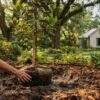
Step one is selecting the right location. You aren’t just planting for today; you’re planting for a tree that will eventually have a 40-foot spread. Avoid power lines and underground utilities. Step two involves testing your drainage. Dig a test hole and fill it with water. If it takes more than 24 hours to drain, you’ll need to use the “high planting” method. Step three focuses on the hole itself. Dig the hole at least twice as wide as the root ball but no deeper. In heavy clay, roots struggle to penetrate compacted walls, so a wide hole provides the loose soil they need to establish quickly. Finally, step four is mulching and watering. Apply a three-inch layer of organic mulch around the base, keeping it away from the trunk to prevent rot. For 2026 plantings, a consistent deep-soak schedule is vital during the first two summers.
Managing Drainage and Soil Compaction
Compaction is the primary enemy of new root growth in urban environments. When the soil is too tight, oxygen can’t reach the roots and water pools at the bottom of the hole. According to the Lady Bird Johnson Wildflower Center, while this tree loves moisture, it needs aeration to thrive. Incorporating expanded shale or high-quality compost helps break up the dense clay particles and improves long-term drainage. To ensure survival in poorly drained areas, plant the tree so the top of the root ball sits two to three inches above the surrounding ground level.
Sunlight and Space Requirements
Full sun is non-negotiable for the Montezuma Cypress. It needs at least six to eight hours of direct light to hit its maximum growth speed. Without enough sun, the canopy becomes thin and the growth rate slows significantly. Because of its massive size, keep the trunk at least 20 feet away from your home’s foundation. Visualizing how an 80-foot tree fits into a modern suburban lot can be difficult. Using 3D landscape design allows you to see the mature canopy in relation to your roofline and patios before the first shovel hits the dirt. This planning stage is the difference between a beautiful shade provider and a future structural problem.
Maintenance and Care: Keeping Your Cypress Majestic
A Montezuma Cypress Houston homeowners install is a long term investment that requires specific attention during its first few years. Once established, these trees are incredibly self sufficient, but initial care sets the stage for a lifetime of shade. Proper maintenance focuses on three core areas: hydration, structural pruning, and pest monitoring. By following a consistent routine, you ensure your tree reaches its full pyramidal glory without unnecessary stress. This proactive approach mirrors the standards we use at our own farm to grow the healthiest specimens in the region.
The “Deep Soak” method is the gold standard for watering in our local climate. Forget surface sprinkling; it rarely penetrates the heavy clay to reach the root ball. Instead, use a soaker hose or a slow running garden hose at the base of the trunk for 20 to 30 minutes. This technique encourages roots to grow deep into the soil rather than staying near the surface where they are vulnerable to heat. For fertilization, a balanced, slow release formula applied in late February or early March works best for the Texas Gulf Coast. This timing provides the nutrients required just as the massive spring growth spurt begins.
Seasonal Watering in the Houston Climate
Our summers are brutal. When temperatures hit the 100 degree mark in August, your cypress may need a deep soak twice a week to maintain its vibrant green color. It’s also a common mistake to stop watering during the winter months. However, a hydrated tree survives a sudden freeze much better than a dry one because water acts as a natural insulator for the root system. For a comprehensive look at managing your entire landscape during extreme heat, you can follow our guide to lawn care Houston for integrated irrigation strategies. Keeping your soil moisture levels consistent is your best defense against environmental stress.
Professional Maintenance Consultations
Pruning is essential for creating a high, walkable canopy that adds value to your property. We recommend removing the lower branches gradually as the tree matures. This “limbing up” process allows you to enjoy the cool shade underneath while maintaining clear sightlines across your yard. While the Montezuma Cypress is resilient, keep an eye out for bagworms or spider mites. Bagworms create distinctive silk cocoons that can strip foliage quickly if left unchecked. If you notice unusual yellowing needles or branch dieback that looks different from natural seasonal bronzing, it’s time to act. You can schedule Maintenance Consultations with our expert team to get a professional health evaluation and ensure your evergreen giant thrives for generations.
Montezuma Cypress for Sale in Houston: The Verdant Advantage
Verdant Tree Farm stands as the largest independent nursery in the city. We take pride in being the primary source for the Montezuma Cypress Houston residents trust to transform their landscapes. Because we are veteran-owned and operated, we bring a level of discipline and local accountability that big-box retailers simply cannot match. You aren’t just buying a plant from a shelf. You’re investing in a specimen cared for by local experts who understand our unique climate. Our team is deeply rooted in this community, and we treat every project as a long-term contribution to the regional canopy.
By selling nursery-direct, we eliminate middleman markups. This business model ensures you get a healthier, larger tree for your money. We maintain rigorous standards across our entire inventory, selecting only the most resilient specimens for our customers. To protect your investment, we provide a comprehensive three-month warranty on all trees. This guarantee offers peace of mind, ensuring your new evergreen giant is protected as it settles into its new environment. We believe in the quality of our stock and the expertise of our staff, and we stand behind every tree we sell.
Professional Installation and Delivery
Many homeowners attempt to plant large trees themselves, but DIY efforts often struggle against the dense Houston clay. Our professional installation team handles the heavy lifting and technical precision required for long-term success. We don’t just drop the tree in a hole. Our comprehensive service includes professional delivery, skilled labor, and the specific soil amendments needed to combat local compaction. We also provide professional staking to ensure your tree remains upright and stable during Gulf Coast winds. Choosing our professional team also validates your three-month warranty, as it ensures the tree starts its life with a perfect horticultural foundation.
Visit the Farm or Book a Consultation
We invite you to visit our Houston nursery to see our massive inventory in person. Walking the rows allows you to select the exact shape and size that fits your vision. You can also learn how to pair your purchase with other evergreen trees Houston landscapes require for a complete, year-round privacy screen. Our staff is ready to answer technical questions and help you plan for a lush, established look. Whether you need a single specimen or a full property overhaul, we are ready to handle the job. Your next step is simple. Request a quote online or book a 3D design session to visualize your new sanctuary before the first tree arrives.
Transform Your Property with Houston’s Premier Evergreen Giant
Investing in a Montezuma Cypress Houston project is one of the smartest ways to add immediate value and year round privacy to your home. You now know that this resilient species offers the rapid growth and lush canopy of a cypress without the invasive root knees or winter bareness of its cousins. By preparing your clay soil correctly and following a deep soak watering routine, you can establish a majestic sanctuary that thrives in our intense Gulf Coast climate. This tree is built to handle our heat and floods, making it a permanent fixture in your family’s legacy.
As Houston’s largest independent tree nursery, we are here to ensure your landscaping success. We are veteran owned and operated, providing the local expertise and reliable service your property deserves. Every purchase is backed by our professional three month warranty on all trees, giving you total confidence in your new investment. Don’t settle for a bare winter yard when you can have a vibrant, evergreen oasis instead.
Browse our Montezuma Cypress inventory at Verdant Tree Farm today! Our team is ready to help you select and install the perfect specimen for your unique landscape. Let’s start growing your shade today.
Frequently Asked Questions
Is the Montezuma Cypress evergreen in Houston?
Yes, the Montezuma Cypress is considered semi-evergreen in the Houston area. While deciduous trees drop their leaves in late autumn, this species maintains its soft emerald needles much longer. In a typical mild winter, it stays green or transitions to a deep bronze without losing its canopy. This makes it an ideal choice for homeowners who want year-round privacy and a lush landscape even during the colder months of the year.
How fast does a Montezuma Cypress tree grow in Texas?
In Texas, a Montezuma Cypress Houston project can see growth rates of three to five feet per year under ideal conditions. This rapid development allows a young sapling to transform into a substantial shade provider in just a few seasons. To hit these speeds, the tree needs full sun and consistent moisture. Its ability to establish quickly makes it one of the most efficient ways to add value and cooling shade to a new property.
Does the Montezuma Cypress have invasive roots or knees?
This species rarely produces the woody “knees” that are common with the Bald Cypress. These protrusions typically only appear when the tree is planted in standing water or swampy environments. In a standard residential yard with improved drainage, the root system remains largely underground. This characteristic makes it much safer to plant near patios, sidewalks, or pool decks where surface roots could otherwise cause structural damage or tripping hazards.
What is the difference between Bald Cypress and Montezuma Cypress?
The primary differences involve foliage retention and root behavior. Montezuma Cypress is semi-evergreen and grows faster than the Bald Cypress. It also lacks the characteristic knees that can disrupt lawn maintenance. While both handle Houston clay well, the Montezuma variety offers a more pyramidal, weeping aesthetic. It stays green through the winter while the Bald Cypress turns rusty brown and goes completely dormant for several months every year.
Can Montezuma Cypress survive a Houston freeze?
Yes, it can survive local freezes, but hydration is the key to its resilience. It is hardy down to USDA Zone 8, which easily covers the Houston region. However, a dry tree is more susceptible to cold damage. We recommend a deep soak before a predicted freeze to insulate the root system. Once established, these trees are quite tough and have survived many of the major temperature swings our region has experienced recently.
How much water does a newly planted Montezuma Cypress need?
A newly planted tree requires a deep soak at least twice a week during the first two growing seasons. You should run a hose at a slow trickle for 20 to 30 minutes to ensure water reaches the bottom of the root ball. During the extreme heat of August, you might need to increase this frequency. Once the roots are established in the clay, the tree becomes significantly more drought tolerant and requires less frequent intervention.
Where can I buy a large Montezuma Cypress in Houston?
You can find high-quality specimens at Verdant Tree Farm, which is the largest independent nursery in the Houston area. We specialize in large-scale trees and offer professional installation to ensure your investment thrives. Our veteran-owned operation provides nursery-direct value and a three-month warranty on every tree we sell. Visiting our farm allows you to hand-pick the exact shape and size that fits your specific backyard or commercial project.
Is Montezuma Cypress native to Texas?
The Montezuma Cypress is native to the Rio Grande Valley in South Texas and throughout much of Mexico. It is perfectly adapted to the heat and humidity of the Gulf Coast region. Because it originates in a similar climate, it handles our heavy clay and unpredictable weather patterns much better than non-native species. Planting this tree supports local biodiversity while providing a resilient, long-lived centerpiece for your home’s landscape design.