A landscape project doesn’t start when the first tree arrives. In Houston, a realistic schedule often starts months earlier, with the planting window in mind. If you’re wondering how to plan a landscape project timeline, work backward from when you want installation to happen, then map the decisions and site preparation that need to come first.
Design, plant selection, and installation may overlap, but decisions about the layout, site conditions, and tree availability can affect the sequence. Houston’s heat and rain can add uncertainty, too. Local planting guidance generally favors fall and winter, with mid-November through late February a common window for planting trees. Use that season as a planning reference, not a reason to rush decisions or assume the weather will cooperate.
This guide lays out practical planning milestones, explains which steps depend on earlier decisions, and shows where to leave room for weather or project changes. With 3-D landscape design, tree selection, and professional installation that includes delivery, planting, staking, and initial mulching, Verdant Tree Farm can support key stages of your plan.
Key Takeaways
- Learn how to plan a landscape project timeline by working backward from your target and identifying decisions that must come first.
- See how design choices, plant selection, site access, and preparation affect later stages of the schedule.
- Allow for Houston’s heat, heavy rain, and occasional freezes when planning outdoor work.
- Match your planning approach to the project scope, from focused tree planting to broader design-led landscape work.
- Use clear milestones and flexible buffers to track progress and adjust when conditions or project details change.
How to Plan a Landscape Project Timeline in Houston: Start with the End Goal
Start with what you want the finished space to do, not with a guessed installation date. You might want shade in a particular part of the yard, a defined entry planting, or several trees selected to work together. Once the goal is clear, you can identify the decisions and site conditions that need to be resolved before installation.
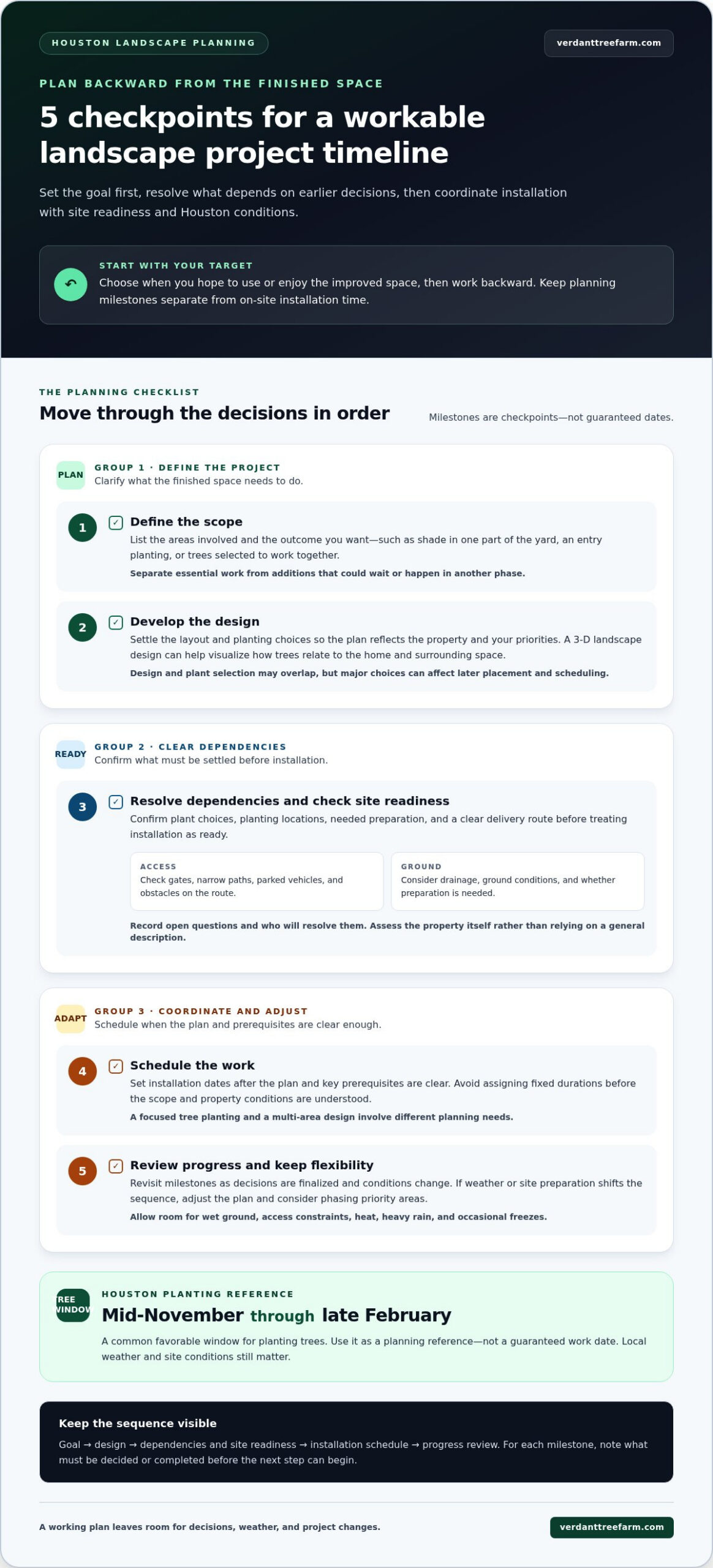
To understand how to plan a landscape project timeline, organize the work around these five connected steps:
- Define the scope. List the areas involved and the outcome you want. Separate essential work from additions that could wait or be handled in another phase.
- Develop the design. Resolve the layout and planting choices so the plan reflects the property and your priorities. Landscape design brings practical, aesthetic, horticultural, and environmental considerations together, as outlined in these principles of landscape design.
- Resolve dependencies. Identify what must happen before work can proceed, such as confirming plant choices, preparing the site, or planning a clear delivery route.
- Schedule the work. Set installation dates once the plan and key prerequisites are clear enough to coordinate.
- Review progress. Revisit milestones as decisions are finalized and conditions change. Adjust the sequence when needed.
Keep planning time separate from on-site installation time. Design conversations, plant selection, and site preparation are milestones, but they aren’t installation days. The schedule depends on the scope, property readiness, timing of decisions, and Houston conditions. Treat milestones as checkpoints, not guaranteed calendar dates.
What belongs on a landscape project timeline?
Include goal-setting, a site review, design decisions, plant selection, site readiness, and installation. For each milestone, record what must be decided or completed before the next step can begin. For example, don’t mark installation as ready until tree choices, placement, access, and necessary site preparation are addressed. Keep a note of open questions and who will resolve them. Weather, wet ground, and access constraints can affect outdoor work, so leave flexibility around those tasks.
How to set a realistic target date
Start with the date you hope to use or enjoy the improved space, then work backward to identify the decisions that need to happen first. Mark essential elements separately from work that could be phased, such as planting one priority area before another. This gives you options if site preparation or weather changes the sequence. Avoid assigning fixed durations before the scope and property conditions are understood. A focused tree planting and a multi-area design involve different planning needs.
Think of the schedule as a working plan, not a promise that every stage will land on a specific day. Clear priorities, timely decisions, and room to adapt make it easier to coordinate design, tree selection, and installation while keeping expectations grounded in the project.
Houston Landscape Project Timeline: Map Design, Site Readiness, and Weather
A schedule can stall before work begins if important decisions are still open. Changing a planting layout after selecting trees may affect placement, and an unclear delivery route may affect installation planning. Settle the major choices early, then confirm the property is ready. This gives each milestone a clear prerequisite instead of treating the calendar as a string of fixed dates.
Review how people use the yard, where new trees or planting areas should go, and which existing conditions could affect the plan. Check access details such as gates, narrow paths, parked vehicles, and obstacles along the route to the planting area. Consider drainage and ground conditions, too. A site review can identify questions to resolve, but the property itself needs to be assessed rather than relying on a general description.
Which design decisions should come before scheduling installation?
Before setting installation milestones, agree on the project goals, layout, and plant choices. A 3-D landscape design can help you picture how trees will relate to the home and surrounding space, making it easier to refine placement before work begins. Verdant Tree Farm provides landscape design and installation services in Houston, connecting visualization with tree selection and installation planning.
Next, map the remaining dependencies. Is the planting area accessible? Are plant choices settled? Does the site need preparation before delivery and planting? Keep installation dates provisional until you have answers. Verdant Tree Farm’s 3-D landscape design can help bring the proposed layout into view before work starts.
How Houston weather and site conditions change the sequence
Houston weather can affect the planting window and day-to-day site readiness. Heat can make newly planted trees more vulnerable to stress, while heavy rain may leave ground conditions unsuitable for planned work. Occasional freezes can also affect outdoor tasks. Houston Area Urban Forestry Council guidance generally identifies mid-November through late February as a favorable tree-planting period, but local conditions still matter from year to year.
Build flexibility around weather-sensitive milestones instead of treating a seasonal guideline as a guaranteed work date. Keep design and plant decisions moving while allowing installation to shift if rain, heat, or a freeze changes what’s practical. After heavy rain, reassess site readiness rather than assuming the original date still works.
In Houston, a weather buffer gives the schedule room to respond to conditions without forcing outdoor work before the site is ready. Track what’s complete, what still depends on site conditions, and which decisions can move forward. That distinction helps you adjust one milestone without losing sight of the whole project.
Compare Landscape Project Scopes to Estimate the Work Ahead
Project scope is a more useful timeline guide than yard size alone. A large yard may need only focused tree planting, while a smaller property may require coordination across several planting areas and design decisions. The number of choices, locations, and dependencies shapes the planning effort. Use the comparison below to identify what needs to be resolved before setting dates.
| Project scope | Planning complexity | Decisions and coordination | Likely scheduling dependencies |
|---|---|---|---|
| Focused tree planting | Centered on a specific planting goal and location. | Choose the tree and confirm its placement and access to the planting area. | Plant selection, site readiness, delivery access, and suitable conditions for installation. |
| Multi-area planting | More coordination because several parts of the property are involved. | Set priorities for each area, coordinate tree choices, and clarify how placements work together. | Finalizing choices across areas, confirming access to each location, and sequencing the planting work. |
| Broader design-led landscape work | Requires the design to connect multiple planting goals into a coherent plan. | Resolve the overall layout, tree selections, and priorities before scheduling individual planting milestones. | Completing design decisions, confirming site readiness, and coordinating each planting stage. |
These categories describe planning needs, not promised durations. Verdant Tree Farm’s professional installation includes delivery, planting, staking, and initial mulching. Keep those tasks distinct from other landscape work when mapping the planting schedule.
How scope changes the number of planning milestones
A focused plan may have a short chain of decisions: select a tree, settle its location, prepare the site, and coordinate installation. A project covering several areas adds choices about which trees belong where and how the work should be sequenced. Broader design-led work also requires coordination between the overall layout and each planting choice. More decisions mean more points to resolve before installation dates are firm.
When phasing a landscape project makes sense
Phasing can help when priorities are clear but different areas aren’t ready at the same time, or when design decisions need to be settled in stages. Completing related planting together can keep the plan coordinated; separating work can make it easier to focus on one priority at a time. As you choose trees for each phase, this Houston tree nursery selection guide can help you think through sourcing alongside project planning.
Scope is a stronger timeline guide than yard size alone because decisions and dependencies, not acreage, determine what must happen before planting. For each phase, write down the planting goals, selected trees, and prerequisites. This simple scope map makes it easier to build a workable schedule and adjust it without losing track of the overall plan. Verdant Tree Farm’s tree selection and professional installation can support the planting stages in that plan.
Build a Workable Houston Landscape Schedule with Milestones and Buffers
A useful schedule shows more than target dates. It shows what must be decided, who owns each action, and what needs to happen before the next step can begin. Keep a shared document with milestones, responsible parties, dependencies, and updates. When weather or a design choice changes the plan, everyone can refer to the same version.
Use this checklist to build the sequence. For each milestone, record its prerequisite and what “ready to move on” means:
- Confirm goals. Agree on the areas to address and the outcome you want. The next step depends on a clear scope and priorities.
- Complete design decisions. Settle the layout and planting choices. Tree selection and placement need to be clear before installation planning can be firm.
- Prepare the site. Confirm the planting areas are accessible and identify any site-readiness questions. Move forward when necessary preparation is complete.
- Schedule installation. Coordinate installation after design, tree choices, access, and site readiness are addressed.
- Review progress. Check off completed milestones and update the next steps when conditions or decisions shift.
How to work backward from the target date
Write down the date you hope the project will be ready, then list milestones in reverse: installation, site readiness, design approval, plant selection, and confirmed goals. Mark tasks that depend on another decision, such as installation depending on final plant selection or delivery access. Leave flexible space before outdoor work so a weather delay doesn’t force you to treat every later milestone as fixed.
Keep this buffer responsive rather than assigning it an arbitrary number of days. Houston rain can affect site readiness, and forecasts can change. A flexible gap gives you room to reassess before outdoor work instead of relying on a prediction made far in advance.
How to keep the schedule current when plans change
Review the milestone list whenever weather, site conditions, or project choices change. Record what changed, which later tasks depend on it, who needs to act, and what decision comes next. If a tree selection changes, revisit any dependent placement or installation planning rather than carrying forward dates based on the old choice.
Clear communication keeps a schedule useful. Share updates with the project team and note when a decision is complete, when a prerequisite remains open, and whether the next milestone is still realistic. This turns a delay into a manageable adjustment instead of an unexpected surprise.
For help connecting design choices with tree selection and installation planning, explore Verdant Tree Farm’s landscape design and tree installation as you build your project schedule.
Plan Your Landscape Project with Verdant Tree Farm in Houston
Once your goals, design choices, and site needs are clear, connect the plan to the trees you want and the installation steps ahead. Verdant Tree Farm supports Houston residential and commercial clients with 3-D landscape design, tree sales, and professional tree installation. Bringing these stages into the same planning conversation helps you visualize the intended layout, settle tree placement, and understand what needs to be ready before installation.
Where design and tree installation fit into the timeline
Design is an early milestone, not a final detail. A 3-D view can help you assess how proposed trees relate to the home and planting areas, so you can resolve placement and other design decisions before they affect later steps. Once the plan is clearer, tree selection can inform installation planning. The schedule should account for the choices made for your project rather than assume a particular tree or timing.
Verdant Tree Farm’s professional tree installation includes delivery, planting, staking, and initial mulching. Put these tasks on the installation milestone, and distinguish them from the design decisions and site-readiness work that come beforehand. After planting, maintenance consultations can support establishment care as you plan for the next stage of looking after your trees.
Choose the next step for your project
Your next move depends on what remains unresolved. If you’re still weighing layout or tree placement, start with design planning. If the overall direction is set but tree choices remain open, focus on selection. If the design, plant choices, and site preparations are in place, move on to installation planning and the prerequisites for getting started.
Use these questions to make the next conversation productive:
- What do you want the finished planting to accomplish?
- Which areas and tree placements are part of the current plan?
- What design or plant decisions still need to be settled?
- What site conditions or access details could affect installation?
These answers connect your project goals with the next practical milestone. Verdant Tree Farm’s Houston experience supports planning for residential and commercial landscapes, with design, tree selection, and installation considered as connected parts of the process. That can help turn a broad idea into a clearer sequence without treating an estimated schedule as a guaranteed start date or duration.
When you’re ready to plan, review Verdant Tree Farm’s landscape design, tree selection, and installation services and identify the right starting point for your project.
Turn Your Landscape Plan into the Next Step
A timeline becomes useful when it leads to a decision you can act on. Choose the next open question in your plan, whether that’s clarifying the layout, settling tree choices, or preparing for installation. Write down what needs to be resolved and who will move it forward. That gives you a practical starting point, even if weather or site conditions later call for adjustments.
Learning how to plan a landscape project timeline isn’t about predicting every detail. It’s about creating a clear sequence, keeping decisions moving, and leaving room to adapt as the project takes shape. A thoughtful plan can help you make steady progress without rushing choices that affect the finished landscape.
Use the milestones in this guide to decide what comes next, then bring your priorities and decisions so far into the planning process.
Frequently Asked Questions
How long does it take to plan a landscape project?
Planning time varies with the project’s scope, design decisions, site conditions, and coordination needs. It’s separate from on-site installation. A focused tree-planting plan may involve fewer decisions than a design spanning several areas. Map the milestones and flag choices that could hold up later work. Once the scope and site needs are understood, use them to develop a project-specific schedule rather than relying on a universal duration.
When should I start planning a landscape project in Houston?
Start before your preferred installation period so there’s room to work through design, plant selection, a site review, and scheduling. The lead-in depends on the project, so don’t wait until outdoor work is about to begin before settling key choices. Houston weather can influence when work is practical. Check current local seasonal recommendations for your planting plans, then leave flexibility in your calendar instead of treating a target date as fixed.
Can rain delay a landscape project in Houston?
Yes. Heavy rain can affect access to a planting area, ground conditions, and the order in which outdoor tasks can proceed. The impact depends on the property and planned work, so a general calendar can’t predict a specific delay. Leave a weather buffer and keep communication open with the project team. If conditions change, reassess the site and update dependent milestones before proceeding with the original schedule.
What should happen before landscape installation begins?
Before installation is scheduled, make sure the project’s purpose and design direction are understood, tree choices are settled, and access and relevant site preparation have been considered. Identify which planting areas are part of the plan and how delivery will reach them. Prerequisites vary by property and scope. Keep a written record of decisions and approvals so the installation date doesn’t conceal unresolved work that could affect readiness.
Is it better to complete a landscape project all at once or in phases?
One coordinated phase can make sense when planting areas or decisions depend on each other. Phasing may suit a project with distinct priorities, such as addressing one part of the yard before finalizing another. Consider how you want to use the property, which areas are ready, and whether separating work creates extra coordination. Neither approach is always faster or less costly. Map the dependencies first, then choose a sequence that fits your goals.
How can a 3-D landscape design help with project scheduling?
A 3-D design can help you review the proposed layout from different perspectives before installation planning moves ahead. Seeing how a planned tree relates to the home and nearby planting areas may prompt useful questions about placement while changes are still design decisions. This can make project discussions more specific, but it doesn’t guarantee a shorter schedule. Treat design review as a decision milestone and allow time to resolve feedback.
What should a landscape project timeline include?
Include the project goal, scope, design and plant decisions, site review, scheduling, installation milestones, and contingency space. To make the timeline useful, add columns for the person responsible, the prerequisite, current status, and date of the latest update. That structure makes it easier to see what’s holding up the next step. Revisit the plan after weather shifts, site conditions change, or you revise a project choice. For help putting the sequence together, plan your Houston landscape project with Verdant Tree Farm.