A more inviting business property starts with practical improvements, not just a fresh look. If you’re considering how to make my business property more inviting, focus on outdoor lighting, comfortable shade, useful seating, and durable materials. Together, these choices can make entrances, walkways, and gathering areas feel more welcoming.
Visitors notice how a property looks and feels before they step inside. The challenge is making outdoor spaces attractive while keeping them functional and manageable. A thoughtful plan considers how people move through the site, where they can pause comfortably, and how landscaping can complement the building.
This article covers ways to improve exterior lighting, plan shade and landscaping around outdoor amenities, create comfortable waiting or break areas, and choose durable materials. It also explains how professional landscape design and installation can bring those ideas together for a Houston business property.
Key Takeaways
- Plan exterior lighting to brighten entrances and walkways while reducing dark corners.
- Place trees and other landscaping with shade, visitor movement, and nearby amenities in mind.
- Create outdoor waiting or break areas with comfortable seating that keeps paths clear.
- Choose weather-ready, easy-to-maintain materials to help outdoor spaces stay welcoming through regular use.
1. Exterior lighting for safety and ambience
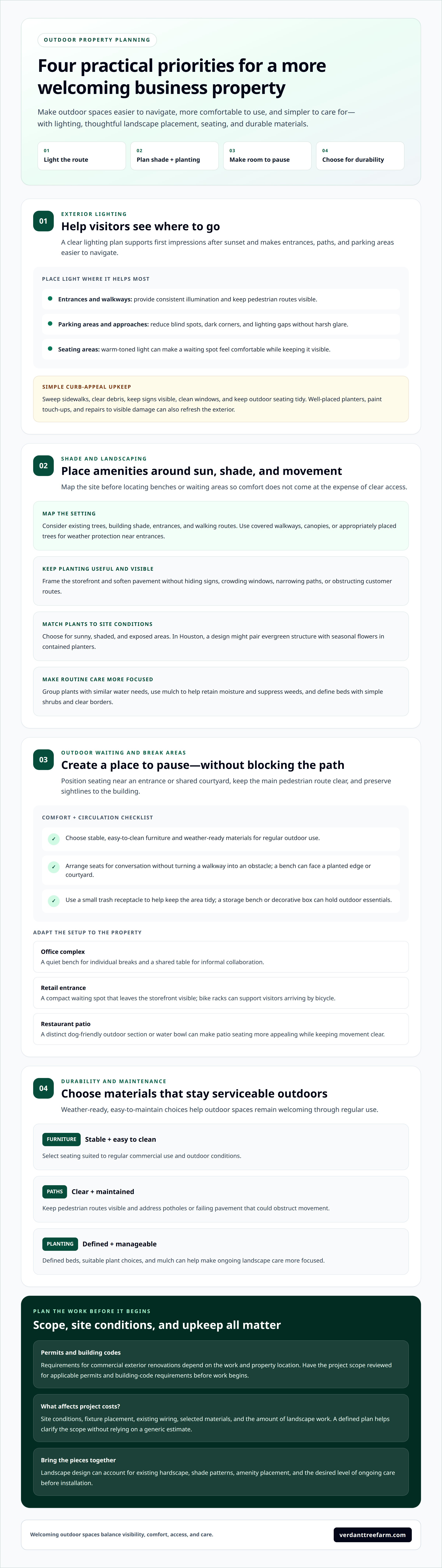
Exterior lighting shapes first impressions after sunset and helps customers find entrances, paths, and landscaping. A useful plan provides consistent illumination at entrances and along walkways, while reducing shadows and dark corners that can make a site feel less welcoming. Parking-area fixtures should support visibility and suit the building’s style. Warm-toned light near seating can make a waiting area feel more comfortable while keeping it visible.
Light-colored walls and furnishings can help a commercial space feel brighter and more open. Whites, soft grays, and pastel tones reflect light, while a consistent neutral palette limits visual distractions. Pair these colors with natural light where possible, and use warm artificial lighting in gathering areas. The result can feel welcoming rather than stark, with enough contrast to keep signs and entrances easy to spot.
For curb appeal on a limited budget, start with simple upkeep: sweep sidewalks, clear debris, and keep signs visible. Clean windows, tidy outdoor seating, and well-placed planters can refresh a storefront without a major renovation. A fresh coat of paint or repairs to visible damage can also improve the exterior. These details help customers recognize the entrance and see that the business is cared for.
Requirements for commercial exterior renovations depend on the work and property location. Before work begins, have the project scope reviewed for applicable permits and building-code requirements. Landscaping and exterior lighting costs depend on factors such as the site, fixture placement, existing wiring, selected materials, and the amount of landscape work. A defined plan helps clarify the scope without relying on a generic estimate.
To make parking lots and walkways safer and more welcoming, combine even lighting with clear pedestrian routes. Keep paths visible from entrances, reduce blind spots, and repair potholes or failing pavement that could obstruct movement. Security planning should account for dark corners, hidden approaches, and lighting gaps around entrances and parking areas. Well-positioned fixtures can improve visibility without harsh glare that makes it harder to see.
2. Considering shade and landscaping when placing amenities
Outdoor amenities work best when their placement accounts for sun, shade, and visitor movement. Before locating benches or waiting areas, map existing trees, building shade, entrances, and walking routes. This helps keep seats usable during sunny periods and prevents planting from narrowing access. Covered walkways, canopies, and appropriately placed trees can provide weather protection near entrances. Landscaping can frame a storefront and soften pavement without hiding signs. Planning how to make my business property more inviting starts with understanding how visitors use each outdoor space.
To choose plants suited to the local climate, a business can work with a professional who evaluates site conditions and maintenance needs. They can recommend plants for sunny, shaded, and exposed areas. In Houston, a design might pair evergreen structure with seasonal flowers in contained planters. Blooms timed across warmer seasons can maintain visual interest. Simple shrubs, defined borders, and refreshed mulch create a neat aesthetic with fewer recurring tasks. For owners thinking about how to make my business property more inviting, matching plant choices to site conditions helps the landscape feel intentional.
Lawn maintenance also shapes the property’s overall appearance. Professionals can plan where trimmed turf, pruned shrubs, and planting beds best support the entrance and customer routes. A water-conscious design can group plants with similar needs and use mulch in beds. Mulch helps retain moisture and suppress weeds. Defined planting areas can make routine care more focused, while trees and shrubs showcase the property without crowding windows, signs, or walkways. A clear plan also helps amenities sit comfortably within the landscape rather than compete with it.
Professional landscape design brings these choices together before installation. The plan can account for existing hardscape, shade patterns, amenity placement, and the desired level of ongoing care. If planting or site features need professional installation, professional landscape installation can help put the design into place. Maintenance consultations can also help businesses plan routine care for lawns, beds, and established plantings.
3. Comfortable outdoor waiting and break areas
A useful outdoor seating area gives visitors, employees, and tenants a place to pause without disrupting circulation. A landscape professional can position benches near an entrance or shared courtyard, then keep the main pedestrian route clear. The layout should reflect how people use the property: a visitor may need a short wait, while tenants may want space to relax or talk. Clear sightlines help the seating feel connected to the building rather than tucked away.
Comfort depends on more than the seat itself. Stable, easy-to-clean furniture suits regular commercial use, while weather-ready materials help it remain serviceable outdoors. Professionals can arrange seating to support conversation without turning a walkway into an obstacle. For example, benches can face a planted edge or courtyard, creating a visual focal point. A small trash receptacle nearby helps keep the area tidy, and a storage bench or decorative box can hold outdoor essentials.
Different properties need different arrangements. An office complex might use a quiet bench for individual breaks and a shared table for informal collaboration. A retail entrance may benefit from a compact waiting spot that leaves the storefront visible. Bike racks can make the property more useful to visitors arriving by bicycle. In each case, seating, paths, and building access should work together.
Restaurants can consider a dog-friendly outdoor section or a water bowl outside to make patio seating more appealing. The layout should distinguish that area while preserving clear movement between the entrance and dining space. Coordinate furniture with nearby landscaping so plantings frame the space without crowding it. This thoughtful arrangement helps the outdoor area serve guests and staff while contributing to a welcoming property.
4. Durable, low-maintenance materials
Materials influence a commercial property’s first impression and ongoing maintenance needs. High-traffic areas benefit from durable, low-maintenance surfaces suited to daily use. Timely pavement repairs can keep small cracks from worsening, and sealing cracks can limit water intrusion and freeze-thaw damage. A smooth, well-maintained route also supports an orderly appearance.
Outdoor seating needs similar consideration. Choose stable, easy-to-clean furniture and fixtures designed for weather exposure. Place them where visitors can reach them without blocking entrances or foot traffic. For a commercial space in regular use, furnishings should be practical to clean and sturdy enough for frequent use. These choices help keep seating useful and the layout clear.
Ongoing maintenance protects those choices. A property plan can cover routine landscaping, cleaning, and repairs, with inspections helping identify problems early. For example, a schedule might include sweeping walkways, clearing debris from seating areas, refreshing worn directional markings after pavement work, and repairing visible damage. Regular attention to signs also keeps business identification clear and the entrance easy to recognize.
Material choices should reflect both exposure and maintenance capacity. Properties with heavy traffic or limited maintenance staff can benefit from resilient finishes that are straightforward to clean. The right selection depends on where each surface sits, how people use it, and what upkeep is practical. This approach helps preserve a welcoming appearance without making maintenance unnecessarily difficult.
For ongoing care of landscape areas, explore maintenance consultations to help plan routine upkeep alongside exterior repairs and cleaning.
Use these priorities as practical criteria when comparing options. Properties with constant wear, heavy traffic, or limited maintenance staff can benefit from durable, low-maintenance materials. Choose exterior seating and fixtures designed for weather exposure, and make sure they are stable, easy to clean, and positioned without blocking foot traffic. Applying these criteria consistently helps keep furnishings suited to daily use and access clear around entrances and walkways.
Verdant Tree Farm
Verdant Tree Farm can help businesses bring greenery into an outdoor improvement plan with trees suited to the property’s design goals. Tree placement can complement paths and seating while preserving building visibility. Options include Live Oak, Shumard Oak, Mexican White Oak, and Drummond Red Maple, with professional installation for commercial projects.
Turn to Verdant Tree Farm when you’re planning a commercial landscape and want to include trees in the overall design. Share the areas you’d like to improve and the look you want to achieve, then discuss how tree selection and professional installation can support those goals.
Contact Verdant Tree Farm to discuss tree options for your business property.
Plan the next step for your property
A useful next step is to decide what you want visitors to notice first. A clearer entrance, a more welcoming place to pause, or a stronger landscape presence can each guide a commercial project. The question of how to make my business property more inviting becomes easier to answer when the outdoor plan reflects your customers’ experience and your business’s character.
Tree selection can support that vision. Verdant Tree Farm offers Live Oak, Shumard Oak, and Mexican White Oak for business properties, with professional installation available. These options can be considered as part of a landscape plan shaped around the site and its goals.
Share your plans and explore suitable tree options with Contact Verdant Tree Farm today. A thoughtful next step can help turn an underused exterior into a more welcoming part of your business.
Frequently Asked Questions
What are the most effective ways to make a business property more inviting?
Start where visitors first decide where to go. For a multi-tenant office, a clear directory near the shared entrance can reduce uncertainty before guests reach individual suites. Then prioritize improvements along the visitor’s route, such as a more defined arrival area or a place to pause. This sequence keeps upgrades useful instead of adding features without a clear purpose.
How can businesses improve entrances, signs, and wayfinding?
Make the business name and destination easy to identify from the visitor’s approach. For properties with several buildings or suites, use consistent labels at the street entrance and at each decision point. Keep building identification visible from the street, and position signs where landscaping or doors will not obscure them. A clear visual sequence helps visitors reach the right storefront or office without guesswork.
How can accessibility improvements make a business property more inviting?
Accessibility improvements help visitors with different mobility needs navigate from arrival to the entrance. Clearly designate accessible parking and connect it to a continuous, unobstructed route. Keep planters, signs, and other fixtures out of that route, and make surface changes or direction shifts easy to notice. Where possible, separate pedestrian movement from vehicle areas to make arrival more orderly for everyone.