An evergreen isn’t automatically the better choice for privacy, and a deciduous tree isn’t automatically the right pick for shade. Choosing between tree species for your goal starts with the conditions at the planting site, then narrows by native status, available space, and what you want the tree to do.
Deciduous or evergreen? That’s an important question, but only one part of choosing a tree that fits your goal. The tree also needs suitable light, soil, and room to grow, while its mature size and seasonal features should suit the planting location. This guide explains how to weigh those factors for a Houston property, from drainage and native status to placement in a front yard, backyard, or along a walkway. You’ll learn how to match practical site requirements with goals such as shade, screening, seasonal color, or a clear path, so you can narrow your options with confidence.
Key Takeaways
- Match a tree’s light, drainage, and soil needs to the planting site to support healthy establishment.
- Weigh native status alongside the specific conditions and care needs of your property.
- Choose species with mature size and growth habits suited to the planting location and nearby structures.
- Let the landscape goal guide choices such as evergreen screening, seasonal color, or shade.
1. How a professional assesses light exposure, drainage, soil compaction, space, and fertility
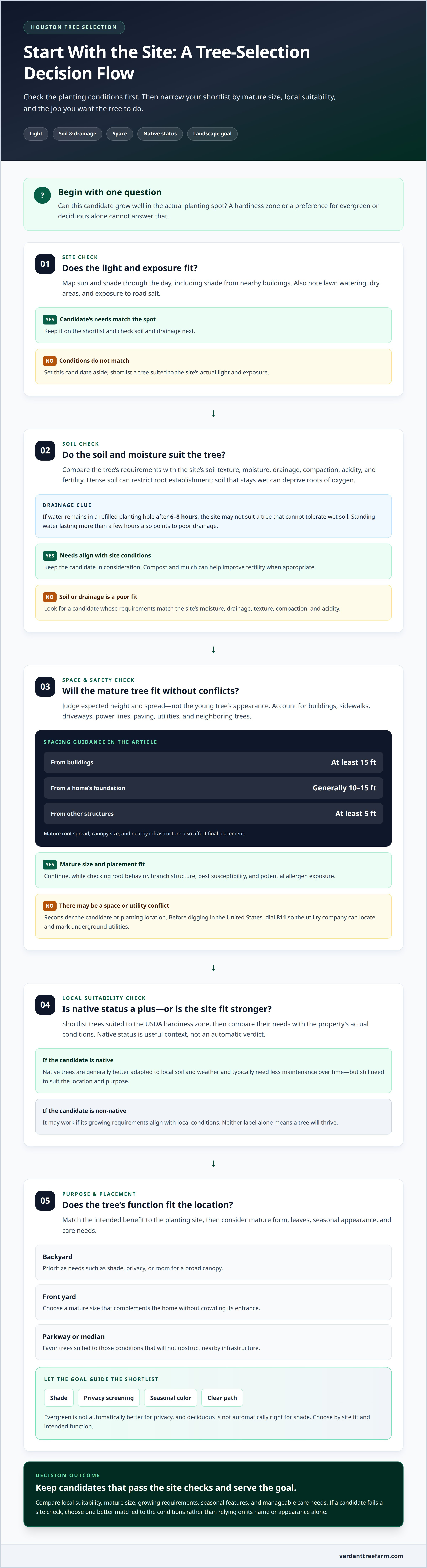
Start with the planting site, not a favorite species. Map how sun and shade change through the day, including how nearby buildings affect summer light. A full-sun tree may struggle in shade, while a tree planted in a lawn needs to tolerate its regular watering. Note dry areas, exposure to road salt, and the space available around the planting spot. Choosing between tree species for my goal begins with identifying which site conditions will shape the tree’s growth.
Soil conditions narrow the choices further. The professional evaluates texture, moisture, drainage, compaction, and acidity, then matches them to each tree’s requirements. Dense soil can restrict root establishment, while soil that stays wet can deprive roots of oxygen. If water remains in a refilled planting hole after 6-8 hours, the site may not suit a tree that cannot tolerate wet soil. Standing water lasting more than a few hours also points to poor drainage. Soil fertility matters too; compost and mulch can help improve it when appropriate.
Which tree species suit your USDA hardiness zone and local soil? Shortlist trees that fit the zone, then compare their needs with the site’s actual light, moisture, drainage, and soil acidity. A zone alone cannot tell you whether a tree will thrive in a compacted, shaded, or poorly drained spot. On a Houston property, choosing between tree species for my goal means weighing local conditions alongside the tree’s intended function.
Space is part of the same assessment. A professional considers mature height and spread, nearby trees, buildings, and power lines. Trees planted too close together may lose access to light and develop health issues. Before digging, homeowners in the United States should dial 811 so the utility company can locate and mark underground utilities.
Which trees may have invasive roots, weak branches, pest problems, allergens, or other risks? These concerns depend on species and placement. Compare root behavior, branch structure, pest susceptibility, and potential allergen exposure with how the site will be used. Consider whether roots could reach paving or utilities, and whether the tree’s care needs are manageable.
Choose species suited to your USDA hardiness zone, then check that their needs match the site’s soil texture, compaction, fertility, and moisture.
2. How a professional weighs native and non-native species for your site
For a Houston property, consider whether each candidate is native to the region, then compare its needs with the planting site. Native trees are generally better adapted to local soil and weather and typically need less maintenance over time. Native status is a useful starting point, not an automatic verdict: the tree must also suit its location and intended function. Ask, “I’m choosing between tree species for my goal, but which candidates fit this site?”
Compare each tree’s growing requirements with the property’s conditions and your priorities. A native tree may suit a lower-maintenance landscape, while a non-native species may work if its needs align with local conditions. Neither label alone means a tree will thrive. Match the species to the planting site rather than choosing by origin alone. In Houston, local soil and weather are important parts of that comparison.
Looking beyond a tree’s name helps make the choice more practical. Consider its mature form, leaves, seasonal appearance, and care needs, and how each fits the property. A beautiful tree may not be the right choice if its foliage conflicts with the desired look or function. Include pest and disease concerns in the assessment, alongside site conditions that can affect tree health. These factors help distinguish a visual preference from a suitable planting choice.
Keep the comparison focused: define the landscape goal, shortlist native and non-native candidates, then assess each one’s local suitability and fit for the site. This helps distinguish a preference for native planting from a firm requirement and ties the final choice to what the property can support. You might ask, “I’m choosing between tree species for my goal and want to balance local suitability with appearance.” That gives the discussion a clear focus: your priorities and the site’s growing conditions.
3. How a professional matches tree species to backyard, front yard, parkway, or median sites
Placement shapes tree selection. For a backyard, prioritize needs such as shade, privacy, or room for a broad canopy. In a front yard, look for a mature size that complements the home without crowding its entrance. Parkway and median sites need trees suited to their conditions that won’t obstruct nearby infrastructure. In every setting, let the planting site and intended function guide the choice.
Mature height and spread matter more than a young tree’s appearance. A small container tree may eventually become much larger, so professionals consider its expected dimensions against buildings, sidewalks, driveways, power lines, and neighboring trees. According to American Forests, planting at least 15 feet from buildings leaves room for roots and branches and helps avoid infrastructure conflicts. Trees should generally sit 10-15 feet from a home’s foundation and at least 5 feet from other structures. Nearby trees also need enough room to avoid limiting one another’s light.
Are there local rules or utility-line restrictions for planting trees near property boundaries? Property-line and utility requirements depend on the planting location, while overhead power lines and underground utilities affect suitable placement. A professional accounts for those constraints when locating the tree.
How far should different tree species be planted from buildings, sidewalks, utilities, and other trees? The cited spacing guidance is 15 feet from buildings, 10-15 feet from a home’s foundation, and at least 5 feet from other structures. Mature root spread, canopy size, and nearby paving or utilities also shape the final placement.
Choose a tree whose care needs suit the time and attention available after planting. Consider expected pruning, watering, and litter. A tree that drops substantial litter may be a poor fit over a walkway, while aggressive roots can conflict with paving. Verdant Tree Farm’s maintenance consultations can help align ongoing care with your tree selection.
What affects the cost of buying, planting, and maintaining different tree species? The tree selected, its size, the planting work, and ongoing care all matter. Weigh these together: a species with greater maintenance needs can add to the long-term investment.
4. How a professional matches tree function to your landscape goals
Start with the result you want. A deciduous tree can offer summer shade and let in more winter light after its leaves fall. An evergreen can screen an unwanted view year-round. Because these choices change how a landscape looks and feels across seasons, weigh the tree’s function alongside its location and mature form.
For cooling, placement matters as much as species. Trees can cool outdoor air by 2 to 9 degrees Fahrenheit, and shade from trees over a home’s roof and windows can reduce summertime air-conditioning costs by up to 35%. A professional considers where shade will land and whether a deciduous canopy suits the ground beneath it. That helps balance summer shelter with desired winter sunlight.
Which trees offer shade, privacy, screening, or wind protection? For shade, choose a tree whose mature canopy fits the available space. An evergreen is often suitable for year-round screening. For winter wind protection, trees are recommended on a home’s north and northwest sides.
Seasonal beauty can guide the choice, too. A flowering tree may suit a focal spot where blooms are part of the desired landscape. Fall color may be a priority elsewhere. A professional weighs those features against practical needs, including walkway clearance, litter, and the room available for mature branches.
Utility also matters beyond appearance. Trees and shrubs on hillsides can help limit soil wash-away, while planting for privacy can add greenery and seclusion. A professional connects each goal to placement, mature size, and seasonal behavior before recommending a species. That keeps the selection focused: decide whether shade, screening, flowering, wind protection, or another function matters most, then choose a tree suited to that job and site.
Verdant Tree Farm
Verdant Tree Farm can help you match landscape goals with tree options and professional installation in Houston. If you’re considering shade, seasonal color, or another function, the team can discuss options such as Shumard Oak, Mexican White Oak, and Drummond Red Maple. The best fit depends on the planting site, available space, and the role you want the tree to serve. Share those priorities with Verdant Tree Farm to focus the selection and plan installation for your property.
Contact Verdant Tree Farm to discuss your tree selection and installation.
Make your next tree choice with confidence
A tree is a lasting part of your property, so give the decision room to reflect both what you want and what the site can support. If you’re choosing between tree species for your goal, focus on the role you want the tree to play and the conditions it will face as it grows. That gives a professional a practical starting point for discussing suitable options.
Verdant Tree Farm offers Live Oak, Shumard Oak, and Mexican White Oak, with professional installation available. Share your priorities to discuss which species may suit your landscape and whether installation fits your plans.
Contact Verdant Tree Farm for tree advice and take the next step toward a tree choice that feels right for your property.
Frequently Asked Questions
Deciduous or evergreen?
Choose a deciduous tree for seasonal changes or an evergreen if you want foliage to remain through winter. The right fit also depends on the view, light, and space at your Houston planting site. For example, a deciduous canopy may suit a patio where you want changing seasonal light, while evergreen foliage can help screen a view. Consider the tree’s mature form before deciding.
What are common goals for planting trees, such as shade, privacy, fruit, wildlife, or timber?
Common goals include creating shade, screening a view, adding seasonal color, and supporting wildlife. A tree can serve more than one purpose, but setting priorities helps narrow the options. If you’re looking for fruit, note that Verdant Tree Farm does not carry fruit trees. For a Houston landscape, focus on the function you want and choose a species suited to the site and intended use.
How do popular tree species compare in mature height, canopy width, and growth rate?
Compare species by expected mature height, canopy width, and growth habit, not just by size at purchase. These details help determine whether a tree will fit beside a home, along a walkway, or in an open yard. Verdant Tree Farm offers options including Live Oak, Shumard Oak, and Drummond Red Maple. A professional can help assess how each candidate fits your layout.
How much water, sunlight, pruning, and maintenance does each tree species need?
Water, sunlight, pruning, and ongoing care needs vary by species and planting conditions. For example, a tree in a regularly watered lawn needs to tolerate that moisture pattern. Your care plan should also account for light requirements and any pruning needed to keep the tree in its place in the landscape. Verdant Tree Farm offers maintenance consultations for guidance on tree care and irrigation needs.
What tree species are native, drought-tolerant, or beneficial to local wildlife?
For a Houston property, assess native status, drought tolerance, and wildlife value as separate criteria. A tree’s suitability depends on its characteristics and the conditions where it will grow. Verdant Tree Farm carries native Texas trees and specialty varieties suited to local weather, including drought and freezes. Discuss the planting site and the benefits you want to narrow the options without assuming every species offers the same advantages.
Which tree species grow well in my USDA hardiness zone and local soil conditions?
Choose candidates suited to your USDA hardiness zone, then check their needs against the site’s light, moisture, drainage, soil acidity, and compaction. A zone alone cannot determine whether a tree will thrive in a particular spot.