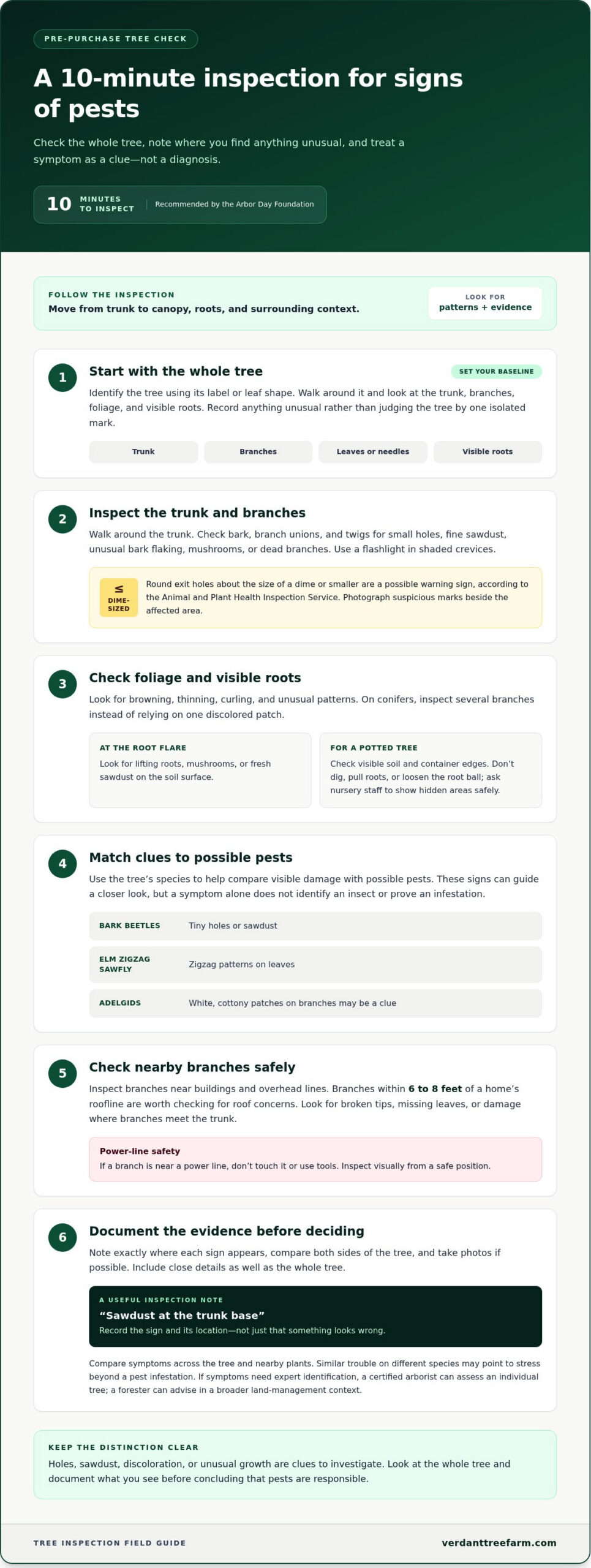
A careful inspection takes about 10 minutes: the Arbor Day Foundation recommends spending that time checking a tree for signs of damage. To learn how to check a tree for pests before buying, examine its leaves, bark, branches, and twigs for holes, sawdust, unusual discoloration, or other signs of trouble. A single symptom doesn’t always mean pests are the cause, so look at the whole tree.
It makes sense to inspect a tree closely before bringing it home. You want to choose a healthy tree, not inherit a problem that could affect nearby plants. This guide explains how to check a tree for pests before buying, how to distinguish possible pest activity from general stress, and what to do when you spot something concerning. You’ll also learn when an arborist or forester can help identify the issue and guide your next decision.
Key Takeaways
- Inspect leaves, bark, branches, and twigs for holes, sawdust, browning, or other unusual changes, then note where each sign appears.
- Look closely among the branches for insects, webs, egg sacs, and white, cottony patches that may indicate adelgids.
- Compare symptoms across nearby plants. Similar trouble on different species may point to stress beyond a pest infestation.
- Photograph unfamiliar damage and seek help from a certified arborist or forester when you need an expert identification.
- Learn which distinctive trunk holes may signal Asian longhorned beetle activity and why accurate identification matters.
What Signs of Pests Should You Check for Before Buying a Tree?
To learn how to check a tree for pests before buying, inspect the trunk, branches, foliage, and visible roots. Spend about 10 minutes, as the Arbor Day Foundation recommends, and record anything unusual.
-
Inspect Trunks and Branches
Walk around the trunk and examine the bark, branch unions, and twigs. Look for small holes, fine sawdust, unusual bark flaking, mushrooms, or dead branches. The Animal and Plant Health Inspection Service identifies round exit holes about the size of a dime or smaller as a possible warning sign. Use a flashlight in shaded crevices, and photograph suspicious marks alongside the affected area.
-
Examine Needles and Roots
Check leaves or needles for browning, thinning, curling, and unusual patterns. On conifers, inspect several branches rather than judging the tree by one discolored patch. Look at the root flare and soil surface for lifting roots, mushrooms, or fresh sawdust. For a potted tree, inspect visible soil and container edges without digging, pulling roots, or loosening the root ball. Ask nursery staff to show you hidden areas safely.
-
Identify Common Nursery Pests
Use the tree’s label or leaf shape to identify its species, then compare symptoms with possible pests. Bark beetles may leave tiny holes or sawdust; elm zigzag sawfly can leave zigzag patterns on leaves. White, cottony patches on branches may indicate adelgids. These are examples of pests and signs found on trees in the United States, but a symptom alone does not identify an insect or prove an infestation.
- Check branches near buildings and overhead lines. Branches within 6 to 8 feet of a home’s roofline are worth inspecting for roof concerns. Look for broken tips, missing leaves, or damage where branches meet the trunk. If a branch is near a power line, don’t touch it or use tools; inspect visually from a safe position.
- Record each sign and where you saw it, such as “sawdust at the trunk base” or “browning on one branch.” Take photos if possible, then compare both sides of the tree. This gives you a clear routine for checking a tree for pests before buying: document the evidence, identify the species, and assess the whole tree rather than one isolated mark.
Use a flashlight to check a Christmas tree’s trunk, branches, and needles for holes, frass, lifting roots, or fine sawdust. Early browning, leafless branches, or zigzag patterns may signal trouble, with zigzags indicating elm zigzag sawfly. Record where you find signs and photograph them if possible.
Consulting certified arborists and foresters
Bring in a qualified tree professional when visible symptoms need expert identification. These steps help you prepare useful evidence and understand what a professional assessment can clarify.
- Arrange an assessment when you find several signs on one tree, such as holes, branch dieback, and unusual foliage. Ask the professional to identify the species, inspect affected areas, and explain whether symptoms point to insects, disease, or another stressor. A clear diagnosis is more useful than treating an unidentified problem.
- Choose the right expertise for the decision. An arborist focuses on individual trees and their condition, while a forester can advise on tree health in a broader land-management context. For a single nursery tree, explain that you’re considering a purchase and need help interpreting its condition, not just a general planting plan.
- Prepare a concise inspection record before the visit. Include the tree’s label or suspected species, the location of each symptom, and photos showing close details as well as the whole tree. Note whether damage appears on one branch or across the canopy. This context helps the professional compare symptoms and focus the inspection.
- Ask for the reasoning behind the assessment. For example, ask which visible signs support the diagnosis, what other causes were considered, and whether the symptoms affect the tree’s structure or likely establishment. If an insect is present, ask for its identification and an explanation of how it relates to the observed damage. Avoid applying treatment before the pest is identified.
- Use the findings to make a practical buying decision. Ask whether the tree appears suitable for planting, what care conditions matter, and which warning signs deserve follow-up. If the professional identifies an active pest concern or structural damage, pause the purchase and weigh those findings against the tree’s intended location and role in your landscape.
After you understand the tree’s condition, explore tree choices for your landscape with the assessment’s species and site considerations in mind.
Distinguishing pest infestation from tree stress
Compare symptoms across the tree and nearby plants before deciding that pests are responsible. Ask nursery staff about the tree’s pest history, past treatments, and any symptoms noticed after treatment.
- Identify the tree species using its tag or leaf shape. Pest threats vary by species, so the name helps narrow down which insects or diseases could explain visible damage. Then compare the symptoms with the tree’s growth pattern. Browning on one branch differs from sudden thinning throughout the canopy.
- Map each symptom before interpreting it. Note whether damage appears on one leaf, several branches, or the entire tree. Pest clues include feeding damage, discoloration, sudden thinning foliage, borer holes, and unusually sized leaves. A combination of signs in one area can guide a closer inspection.
- Look for a visible connection between an insect and the damaged tissue. Check whether insects cluster near discolored leaves or holes, or whether fresh feeding marks appear nearby. Record what you see and where it occurs. Damage without visible insects still deserves attention, because pests aren’t always present during an inspection.
- Compare the tree with nearby plants, including different species. If several plants show similar symptoms, the cause may be something other than an insect or disease. For example, matching leaf discoloration across unlike plants suggests looking beyond a pest affecting only one tree species. Treat this as a clue, not a diagnosis.
- Check the growing conditions for signs that could explain stress. Inspect the potting medium for dryness or waterlogging, and look for compacted soil or a damaged container. Consider whether the tree has recently been moved or handled. These conditions can affect foliage and growth, so assess them alongside any pest evidence.
- Ask nursery staff clear questions about the tree’s history. Ask which pests have been seen on this tree or nearby stock, what treatments were applied, and when. Also ask whether new damage appeared afterward and whether the tree has been separated from affected plants. Record the answers alongside your symptom notes.
- Use the combined evidence to decide what needs follow-up. A single browning leaf gives less context than repeated damage, visible feeding, and matching insects. If symptoms remain unexplained, share your notes and photographs with a certified arborist or forester. Avoid choosing a treatment until the suspected pest has been identified.
Recognizing insects, webs, egg sacs, and adelgid patches
Inspect the inner branches closely, where insects, webs, egg sacs, and cottony adelgid patches may be easier to spot.
- Part the branches gently and scan their undersides, inner joints, and shaded areas. On a Christmas tree, insects and egg sacs can hide among the limbs, while fine webs may stretch between needles or twigs. Use a flashlight to see into dense growth. Check several branches, since one isolated web or insect does not show how widely signs are spread.
- Look closely at any web before treating it as pest evidence. Check whether insects, eggs, or feeding damage appear on or beside the silk. A web by itself may have another explanation, so note its location and whether it connects to affected foliage. Photograph the web and nearby branch together to preserve useful context for later identification.
- Search for egg sacs attached to twigs, needles, or branch forks. Note their color, shape, and exact position without squeezing or scraping them. Look nearby for small insects, shed skins, or leaf and needle damage. These details can help distinguish an isolated object from a pattern associated with visible activity. Avoid moving egg sacs to another plant or tree.
- Check conifer branches for white, cottony patches, which can indicate adelgids. Examine the needles and twig around each patch for discoloration or other changes. Record whether patches occur on one branch or several parts of the tree. A close photograph and a wider view show both the patch’s appearance and its location.
- Document suspected insects before taking action. The Arbor Day Foundation recommends photographing suspected tree pests and freezing a captured insect to preserve it for USDA identification. Don’t apply treatment based only on a web, egg sac, or cottony patch. First try to identify the insect and connect it to the tree’s symptoms. Record where you found it and share those details with a qualified professional if identification remains unclear.
Before buying a Christmas tree, include its inner limbs and shaded branch joints in a deliberate check for insects, spider webs, and egg sacs. Look over several areas and note where signs appear. This gives you a clearer basis for comparing trees instead of focusing on one isolated spot. If you find an insect, try to identify it before deciding on management steps. Keep observation and identification distinct: a sign calls for closer inspection, while management should follow only after you have considered what the insect is.
Recognizing signs of Asian longhorned beetle
Check the trunk and larger branches for perfectly round exit holes. Their shape and size can help you decide whether closer identification is needed.
- Scan the visible trunk from its base upward, then inspect larger branches within reach. Look for perfectly round openings about the width of a pencil or a dime. Check both sides where you can see safely, including branch surfaces partly hidden by foliage. Don’t rely on one quick glance; note each hole’s location and whether others appear nearby.
- Compare the opening with the specific visual clue. A round hole about pencil-width or dime-sized can be associated with Asian longhorned beetle activity. Don’t treat every hole as proof of this pest. Record its shape, approximate size, and position on the tree, then photograph it clearly. Take a close image of the opening and a second view showing where it sits.
- Photograph the tree before moving or handling it. Take a close-up of each suspected hole and a wider image that includes the trunk or branch. Include the tree’s label in a separate photograph if available, so its identity stays connected to your observations. Write down where the tree was being sold and when you noticed the sign.
- Identify the tree before interpreting the evidence. Read its nursery label or use visible leaves to establish its species, then keep that information with your photos. The Arbor Day Foundation identifies August as Tree Check Month and says its annual campaign checks for Asian longhorned beetle. Use the campaign as a seasonal reminder to look closely, not as evidence that a particular tree is infested.
- Pause the purchase if you find a suspicious round hole. Don’t cut into the bark, scrape the opening, or apply a treatment, because those actions can change the evidence. Keep the tree separate from other plants while you seek identification from a qualified tree professional or appropriate local authority. Share your photographs, species label, and location notes.
- Make your next decision from the documented evidence. A careful record lets a professional assess the opening without relying on memory or an unclear description. If the sign is identified as a concern, avoid transporting the tree until you understand the recommended next step. If you’re also planning a healthy landscape, explore tree options for your property after resolving the inspection question.
Verdant Tree Farm: Live Oak
Verdant Tree Farm can help you move from inspection to choosing a tree suited to your Houston landscape. Once you’ve reviewed any pest concerns, consider options such as Shumard Oak, Mexican White Oak, or Drummond Red Maple. Compare each tree’s characteristics with your site and planting goals, and use your inspection notes to guide the decision. A careful selection starts with matching the species to the space and the role you want it to fill.
You’re welcome to visit verdanttreefarm.com to explore your next steps.
Choose Your Next Tree with Confidence
Make your inspection notes part of the planting decision. Match the tree’s species and condition to the space, soil, and purpose you have in mind. If a symptom remains unclear, use your photographs and observations to get an expert identification before moving forward. That gives you a clearer basis for deciding whether the tree suits your landscape.
Knowing how to check a tree for pests before buying helps you make a more informed choice, but species selection matters just as much over the long term. Verdant Tree Farm offers Live Oak, Shumard Oak, and Mexican White Oak. Consider how each option fits your property and plans for the space.
Ready to explore your options? Contact Verdant Tree Farm for help choosing a tree, and take your next step toward a landscape you’ll enjoy.
Frequently Asked Questions
What Should You Do at the Lot Before Bringing the Tree Home?
Ask nursery staff to inspect the tree with you before loading it. For a cut Christmas tree, a mechanical shaker can dislodge loose needles and hiding pests; if one isn’t available, hold the trunk firmly and shake it several times outdoors. Check the tree again with a flashlight before bringing it inside. Keep it separate from houseplants while you inspect it, and avoid spraying an indoor tree with bug spray.
What signs of insect pests should you check on a tree before buying?
Look for insects gathered on foliage, feeding marks, egg sacs, webs, and white, cottony patches on branches. Also notice whether the tree has sudden thinning or unusually sized leaves. A single insect may not explain visible damage, so record where you found it and whether nearby leaves show similar symptoms. Photograph unfamiliar insects rather than guessing their identity, especially if the tree is intended for a Houston landscape.
How do you inspect tree leaves, branches, trunk, and roots for pests?
Use a consistent route: begin at the canopy, inspect the trunk, then examine the visible root flare and soil surface. Turn a few leaves over to check their undersides, and look into branch joints for insects or egg sacs. For container-grown trees, leave the root ball intact. Check the soil and container exterior for insects, unusual material, or damage without pulling the tree from its pot.
What signs of tree diseases can look like pest damage?
Leaf discoloration, curling, thinning, and unusual patterns can result from disease or other stress, not just insects. For example, curled leaves or stripes between the veins on beech may be signs of beech leaf disease. Compare the symptom with the tree’s species and nearby plants. If different species show similar problems, the cause may extend beyond a pest or disease affecting one kind of tree.
How can you check a tree’s root ball for insects or damage before purchase?
Inspect only what’s visible without loosening the root ball. Look around the container’s drainage openings and soil surface for insects, webbing, decay, or damaged roots emerging from the edges. Check whether the container is cracked or the tree sits loosely in its pot. Don’t tug on the trunk or probe deeply into the soil; ask nursery staff to show you the root ball if you need a closer look.
What should you do if you find pests on a tree before buying it?
Pause the purchase and document the finding with a clear photo and its location on the tree. Ask nursery staff whether they recognize the insect and whether similar signs appear on nearby stock. Avoid moving a tree with a suspicious pest to your property before identification. For a suspected serious tree pest, the Arbor Day Foundation recommends reporting findings to your state department of agriculture.
How can you avoid bringing invasive tree pests home from a nursery?
Inspect the tree before transport and avoid taking home one with unexplained insects, egg sacs, or suspicious damage. Keep the tree separate from other plants until you’ve examined it again at home, especially if it traveled from another region. Photograph unfamiliar pests and seek identification before moving them between locations. If you suspect a pest that could threaten local trees, report the finding to your state department of agriculture.
When should you hire an arborist to inspect a tree before buying?
Consult an arborist when symptoms are extensive, several signs appear together, or you can’t identify the cause. An arborist can assess the tree’s species, condition, and visible damage before you make a purchase decision. A forester may be helpful when the question involves a broader planting area or several trees. Bring photos and the tree’s label so the professional can focus the assessment on the specific specimen.