A nursery label alone doesn’t guarantee a healthy tree, and a big-box price tag doesn’t tell the whole story. In the tree nursery vs big box store trees decision, what matters most is the individual tree’s condition, how it fits your Houston property, and what support comes with the purchase. A full-looking canopy can still hide root or trunk problems, so knowing what to inspect helps you choose with care.
A nearby retailer may be convenient, while a tree-focused business may offer a broader selection and help with planting. This guide compares selection, tree condition, site fit, delivery, planting, and after-purchase support, so you can weigh the complete buying experience instead of relying on the store label alone.
You’ll learn what to look for before you buy, how to assess a planting site, and what installation help can include. At Verdant Tree Farm, residential tree and palm purchases include delivery, planting, staking, and initial mulching, along with a three-month warranty. With a suitable tree and a clear plan for planting, your choice can become a lasting part of your landscape.
Key Takeaways
- Compare tree nursery vs big box store trees by condition, selection, guidance, and purchase support, not by store type alone.
- Inspect a tree’s canopy, trunk, root flare, and container before making a choice.
- Match the tree to your Houston yard’s available space and landscaping goals before you shop.
- Assess what you can see yourself, then compare the delivery, planting, and after-purchase support included with the purchase.
- Verdant Tree Farm residential purchases include delivery, planting, staking, initial mulching, and a three-month warranty.
Tree Nursery vs. Big Box Store Trees: What Actually Differs?
The comparison isn’t simply “healthy nursery tree” versus “risky retail tree.” A big-box store may offer convenient access to a tree in good condition. A tree nursery may offer a more focused assortment and guidance related to plant selection. Neither the store category nor the plant label tells you everything about an individual tree or the help available after purchase.
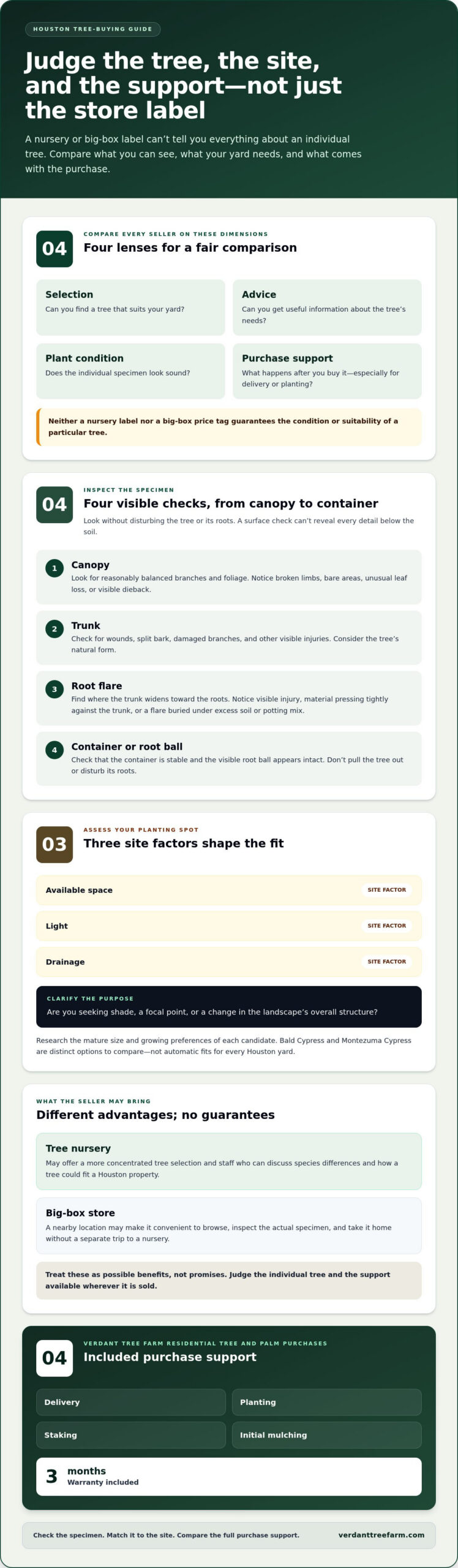
Instead, compare four things: selection, advice, plant condition, and purchase support. Can you find a tree that suits your yard? Can you get useful information about its needs? Does the specimen look sound? And what happens after you buy it, particularly if you need delivery or planting? These questions provide a more useful comparison than assumptions about where trees are sold.
What does a tree nursery offer beyond a retail shelf?
A plant nursery is a business focused on growing or selling plants, and nurseries may specialize in particular types of plants or customers. Compared with a general retail assortment, nursery-direct inventory may provide a more concentrated tree selection. Staff with horticultural knowledge may also help explain differences between species and discuss how a tree could fit a Houston property. These are potential benefits, not guarantees: a nursery label alone doesn’t prove that a particular tree was well cared for or suits your site.
Local suitability matters because choosing a tree involves more than liking its appearance. Consider the space available, the purpose you have in mind, and the conditions where it will grow. A Bald Cypress and a Montezuma Cypress, for example, are distinct options to compare. Guidance can help you narrow the choices, but you should still assess the individual specimen before buying.
When might a big-box store be a practical choice?
Convenience counts. A nearby store may make it easy to browse, compare trees in person, and take one home without making a separate trip to a nursery. You can inspect the actual specimen instead of relying only on a picture or description. If the tree appears healthy, suits your yard, and the purchase arrangements meet your needs, it can be a reasonable choice wherever it’s sold.
Be discerning, not dismissive. Trees may be handled or cared for differently from one location to another, so the store name can’t reveal the condition of an individual plant. A nursery isn’t a substitute for checking the tree yourself, either. Look beyond the label and compare the support included with the purchase, such as delivery or planting, before weighing the complete buying experience.
Use the same test for every seller
For a fair tree nursery vs big box store trees comparison, judge both the tree and the support behind it. A healthy specimen is only part of a successful purchase; the right species and a clear plan for getting it into the ground matter, too. At Verdant Tree Farm, residential tree and palm purchases include delivery, planting, staking, and initial mulching. First, learn how to inspect a tree’s canopy, trunk, roots, and container.
How to Judge Tree Health and Houston Suitability Before You Buy
A species label identifies a tree, but it can’t tell you whether that specimen is healthy or whether it belongs in your yard. Inspect the tree and evaluate the planting site as separate parts of the decision. You don’t need to diagnose every concern yourself. Look for visible warning signs, and don’t treat the name on a tag as proof of good condition or a fit for your property.
What should you inspect on the tree itself?
Look from the canopy down to the container. Focus on what you can see without disturbing the tree or its roots. If part of the tree is obscured, get a clear view or compare another specimen.
- Canopy: Check whether the branches and foliage appear reasonably balanced. Notice broken limbs, bare areas, unusual leaf loss, or visible dieback.
- Trunk: Look for wounds, split bark, damaged branches, or other visible injuries. Consider the tree’s natural form, since branching habits differ by species.
- Root flare: Find where the trunk widens toward the roots. Look for visible injury or material pressing tightly against the trunk, and notice if the flare appears buried under excess soil or potting mix.
- Container or root ball: Check that the container is stable and the visible root ball appears intact. Don’t pull the tree out or disturb its roots to inspect them. A surface check cannot reveal every detail below the soil.
A label can identify a Bald Cypress or a Medjool Date Palm, but it can’t show whether that individual tree has damaged branches or a trunk wound. Make your decision based on the specimen in front of you, not just the printed name or where it’s being sold.
How can a tree fit a Houston property?
Start with the planting spot. Note the available space, light, and drainage, along with the role you want the tree to play. Are you seeking shade, a focal point, or a change in the landscape’s overall structure? These details help you compare species according to your property’s needs instead of choosing based on appearance alone.
Next, research the mature size and growing preferences of each candidate. Bald Cypress and Montezuma Cypress are options to consider, but neither should be assumed to suit every Houston yard. Look for reliable local recommendations about soil, light, and drainage for the specific species. Be cautious with broad claims about drought tolerance or soil compatibility unless you can verify them for that tree.
Use the same inspection and site-fit approach whether shopping at a nursery or a big-box store. If you’re considering a Bald Cypress or Montezuma Cypress, explore tree choices at Verdant Tree Farm as you compare options for your landscape.
Nursery vs. Big-Box Trees: Compare Selection, Advice, and Support
A useful tree nursery vs big box store trees comparison looks beyond the sales floor. You can inspect a particular tree yourself, but the range of species, depth of staff guidance, and help after purchase depend on the seller and the individual transaction. A broad selection gives you more options to compare, but it can’t choose the right species or specimen for you.
Use this side-by-side view as a starting point, not a rule about every nursery or retail store:
| What to compare | Tree nursery | Big-box store |
|---|---|---|
| Selection | May focus more heavily on trees and offer a range suited to landscaping projects. | May combine trees with a broad assortment of other home and garden products; tree choices vary by location and season. |
| Guidance | Specialist horticultural knowledge may be available, though the depth of advice varies. | Staff can help with the shopping experience, but tree-specific expertise varies by store and employee. |
| Inspection | You can assess the individual tree on site if it is available to view. | You can also inspect the individual tree in person; condition depends on that specimen and its handling. |
| After-purchase support | Delivery, planting, and other support depend on the nursery and purchase. | Delivery or planting arrangements depend on the retailer and purchase; the buyer may need to handle logistics. |
Which buying channel fits your project?
For one straightforward tree, convenience may matter most. If you already know the species and can assess the specimen, a nearby retailer may suit your plans. If you’re still deciding which tree fits the site, focused selection guidance can be valuable.
A larger landscape brings different needs. A wider tree selection can help you compare species across several planting locations, but the goal is a suitable mix, not simply more choices. For commercial work, separate the plant order from the installation plan: purchasing trees alone is different from coordinating supply with installation. Verdant Tree Farm provides wholesale supply and commercial tree installation.
What does after-purchase support change?
Delivery and planting affect how much of the project you manage yourself. One purchase may leave transport, planting, staking, and initial mulching to the buyer, while another may include these tasks. Compare the arrangements rather than assuming they come with every tree. Establishment guidance can help you understand how to care for a new planting, but no advice can promise that a tree will survive.
Warranty coverage also varies. Review the terms that apply to the specific purchase, including what the coverage includes. Verdant Tree Farm provides a three-month warranty; that term does not describe coverage at other stores or nurseries.
A Houston Buyer’s Checklist for Choosing a Tree and Purchase Route
A good purchase starts before you reach the nursery or retail aisle. Decide what your Houston yard needs, then compare suitable species, inspect the individual tree, and plan how it will get from the seller to its planting spot. This sequence helps you compare tree nursery vs big box store trees on practical needs, not convenience alone.
Five checks to make before choosing a tree
Work through these steps in order. Each one narrows the options and helps prevent a mismatch between the tree, your property, and the purchase arrangements.
- Measure the planting area. Note the open space and look up for overhead constraints. Also consider nearby paving, buildings, fences, and neighboring landscape features.
- Choose the tree’s purpose. Decide whether you want shade, screening, or seasonal visual interest. A clear goal makes it easier to compare different species and forms.
- Match species to site and space. Research the mature size and growing needs of each candidate before settling on it. Compare options such as Bald Cypress, Green Ash, Mexican / American Sycamore, or a palm against your location and intended use, rather than choosing on appearance alone.
- Inspect the actual specimen. Look over its canopy, trunk, root flare, and container for visible damage or signs of stress. Confirm the tree’s identity, since a tag names a species but doesn’t establish the condition of that individual plant.
- Plan the route from purchase to planting. Identify the planting location and access path before arranging delivery. Consider whether the tree can be moved through gates or around other obstacles, and clarify who will handle delivery and planting.
For more criteria to weigh as you compare sellers, use this Houston tree nursery selection guide alongside your site notes. Keep the checklist with you while shopping. It can help you compare trees and support options consistently, even when sellers present their offerings differently.
Plan delivery, planting, and establishment
Confirm which parts of the purchase are included: delivery, planting, staking, and initial mulching. These tasks affect the time and coordination you’ll need to manage. At Verdant Tree Farm, residential tree and palm purchases include delivery, planting, staking, and initial mulching. Make room for establishment care in your plans, and consider a professional maintenance consultation if you want guidance after planting.
For a project involving more than one tree, consider how the planting work fits the wider landscape plan. Explore Houston landscaping services and installation to see how tree selection and installation can fit into a broader project. To put your checklist into practice, explore tree options and installation with Verdant Tree Farm.
Why Choose Verdant Tree Farm for Houston Trees?
Choosing between tree nursery vs big box store trees means weighing the specimen and the full buying experience. Verdant Tree Farm is Houston’s largest independently owned and operated tree farm, serving residential buyers, wholesale landscape partners, and commercial projects. That range connects tree selection with practical support, whether you’re planning a planting at home or coordinating a larger landscape.
For residential customers, a tree or palm purchase includes delivery, planting, staking, and initial mulching. These are useful details to compare when weighing a tree-only purchase against one that includes installation tasks. Verdant also offers a price-match guarantee and will beat any advertised price for residential customers.
What comes with a Verdant tree purchase?
A tree or palm purchase includes delivery, planting, staking, and initial mulching. Having these steps included makes clear who is handling key parts of getting the tree from purchase to planting. Verdant also provides a three-month warranty. Include the warranty terms in your purchase decision alongside the tree’s condition and planting arrangements.
Establishment continues after planting. Verdant offers maintenance consultations for homeowners who want guidance on caring for their landscape. A consultation can help you think through ongoing maintenance needs, while a tree’s success still depends on its site and care over time. Pair a considered species choice with a clear planting and care plan to give your landscape a practical start.
How can Houston buyers take the next step?
Residential buyers can explore tree options for their property, including Bald Cypress, Green Ash, Mexican / American Sycamore, and palms such as Medjool Date Palm. Commercial clients can discuss installation needs for their projects. Verdant’s displayed clients include Moody Gardens, Toyota Center, and Memorial City Mall, examples of organizations connected with the business’s commercial work.
Whether you’re choosing one tree or planning a broader project, bring your site requirements and landscape goals into the conversation. This makes it easier to focus on appropriate options and understand how the purchase can fit your plans. Residential purchases include delivery, planting, staking, and initial mulching; for commercial projects, Verdant offers commercial installation alongside wholesale supply.
Ready to explore your options? Explore Verdant Tree Farm and take the next step toward choosing trees for your Houston landscape.
Choose the Tree That Moves Your Yard Forward
The best answer to tree nursery vs big box store trees is the buying route that helps you choose a sound tree for your space and makes the next steps manageable. Before deciding, picture how the planting will fit your yard over time, then choose a seller whose selection and support match your plans.
For Houston homeowners who want tree selection and planting support together, Verdant Tree Farm is Houston’s largest independently owned and operated tree farm. Residential tree and palm purchases include delivery, planting, staking, and initial mulching, along with a three-month warranty. These details give you a clear starting point as you plan your purchase and consider what happens after the tree arrives.
Explore the available trees and palms, consider what suits your property, and choose support that fits your project. Explore trees and installation services at Verdant Tree Farm to plan your Houston landscape.
Frequently Asked Questions
Are nursery trees always better than big-box store trees?
No. In the tree nursery vs big box store trees comparison, the seller type is only one clue; the individual tree matters more. A nursery may offer focused choices and tree-specific guidance, while a big-box store may be convenient. Either can have a suitable specimen. Before choosing a tree for a narrow side yard, for example, confirm its identity, check its expected mature size, and assess its visible condition and the support included with the purchase.
Can I buy just one tree from a Houston tree nursery?
Yes. Verdant Tree Farm offers residential tree sales, including for homeowners planning a single planting. Start with the purpose of the tree and the space you have, then consider how it will fit with nearby structures and plants as it grows. A single tree can serve as a focal point or provide shade. Share those goals when discussing your selection so the options and purchase support can suit your property.
Does Verdant Tree Farm include planting with a tree purchase?
Yes. A tree or palm purchase includes delivery, planting, staking, and initial mulching. These are the tasks included with the purchase, so plan around that scope rather than assuming other landscape work is included. If you want guidance after planting, Verdant Tree Farm also offers maintenance consultations. For a new Bald Cypress, for instance, a consultation can address care considerations for that tree and its planting site.
Does Verdant Tree Farm offer a warranty on trees?
Yes. Verdant Tree Farm provides a three-month warranty. Treat the warranty as one part of your purchase decision, alongside the tree’s condition and the planting arrangements. Warranty coverage is specific to the seller and its terms, so don’t assume another nursery or retailer provides the same coverage. A warranty also isn’t a promise that a tree will thrive in every site or care situation.
When is the best time to plant a tree in Houston?
There isn’t one best planting date for every tree and property. Timing can depend on the species, local weather, and site conditions, so avoid choosing a date based on a general rule alone. Before scheduling, consider the planting area’s drainage and light, and look for seasonal recommendations specific to your chosen tree. A maintenance consultation can help you think through establishment needs for the species and landscape you have in mind.
What should I do after a newly planted tree is installed?
Follow care guidance suited to the selected tree and the conditions in your yard. Pay attention to watering needs as weather and soil conditions change, rather than applying one schedule to every species. Keep an eye on the tree and note changes that concern you, such as wilting or damaged foliage. Verdant Tree Farm offers maintenance consultations for tree-care guidance; advice should be tailored to the tree and its planting location.
Can a nursery help with a larger commercial tree project?
Yes. Verdant Tree Farm supplies wholesale landscape partners and provides commercial tree installation. These address distinct project needs: wholesale supply covers tree purchasing, while installation covers work to put trees in place. Moody Gardens, Toyota Center, and Memorial City Mall are among the commercial clients displayed by Verdant. For a project discussion, outline the landscape scope and the tree selection and installation needs so the appropriate service can be considered.