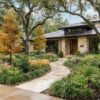
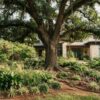
Houston yards don’t have one perfect landscaping season. The best time of year for landscaping in Houston depends on the work and the plants: fall is generally a favorable window for planting trees and shrubs, while spring can suit other planting and outdoor projects. Houston’s mild winters and long growing season offer flexibility, but summer heat, heavy rain, and occasional freezes can affect the schedule.
Planting, design, and installation don’t always follow the same timeline. A season-aware plan helps you choose a practical window for each step instead of forcing every task into one busy month. Start by considering your goals, the plants that fit your site, and how the weather could affect access and establishment.
This guide explains how Houston’s seasons affect planting and landscape work, so you can build a timeline around your yard. You’ll learn when trees and shrubs are generally suited to planting, what spring and summer may be better for, and how winter planning can prepare a project. Verdant Tree Farm offers local tree selection, 3-D landscape design, professional installation, and maintenance consultations to connect those steps, from choosing trees to supporting their establishment.
Key Takeaways
- The best time of year for landscaping in Houston depends on the plants, project, and weather, so separate design planning from planting and establishment care.
- Use Houston’s seasonal patterns to choose a practical window for tree planting and other yard work, while accounting for each plant’s needs.
- Compare design, tree planting, installation, and follow-up care by season with a flexible planning guide, not a fixed schedule.
- Build a timeline around your yard’s sun exposure, drainage, access, and existing landscape constraints.
- Verdant Tree Farm connects local tree selection, 3-D landscape design, and professional installation, including delivery, planting, staking, and initial mulching.
When is the best time of year for landscaping in Houston?
The best time of year for landscaping in Houston depends on the work, the plant, and the weather, not one universally perfect month. A tree may benefit from cooler planting conditions, while design and site planning can begin well before planting day. Installation and establishment care need their own timing, too. Think of landscaping as a sequence: plan the yard, prepare the site, plant when conditions suit the selected tree, then support it as it settles in.
Why Houston’s Gulf Coast climate changes landscaping timing
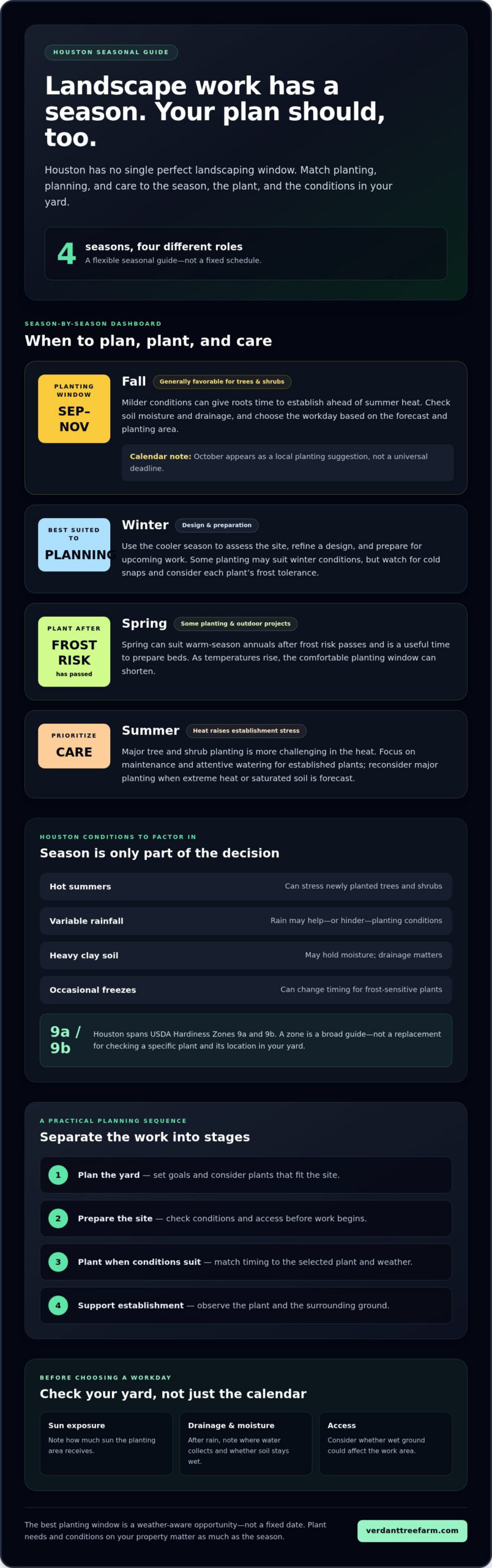
Houston’s humid subtropical climate brings hot summers, variable rainfall, mild winters, and occasional freezes. Summer heat can put newly planted trees and shrubs under stress as they establish roots, so cooler fall conditions are generally more favorable for planting them. Rain can help or hinder. Heavy clay soil may hold moisture, which makes drainage and the condition of the planting area important considerations.
Cold snaps can also affect plant selection and installation timing, especially for plants sensitive to frost. Houston spans USDA Hardiness Zones 9a and 9b, but a zone is a broad guide, not a substitute for considering a specific plant and its location in your yard. Landscaping brings together planting, design, and other outdoor elements, as outlined in Understanding Landscaping.
The short answer for homeowners planning a landscape
For trees and shrubs, fall is generally Houston’s strongest planting window because milder temperatures give roots time to establish ahead of summer. Spring can suit some planting, including warm-season annuals after frost risk has passed. Winter is useful for planning and design, while summer is often better for maintenance and attentive watering than for starting major tree and shrub plantings.
The best planting window is a weather-aware opportunity when conditions and the plant’s needs support establishment, not a fixed date on the calendar.
- Fall: September through November is generally favorable for planting trees and shrubs. Check soil moisture and drainage, and allow time for establishment before summer heat.
- Winter: Use the cooler season to develop a design, assess the site, and prepare for upcoming work. Mild conditions can still vary, so account for possible cold snaps.
- Spring: A useful season for some planting and outdoor projects, but rising temperatures can shorten the comfortable window. Warm-season annuals are generally planted after frost risk passes.
- Summer: Heat makes new tree and shrub planting more challenging. Prioritize maintenance and attentive watering for established plants, and reconsider major planting if extreme heat or saturated soil is in the forecast.
Design, site preparation, delivery, and planting don’t have to happen at once. A landscape plan can take shape in winter, for example, with tree selection and installation scheduled for a more favorable fall window. Before setting dates, look at the forecast and inspect the planting area after rain. Note where water collects, how much sun the site receives, and whether wet ground could affect access. These checks turn a broad seasonal recommendation into a workable plan for your yard.
How Houston’s seasons affect landscaping and plant establishment
Seasonal timing is only part of the decision. A new planting also needs time to establish, meaning its roots must adjust to the site while the plant responds to local soil, moisture, and temperature. During this period, observe the plant and surrounding ground rather than relying on the calendar alone. Houston’s weather can shift quickly, so conditions on your property matter as much as the season.
Fall and winter: planning around cooler conditions
Fall often brings milder temperatures than summer, making it a useful opportunity to plant trees and shrubs before the next hot season. October appears as a planting suggestion on one local calendar, but it isn’t a universal deadline. Winter can also suit some planting and is a practical time to refine a design. Watch freeze forecasts, especially for sensitive plants or newly installed specimens, and consider each plant’s cold tolerance before scheduling work.
Plant needs still vary. A species’ tolerance for heat, cold, and wet soil should guide its timing and placement. For example, Bald Cypress and Medjool Date Palm have different characteristics, so a general seasonal recommendation shouldn’t be treated as a rule for every tree or palm. Local plant guidance can help match a selection to the yard’s exposure and conditions.
Spring and summer: matching work to heat and rainfall
Spring offers a chance to prepare beds and schedule suitable planting as temperatures rise, but warm weather can arrive quickly. Summer heat increases the attention new plantings may need, particularly with watering and observation. Rainfall helps, but it doesn’t show whether moisture is reaching the root area or whether water is lingering in heavy soil. Check both the plant and its site.
- Fall: Cooler conditions may support planting and root establishment. Use the forecast and site condition to choose the actual workday.
- Winter: Use this season for design and preparation, and consider planting when the plant and weather are suitable. A cold snap can change the plan.
- Spring: Plan and plant selectively as conditions allow. Keep an eye on rising temperatures and soil moisture.
- Summer: Expect to observe new plantings more closely. Heat and variable rain make irrigation and drainage checks especially important.
After planting, don’t assume rainfall alone has met a plant’s needs. Feel the soil near the root area, look for signs of standing water, and watch for changes in the foliage. Deep, infrequent watering is a common approach for encouraging deeper root growth, but the right routine depends on the plant, soil, and weather. Adjust as conditions change, and use locally appropriate establishment guidance rather than a one-size-fits-all schedule.
A seasonal plan works best when it leaves room to respond to the forecast and the specific planting site. Verdant Tree Farm offers maintenance consultations to help with tree selection and establishment care.
Which Houston landscaping projects fit each season?
Use the calendar as a planning guide, not a promise that every project should happen in the same month. Design can begin well before planting, while tree installation depends on the selected species, the site, and current weather. The best time of year for landscaping in Houston is easier to identify project by project: schedule the work in sequence, then adjust when conditions call for it.
| Season | Design and preparation | Tree planting and installation | Follow-up |
|---|---|---|---|
| Fall | Refine the plan and prepare the planting area. | A useful general window for trees, depending on plant and site conditions. | Observe new plantings and adjust care to weather and soil moisture. |
| Winter | Develop the design and coordinate plant selection. | Consider planting when the species and forecast are suitable. | Watch for cold snaps and follow plant-specific guidance. |
| Spring | Finalize details and prepare for suitable planting conditions. | Schedule selectively as temperatures and site conditions allow. | Monitor moisture as temperatures rise. |
| Summer | Plan future work and assess the site. | Heat may make major new plantings more demanding; timing depends on conditions. | Pay close attention to watering, drainage, and plant response. |
When to design, prepare, and schedule a landscape
Design work doesn’t need to wait for the planting season. Starting earlier gives you time to consider the yard’s goals, select plants suited to the site, and coordinate preparation with installation. Verdant Tree Farm’s 3-D landscape design can help homeowners and project teams plan how trees fit into the broader outdoor space. For more detail on how design and installation fit together, explore the Houston landscaping services guide.
When to plant trees and palms in Houston
Fall is generally a favorable window for tree planting, but it isn’t a universal rule. Bald Cypress and Medjool Date Palm have different plant characteristics, so species choice, drainage, exposure, and the weather forecast all matter. For palms, the Houston palm tree guide offers more detail to support selection.
Installation can then be coordinated around the planting window. Verdant Tree Farm’s professional installation includes delivery, planting, staking, and initial mulching. Afterward, keep an eye on soil moisture and the plant’s condition as it establishes. A maintenance consultation can help inform follow-up care based on the planting and site.
Rain, saturated ground, a forecast cold snap, or a change in plant selection can shift the sequence. Keep the plan flexible: complete design and preparation ahead of time, then schedule planting and installation when the chosen plants and yard conditions align. That approach makes seasonal timing useful without treating it as a fixed calendar rule.
How to build a Houston landscaping calendar that works
A useful landscaping calendar starts with your yard, not a generic month-by-month checklist. Houston’s weather can shift, and the same planting date may suit one site but not another. The best time of year for landscaping in Houston depends on what you want to change, the plants you choose, and the conditions where they’ll grow. Use this sequence to turn those details into a flexible plan.
- Set your goals and priorities. Decide what the project needs to accomplish, such as adding shade, creating privacy, or improving curb appeal. Separate must-do work from items that can wait for a better planting window. This keeps the schedule practical if weather or site conditions shift.
- Record what’s happening on site. Note which areas receive full sun or shade, where water collects after rain, and how quickly the soil drains. Map access for delivery and planting, and identify existing trees, structures, utilities, or narrow passages that could constrain the work. These observations help shape plant selection and installation planning.
- Choose plants for the place and purpose. Match each selection to its intended role and the conditions in that part of the yard. Consider the plant’s needs, mature size, sun exposure, drainage, and tolerance for Houston’s heat or occasional cold snaps. A local tree guide can help you compare options, including evergreen trees for Houston landscapes.
- Put design and installation in sequence. Plan the layout and prepare the site before choosing a planting date. Then coordinate plant selection, delivery, planting, staking, and initial mulching. With Verdant Tree Farm, 3-D landscape design and professional installation connect the planning stage to the work on site.
- Schedule with room to adjust. Set a preferred seasonal window, then leave flexibility for heavy rain, saturated soil, heat, or a freeze forecast. Confirm the planting area is ready and accessible before installation, and use the selected plant’s needs to guide the final timing.
A Houston landscape calendar should flex with the weather and the site, not force every project into a fixed date. That flexibility matters after planting, too. Establishment care means observing how a new plant responds and adapting attention as conditions change. Check soil moisture near the root area rather than assuming rainfall has reached it. Look for standing water after storms, and watch foliage for signs that the plant may be under stress. A hot, dry stretch calls for a different response than days of persistent rain.
Keep simple notes: planting date, recent rainfall, soil condition, and changes in the plant’s appearance. This record can help you spot patterns and adjust care to the chosen species and site. Verdant Tree Farm’s maintenance consultations can support establishment-care planning alongside local tree selection and installation.
Explore Verdant Tree Farm’s tree selection and landscape planning to connect design, installation, and after-care with your yard’s conditions.
Plan Houston landscaping with Verdant Tree Farm
Good seasonal planning connects the right tree to the right site, then coordinates design, installation, and establishment care around Houston’s changing weather. Verdant Tree Farm is Houston’s largest independently owned and operated tree farm, serving residential customers, wholesale buyers, and commercial projects. Its local nursery experience brings plant selection and landscape planning together, whether you’re considering a single tree or shaping a larger outdoor space.
Bring seasonal planning and tree selection together
Start with what the yard needs: shade, screening, or a focal point. Then consider sun exposure, drainage, available space, and the planting window. Verdant Tree Farm offers trees including Bald Cypress and Montezuma Cypress, and palms including Windmill Palm and Medjool Date Palm. Each choice has its own characteristics, so matching a species to the site is an important part of planning.
Timing can shape the sequence without dictating every step. Explore plant options and work through the design before the preferred planting window, then coordinate installation when the chosen tree and site conditions align. For residential yards, wholesale supply, and commercial installation, a connected plan helps keep selection and scheduling focused on the project’s purpose.
Make the next step straightforward
Verdant’s 3-D landscape design gives you a way to visualize the planned landscape before installation. It can help you consider how trees fit into the overall layout and refine the plan before work begins. Design and installation are connected steps, but they don’t need to happen at the same time. A seasonal schedule can account for planting conditions and the needs of the selected species.
Professional installation includes delivery, planting, staking, and initial mulching. After planting, establishment care still matters. Weather, soil moisture, and plant response can vary, so observe the new tree and adapt care to its needs. Verdant Tree Farm’s maintenance consultations can help owners think through follow-up care as plants settle into their site.
The best time of year for landscaping in Houston depends on the plants, project, and conditions in your yard. Verdant Tree Farm can help connect those decisions, from tree selection and 3-D design to professional installation and after-care planning. Start exploring your options with Verdant Tree Farm and build a landscape plan around your goals and seasonal timing.
Make your next landscaping decision with confidence
Your yard’s next step might be sketching a new layout, choosing a tree, or planning a planting window that fits your schedule. Start with one clear goal and build from there. The best time of year for landscaping in Houston is the time that aligns your project, plant selection, and site conditions.
Verdant Tree Farm brings local tree selection, 3-D landscape design, and professional installation together. As Houston’s largest independently owned and operated tree farm, Verdant serves residential customers, wholesale buyers, and commercial projects. Installation includes delivery, planting, staking, and initial mulching. Displayed clients include Moody Gardens, Toyota Center, and Memorial City Mall.
Take the next step by exploring landscaping design and installation with Verdant Tree Farm, then shape an outdoor space around your property and plans.
Frequently Asked Questions
Is fall the best time to plant trees in Houston?
Fall is often a strong season for planting trees in Houston, but it isn’t automatically best for every species or site. Before choosing a date, consider whether the planting area drains well and whether the tree will receive the sun it needs. A tree planted in a low spot that stays soggy may face different challenges from one planted in well-drained ground, even in the same season.
Can you landscape in Houston during the summer?
Yes, you can landscape in Houston during summer, though it helps to choose work that suits the heat. Design planning, evaluating existing trees, and preparing for a later planting window can keep a project moving without adding new plants during a stressful stretch. If you do plant, plan for attentive establishment care and watch the forecast. Don’t assume recent rain has evenly moistened the soil around roots.
What month is best for landscaping in Houston?
There isn’t one best month for every Houston landscape project. October is a useful local planting cue for trees and shrubs, but the best time of year for landscaping in Houston depends on the work, plant, and conditions at the site. Treat a month as a starting point, then consider the forecast and whether the planting area is workable. A design project can begin well ahead of planting.
Does Houston’s winter weather affect when I should plant?
Yes. Houston winters are generally mild, but an occasional cold snap can affect timing, particularly for plants sensitive to freezing conditions. Check the forecast before installation and avoid scheduling around a predicted freeze if the selected plant could be vulnerable. Also consider whether the ground is overly wet after rain. Choosing a suitable planting day can matter as much as choosing a suitable season.
Should landscape design happen before the planting season?
Yes, starting design early can make seasonal scheduling easier. For example, if you want a tree to shade a patio, decide where it belongs and how it fits the yard before arranging planting. Early planning also gives you time to consider access for delivery and any conflicts with existing trees or structures. Verdant Tree Farm’s 3-D landscape design can help you visualize a proposed layout before installation.
How do I know if my new landscape is establishing well?
Look for steady improvement, not a single sign. Check whether the soil near the root area is moist without remaining waterlogged, and observe leaves and stems for changes such as persistent wilting or discoloration. New growth can be encouraging when it’s appropriate for the plant and season, but growth patterns vary. Keep notes on rainfall, watering, and visible changes so you can adjust care to the plant’s needs.