More water or fertilizer can make a yellowing palm worse. If you’re troubleshooting yellowing palm fronds in a Houston landscape, first look at where the yellowing starts, how quickly it spreads, and what the soil and recent weather have been like. Those clues help you decide what to check before changing the palm’s care.
Some lower fronds naturally age and turn yellow. Other patterns can point to watering stress, nutrient availability, pests, or disease. Houston’s alkaline, clay-heavy soils can limit nutrient uptake, while heat, heavy rain, or an occasional freeze can add stress. Similar symptoms don’t always call for the same fix, so avoid guessing based on color alone.
This guide explains how to read frond patterns, distinguish normal aging from warning signs, and take sensible first steps without overwatering, applying fertilizer blindly, or pruning fronds that are still partly green. You’ll also learn which changes in new growth or the central spear deserve prompt attention. If the cause remains unclear or the palm continues to decline, Verdant Tree Farm’s maintenance consultations offer guidance on tree health and irrigation needs.
Key Takeaways
- Use the location and spread of yellowing to distinguish ordinary lower-frond aging from changes that deserve closer attention.
- When troubleshooting yellowing palm fronds, compare visible symptoms with soil moisture, irrigation patterns, recent care, and weather before choosing a response.
- Check the palm and its growing conditions before adding water or fertilizer.
- Watch for worsening symptoms or changes in new growth. If the cause remains unclear, a maintenance consultation can help you decide what to do next.
Troubleshooting Yellowing Palm Fronds: What the Pattern Tells You
Yellowing is a symptom, not a diagnosis. A palm may shed older fronds as part of normal growth, while discoloration in new growth or across much of the crown can signal a problem that needs closer attention. Start by checking whether one frond, several fronds, or most of the canopy are affected. Note where yellowing begins, whether it is spreading, and when you first noticed it. These details, together with recent care and weather, help narrow down what to investigate without assigning a cause based on one color change.
Which palm fronds are turning yellow?
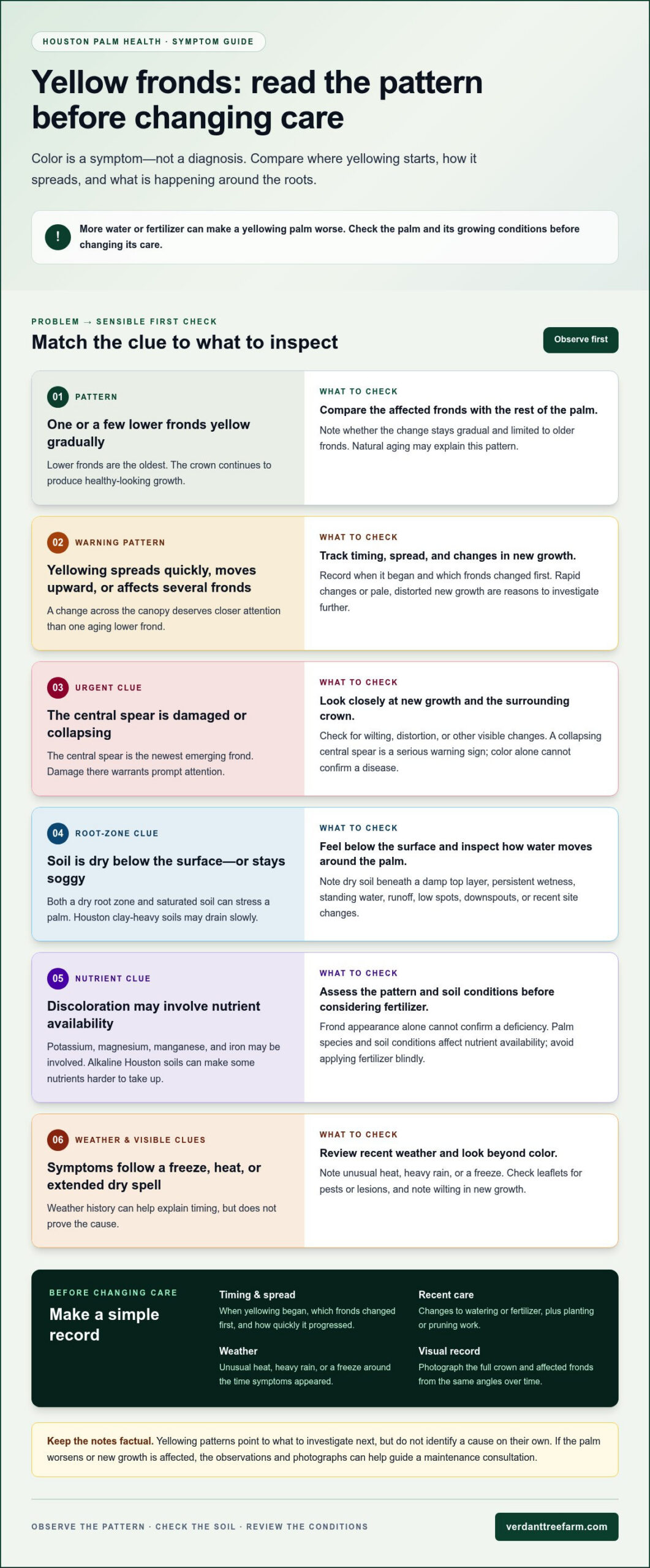
Lower fronds are the oldest. If one or a few turn yellow gradually while the crown continues to produce healthy-looking growth, natural aging may be the explanation. The central spear is the newest emerging frond, so yellowing or damage there deserves closer attention. Rapid changes, several affected fronds, or pale and distorted new growth are reasons to investigate further. Color alone cannot confirm a disease. Even serious conditions such as Lethal Yellowing Disease require more than a quick visual guess.
Compare affected fronds with the rest of the palm. Is the discoloration even or patchy? Do the tips or leaflets change first? Are the fronds drooping or drying as well as yellowing? One aging lower frond is a different pattern from yellowing that moves upward or affects the newest growth. These observations don’t identify the cause on their own, but they point to what you should check next.
What to record before changing palm care
Before adjusting irrigation, applying fertilizer, or pruning, make a simple record. A timeline can reveal whether symptoms are stable or progressing, and it helps you distinguish what you observed from what you suspect. Include care and weather details that might relate to the palm’s condition.
- Timing and spread: Record when yellowing began, which fronds were affected first, and how quickly it has progressed.
- Recent care: Note changes to watering or fertilizer, along with any planting or pruning work.
- Weather: Write down unusual heat, heavy rain, or a freeze around the time symptoms appeared.
- Visual record: Photograph the full crown and close views of affected fronds from the same angles over time.
Keep the notes factual. “Three lower fronds began yellowing after irrigation was changed” is more useful than assuming the change caused the symptoms. If the palm worsens or new growth is affected, your notes and photographs will help make a maintenance consultation more useful. Verdant Tree Farm’s site-based guidance can connect the visible pattern with irrigation and planting conditions, rather than treating color as the whole story.
Why Palm Fronds Turn Yellow in Houston: Water, Nutrients, Roots, and Weather
Houston palms face changing conditions, but yellow fronds don’t point to one automatic fix. Irrigation, drainage around the roots, nutrient availability, and weather can each play a part, sometimes in combination. Treat them as possibilities to investigate, not diagnoses. A dry root zone may limit water uptake, while soil that stays saturated can restrict oxygen around roots. Because both conditions can stress a palm, adding water without checking the soil may make the problem worse.
How watering and drainage can affect palm color
Check soil moisture around the root zone, not just at the surface. Soil that is dry underneath a damp top layer may mean water isn’t reaching the roots. Persistently soggy ground or water that collects after irrigation may point to poor drainage or excessive watering. Houston’s clay-heavy soils can drain slowly, but conditions vary from one landscape to another. Before changing your routine, consider recent rain, irrigation timing, and whether runoff or low spots leave the planting area wet.
Planting conditions also affect roots. A palm surrounded by compacted soil or planted where water gathers may struggle even when the irrigation schedule seems reasonable. Look at the whole site: nearby downspouts, slopes, and changes to paving or landscaping can influence how water moves around the palm.
Nutrient, cold, and pest clues to investigate
Potassium, magnesium, manganese, and iron are among the nutrients that may be involved in palm discoloration. The pattern can offer clues, but it can’t confirm a deficiency on its own. Palm species and soil conditions affect nutrient availability. Houston’s alkaline soils can also make some nutrients harder for plants to take up. The University of Florida IFAS guide to Nutrient Deficiencies in Palms explains why symptoms should be assessed by pattern and nutrient rather than treated with a one-size-fits-all fertilizer.
Weather history matters, too. Frond damage that appears after a freeze may be consistent with cold injury, while heat and extended dry periods can add stress. Houston’s humidity and heavy rainfall are relevant when assessing site conditions, but neither proves that a palm has a disease. Look for other visible clues, such as pests on leaflets, lesions, or wilting in new growth. A collapsing central spear is a serious warning sign that calls for prompt attention.
- Check the soil: Feel below the surface and note whether it is dry, moist, or persistently wet.
- Review the site: Look for standing water, slow drainage, runoff, or recent changes around the planting area.
- Match the timing: Consider whether symptoms followed heavy rain, a dry spell, or a freeze.
- Look beyond color: Check for pests, lesions, or changes in new growth before choosing a response.
If symptoms persist, a maintenance consultation for palm health and irrigation guidance can help you assess the palm alongside Houston’s local soil and planting conditions.
How to Compare the Most Likely Causes of Yellow Palm Fronds
Use the pattern to decide what to check next, not to label the problem. Yellowing patterns are clues, not proof: the same color change can have different causes, and one clue rarely tells the whole story. Compare the affected fronds, recent weather, and conditions around the palm before changing its care. The table is a starting point for troubleshooting yellowing palm fronds, not a substitute for assessing the whole plant and its site.
| Symptom pattern | Possible cause | Next observation |
|---|---|---|
| One or a few oldest lower fronds yellow gradually | Normal aging may be occurring | Check whether newer fronds remain healthy and the change is limited to the oldest growth. |
| Several fronds yellow after irrigation changes, dry weather, or heavy rain | Water stress or poor drainage may be involved | Check soil moisture below the surface and note whether water drains or pools around the palm. |
| Repeated yellowing across older or newer fronds | A nutrient availability issue is possible | Look for a consistent pattern and consider whether soil conditions may affect nutrient uptake. UC ANR discusses mineral deficiencies and toxicities in palms. |
| Discoloration appears after a freeze or unusually hot, dry period | Weather injury or environmental stress may contribute | Compare symptom timing with local weather and check whether damage is limited to exposed growth. |
Yellow lower fronds versus yellow new growth
Gradual decline in the oldest lower fronds may fit normal aging, especially if the newest leaves look healthy. Yellowing near the central spear or across newly emerging fronds deserves a closer look because it affects the palm’s newest growth. Frond position narrows the possibilities but doesn’t confirm a cause. Photograph the same fronds and crown from the same angles during follow-up checks so you can see whether the pattern is stable or advancing.
Widespread yellowing versus isolated frond changes
A single aging frond is different from several fronds changing across the crown. Widespread symptoms make it sensible to review the broader picture, including irrigation, drainage, soil conditions, and recent weather, rather than focusing on one leaf. Visible pests, lesions, wilting, or damage to new growth are prompts for further assessment, not a diagnosis. Record where symptoms appear and how they change over time.
What to Do First When Palm Fronds Turn Yellow
Inspect before you intervene. Changing watering, fertilizer, or pruning may not address the cause and can make it harder to tell what’s happening. Follow a simple sequence: observe the palm, check soil moisture and irrigation, review recent care and weather, then reassess before making a targeted change. This measured approach to troubleshooting yellowing palm fronds helps you act on evidence rather than guesswork.
A practical first-response checklist
Look at the whole palm before focusing on one leaf. Note whether the affected fronds are old or new, how much of the crown is involved, and whether discoloration is spreading. Check the soil below the surface, observe how irrigation reaches the root zone, and look for pooling or runoff. Record recent care and weather changes, then take dated photographs from consistent angles for comparison.
- Observe the pattern. Identify which fronds are yellow, whether the central spear or other new growth looks affected, and whether the change is isolated or visible across the crown.
- Check moisture and drainage. Feel the soil below the surface near the root zone. Note whether it is dry, moist, or persistently wet, and whether irrigation reaches the planting area or drains away from it.
- Review recent changes. Write down shifts in watering, fertilizer, planting, or pruning, along with any heat, heavy rain, or freeze exposure before symptoms appeared.
- Document and reassess. Keep notes and dated photographs. Compare the same fronds and crown views later to see whether the pattern is stable, improving, or spreading.
When to avoid pruning or applying fertilizer
Yellow fronds may still contain green tissue that supports the palm. Removing them too early can take away useful tissue, so don’t prune fronds that are partly green or cut into the central spear. A fully brown, dry frond is different, but avoid aggressive trimming while the cause is uncertain. A tidy appearance isn’t worth removing foliage the palm may still be using.
Fertilizer is not a universal fix. If the underlying issue is soggy soil, dry roots, or another site stress, adding nutrients may not help and could add another variable. Nutrient needs also depend on palm species and conditions. Before making a targeted correction, use reliable, species-appropriate guidance and consider whether a soil assessment is needed. Avoid combining several changes at once. Making one well-supported adjustment at a time makes it easier to observe the response.
If symptoms persist or worsen, a maintenance consultation for palm health and irrigation guidance can help connect your observations with the planting site and care routine.
When Yellowing Palms Need Expert Attention in Houston
A palm that changes slowly isn’t always in immediate trouble, but rapid decline or a pattern that keeps spreading deserves closer assessment. Pay special attention to yellowing in new growth, a central spear that wilts or collapses, and changes to the crown or trunk. These signs don’t identify a cause by themselves. They do mean it’s sensible to look beyond the color of one frond and consider the palm’s overall condition and growing site.
Signs that call for a closer palm-health assessment
Arrange an assessment if yellowing continues to spread despite careful observation or if the palm looks worse over time. Changes in new growth, unusual crown drooping, trunk damage, or visible lesions are also reasons to seek prompt guidance. Avoid identifying a disease from a photo or a single symptom. A closer look can help distinguish a palm-health concern from stress related to irrigation or planting conditions.
Consider how quickly and broadly the change is happening. One older frond fading while the rest of the palm remains steady is different from several fronds declining across the crown. A site-specific review is particularly useful when symptoms overlap or the cause isn’t clear. Irrigation coverage, soil moisture, drainage, and the palm’s planting location all affect how its condition should be interpreted.
Getting useful help for a Houston palm
Make an assessment more useful by gathering a short record of what you’ve observed. Bring dated photographs showing both the full crown and affected fronds, along with notes about watering frequency, recent care changes, and weather around the time symptoms began. Include what you noticed about the soil, such as whether it stayed wet or dried quickly. This context helps connect the visible pattern with conditions around the roots.
Verdant Tree Farm’s Houston maintenance consultations include guidance on tree health and irrigation needs. The consultation considers the palm and its site together, rather than treating yellow color as a diagnosis. For background on palm types and local growing considerations, explore the Houston palm tree guide. It can help frame questions about species and conditions, while persistent or worsening symptoms still call for attention to the individual palm and its planting environment.
To discuss site conditions and practical next steps, explore Verdant Tree Farm’s landscape support. A careful review can help turn your observations into a clearer plan for the palm and surrounding landscape.
Turn Your Observations Into a Clear Next Step
A palm’s condition can change over time, so your notes are more than a record of what looked wrong on one day. They create a baseline for noticing whether the palm is stabilizing, recovering, or continuing to decline. Keep that record as part of your regular landscape care. It can help you make better-informed decisions as Houston’s weather and site conditions shift.
Good troubleshooting yellowing palm fronds starts with careful observation, but you don’t have to interpret every change alone. If symptoms persist or you’re unsure what to do next, Verdant Tree Farm can help you consider the palm’s health and growing conditions. Explore the nursery’s palm selection and landscape services, including professional installation, as you plan care for your property.
Explore Verdant Tree Farm’s Houston palm and maintenance support to discuss your next steps. A thoughtful plan can help you care for your palm and keep your landscape moving in the right direction.
Frequently Asked Questions
Is it normal for palm fronds to turn yellow?
Yes, an occasional older frond turning yellow can be part of normal growth, especially if the rest of the palm looks steady. Note how often it happens and whether new leaves are emerging normally. A palm that keeps losing fronds faster than it produces healthy growth, or develops yellowing in the crown, warrants closer attention. In Houston, consider the palm’s species and growing conditions before deciding that a color change is simply age.
Should I cut off yellow palm fronds?
Don’t cut a frond just because it has turned yellow. If it still has green sections, it may remain useful to the palm, and removing it too early can add stress. Wait until a frond is fully brown and dry before considering removal, and avoid cutting into the crown or central spear. If several fronds are affected, focus first on understanding the pattern rather than pruning to make the palm look tidier.
Can overwatering make palm fronds turn yellow?
Yes. Soil that stays saturated can stress roots and contribute to yellowing, particularly where water collects after irrigation or rain. But yellow fronds can also occur when the root zone is too dry, so color alone can’t tell you whether to water more or less. Check below the soil surface and note how long the planting area stays wet after watering. Adjust irrigation based on those observations, not on a calendar alone.
Can a Houston freeze cause palm fronds to turn yellow?
Yes, freeze exposure can damage palm foliage, but the extent depends on the palm and the conditions it experienced. Discoloration may appear after cold weather, and damaged fronds can later become brown or dry. Don’t remove foliage while it’s still partly green, since it can help support the palm. Watch for changes in the crown and emerging growth as the weather warms, and seek guidance if the central spear appears damaged or declines.
How can I tell whether yellow palm fronds mean a nutrient deficiency?
You can look for patterns, but visual symptoms alone can’t confirm a deficiency. Note whether older or newer fronds are affected, whether the change is consistent across several leaves, and whether soil or irrigation conditions could be limiting nutrient uptake. Palm species and local soil conditions matter. A soil assessment and species-specific guidance can help determine whether nutrients are involved before you apply fertilizer. This careful approach is central to troubleshooting yellowing palm fronds without adding an unnecessary treatment.
Will yellow palm fronds turn green again?
Usually, a frond that has substantially yellowed won’t return to its former green color, even if the cause is corrected. A more useful sign is the condition of new growth and whether additional fronds develop symptoms. If watering conditions improve but an affected leaf stays yellow while new leaves appear healthier, that may indicate a better trend. Track new growth rather than expecting damaged foliage to recover its color.
How long does it take a palm to recover from yellowing?
There isn’t one reliable recovery timeline. It depends on what caused the symptoms, how much of the palm is affected, and whether its growing conditions improve. Existing yellow fronds may remain discolored, so judge recovery by stable growth and healthier emerging leaves. Take periodic photographs from the same angle and compare them over time. If yellowing continues to spread or new growth worsens, Verdant Tree Farm’s maintenance consultation can help assess the palm and its site.