You shouldn’t have to hold your breath every time a piece of heavy equipment enters your gate. While adding a massive Cedar Elm or a stately Little Gem Magnolia is a smart investment in your property’s value, the actual day of delivery often brings a wave of anxiety about underground utility lines and torn-up turf. Understanding how to prepare yard for tree installation is the difference between a stressful afternoon and a seamless property upgrade. We know that local homeowners often worry about our notorious “gumbo” clay soil or the potential for heavy machinery to leave lasting scars on a manicured lawn.
We’ve spent generations planting across this region; we’ve seen how a few simple steps can protect your infrastructure while giving your new tree the best start possible. You deserve to feel confident that your new addition is placed safely and correctly without collateral damage to your landscape. This guide provides an actionable preparation checklist to handle everything from marking utility lines to amending unyielding soil. We’ll walk you through the exact process of readying your site for professional crews, ensuring your investment is rooted in success from the very first shovel turn.
Key Takeaways
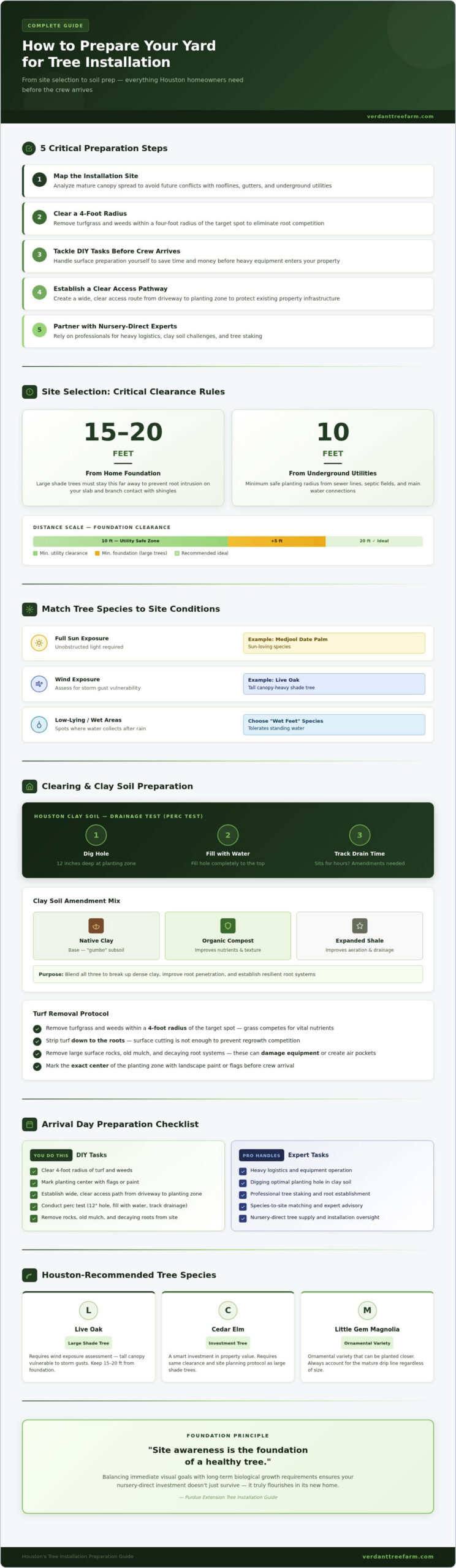
- Map your installation site by analyzing mature canopy spread to avoid future conflicts with rooflines, gutters, and underground utilities.
- Discover how to prepare yard for tree installation by clearing a four-foot radius of turfgrass and weeds around your target spot.
- Save time and money by understanding which surface preparation tasks you can handle yourself before the heavy equipment arrives.
- Protect your existing property infrastructure by establishing a wide, clear access pathway from the driveway to the final planting zone.
- Partner with a nursery-direct expert to handle the heavy logistics, unyielding clay soils, and professional tree staking seamlessly.
Selecting and Mapping the Ideal Installation Site
Planning the perfect spot for your new tree is more than an aesthetic choice. It’s a technical decision that impacts your home’s safety and the tree’s health for decades. As Houston’s largest independent nursery, we’ve seen how a misplaced Live Oak can eventually lift a driveway or clog gutters with debris. Learning how to prepare yard for tree installation starts with a map and a tape measure. You need to balance where you want shade today with where that canopy will be in twenty years. Choosing the right location requires balancing these immediate visual goals with the long-term biological growth requirements of the species.
Give your tree enough room to breathe. Large shade trees should typically stay at least 15 to 20 feet away from your home’s foundation. This prevents roots from intruding on your slab and keeps branches from scraping your shingles. For smaller ornamental varieties, you can get closer, but you should always account for the mature drip line. If you aren’t sure which species fits your specific lot size, consult a premier tree nursery Houston to get expert advice tailored to our local climate. Our veteran-owned team manages every step, ensuring your layout respects both your property and our rigorous standards.
Evaluating Overhead and Underground Clearances
Look up before you dig. Power lines and internet cables are often overlooked until a tree grows into them, requiring aggressive pruning that ruins the tree’s natural shape. Tree planting success also depends on what lies beneath the surface. You must identify the location of sewer lines, septic fields, and main water connections to avoid catastrophic damage during excavation. As a general rule, maintain a safe planting radius of at least 10 feet from all major underground utility lines to prevent root interference and future repair issues. This simple precaution saves you from expensive plumbing bills down the road.
Matching Tree Species to Site Conditions
Your yard’s microclimate dictates which trees will thrive. Consider sun exposure patterns throughout the day; a sun-loving Medjool date palm needs full, unobstructed light to stay healthy. In contrast, you should assess wind exposure for tall, canopy-heavy shade trees like the Live Oak, especially in areas prone to heavy storm gusts. Don’t forget to account for natural yard topography. If your yard has low spots where water tends to collect after a heavy rain, you’ll need a species that handles “wet feet” better than others. Proper site mapping ensures your nursery-direct investment doesn’t just survive, but truly flourishes in its new home.
Clearing the Ground and Preparing Tough Clay Soil
Once you’ve mapped your site, the physical preparation begins. Preparing the ground surface ensures the installation crew can dig an optimal planting hole efficiently. In Houston, we deal with heavy, unyielding clay that can act like a brick wall for young roots. Proper soil prep helps establish resilient root systems for newly planted evergreen trees Houston landscapes depend on for year-round beauty. Our veteran-owned teams know that a little sweat equity today prevents a lot of stress tomorrow.
Turf Removal and Site Clearing Protocols
Start by clearing the stage. You should remove existing turfgrass, weeds, and brush within a four-foot radius of the target spot. Learning how to prepare yard for tree installation means understanding that grass is a greedy neighbor. Strip away the turf down to the roots to prevent competition for vital nutrients. Clear away large surface rocks, old mulch, and decaying root systems from previous plants. These obstructions can damage equipment or create air pockets in the soil. Finally, mark the exact center of the planting zone clearly with landscape paint or flags. This clarity prevents confusion when the heavy trucks arrive at your property.
Managing and Amending Heavy Clay Subsoils
Houston’s “gumbo” clay is notoriously dense. Before we arrive, test the planting zone’s drainage capacity by conducting a simple perc test. Dig a hole 12 inches deep, fill it with water, and track the drainage time. If it sits for hours, you’ll need amendments. The Purdue Extension tree installation guide emphasizes that site awareness is the foundation of a healthy tree. Prepare to blend your native clay with organic compost and expanded shale to improve aeration. This mix breaks up the tight clay particles, allowing roots to breathe and expand. Avoid over-tilling the entire area; you want to maintain the native soil structure outside the immediate planting zone. If you need expert advice on local soil conditions, our team offers maintenance consultations to ensure your yard is ready for a lifetime of growth.
DIY Yard Preparation vs. Professional Pre-Installation Services
Deciding which tasks to tackle yourself and which to leave to the experts is a vital part of your project planning. Understanding where homeowner prep ends and professional installation labor begins saves you both time and money. You can easily handle surface level clearing, marking your preferred planting spots, and removing minor debris. These small steps ensure that when our veteran-owned crews arrive, they can get straight to work without delays. While you focus on the visible layout, our team focuses on the heavy logistics required for long-term success.
Professional crews bring specialized heavy equipment, like mechanical tree spades and bobcats, capable of handling massive root balls and deep digging in Houston’s dense subsoil. Utilizing comprehensive landscaping services Houston homeowners trust ensures more than just a hole in the ground. We provide proper planting depth, mechanical staking for stability, and initial deep watering to reduce transplant shock. This collaborative approach guarantees that your new Live Oak or Cedar Elm is installed to the highest professional standards.
The Critical Step: Marking Utilities with Texas 811
Safety is the one area where you cannot cut corners. You must ensure all underground utility lines are marked before any commercial digging begins on your property. It’s a simple, free process: call 811 or submit a web request at least two business days prior to your scheduled installation. This gives utility companies time to mark the location of gas, electric, water, and communication lines. You’ll see color-coded flags or paint: yellow for gas, red for electric, blue for water, and orange for communications. Learning how to prepare yard for tree installation means respecting these markers to prevent dangerous and expensive service interruptions.
When to Leverage Full-Service Nursery Installation
Large specimen trees, like a mature October Glory Maple or a tall Loblolly Pine, are far too heavy for manual labor alone. They require mechanical equipment that can easily damage an unmapped or soft lawn if not handled by experts. Professional installers understand how to maneuver these machines while minimizing property impact. More importantly, our crews know how to handle delicate root systems without voiding your three-month installation warranty. We apply the exact ratio of organic compost and expanded shale required for immediate root establishment in our local clay. By letting the pros handle the technical excavation and soil conditioning, you ensure your investment is protected from day one.
Final Yard Checklist: Preparing for Arrival Day
Arrival day is the culmination of your planning. You’ve selected your native Live Oak or Cedar Elm, and now it’s time for the physical delivery. A final walkthrough ensures your property remains protected when heavy delivery trucks arrive. You want a seamless transition from our nursery-direct inventory to your landscape. This means clearing a wide access pathway from the driveway or street to the final backyard planting site. Knowing how to prepare yard for tree installation involves staging your property to handle the weight and size of professional equipment.
Protect your grass during heavy equipment transport by referencing professional tips for lawn care houston families rely on to keep their turf resilient. Even with our expert crews, heavy machinery requires a stable, clear route. A bit of foresight prevents unnecessary ruts and keeps your yard looking its best throughout the process.
Clearing Access Paths and Removing Obstacles
Measure your gates, pathways, and fence openings before we arrive. Our equipment needs enough clearance to maneuver without scraping structures or damaging fence posts. Move patio furniture, potted plants, vehicles, and children’s toys completely out of the work zone. This isn’t just about efficiency; it’s about safety for your family and our team. Don’t forget to look up. Trim low-hanging branches along the access route to prevent damage to delivery machinery or the new tree during transit. A clear path allows us to move swiftly and place your tree exactly where it belongs.
Managing Moisture and Irrigation Levels
Water management is a delicate balance. Turn off automatic sprinkler systems 24 to 48 hours prior to the installation crew’s arrival. While slightly damp soil is ideal for clean digging, oversaturated mud causes severe lawn rutting and makes the heavy clay difficult to manage. You also need to locate and mark all plastic sprinkler heads near the planting zone with flags or paint. This prevents accidental damage during excavation and ensures your irrigation system remains functional after the tree is in the ground. If you have questions about specific site obstacles, contact our team to schedule a site preparation review before your delivery date.
Partnering with Verdant Tree Farm for Flawless Installation
Choosing the right trees is only half the battle. The real magic happens when those trees are placed in the ground with precision and care. Verdant Tree Farm eliminates intermediate steps by providing premium nursery stock alongside expert installation crews. You don’t have to worry about coordinating between a third-party nursery and a separate landscaper. We manage the entire lifecycle of your investment. From selecting native Texas oaks to final mulching, we deliver unmatched direct-to-consumer value across the region. Our heritage as a local leader means we treat your property like it’s our own neighborhood.
Our experienced teams handle the heavy logistics, proper soil conditioning, and professional staking. We know how to prepare yard for tree installation by bridging the gap between your site prep and the final planting. While you clear the paths and mark the utilities as discussed, we prepare the specific biological environment for your tree. This includes the heavy digging and the precise soil amendments needed for Houston’s unique environment. We take pride in our “can-do” attitude, ensuring that every project, regardless of scale, meets our rigorous standards of quality and personal accountability.
Nursery-Direct Delivery and Expert Planting Teams
Our veteran-owned business ensures your trees are transported under climate-controlled, stress-free conditions. We don’t just drop a tree on your curb; we ensure it arrives ready to grow. We specialize in installing large-scale shade trees, accent shrubs, and cold-hardy palms safely. Whether you’ve chosen a massive Shumard Oak or a delicate Desert Willow, our crews treat every specimen with horticultural respect. Crews complete the job with premium mulch, slow-release fertilizer, and tailored structural support systems. These final touches aren’t just for looks. They provide the stability and nutrients required for immediate root expansion in our local clay.
Protecting Your Investment with Our Three-Month Warranty
We stand behind our work and our trees. Professional installation safeguards your landscape investment against early transplant shock issues. Every tree installed by our team comes backed by a dependable three-month warranty for ultimate peace of mind. This is a standard we take seriously as Houston’s largest independent tree nursery. You’ll receive explicit post-care instructions regarding watering frequency tailored to your specific yard conditions. We want your new landscape to thrive for generations, not just survive the first week. Ready to transform your yard? Contact Verdant Tree Farm to schedule your professional tree installation today!
Rooting Your Investment in Success
A thriving landscape starts long before the first shovel hits the dirt. By mapping your site to avoid utility conflicts and amending dense regional clay, you give your new tree a strong foundation. Understanding how to prepare yard for tree installation protects your home’s infrastructure while securing a long-term investment. Whether you handle the surface clearing yourself or leverage our expertise, these steps guarantee a seamless transition for your property.
We take pride in being the Largest Independent Tree Farm in Houston. As a veteran-owned and operated business, we value reliability and local heritage. We stand behind our work. Every professional installation includes a comprehensive three-month warranty for total peace of mind. You don’t have to navigate the technical complexities of heavy excavation alone. Our hardworking team provides direct-to-consumer value and the specialized labor your project deserves.
Explore Houston’s Largest Tree Selection and Schedule Professional Installation
Frequently Asked Questions
Do I need to dig the hole before the tree installation crew arrives?
No, our professional installation teams handle all the heavy digging once they arrive on site. We use specialized equipment designed to penetrate tough Houston soils efficiently. You only need to focus on surface clearing and marking your preferred planting location. By letting our experienced crews manage the excavation, you ensure the hole is the correct depth and width for the specific root ball of your new tree.
How wide of an opening does the installation crew need to get into my backyard?
Most standard installation equipment requires a minimum clearance of 36 to 48 inches through gates and pathways. If you’ve ordered a large specimen tree, we may need even wider access for a bobcat or mechanical tree spade. It’s best to measure your fence openings and remove any temporary obstacles like potted plants or furniture. We recommend clearing a straight, unobstructed path from the street to the target planting zone.
Who is responsible for calling the utility line locator service before planting?
Homeowners are responsible for contacting Texas 811 to have underground utility lines marked before our crew arrives. You should call 811 or submit a request online at least two business days before your scheduled planting. This free service identifies the location of gas, water, and electric lines. Properly marking these zones is a critical part of how to prepare yard for tree installation to ensure safety and prevent service interruptions.
What should I do with my existing lawn sprinkler system before installation?
You should turn off your automatic irrigation system at least 24 to 48 hours before the crew arrives. This prevents the soil from becoming an oversaturated, muddy mess that could lead to lawn rutting from our equipment. Additionally, use landscape flags or paint to mark every sprinkler head near the work zone. Identifying these plastic components helps our team navigate the area without causing accidental damage to your existing irrigation infrastructure.
How do I prepare my yard’s heavy clay soil for a new tree?
The best way to address dense Houston “gumbo” is to blend native clay with organic compost and expanded shale. This combination improves aeration and drainage, which are vital for root health. While you can start this process, our professional installation service includes site-specific soil conditioning tailored to your tree’s needs. Understanding how to prepare yard for tree installation involves ensuring the right balance of amendments is used to break up tight clay particles.
Can trees be safely installed in my yard during the hot summer months?
Yes, trees can be successfully installed during the summer provided they receive immediate and consistent deep watering. Many varieties, such as our Medjool date palms and native Live Oaks, are highly resilient to local heat when planted correctly. Our team provides explicit post-care instructions to help your new investment survive the transition. We also back our installed stock with a three-month warranty to give you extra confidence during the warmer months.
What happens if a utility line is discovered exactly where I want my tree?
If a utility marker or a line is discovered in your preferred spot, the planting location must be shifted for safety. Planting a tree directly over gas or water lines can lead to future root intrusion and expensive repairs. Our expert team will work with you on arrival day to find the next best location. We balance your aesthetic goals with safety requirements to ensure your tree has room to grow without interference.