What if your wooden fence isn’t just rotting, but actually failing to block the view from your neighbor’s new second-story balcony? It’s a common frustration across the Bayou City. You invest in a backyard retreat only to realize that a standard six-foot fence offers zero protection from the windows next door.
We know that local homeowners are tired of watching expensive landscaping die during a sudden freeze or suffocate in heavy clay “gumbo” soil. You need a solution that is as tough as it is beautiful. This 2026 guide focuses on the most resilient privacy trees Houston families can plant to create an immediate, evergreen barrier. We’ve vetted every species for its ability to handle our volatile climate and drainage challenges.
You’ll discover the fastest growers like the Green Giant Arborvitae, which can add three to five feet of height per year. We also cover freeze-hardy staples like the Nellie R. Stevens Holly and the Little Gem Magnolia. From professional installation techniques to choosing the right specimen for your yard, we’re here to help you grow a living fence that stands the test of time.
Key Takeaways
- Identify the top-performing species for our Zone 9a climate, including the fast-growing Green Giant Arborvitae and the resilient Nellie R. Stevens Holly.
- Learn why a multi-layered approach using both trees and shrubs creates a more effective wind and sound barrier than a single row of plants.
- Master the “mounding” technique required to help privacy trees Houston survive in heavy clay soil and prevent root rot.
- Discover how professional installation and 3D landscape design provide a long-term insurance policy for your property investment.
- Understand the latest freeze-hardy planting trends to ensure your living fence survives unpredictable Texas winters like those seen in recent years.
The Houston Privacy Challenge: Why Fences Aren’t Enough
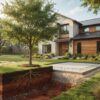
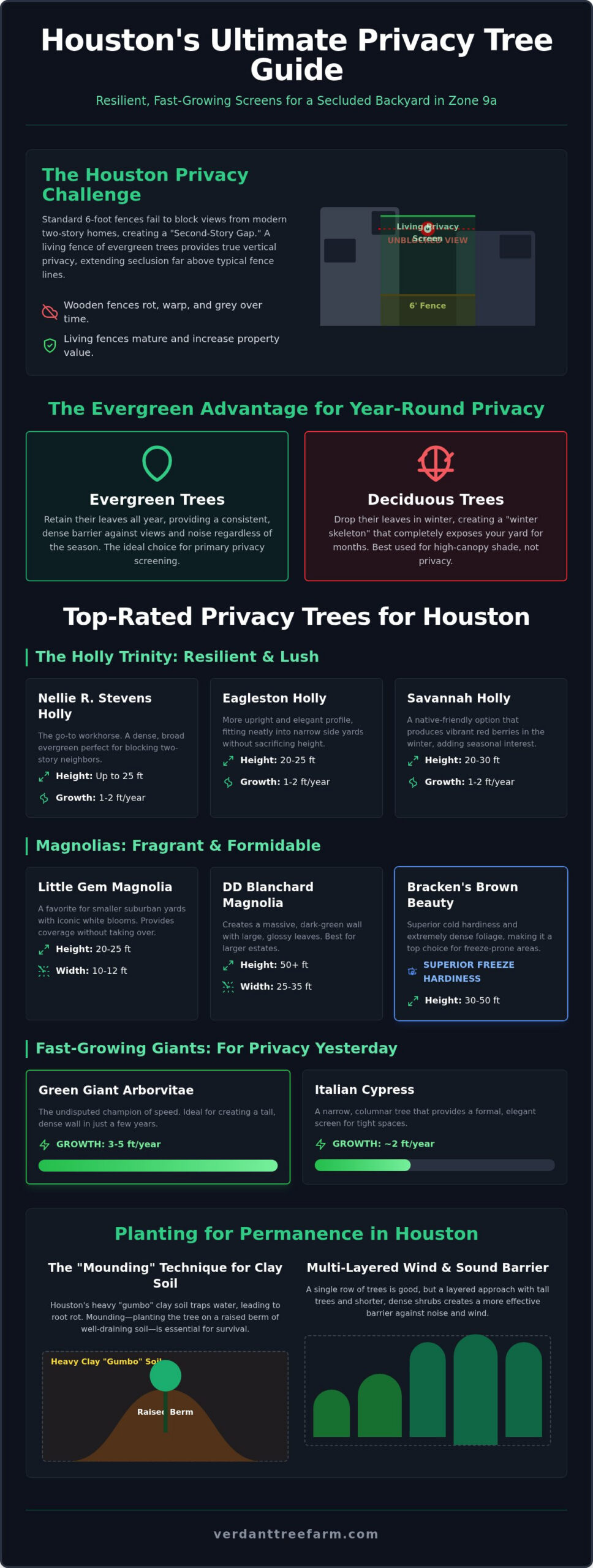
Standard six-foot wooden fences are the baseline for most Houston homes. However, they’re often the first thing to fail. In modern developments, houses are built tall and close together. This creates a “Second-Story Gap.” While your fence hides the lawn, it does nothing to stop a neighbor from looking directly into your patio from their upstairs bedroom. This is why we advocate for “Vertical Privacy.” By using living fences, you extend your privacy zone well above the height of a standard permit-restricted wooden structure.
Beyond the functional benefits, a living wall is a long-term investment in your property’s value. A wooden fence starts to grey and rot the moment it’s installed. In contrast, a well-placed row of privacy trees matures and becomes more valuable every year. Professional landscaping creates a high-end, finished look that potential buyers crave. It turns a basic backyard into a secluded outdoor room that feels intentional and high-quality.
The Problem with Houston Subdivisions
Evergreen vs. Deciduous: The Privacy Verdict
Choosing the right type of tree is critical for year-round peace of mind. Many people love the look of a Drummond Red Maple or a Cedar Elm. These are fantastic trees for shade, but they fail as privacy screens. They drop their leaves in winter. This leaves you with a “winter skeleton” that exposes your backyard for months. We recommend a strategy centered on evergreens. Species like the Eagleston Holly or Little Gem Magnolia keep their leaves all year. They provide a consistent barrier against prying eyes regardless of the season. If you want the best of both worlds, use deciduous trees for high-canopy shade and evergreens to form the solid “wall” at eye level. This multi-layered approach ensures your yard remains private even when the temperature drops.
Top-Rated Privacy Tree Species for Southeast Texas
In Houston, the best privacy tree is one that can handle 100-degree humidity and 15-degree freezes in the same year. After the brutal cold snaps of 2021 and 2024, local homeowners have learned that “fast-growing” doesn’t mean much if the plant can’t survive a Texas winter. We’ve selected these privacy trees Houston residents can depend on for both resilience and rapid screening. Choosing freeze-hardy specimens ensures your investment doesn’t disappear during the next unpredictable weather event.
The Holly Trinity: Eagleston, Nellie R. Stevens, and Savannah
Hollies are the backbone of Texas privacy screens because they stay lush and green all year. The Nellie R. Stevens Holly is our go-to workhorse. It’s a dense evergreen that can grow up to 25 feet tall, making it perfect for blocking out two-story neighbors. If you have a tighter space, the Eagleston Holly offers a more upright, elegant profile that fits neatly into narrow side yards without sacrificing height. For those who want a splash of color, the Savannah Holly is a native-friendly option that produces vibrant red berries in the winter. These trees typically grow 12 to 24 inches per year once established, providing a reliable barrier that requires minimal pruning.
Magnolias: Fragrant and Formidable Screens
If you want a screen that offers both privacy and luxury, Magnolias are the answer. The Little Gem Magnolia is a favorite for smaller suburban yards. It reaches a width of about 10 to 12 feet, which is wide enough to provide coverage without taking over your entire lawn. For larger estates, the DD Blanchard Magnolia creates a massive, dark-green wall with its large, glossy leaves and iconic white blooms. If your primary concern is survival during a deep freeze, Bracken’s Brown Beauty is widely considered to have superior cold hardiness and extremely dense foliage. You can view our full inventory of specimen trees to see which Magnolia fits your landscape design.
Fast-Growing Giants: Green Giant Arborvitae and Italian Cypress
When you need a privacy wall yesterday, certain species stand out for their sheer speed. The Green Giant Arborvitae is the fastest-growing privacy tree for the Houston area. It can put on three to five feet of height per year under the right conditions. A three-gallon Green Giant can easily reach 10 to 15 feet in just three years. If you’re dealing with a very narrow footprint, the Italian Cypress provides a classic Mediterranean look with a tall, columnar shape. While ultra-fast growth is appealing, it’s vital to ensure these trees are planted correctly. Rapid growth can sometimes lead to root stability issues if they aren’t professionally installed in our heavy clay soil.
Screening Shrubs and Palms: Alternative Privacy Layers
A single row of tall trees is a great start. However, true seclusion often requires a multi-layered approach. By mixing different heights and textures, you create a more effective windbreak and sound barrier. Layering also prevents the “tunnel effect” in smaller yards. It ensures that if one plant faces a struggle, your entire privacy screen doesn’t fail. This strategy works perfectly when you combine mid-sized shrubs with the larger privacy trees Houston properties typically require for perimeter blocking.
Resilient Screening Shrubs
For privacy at the six-to-ten-foot level, shrubs are your best tools. The Southern Wax Myrtle is a standout choice for Southeast Texas. It’s a fast-growing native that thrives in our intense humidity. Its aromatic foliage stays green year-round and handles our heavy clay soil with ease. If you prefer a more formal, manicured look, the Cherry Laurel offers glossy, dark green leaves that create a dense, sophisticated hedge. For those seeking a truly low-maintenance option, the Yaupon Holly is nearly indestructible. It’s a native shrub that resists pests and drought, making it a reliable choice for busy homeowners who want privacy without the constant upkeep.
Privacy Palms for the Tropical Look
Palms offer a unique way to gain “vertical privacy” without taking up a massive footprint in your yard. They are ideal for pool areas where you want a resort-style feel. The Windmill Palm is exceptionally cold-hardy and stays narrow, which is perfect for tight clusters between houses. If you need a more rugged, mid-level screen, the Sabal Palm is a native powerhouse that stands up to coastal winds and occasional freezes. For large-scale estates, the Medjool Date Palm provides high-level privacy that blocks views from neighboring balconies. These specimens are featured in our guide to Palm Trees for Sale in Houston, where we detail how to build a freeze-resistant oasis. Using palms allows you to block specific sightlines while maintaining an open, airy feel at the ground level.
Planting for Permanence: Navigating Houston’s Clay and Climate
A privacy tree in Houston is only as good as the drainage in the hole you dig for it. It’s a hard truth for many local homeowners. We often see beautiful, expensive specimens fail because they were simply dropped into a hole in our heavy “gumbo” clay. This soil is incredibly dense and holds water like a sponge. Without the right preparation, your new investment won’t last through its first wet season. Successful planting requires a strategy that respects the unique geology of Southeast Texas.
Overcoming the Clay Soil Challenge
Before you purchase any privacy trees Houston nurseries offer, you must test your yard’s drainage. Dig a hole 12 inches deep and fill it with water. If that water is still sitting there after four hours, you’re dealing with a drainage issue. This leads to the “Bathtub Effect.” When you dig a hole in clay and fill it with loose, amended soil, the clay acts as a waterproof bowl. Rainwater collects in that bowl and drowns the roots because it has nowhere to go. It’s the primary cause of root rot in our area.
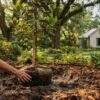
To prevent this, we use the mound planting technique. Don’t bury the root ball completely in the clay. Instead, plant the tree so the top third of the root ball sits above the natural soil line. You then build a wide, sloping mound of quality soil around it. This allows gravity to pull excess water away from the trunk while the roots still reach the moisture they need. Mixing in expanded shale or organic compost helps break up the clay and improves aeration, giving the roots the oxygen they need to thrive.
Watering and Long-Term Care
New trees need consistent support during their first two Houston summers. We follow the 3-2-1 rule for establishment. Water your trees three times a week for the first month, twice a week for the second month, and once a week thereafter. Of course, you should adjust this during our frequent summer droughts or heavy rain events. A three-inch layer of hardwood mulch is also essential. It keeps the root zone significantly cooler during those brutal 100-degree August days and helps retain moisture between waterings.
If you aren’t sure how to handle a specific drainage spot or want a professional to evaluate your yard’s health, you can schedule Maintenance Consultations with our expert team. We’ve spent decades learning how to make trees thrive in this specific environment. Contact Verdant Tree Farm today to get started with a planting plan that guarantees long-term success for your living fence.
Expert Installation: Transforming Your Yard with Verdant Tree Farm
Investing in privacy trees Houston families rely on is a significant decision. You’ve selected the right species and understood the challenges of our “gumbo” clay soil. Now, the final step is ensuring those trees are planted for long-term survival. Professional installation serves as a smart insurance policy for your investment. Just as Meridian Property Appraisers Inc. helps property owners understand the value of their assets through certified appraisal services, expert planting ensures your landscape matures into a tangible financial benefit. Large specimen trees are heavy, delicate, and expensive; our team handles the heavy lifting so your living fence starts its life in the best possible condition.
Verdant Tree Farm is proud to be the largest independent nursery in the area. We combine the scale of a major operation with the personal accountability of a veteran-owned and operated business. We don’t just sell you a tree and walk away. We provide an end-to-end service model that includes selection, delivery, and expert planting. Because we manage our own inventory and installation teams, we maintain rigorous standards that third-party contractors simply can’t match.
One of the biggest mistakes homeowners make is over-planting. It’s easy to buy too many trees because they look small in the nursery. Our 3D Landscape Design service eliminates this guesswork. We create a digital model of your property that shows exactly how your privacy wall will look at its mature height. This ensures proper spacing, which is vital for airflow and root health. You’ll see the “Second-Story Gap” disappear on screen before a single hole is dug. This precision saves you money and prevents future maintenance headaches caused by overcrowded plants. You can request a consultation today at our nursery to start planning your custom screen.
The Verdant Installation Advantage
We believe in providing direct-to-consumer value. By offering wholesale pricing to the public, we make high-end specimen trees accessible to every homeowner. Planting a 15-foot Magnolia or a heavy Nellie R. Stevens Holly requires more than a shovel. It requires specialized equipment, including cranes and heavy-duty loaders, to navigate your property without causing damage. Our experienced crews understand the logistics of large-scale planting in tight suburban spaces.
Every tree we install comes with a three-month warranty. In our volatile climate, this peace of mind is essential. Whether we face a sudden heatwave or an unexpected cold snap, we stand behind the quality of our inventory and our work. Choosing Verdant means supporting a local, veteran-owned business that values legacy and regional growth. We’re ready to help you transform your yard into the private sanctuary you deserve.
Secure Your Backyard Sanctuary Today
Creating a secluded outdoor space in Southeast Texas requires more than just digging a hole. It’s about selecting the right privacy trees Houston families can count on to withstand both blistering heat and sudden freezes. By prioritizing freeze-hardy species like the Nellie R. Stevens Holly, you’re building a living fence that grows more valuable every year. Proper mounding techniques ensure these trees survive the heavy clay soil common in our area.
Verdant Tree Farm is here to simplify this process. As Houston’s largest independent tree nursery, we provide wholesale pricing directly to the public. Our veteran-owned and operated team handles everything from 3D landscape design to professional installation. Every tree we plant comes with a three-month warranty to ensure your investment thrives from day one. We take pride in helping our neighbors build lasting value and privacy on their property.
Ready to block out the neighbors and reclaim your peace? Browse Our Current Inventory of Houston Privacy Trees and see how easy it is to transform your property. Your perfect backyard retreat is just a planting season away.
Frequently Asked Questions
What is the fastest-growing privacy tree for Houston?
The Green Giant Arborvitae is the fastest-growing option for our region, often adding three to five feet of height annually. This allows a three-gallon specimen to reach 10 to 15 feet in just three years. This rapid growth makes them a top choice for new developments. While speed is a major benefit, these trees require consistent moisture and proper drainage to maintain their rapid pace throughout the year.
How far apart should I plant privacy trees for a dense screen?
Proper spacing depends on the specific species you choose and your desired level of density. For a solid wall using Nellie R. Stevens Hollies, we typically recommend planting them five to six feet apart on center. Larger trees like the DD Blanchard Magnolia may require eight to ten feet of space to allow for healthy root development. Our 3D design service helps you visualize the mature canopy to prevent overcrowding.
Which privacy trees are the most freeze-hardy in Zone 9a?
The Nellie R. Stevens Holly and Southern Wax Myrtle are among the most resilient choices for Zone 9a. These species have proven their ability to survive the extreme cold snaps Houston has faced in recent years. Little Gem Magnolias also offer excellent cold resistance while maintaining their lush, evergreen foliage. Choosing these hardy varieties ensures your privacy trees Houston investment remains intact even when the temperature drops unexpectedly.
Do I need a permit to plant privacy trees in Houston?
You generally don’t need a permit to plant trees on your private residential property in Houston. However, city ordinances require two trees for new single-family lots of 5,000 square feet or more. It’s also vital to check your specific Homeowner Association (HOA) rules, as they often have stricter guidelines regarding tree species and placement than the city. Always call 811 before digging to have your underground utility lines marked.
Can I plant privacy trees in heavy clay soil?
You can absolutely grow healthy trees in “Houston Gumbo,” but you must use specific planting techniques. We recommend the mounding method, where the top third of the root ball stays above the ground level. This prevents the “bathtub effect” where water collects in the clay and drowns the roots. Mixing in expanded shale and organic compost improves aeration, allowing your trees to establish strong root systems despite the dense soil.
How often should I water my new privacy trees in the Houston summer?
New trees require a disciplined watering schedule during the brutal Houston summer. We suggest the 3-2-1 rule: water three times a week for the first month, twice a week for the second, and once a week after that. During weeks with temperatures over 100 degrees, you’ll likely need to increase this frequency. Deep, slow watering is better than frequent light sprays because it encourages roots to grow deeper into the cooler soil.
Which privacy trees are safe to plant near a swimming pool?
Little Gem Magnolias and Windmill Palms are excellent choices near pools because they have non-invasive root systems and minimal leaf litter. You want to avoid trees with aggressive roots that could damage your pool’s shell or plumbing. Nellie R. Stevens Hollies also work well as they provide a dense screen without dropping excessive debris into the water. These selections allow you to maintain a private, resort-style atmosphere without constant cleaning, a philosophy shared by premium designers like Kultgarden who specialize in integrating custom pools with lush, intentional landscaping.
How much does professional tree installation cost in Houston?
Professional installation costs depend on several factors, including the size of the specimen and the accessibility of your planting site. While industry averages for large-scale landscaping projects vary, homeowners should consider this an investment in their property’s long-term value. We recommend requesting a customized quote that accounts for your specific soil conditions and desired tree maturity. This ensures you receive a clear breakdown of the labor, equipment, and materials required for your project.