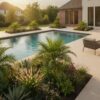
Imagine waking up after a sudden February cold snap only to find your tropical oasis has turned brown and brittle overnight. It’s a common fear for local homeowners who still remember the devastating 2021 freeze. You want the resort-style look of a Pygmy Date Palm Houston summers adore, but you’re worried about winter survival and invasive roots near your pool plumbing. We understand that a landscape is a long-term investment in your property, not just a weekend project.
You don’t have to sacrifice your tropical vision for peace of mind. It’s entirely possible to build a lush, low-maintenance backyard that stands up to our unpredictable Zone 9 climate. By selecting the right species and using professional planting techniques, you can enjoy a year-round paradise even in a compact space. This guide will show you which dwarf palms thrive in our heavy clay soil, how to protect them when temperatures hit that 25°F danger zone, and how to design a small-scale landscape that looks like it was handled by a pro.
Key Takeaways
- Identify the best compact species, including the Pygmy Date Palm Houston homeowners prefer for pool areas, that won’t outgrow their space.
- Learn the difference between dwarf and slow-growing varieties to select freeze-hardy palms that can withstand unpredictable Gulf Coast winters.
- Master soil amendment techniques specifically for Houston’s heavy clay to provide the drainage your small palms need to thrive.
- Explore 3D design strategies for layering palms and native shrubs to maximize privacy and tropical aesthetics in small landscapes.
- Secure your landscape investment with direct-to-consumer value and professional installation services that include a three-month health warranty.
Defining Small Palm Trees for the Houston Climate
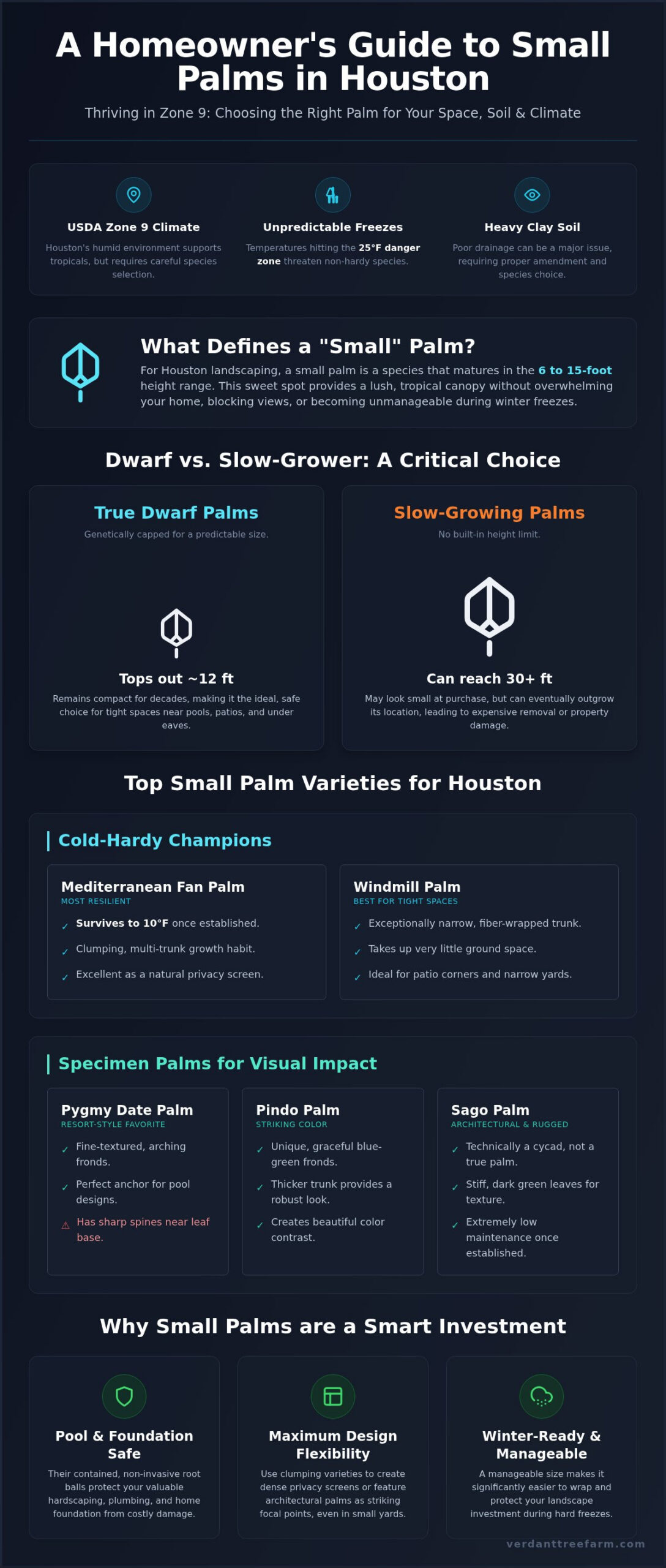
In the Greater Houston area, a “small” palm tree is defined by more than just its current height in a nursery container. For a typical suburban backyard or an urban patio, a small palm is a species that matures between 6 and 15 feet. This height range is the sweet spot for local landscaping. It provides that sought-after tropical canopy without blocking views, hitting power lines, or overwhelming the architectural scale of a single-family home. Because Houston sits in USDA Zones 9a and 9b, choosing a smaller species also makes winter maintenance much more manageable. When a freeze warning hits, it’s far easier to protect a 10-foot tree than a towering giant.
Dwarf Species vs. Slow Growers
Understanding the difference between dwarf species and slow-growing palms is critical for your long-term property value. True dwarf palms are genetically capped at a shorter height, usually topping out around 12 feet. The Pygmy Date Palm (Phoenix roebelenii) is a prime example of this. It stays compact and manageable for decades. In contrast, slow-growing palms might only add 6 to 12 inches of trunk height per year in our humid climate, but they don’t have a built-in height limit. A “slow” tree can still reach 30 feet eventually. If you have a tight space near a balcony or under an eave, you want a true dwarf to avoid expensive removal or transplanting costs down the road.
Why Size Matters in Houston Landscaping
Houston’s heavy clay soil presents unique challenges for root systems. Large, aggressive roots can shift pool plumbing or crack concrete foundations as they expand. Small palms generally have more contained, less invasive root balls. This makes them the ideal choice for planting near pool decks or along narrow side yards. Beyond the practical benefits, these trees offer incredible design flexibility. Clumping varieties like the Mediterranean Fan Palm create a dense, lush screen that provides privacy without taking up half the yard. Architectural palms serve as striking focal points for small yards by providing unique shapes and textures that draw the eye without overwhelming the surrounding plants. Integrating a Pygmy Date Palm Houston residents can trust for its compact footprint ensures your tropical oasis stays beautiful without outgrowing its welcome.
Top Small Palm Varieties for Houston Yards
Selecting the right variety means balancing your aesthetic goals with the reality of Texas weather. Houston’s Zone 9 environment allows for a surprising diversity of small palms, provided you choose species that won’t outgrow their intended footprint. Whether you need a rugged survivor for a north-facing wall or a delicate specimen for your pool deck, these varieties are the most reliable performers for our region. We’ve spent years testing these species in local soil to ensure they provide the long-term value you expect for your property.
Cold-Hardy Champions
If your primary concern is survival during a hard freeze, the Mediterranean Fan Palm should be at the top of your list. It’s one of the most resilient species we carry, capable of surviving temperatures as low as 10°F once established. Its clumping growth habit creates a thick, multi-trunked look that works perfectly as a natural privacy screen or a dense backdrop for smaller garden beds. For homeowners with extremely tight spaces, the Windmill Palm is a superior choice. Its trunk is exceptionally narrow, often wrapped in a distinctive dark brown fiber, and it takes up very little ground space. This makes it ideal for tucking into patio corners where a wider tree would block foot traffic. You can explore our full guide to freeze-resistant palms to see how these rugged varieties compare to other local favorites.
Specimen Palms for Visual Impact
For that quintessential resort feel, nothing beats the Pygmy Date Palm Houston landscapers use to anchor pool designs. While it’s slightly more sensitive to extreme cold than the Windmill, it thrives in the heat and humidity of Zone 9b. According to NC State Extension’s plant profile, this palm is prized for its fine-textured, arching fronds, though you should be mindful of the sharp spines located near the base of the leaves. If you want a different color palette, the Pindo Palm offers striking blue-green fronds that arch gracefully toward the ground. It stays relatively short for many years, though it has a thicker trunk than the Pygmy. Finally, the Sago Palm remains a staple for low-profile greenery. Technically a cycad rather than a true palm, its stiff, dark green leaves provide a rugged, architectural interest that requires almost zero maintenance once established in a well-drained spot. If you aren’t sure which specimen fits your yard’s sunlight levels, we recommend a maintenance consultation with our team to ensure your new investment thrives.
Small Palm Landscaping: Design Ideas for Houston Patios & Pools
Successful landscaping in Houston often comes down to how you layer textures. Instead of just planting a lone palm, try surrounding it with Houston-native shrubs like Texas Sage or Dwarf Palmetto. This creates a multi-tiered look that feels lush and intentional. It also helps ground the verticality of the palms, making your garden feel more established. We’ve found that this layering approach is the most effective way to achieve a professional finish in a residential setting.
Not every palm needs to go in the ground. For those with concrete patios or small balconies, container gardening is a game-changer. Mediterranean Fan Palms and Sagos thrive in large pots. This setup allows you to move your tropical accents if you decide to rearrange your outdoor furniture. It also makes it much easier to move sensitive species into a garage during a severe freeze. Don’t forget the night view; up-lighting the textured trunks and arching fronds of your palms adds immediate drama. It turns a dark corner into a sophisticated focal point.
Pool-Side Tropical Design
When designing around a pool, choose species that won’t clog your skimmer. The Pygmy Date Palm Houston homeowners love is a top pick because its fine fronds don’t shed as much heavy debris as larger broad-leafed trees. Keep your palms at least 4 to 6 feet away from the coping. This prevents root pressure on the pool shell and keeps fronds from overhanging the water. Our 3D landscape design services are the best way to see exactly how these placements will look before we ever break ground. It takes the guesswork out of spacing around expensive equipment.
Small Space Privacy Solutions
Privacy is a major concern in modern Houston developments where houses are built close together. You can create a “living wall” by planting clumping Mediterranean Fan Palms in a row. Their dense, multi-trunk growth naturally fills in gaps that single-trunk trees leave open. This strategy blocks the view from your neighbor’s second-story windows without making your yard feel like a fortress. Small palms provide vertical interest and a sense of enclosure without overhanging roofs or interfering with gutters. It’s a smart way to maximize every square inch of a narrow side yard while keeping your sunlight intact.
Planting and Maintenance in Houston’s Clay Soil
Houston’s heavy clay soil is the biggest obstacle to a healthy, thriving palm. While our heat and humidity mimic a tropical environment, the ground beneath our feet often acts like a sponge that refuses to drain. This creates a high risk for root rot, especially during our rainy spring and fall seasons. Success with a Pygmy Date Palm Houston landscape depends on how you handle this soil structure from the very first day. If you simply dig a hole in the clay and drop the tree in, you’ve essentially created an underground bowl that will drown the roots. We call this the bathtub effect, and it’s a leading cause of plant failure in East Texas.
The Battle with Houston Clay
The secret to palm survival in our region is “planting high.” You should always install your palm so that the top of the root ball sits 2 to 3 inches above the surrounding soil line. This allows excess water to shed away from the trunk rather than pooling at the base. You’ll also need to amend the backfill soil. A mix of coarse sand, peat moss, and organic compost helps break up the clay’s density and creates the air pockets roots need to breathe. If you’re unsure about managing these soil conditions yourself, our team provides professional installation services to ensure your trees are positioned for long-term health.
Seasonal Care and Freeze Prep
Maintenance changes with the seasons. During the peak of summer, your small palms need deep, infrequent watering rather than daily light sprinkles. This encourages roots to grow deeper into the cooler earth. You should also follow a strict fertilization schedule using a slow-release formula high in magnesium and potassium, which prevents the yellowing fronds common in Gulf Coast palms. Watch out for spider mites during dry spells; these tiny pests love the underside of palm leaves and can quickly dull the vibrant green of your Pygmy Date Palm.
Freeze protection is the final, crucial piece of the puzzle. Most small palms, including the Pygmy Date, are vulnerable when temperatures drop to 25°F. When a hard freeze is forecasted, wrap the trunk and the “heart” (the center where new fronds emerge) with frost cloth or burlap. Avoid using plastic, as it can trap moisture and cause fungal issues. If your palm does suffer freeze damage, don’t prune the brown fronds immediately. Wait until the threat of frost has passed in late spring. Those dead fronds actually provide a layer of insulation for the crown, protecting the living tissue inside from subsequent cold snaps.
Why Buy Your Small Palms from Verdant Tree Farm?
Buying a palm is a long-term investment in your home’s beauty and value. You shouldn’t have to settle for a big-box retailer that treats plants like disposable inventory. As Houston’s largest independent nursery, we provide a level of personal accountability that national chains simply can’t match. Our veteran-owned operation is built on a foundation of integrity and a deep connection to our regional community. When you select a Pygmy Date Palm Houston families love for their pool-side retreats, you’re getting a tree cared for by local experts who understand our specific weather patterns. We manage our own inventory and internal teams, ensuring that the quality of our service remains consistent from the nursery floor to your final installation.
Nursery-Direct Quality
There is a significant advantage to buying nursery-direct. Our palms are fully acclimated to the intense humidity and unique soil conditions of the Gulf Coast before they ever reach your property. This reduces transplant shock and ensures a much higher survival rate compared to trees shipped in from different climates. We offer wholesale-level inventory directly to the general public, providing direct-to-consumer value that makes high-end landscaping more accessible for every homeowner. You can check out our Houston tree nursery guide to learn more about what sets a local grower apart from a standard retail outlet.
End-to-End Landscaping Services
We don’t just sell you a tree and leave the heavy lifting to you. Our process is comprehensive and designed to simplify the technical side of landscaping. It begins with professional 3D design services to help you visualize your new Pygmy Date Palm Houston layout before a single shovel hits the ground. Once the design is finalized, our experienced crew handles the professional installation. We know exactly how to navigate the clay drainage issues and “planting high” techniques required for success in East Texas. To give you total peace of mind, we provide a three-month warranty on all trees we install. This guarantee reflects our confidence in our stock and our professional planting methods. If you need ongoing support, our maintenance consultations are available to keep your tropical oasis thriving for years to come. We invite you to visit our location to hand-pick your next specimen and see the Verdant difference for yourself.
Build Your Houston Tropical Oasis Today
Transforming a compact backyard into a lush retreat is entirely possible with the right selection of small palms. You’ve learned how to navigate Houston’s heavy clay soil by planting high and using the proper amendments. You also know the difference between a true dwarf species and a slow grower, ensuring your landscape won’t overwhelm your home in five years. Whether you’re eyeing a hardy Mediterranean Fan Palm or the iconic Pygmy Date Palm Houston homeowners use to anchor their pool decks, success starts with quality stock.
As the largest independent nursery in the city, we’re proud to offer a direct-to-consumer value that big-box stores can’t touch. Our veteran-owned team provides the professional installation and 3D design services you need to get it right the first time. Every tree we install comes with a three-month warranty to protect your investment. Shop our full selection of small palm trees at Verdant Tree Farm today! We look forward to helping you build a landscape that brings you joy for years to come.
Frequently Asked Questions
What is the best small palm tree for a pool area in Houston?
The Pygmy Date Palm Houston residents often choose is the top pick for pool areas because it produces minimal litter that could clog filtration systems. Its compact size and non-invasive root system make it safe for planting near coping and underground plumbing. This species adds a sophisticated, resort-style aesthetic without the maintenance headache of larger, messier trees.
How do I protect my small palm trees from a Houston freeze?
You should wrap the trunk and the central growth point, or heart, with breathable frost cloth or burlap when temperatures drop toward 25°F. Avoid using plastic covers because they trap moisture and can cause fungal rot. If your palm sustains cold damage, wait until the threat of frost passes in late spring before pruning any brown fronds.
Can I grow small palm trees in pots on my patio?
Yes, varieties like the Mediterranean Fan Palm and Sago Palm thrive in large containers on local patios. Growing in pots offers excellent flexibility, allowing you to move sensitive plants into a garage or shed during extreme weather events. Just ensure your containers have adequate drainage holes to prevent water from sitting at the roots and causing rot.
Which small palms are most resistant to root rot in clay soil?
The Mediterranean Fan Palm and Windmill Palm are particularly resilient against the drainage challenges of our local environment. However, the most effective way to prevent root rot in clay soil is to plant the tree slightly high. This ensures water sheds away from the base rather than pooling in the heavy, non-porous ground.
How fast do Windmill palms grow in the Houston area?
Windmill palms are slow growers that typically add 6 to 12 inches of trunk height annually in the Gulf Coast region. This steady, predictable growth makes them ideal for tight spaces near home foundations or patio corners. Their narrow profile ensures they won’t overwhelm your landscape even after several years of growth in your yard.
Do small palm trees require a lot of water in the summer?
Small palms require deep, infrequent watering during the peak of summer rather than daily light sprinkles. Once they are established in your yard, they become quite drought-tolerant. However, newly planted palms need consistent moisture for the first several months to help their root systems adapt to the intense Texas heat.
What is the difference between a Sago Palm and a Pygmy Date Palm?
A Sago Palm is actually a cycad with stiff, dark green leaves that grows very slowly and stays low to the ground. In contrast, the Pygmy Date Palm Houston landscapers prefer is a true palm species with soft, arching fronds and an upright trunk. While both are great for small spaces, the Pygmy Date provides a more traditional tropical look.
When is the best time of year to plant palms in Houston?
The best time to plant palms in our area is from late spring through early summer when the soil has warmed up significantly. Warm soil temperatures are necessary for active root growth and help the plant establish itself before the first winter. Planting during this window gives your new investment the best chance of long-term survival.