Your backyard oasis might be one sap-sucking insect away from a total loss. In 2026, many homeowners are realizing that common palm tree problems in Houston are often mistaken for simple dehydration when they’re actually signs of something much more permanent. While the Harris County quarantine for Lethal Bronzing expired this past May, the risk to your investment remains high as the disease continues to spread through nearby Galveston and Bexar counties. It’s frustrating to watch a mature Sylvester or Queen palm lose its luster without knowing if the cause is a minor nutrient deficiency or a terminal infection.
We understand the pride you take in your landscape and the stress that comes with seeing a brown frond or a drooping spear leaf. You shouldn’t have to guess whether your Pindo or Windmill palm needs a specific fertilizer or an emergency intervention. This guide will help you identify the exact symptoms of local pests and environmental stressors so you can act quickly. We’ll walk through the latest diagnostic signs for Lethal Bronzing, explain how Houston’s unique soil impacts palm health, and provide a clear roadmap to keep your palms thriving for years to come.
Key Takeaways
- Identify common palm tree problems in Houston by distinguishing between terminal diseases like Lethal Bronzing and treatable nutrient deficiencies.
- Learn why Houston’s heavy clay soil often leads to root suffocation and how proper drainage serves as your first line of defense.
- Recognize the symptoms of “Frizzle Top” to ensure your palms receive the specific minerals they need to maintain healthy fronds.
- Prepare for unpredictable Texas winters with proven protection strategies that keep cold-hardy varieties safe during sudden arctic blasts.
- Minimize replacement risks by selecting resilient, locally-proven species like the Sabal, Windmill, or Pindo palm for your landscape.
The Houston Environment: Why Palms Struggle in East Texas
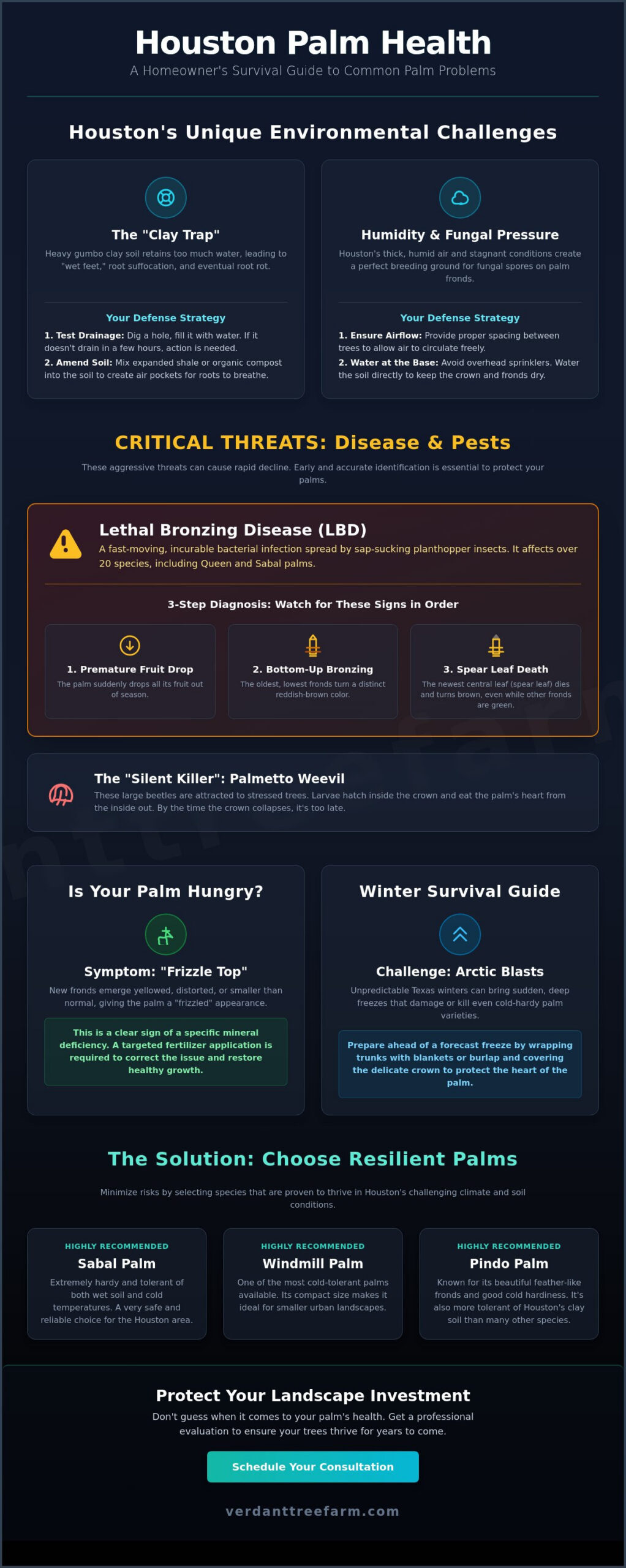
Houston looks like a tropical paradise on the surface, but our local climate presents a unique set of challenges that can catch even experienced gardeners off guard. We live in USDA Zone 9, where intense summer heat meets some of the highest humidity levels in the country. While palms are built for warmth, the combination of stagnant air and heavy rainfall creates a breeding ground for many common palm diseases. Many common palm tree problems in Houston aren’t caused by the trees themselves, but by the environmental “Clay Trap” that defines our regional geography.
In the city center and surrounding suburbs, urban heat islands make things even tougher. Concrete and asphalt radiate heat long after the sun goes down, forcing palms to transpire at a much higher rate. This increased water demand is difficult to balance when your soil doesn’t drain. If you’ve noticed your palm looking stressed despite regular watering, the environment is likely the culprit. Success in East Texas requires a proactive approach to nutrition and site preparation rather than just reactive care.
The Challenge of Houston Clay Soil
Most local subdivisions are built on heavy gumbo clay. This soil retains water for far too long, leading to a condition known as “wet feet.” When palm roots sit in saturated clay, they suffocate from a lack of oxygen, which eventually triggers root rot. Before planting a new Windmill or Sabal palm, we recommend a simple drainage test. Dig a hole and fill it with water; if it hasn’t drained within a few hours, you need to amend the area. Using expanded shale or organic compost helps break up the clay’s tight structure. This creates the necessary air pockets for roots to thrive and prevents common palm tree problems in Houston related to poor drainage.
Humidity and Fungal Pressure
Our thick, humid air is the perfect environment for fungal growth. Unlike drier palm-growing regions, Houston doesn’t provide much natural relief from moisture. Stagnant air allows fungal spores to settle on fronds, leading to unsightly leaf spots and crown issues. You can combat this by ensuring proper spacing between your trees to encourage airflow. It’s also vital to avoid overhead irrigation. When you use sprinklers that soak the palm’s crown and trunk, you’re essentially inviting disease. Always water at the base of the tree to keep the foliage dry and healthy.
Lethal Bronzing and Major Pests in the Houston Area
Identifying common palm tree problems in Houston requires a sharp eye for detail, especially with the rise of aggressive diseases. As of June 2026, the most significant threat to our local canopy is Lethal Bronzing Disease (LBD). While the specific quarantine for Harris County expired on May 3, 2026, the disease remains active in neighboring Galveston County as of May 19, 2026. This means Houston homeowners must stay vigilant. This bacterial infection is spread by a tiny, sap-sucking insect called a planthopper. Once the insect feeds on an infected tree, it carries the pathogen to every healthy palm it visits next.
Beyond bacterial threats, Houston palms face a silent killer known as the Palmetto Weevil. These large beetles are attracted to stressed or recently transplanted trees. They crawl into the crown and lay eggs; the resulting larvae eat the heart of the palm from the inside out. By the time you notice the fronds drooping or the crown collapsing, it’s often too late to save the tree. Distinguishing between these pests and standard fungal issues is the first step toward protecting your property’s value.
Identifying Lethal Bronzing Disease
LBD doesn’t have a cure, so early diagnosis is critical to prevent it from jumping to your other trees. Watch for these specific signs:
- Premature Fruit Drop: If your palm drops all its fruit suddenly and out of season, take note.
- Bottom-Up Bronzing: Fronds will turn a distinct reddish-brown or bronze color, starting with the oldest leaves at the bottom.
- The Spear Leaf Test: Check the newest, central leaf (the spear leaf). If this leaf is brown or easy to pull out while the rest of the tree still looks green, the palm is likely infected.
Because this disease affects over 20 species, including Queen and Sabal palms, we recommend maintenance consultations to evaluate any suspicious symptoms before they spread to your neighbors’ yards.
Common Local Pests: Weevils and Scale
Houston’s high humidity makes Diamond Scale a frequent nuisance. This fungus appears as small, black, diamond-shaped fungal bodies on the fronds. While it rarely kills a tree on its own, it weakens the palm’s immune system, making it a prime target for weevils. For scale, improving airflow and using organic neem oil can often manage the spread. However, weevil infestations usually require systemic chemical treatments to reach the larvae hidden deep within the trunk. If you see “sawdust” at the base of the fronds or smell a foul, fermenting odor coming from the crown, you’re likely dealing with a weevil emergency that needs immediate professional attention.
Nutritional Deficiencies: Common Signs of ‘Hungry’ Palms
Many homeowners assume a yellowing frond means the tree is thirsty. In reality, nutritional gaps are among the most common palm tree problems in Houston. If you use standard lawn fertilizer near your palms, you’re likely doing more harm than good. High-nitrogen turf blends encourage rapid growth that the palm’s root system can’t support. This often leads to severe mineral imbalances. Palms require a specific ratio of nitrogen, potassium, and magnesium to thrive in our coastal environment. Without it, the tree’s health will steadily decline.
A classic sign of trouble is “Frizzle Top.” This occurs when a Manganese deficiency causes new fronds to emerge stunted, yellowed, and tattered. It looks as if the leaves have been scorched by fire. Without the right micronutrients, your palm loses its ability to photosynthesize effectively. This is why we emphasize slow-release fertilizers designed specifically for Zone 9. These products release minerals over several months, ensuring your palms get a steady diet rather than a sudden, overwhelming spike of chemicals.
Magnesium and Potassium Deficiencies
Potassium deficiency shows up as orange or yellow spotting on the oldest fronds first. You might be tempted to prune these leaves to “clean up” the look of the tree. Don’t do it. The palm is actually moving nutrients from those old leaves to the new growth. Removing them too early accelerates the tree’s decline. Keeping a full canopy is also a key part of winter protection for palms, as the extra foliage helps shield the sensitive bud from frost. Magnesium deficiency looks slightly different, appearing as a broad lemon-yellow band along the outer edge of the frond while the center remains green. Both issues can be corrected with high-quality, palm-specific fertilizers applied at the drip line.
The Role of Soil pH in Houston
Our soil is often highly alkaline. This is especially true in newer subdivisions where construction debris or concrete runoff has raised the pH level. When the soil is too alkaline, it “locks” essential minerals in the ground. The nutrients are present, but the roots can’t absorb them. This leads to a persistent “hungry” look despite regular feeding. You can use elemental sulfur to lower the pH, making those nutrients accessible again. A simple DIY soil test kit from a local garden center is a great way to start your diagnosis. If your pH is above 7.5, your palms will likely struggle to take in the manganese and iron they need to stay vibrant and green.
Winter Survival: Protecting Palms from the Next Houston Freeze
Recent Arctic blasts have proven that even the most established landscapes aren’t immune to common palm tree problems in Houston. When temperatures drop into the teens for extended periods, the water inside palm cells actually freezes and expands. This leads to cell rupture and vascular collapse, which essentially shuts down the tree’s ability to move water and nutrients. While some species are labeled as “cold hardy,” this doesn’t mean they are indestructible. Most palms in our area can handle a light frost, but multi-day freezes often trigger common palm tree problems in Houston that require proactive intervention to prevent total loss.
Understanding the limits of your trees is vital for long-term property value. Cold hardiness is the ability of a plant to survive specific minimum temperatures for short durations. If a freeze exceeds those limits or lasts for several days, even a mature Sabal or Windmill palm can suffer terminal damage. Success during a Texas winter depends on how well you prepare the tree’s “heart” before the ice arrives.
Pre-Freeze Preparation Steps
Preparation starts long before the first snowflake falls. One of the most effective ways to protect your palm is to water it deeply 24 to 48 hours before a freeze. Moist soil stays warmer than dry soil and provides a small buffer of radiant heat. You should also avoid pruning your palms in late autumn; those brown or yellowing lower fronds act as a natural insulation blanket for the trunk. For extreme cold, wrap the “bud” or “heart” of the palm with frost cloth or burlap. This protects the growth point where new fronds emerge, which is the most vulnerable part of the tree.
Post-Freeze Recovery and Assessment
The biggest mistake Houston homeowners make is removing a palm too quickly after a freeze. It’s common to see a palm turn completely brown and look dead by February, only to push out new green growth by early summer. We recommend waiting until at least June to determine if a palm has truly failed. During this waiting period, applying a copper-based fungicide to the crown can help prevent “heart rot” while the tree is in a weakened state. If the center spear leaf remains firm and doesn’t pull out easily, there is still hope for recovery.
If you’re unsure whether your palms can survive the next big freeze, schedule one of our maintenance consultations to get a professional health check and a customized protection plan.
The Solution: Selecting Resilient Palms and Professional Care
The best way to avoid common palm tree problems in Houston is to start with a specimen that’s already adapted to our specific climate. Buying a palm from a local, professional nursery ensures you aren’t bringing home a pre-existing disease or a tree weakened by improper care. We’ve found that the Sabal, Windmill, and Pindo palms are the most resilient choices for East Texas. These species have survived our humidity and our freezes with remarkable consistency. Starting with a healthy, nursery-grown specimen is your strongest defense against the pests and pathogens that target stressed plants.
Professional installation is more than just digging a hole. It’s about engineering the right environment for a tree that might stay on your property for decades. Our team understands the local soil challenges we’ve discussed. We use specific amendments to ensure your palm doesn’t suffer from root rot in its first year. This proactive approach saves you from the high replacement costs of mature palms down the road. Regular maintenance consultations can also catch issues like nutritional gaps or early-stage weevil activity before they become terminal.
Choosing the Right Species for Your Micro-Climate
Your backyard’s specific conditions should dictate your choice. For instance, Sabal Palms are incredibly hardy and can tolerate the wetter soil often found in low-lying areas. If you’re looking for a statement piece, the Medjool Date Palm is a premium, resilient choice for Houston that brings an upscale look to your property. Consulting with a professional Houston landscaping service helps you place these trees where they have the best chance to grow. We look at drainage patterns and sun exposure to create a plan that works for your specific lot.
Verdant Tree Farm’s Expert Support
We are a veteran-owned business deeply committed to the health of our local community. We don’t just sell trees; we provide a long-term investment in your property. To give you peace of mind, we offer a three-month warranty on palms that our team professionally installs. This ensures that the initial planting, soil amendment, and drainage are handled correctly from day one. If you’re worried about an existing tree or want to prevent common palm tree problems in Houston from taking root, don’t wait for the leaves to turn brown. Schedule a maintenance consultation today to evaluate your palm’s health and keep your tropical oasis thriving.
Secure Your Backyard Oasis for Years to Come
Maintaining a healthy landscape requires staying ahead of environmental shifts and biological threats. You now have the tools to identify common palm tree problems in Houston before they become costly removals. By mastering soil drainage, recognizing the early signs of Lethal Bronzing, and selecting the right freeze-hardy species, you can protect your property’s value and aesthetic appeal. Success starts with a healthy tree and ends with consistent, expert care.
As Houston’s largest independent tree nursery, we are proud to be a veteran-owned and operated partner for your landscaping needs. We don’t just sell trees; we provide a long-term investment in your home. Every tree we professionally install comes with a three-month warranty to ensure your new palm gets the best possible start in our unique climate. Our team is ready to help you navigate everything from soil amendments to pest prevention.
Visit Houston’s Largest Nursery to Find Your Resilient Palm Today!
Take the guesswork out of palm care and enjoy the peace of mind that comes with local expertise. Your vibrant, tropical retreat is within reach.
Frequently Asked Questions
How do I know if my palm tree is dying or just stressed?
Check the newest growth at the very center of the canopy, known as the spear leaf. If the spear leaf remains green and firm, your palm is likely just stressed from Houston’s heat or a nutrient deficiency. If that central leaf is brown, mushy, or pulls out easily with a gentle tug, the palm’s “heart” is likely dead. Stress usually shows as yellowing, while death involves a total collapse of the crown.
Is Lethal Bronzing Disease curable if caught early?
Lethal Bronzing Disease has no known cure as of June 2026, regardless of when it is detected. Once a palm is infected with this phytoplasma, it will typically die within a year. Management focuses on the immediate removal of the infected tree to prevent planthoppers from spreading the pathogen to your healthy palms. Preventative antibiotic injections are the only way to protect healthy trees in high-risk areas.
Why are the bottom leaves of my palm tree turning brown?
Brown bottom leaves are often a sign of natural aging or one of the common palm tree problems in Houston related to potassium deficiency. Palms naturally shed older fronds at the bottom to direct energy to new growth at the top. However, if the browning is rapid or accompanied by orange spotting, it indicates a nutrient gap. Don’t prune these until they’re entirely brown, as the tree is still sourcing minerals from them.
Can I use Epsom salt to fix my palm tree’s yellow leaves?
Epsom salt only helps if the yellowing is specifically caused by a magnesium deficiency, but it isn’t a universal fix. While magnesium is vital for chlorophyll, over-applying Epsom salt can actually block the tree from absorbing potassium. It’s much safer to use a balanced, slow-release palm fertilizer. These professional blends are specifically formulated for East Texas soils and provide a steady diet of all necessary micronutrients.
How often should I water my palm trees in Houston’s summer heat?
Established palms usually require deep watering two to three times per week during the peak of a Houston summer. Newly planted palms need daily watering for the first few weeks to help the root system take hold in our heavy clay soil. Always apply water at the base of the trunk. Avoid wetting the foliage, as stagnant moisture in the crown often leads to fungal infections and rot in our humid climate.
What is the best time of year to prune palm trees in Texas?
The best time to prune is late spring or early summer after the threat of a freeze has passed. You should avoid pruning in the fall or winter. Those older fronds actually provide a layer of natural insulation for the palm’s sensitive bud during sudden cold snaps. When you do prune, only remove fronds that are completely brown and hanging below a horizontal line to keep the tree’s structure strong.
Should I cut off the brown fronds after a freeze?
No, you should wait until the weather warms up significantly, usually around June, before removing freeze-damaged fronds. Even a brown frond provides a small amount of protection against subsequent frosts. Waiting also allows you to see if the central spear leaf begins to push out new green growth. Cutting too early can expose the weakened heart of the palm to further damage or secondary infections while it tries to recover.
How do I protect my palm tree from the ‘spear leaf’ rot?
Protection starts with improving airflow and preventing common palm tree problems in Houston caused by overhead irrigation. Spear leaf rot often occurs when water sits in the crown during periods of high humidity. Ensure your palms have proper spacing and never aim sprinklers at the canopy. If you suspect rot, a professional application of a copper-based fungicide into the bud can sometimes stop the infection before it reaches the palm’s heart.