In Houston, your tree’s biggest enemy isn’t just the summer heat; it’s the nutrient-locking power of our heavy alkaline clay soil. Most homeowners watch their Live Oaks or Drummond Red Maples struggle with yellowing leaves and stunted growth, assuming the brutal Texas sun is the only culprit. However, without a consistent tree fertilizer schedule Houston trees often lack the deep-root resilience needed to survive our unpredictable climate. We understand the frustration of seeing a high-value investment like a Medjool Palm look stressed after a long July, or the fear that one wrong application might burn sensitive roots.
You can transform your landscape from surviving to thriving by mastering the timing of local nutrient cycles. This guide provides a clear, month-by-month plan to navigate the 2026 growing season with professional precision. You’ll learn exactly when to apply slow-release 3-1-2 ratios to combat chlorosis and how to prepare your shade trees for the next big freeze. We’ll break down everything from spring growth surges to essential fall root development, ensuring your property remains a lush, green sanctuary all year long.
Key Takeaways
- Learn the specific 2026 windows for “wake up” and summer-prep feedings to build resilience before the peak of Texas heat.
- Implement a professional tree fertilizer schedule Houston properties require to navigate the drainage and compaction issues of local clay soil.
- Understand why slow-release fertilizers are essential for Houston’s climate and how to select the right N-P-K ratio for your specific tree species.
- Use the drip line method to ensure nutrients reach the active root zone effectively while protecting your landscape investment from fertilizer burn.
- Identify the unique mineral requirements for Houston icons like Live Oaks and specialized needs for palms like the Medjool or Sylvester.
Why Houston Trees Require a Specialized Fertilizer Schedule
A strategic tree fertilizer schedule Houston homeowners can trust is more than just a seasonal chore; it’s a precise roadmap designed to match the biological growth spurts of your trees. In our region, this plan is essential because we aren’t dealing with standard garden soil. We have “black gumbo.” This heavy clay is notorious for compaction and poor drainage, which physically blocks roots from accessing the Fertilizer you apply. Without a scheduled approach, nutrients often sit on the surface or wash away before the tree can utilize them.
Our coastal humidity also plays a role that many North Texas guides overlook. High moisture in the air slows down transpiration, the process where trees “sweat” to pull water and nutrients from the soil. This makes efficient nutrient delivery even more critical. Proper fertilization acts as a primary defense. It builds the cellular strength required to survive 100-degree August droughts and the sudden, deep freezes that have become more common in recent years. By feeding at the right time, you are essentially buying insurance for your landscape’s health.
The Role of Soil pH in Nutrient Availability
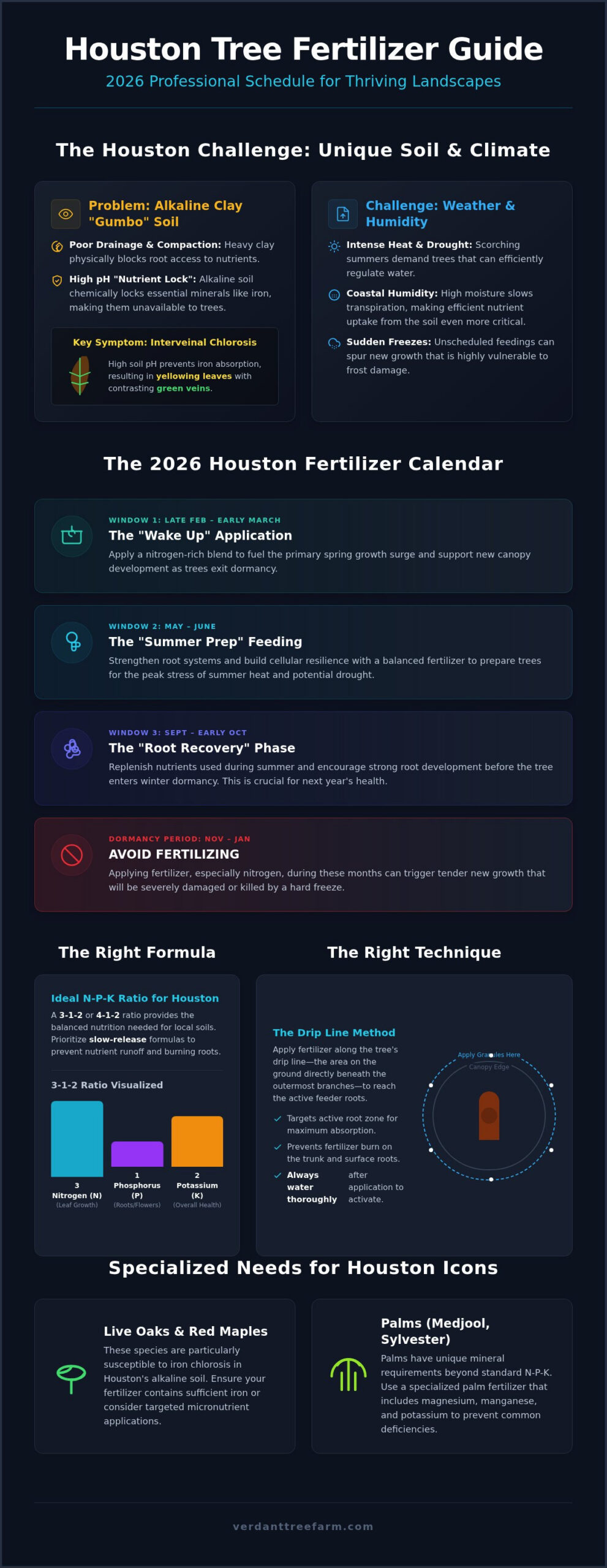
Houston’s soil is often slightly alkaline. This high pH level creates a chemical “lock” on essential micronutrients like iron. When this happens, your trees can’t absorb what they need, even if the minerals are present in the ground. You’ll likely see this as interveinal chlorosis, where leaves turn a sickly yellow while the veins stay dark green. This is a common cry for help from a tree’s root system. A professional soil test is the first mandatory step in any successful Houston fertilizer plan to identify these specific imbalances.
Building Resilience Against Houston Weather Extremes
Potassium is a key player in Houston’s climate. It helps trees regulate their internal water pressure, which is vital during our scorching summers. By strengthening cell walls, potassium ensures your Oaks and Maples don’t wilt under the pressure of a July heatwave. However, timing is everything. Applying the wrong nutrients too late in the year can trigger tender new growth that gets zapped by a November frost. To ensure your trees are protected rather than endangered, we recommend maintenance consultations for a professional evaluation of your specific property’s needs. This proactive approach protects your investment and ensures your landscape remains a legacy for years to come.
The 2026 Houston Tree Fertilizer Calendar
Houston trees don’t follow a standard national calendar. Our “winter” is short, and our “summer” is a marathon. A reliable tree fertilizer schedule Houston homeowners use must account for three distinct feeding windows to ensure long-term health and resilience. Following this timeline prevents the common mistake of over-stimulating growth at the wrong time.
- Late February to Early March: The “Wake Up” application for spring growth.
- May to June: The “Summer Prep” feeding to strengthen roots before the peak heat.
- September to Early October: The “Root Recovery” phase for post-summer health.
Avoid fertilizing between November and January. During these months, trees need to enter true dormancy. Pushing new growth with nitrogen in December is a recipe for disaster. If a hard freeze hits, that tender new foliage will turn to mush. This can damage the entire vascular system of the tree, leaving it vulnerable to pests in the spring.
Spring: The Primary Growth Window
Late February is the sweet spot for Southeast Texas. As soil temperatures rise, trees begin their most aggressive growth phase. This is the time to focus on Nitrogen-rich blends to support canopy development in species like Live Oaks. According to the Texas A&M AgriLife Extension guide on Fertilizing Woody Ornamentals, using a 3-1-2 or 4-1-2 ratio provides the balanced nutrition needed for this surge. Don’t skip the water. Always water the area immediately after application to help the nutrients penetrate our heavy clay. High spring winds can dry out granular products before they ever reach the root zone. If you have questions about specific ratios for your yard, the team at Verdant Tree Farm can help you choose the right blend.
Fall: Preparing for Winter Dormancy
September and early October represent the final feeding window of the year. Switch to low-nitrogen, high-potassium blends during this phase. Potassium strengthens cellular walls, helping trees withstand sudden cold snaps. Stop all feeding by mid-October. Late-season nitrogen pushes growth that won’t have time to “harden off” before the first frost. Once you’ve applied your fall nutrients, refresh your mulch layers. Proper mulching insulates the newly fertilized root zones. It keeps the ground temperature stable through the erratic swings of a Houston winter, protecting your landscape investment.
Choosing the Right Fertilizer for Texas Landscapes
Selecting the correct product is the most critical step in your tree fertilizer schedule Houston plan. Every bag features three bold numbers, known as the N-P-K ratio. Nitrogen (N) drives leaf and canopy growth. Phosphorus (P) focuses on root development and flower production. Potassium (K) acts as a general health booster, helping trees manage the stress of our erratic Texas weather. For most established trees in our area, a ratio like 3-1-2 or 4-1-2 is the standard recommendation to maintain a healthy balance.
In Houston, slow-release granular fertilizers are almost always superior to quick-release liquids. Our sudden, heavy rainstorms can easily wash away water-soluble nutrients before the roots have a chance to absorb them. Slow-release options break down over several months, providing a steady “drip” of nutrition that mimics natural cycles. While spikes are a popular retail option, they often concentrate nutrients in one small spot, which isn’t ideal for the expansive root systems of large shade trees. For the best results, follow the Texas A&M Forest Service fertilization guidelines, which suggest testing your soil to avoid over-applying nutrients that your yard might already have in abundance.
Organic options like compost and seaweed extracts are excellent for long-term soil health. These products don’t just provide minerals; they improve the physical structure of the soil. While synthetic fertilizers offer a quick boost, organics build a sustainable environment where your trees can thrive independently over time. Using compost as a top-dressing can also help break down the surface tension of our clay soil, making it easier for water to reach the roots.
NPK Ratios for Common Houston Varieties
Different species have distinct appetites. For instance, flowering trees in Houston, such as Crape Myrtles or Vitex, benefit from slightly higher Phosphorus levels to encourage vibrant blooms. Conversely, fast-growing shade trees like the Shumard Oak or Cedar Elm require higher Nitrogen to support their massive canopy development. When shopping, look at the guaranteed analysis on the back of the bag; the first number should be the highest for shade trees, while the middle number should be prominent for flowering varieties.
The Benefits of Mycorrhizae and Soil Microbes
Feeding the soil is more important than just feeding the tree. High-quality fertilizers now often include mycorrhizae, which are beneficial fungi that form a symbiotic relationship with tree roots. These microbes are essential in Houston because they help roots penetrate our tough, compacted clay. They extend the reach of the root system, allowing the tree to pull moisture and nutrients from a much larger area. Look for labels that mention “biological boosters” or “soil microbes” to give your landscape an edge against the harsh Gulf Coast environment.
How to Properly Apply Fertilizer in Houston Soil
Properly applying nutrients in Houston requires more than just tossing a handful of pellets onto the grass. Because of our dense “black gumbo” clay, the physical placement of your fertilizer determines whether your tree thrives or struggles. Following a professional tree fertilizer schedule Houston homeowners can manage starts with understanding where the roots actually live. Don’t make the mistake of piling product at the base of the trunk. Instead, follow these five steps for maximum impact.
- Step 1: Identify the Drip Line. Locate the area directly under the outer circumference of the branches. This is where the most active feeder roots are found.
- Step 2: Clear Debris. Pull back heavy mulch or leaf litter. You need the fertilizer to make direct contact with the soil surface.
- Step 3: Distribute Evenly. Spread your granular fertilizer throughout the drip line zone. Keep the product away from the trunk flare to prevent bark damage.
- Step 4: Deep Water. Use a slow-soaker hose or a steady spray immediately after application. This moves the nutrients into the root zone before they can evaporate or wash away.
- Step 5: Re-apply Mulch. Replace your mulch layer to lock in that moisture and protect the root zone from the sun.
Deep Root Fertilization vs. Surface Application
Surface application is standard for most residential yards. However, Houston’s frequent thunderstorms often lead to “surface runoff.” This is especially true on sloped lots or in areas with severe soil compaction. Professional deep-root injections are a superior alternative for struggling trees. This process delivers a high-pressure liquid blend directly into the root zone, roughly 8 to 12 inches below the surface. This method also helps aerate our stubborn clay. Our professional installation sets a strong foundation with initial soil amendments, but as your trees grow, deep-root feeding becomes a powerful tool for maintaining vitality.
Avoiding Common Fertilization Mistakes
One of the most dangerous myths is that fertilizer should be placed near the trunk. This causes “trunk burn,” a chemical reaction that can damage the tree’s vascular system. Always keep a clear gap between the fertilizer and the bark. You should also watch for signs of over-fertilization, such as a white salt crust on the soil or brown, crispy leaf tips. If your tree is already suffering from drought stress during a hot July, never apply fertilizer until you’ve thoroughly hydrated the root zone for several days. Applying chemicals to a thirsty tree can cause immediate root shock and permanent damage.
If you’re noticing yellowing leaves or stunted growth despite your best efforts, contact us for a maintenance consultation to get your landscape back on track.
Specialized Feeding for Palms and Native Houston Trees
Understory trees like the Texas Redbud or Little Gem Magnolia require a more delicate touch. These smaller varieties often grow in the shadow of larger Oaks and need nutrients that support both flowering and foliage without overwhelming their smaller root systems. Providing the right balance ensures these decorative icons provide the color and fragrance they’re known for without suffering from chemical burn.
Palms are heavy feeders with very specific mineral needs. If you notice the new leaves on your palm look stunted, yellow, or frizzled, you’re likely seeing “Frizzle Top.” This is a classic sign of manganese deficiency, a common issue in our alkaline soil. High-value Houston palm trees like the Sylvester or Medjool Date Palm require an 8-2-12 ratio fertilizer. This specific blend includes the extra magnesium and manganese these tropical icons crave. For a Medjool Date Palm, we recommend applying these nutrients three to four times a year during the growing season. This frequent schedule protects your investment and ensures the fronds stay deep green and resilient through the summer heat.
Nurturing Native Texas Varieties
Native trees are the backbone of our local ecosystem. Varieties like the Bald Cypress and Cedar Elm have evolved to handle our heavy “gumbo” soil, so they require less frequent intervention than exotic imports. However, they still benefit from a boost to maintain their structural integrity. For the Natchez Crape Myrtle, a targeted spring feeding ensures those spectacular white blooms are prolific and long-lasting. Following a native tree fertilizer schedule Houston experts recommend ensures you don’t over-stimulate these adapted species. Native resilience is boosted by minimal, targeted feeding that supports natural growth without forcing excessive, weak foliage. This balanced approach keeps your native canopy strong and ready for whatever the Texas sky throws its way.
Secure Your Landscape’s Future for 2026 and Beyond
Mastering a tree fertilizer schedule Houston yards can rely on is the single best way to protect your property’s value. You’ve learned how to time applications with our unique Gulf Coast seasons, from the late February “wake up” feeding to the root-strengthening fall applications. By choosing slow-release nutrients and respecting the specific needs of high-value specimens like the Medjool Palm, you’re building a landscape that can withstand both drought and deep freezes. Consistency is the key to creating a resilient, fast-growing canopy that provides shade and beauty for generations.
If you’re ready to elevate your property’s health, we’re here to help. As the largest independent tree farm in the region, we provide the veteran-owned expertise you need to succeed. Every tree we sell comes with a three-month warranty to give you peace of mind. Visit Verdant Tree Farm for expert maintenance consultations and premium nursery stock today. Let’s work together to grow a greener, stronger Houston.
Frequently Asked Questions
While you focus on the health and resilience of your trees, don’t forget to protect yourself from the elements during your outdoor projects; discover Earth’s Daughter for natural, organic lip balms that keep you comfortable in the Houston sun.
When is the absolute best month to fertilize trees in Houston?
The absolute best month to fertilize trees in Houston is late February. This timing allows nutrients to be available exactly as the soil temperatures rise and the spring growth surge begins. By following a consistent tree fertilizer schedule Houston homeowners can ensure their Live Oaks and Cedar Elms have the energy needed for a full canopy. If you miss this window, early March is your next best option before the humidity peaks.
Can I use the same fertilizer for my lawn and my trees?
We don’t recommend using standard lawn fertilizer for your trees. Many turf products contain herbicides meant to kill broadleaf weeds, which can severely stress or even kill your tree’s root system. Trees require specific NPK ratios like 3-1-2 to support their massive vascular structures. It’s safer to use a dedicated tree fertilizer that focuses on long-term health rather than just a quick green-up for your grass.
How do I know if my Houston tree is nutrient deficient?
Nutrient deficiency usually shows up in the foliage first. In Houston’s alkaline clay, you’ll often see yellow leaves with green veins, which indicates an iron or manganese lockout. Stunted growth or premature leaf drop are also major red flags. If you’re unsure, we offer expert maintenance consultations to evaluate your tree’s health and determine if a specialized feeding plan is necessary to correct these specific soil imbalances.
Should I fertilize a newly planted tree from Verdant Tree Farm immediately?
You shouldn’t fertilize a newly planted tree from Verdant Tree Farm immediately. Our professional installation service already includes initial soil amendments and root stimulants to help the specimen transition. Adding more fertilizer too soon can shock the young root system. We suggest waiting until the tree has established itself, usually after the first full growing season, before starting a regular tree fertilizer schedule Houston properties require.
What happens if I fertilize my trees right before a Houston freeze?
Fertilizing right before a freeze is dangerous because it stimulates tender new growth. This fresh foliage hasn’t had time to “harden off” and will likely turn to mush when temperatures drop. This process wastes the tree’s stored energy and can lead to bark splitting or vascular damage. It’s best to stop all nitrogen-heavy feeding by mid-October to allow your trees to enter a natural and safe state of winter dormancy.
Does Houston’s clay soil require more or less fertilizer than sandy soil?
Houston’s “black gumbo” clay soil requires a more strategic application rather than just more volume. While clay holds onto some nutrients longer, its high pH often makes them chemically unavailable to the tree roots. You don’t necessarily need more fertilizer, but you do need products that can penetrate compacted layers. Using slow-release formulas ensures that nutrients don’t just sit on the surface but gradually work their way down into the heavy soil.
How much water do I need to use after applying granular fertilizer?
You need to provide a deep soak immediately after applying granular fertilizer. The goal is to move the nutrients 8 to 12 inches deep into the soil where the active feeder roots live. A light sprinkling isn’t enough for our dense clay. We recommend using a soaker hose or a slow drip for at least 30 to 45 minutes per tree to ensure the fertilizer is fully incorporated and won’t evaporate.
Are organic fertilizers effective for large shade trees like Live Oaks?
Organic fertilizers are highly effective for large shade trees like Live Oaks and Shumard Oaks. While synthetic blends offer a fast boost, organics like compost and seaweed extracts improve the physical structure of the soil over time. This is especially helpful in Houston, where we need to break down compacted clay. Building a healthy soil ecosystem with microbes and fungi provides a more sustainable foundation for your legacy trees to thrive.