Imagine spending your Saturday morning picking out a stunning Mexican White Oak, only to watch it struggle and fail six months later because of the heavy Houston “Black Gumbo” clay beneath the surface. It’s a frustrating reality for many homeowners who realize too late that the sticker price on a tree is only a fraction of the total investment. When you’re planning a transformation, the hidden costs of landscaping projects often lurk underground, involving everything from subsurface PVC drainage to the specialized soil amendments needed to break up our local clay.
We know you want a beautiful, resilient yard without the stress of unexpected budget creep or confusing HOA delays. This guide provides a transparent look at the expenses that matter most, helping you plan a high-impact landscape that survives intense Houston freezes and droughts. You’ll learn how to prioritize site preparation and professional installation to ensure your new Drummond Red Maple or Little Gem Magnolia thrives for decades. We’ve simplified the technical side of budgeting so you can move forward with confidence and local expertise. Let’s look at what it really takes to build a yard that lasts.
Key Takeaways
- Prepare for the “iceberg effect” by budgeting for invisible infrastructure like drainage and soil amendments that protect your investment from Houston’s heavy clay.
- Identify the hidden costs of landscaping projects including HOA approval fees, professional permitting, and the logistics of site clearing.
- Use 3D landscape design as a strategic tool to visualize mature growth and eliminate the risk of expensive mid-project change orders.
- Protect your budget from replacement costs by selecting climate-hardy specimens and professional installation services that include a survival warranty.
- Discover how sourcing directly from a local nursery removes retail markups and provides higher-quality material for a more resilient yard.
Beyond the Quote: What Are the Real Hidden Costs of Landscaping?
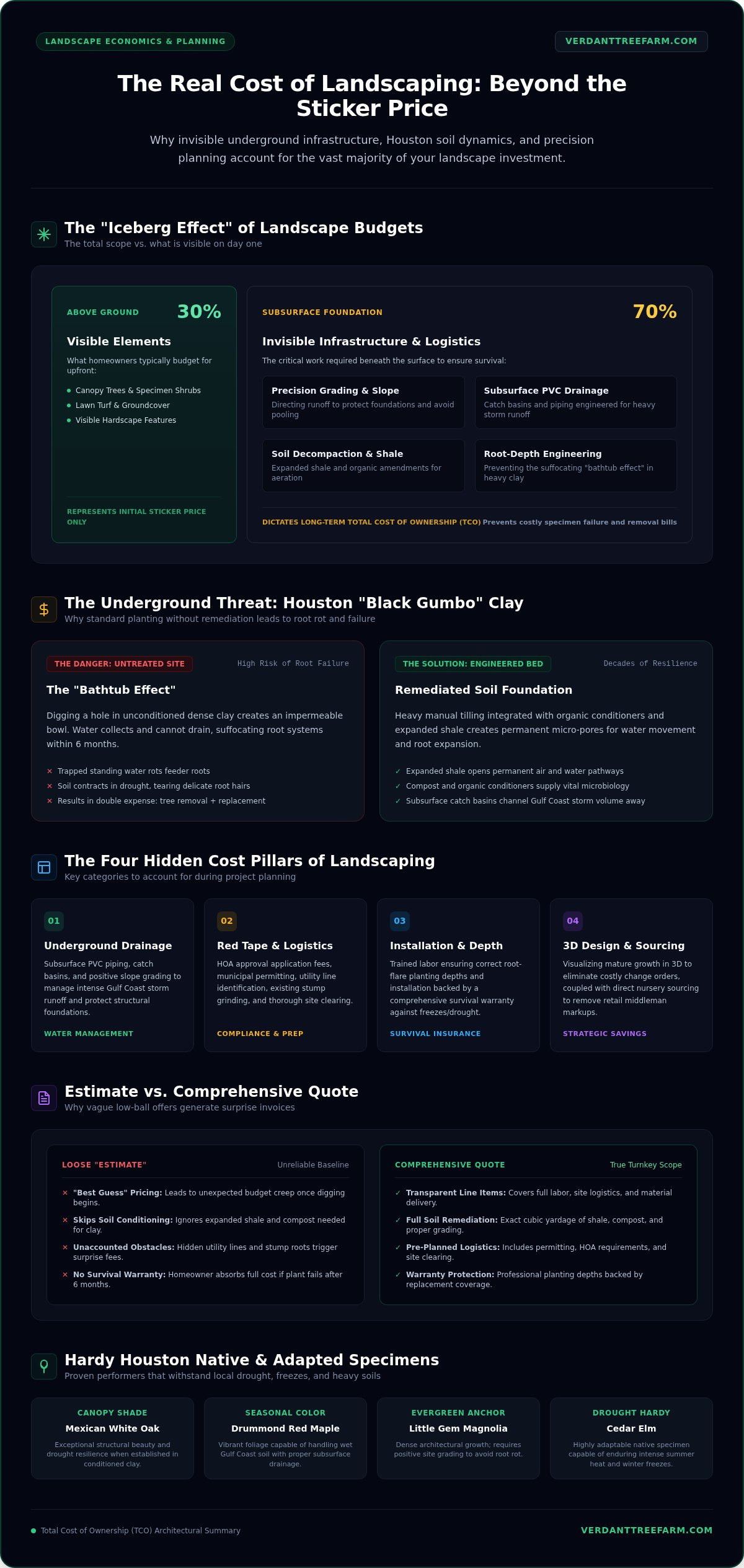
When you admire a finished landscape, your eyes naturally gravitate toward the vibrant foliage of a Drummond Red Maple or the structural beauty of a Mexican White Oak. You don’t see the hours of precision grading, the cubic yards of specialized soil amendments, or the intricate drainage networks buried beneath the turf. These are the hidden costs of landscaping projects that often surprise homeowners once construction begins. Most people view their budget as a simple shopping list of plants and hardscape materials. In reality, professional landscaping follows the “iceberg effect.” The visible elements represent only about 30% of the project’s true scope, while 70% of the work remains invisible beneath the surface.
True success starts with a firm grasp of landscape design principles. These fundamentals dictate how water moves across your property and how the ground must be conditioned to support long-term growth. If you ignore these invisible factors, you aren’t just buying a tree; you’re likely paying for a future removal bill. A high-impact Houston yard requires a shift in mindset toward the “Total Cost of Ownership.” This perspective accounts for the initial purchase, the professional installation required for survival, and the long-term resilience of the site. Focusing only on the plant list is a primary cause of budget creep.
The Difference Between a Quote and an Estimate
A vague estimate is often just a “best guess” that leads to surprise invoices once the crew starts digging. Site-specific variables, such as hidden utility lines or existing stump remnants, can quickly inflate a loose number. You should always look for a comprehensive quote that includes labor, logistics, and necessary soil amendments. This level of detail ensures you aren’t hit with unexpected charges halfway through the process. We believe in a transparent, straightforward approach that mirrors the practical nature of our trade. Clear documentation builds confidence in your project timeline and final investment.
Why Initial Low-Ball Offers Are Dangerous
Cutting corners on soil preparation is the fastest way to lose a new investment. Houston’s “Black Gumbo” clay acts like a bathtub, trapping water and suffocating root systems if the site isn’t prepped with expanded shale and compost. Low-ball contractors often skip these vital steps or use untrained labor that ignores proper planting depths. It’s much cheaper to do the job right the first time than it is to pay for the removal and replacement of a dead specimen. Investing in professional installation and nursery-direct quality saves you money by preventing avoidable failures and ensuring your trees thrive for decades.
The Underground Budget: Drainage, Irrigation, and Houston Soil Preparation
Underneath every lush lawn is a foundation that either supports life or suffocates it. In the Greater Houston area, that foundation is usually “Black Gumbo” clay. This heavy, expansive soil is one of the most significant hidden costs of landscaping projects because it requires extensive remediation before any planting begins. Without proper amendments, your new Little Gem Magnolia or Cedar Elm sits in a “bathtub” of trapped water, leading to root rot and eventual failure. Professional soil preparation involves more than just a bag of potting mix. It requires integrating organic matter and expanded shale to create permanent drainage pores that persist for years.
Investing in “invisible” infrastructure is the best insurance policy for your property. While it’s tempting to spend your entire budget on visible foliage, allocating funds for catch basins and subsurface PVC drainage prevents future headaches. These systems manage the intense stormwater runoff typical of the Gulf Coast, protecting both your new plant material and your home’s foundation. To explore technical irrigation components and outdoor maintenance equipment, learn more about selecting the right supplies. When we design a landscape, we look at the site as a complete ecosystem where water management is the highest priority.
Taming Houston Clay: Soil Amendments and Grading
Breaking up clay isn’t a simple task. It involves labor-intensive manual tilling and the careful integration of organic conditioners. Proper grading is equally critical. If the slope of your yard isn’t precisely managed, water can pool against your home, leading to structural damage. Our team focuses on creating a positive grade that directs water toward drainage points. This process requires a deep understanding of local topography and soil behavior, ensuring your yard remains functional even after a heavy downpour.
Irrigation Adjustments and Water Management
Many homeowners assume their existing sprinkler system is sufficient for a new landscape. However, mature trees and specialty specimens like a Windmill Palm or Pindo Palm have vastly different hydration needs than standard turf. Following EPA WaterSense outdoor water efficiency guidelines helps you manage these needs while controlling long-term utility costs. You may need to retrofit your system with dedicated drip lines or smart controllers that adjust for local humidity. Our professional maintenance consultations prevent overwatering expenses by ensuring each plant zone receives exactly what it needs to establish deep roots. If you’re ready to build a landscape that lasts, Verdant Tree Farm provides the technical expertise to handle every stage of site preparation.
Red Tape and Heavy Lifting: Permitting, HOAs, and Site Clearing
Before the first shovel hits the ground, you’ll likely face a mountain of paperwork and logistical planning. Administrative hurdles and site preparation are among the most overlooked hidden costs of landscaping projects. Many Houston communities have strict aesthetic guidelines and technical requirements that must be met before work begins. Ignoring these leads to fines or the costly removal of unapproved plants. You also need to account for the physical clearing of the site. Old stumps, overgrown brush, and debris haul-away fees can add up quickly if your quote doesn’t explicitly cover them.
Site inventory is a critical first step. You must identify existing utility lines and potential obstacles that could interfere with your vision. Locating gas, water, and electrical lines is vital for safety and prevents expensive emergency repairs. If a utility line needs relocation to accommodate a new shade tree or a drainage trench, that cost must be factored into your initial plan. Proper planning ensures that your project moves forward without legal or safety-related financial surprises.
Navigating Houston HOA Requirements
HOAs in master-planned communities across the Greater Houston area are notoriously thorough. They often require professional 3D landscape designs for approval. These renderings prove that your project follows research-based standards, such as those found in NC State Extension’s landscape planning guide, by accounting for mature growth and site inventory. Delays in this process are expensive. If you miss the prime planting window for a Mexican Redbud or Texas Mountain Laurel, you might be forced to wait months or pay for extra irrigation during a summer heatwave. Many neighborhoods also have specific lists of approved native species, so verifying your plant list early is essential.
Logistics and Site Accessibility
Getting materials into your backyard isn’t always straightforward. Narrow side gates often prevent skid steers or tractors from entering the work area. This triggers an “access fee” because crews must haul soil, stone, and plants by hand. If you’ve selected a massive Medjool date palm or a mature Shumard Oak, you’ll need to budget for crane fees and specialized operator time. Heavy machinery also leaves a footprint. You should expect costs for lawn restoration and clean-up after the heavy lifting is done. Labor surcharges for manual hauling can significantly increase the final invoice if accessibility isn’t addressed during the initial site visit.
Specimen Selection and Installation: The True Price of “Instant” Impact
Choosing between a small sapling and a mature specimen is more than an aesthetic choice. It’s a strategic decision about risk management and long-term value. One of the primary hidden costs of landscaping projects is the high failure rate of cheaper, non-native plants that aren’t acclimated to our specific Gulf Coast environment. A bargain tree that dies during a sudden February freeze or a July drought isn’t a deal. It’s a double expense because you pay for the plant twice and the labor twice. Opting for professional installation mitigates these risks by including critical services like professional staking, initial fertilization, and specialized labor to ensure proper root flare exposure. These steps are vital for the tree’s health but are often omitted by low-bid contractors.
Installation fees also cover the technical logistics of handling heavy root balls. A mature tree can weigh several hundred pounds, requiring specialized equipment and experienced crews to prevent trunk damage or root compaction. When you buy direct from a nursery that handles its own installations, you remove the middleman markup and ensure the people planting your trees understand exactly how they were grown. This direct-to-consumer value is a cornerstone of our service model, providing you with higher quality material at a more accessible price point.
Size vs. Value: Maturity as a Hidden Investment
A mature Live Oak or a stately Sylvester Palm offers an immediate boost to your property’s curb appeal and market value. While the initial investment for a larger specimen is higher, these trees often require less intensive care than saplings that need constant monitoring to survive their first three years. Field-grown specimens often exhibit greater survival resilience compared to container-grown counterparts because they’ve already established robust root systems in local soil conditions. This maturity acts as a buffer against the environmental stressors that often claim younger, more vulnerable plants. You’re essentially paying for the time the tree has already spent growing in a controlled, professional environment.
The Warranty Factor: Peace of Mind Pricing
Replacement costs are the most frustrating budget surprises. A typical nursery might offer a limited guarantee, but these often come with complex loopholes that leave homeowners unprotected. Our three-month warranty on professional installations provides a clear safety net, protecting you from the financial sting of “hidden replacement costs” during the critical establishment phase. This level of accountability is a hallmark of our veteran-owned operation. We treat your property as a long-term investment rather than a one-time transaction. To secure your landscape’s future with professional expertise, choose a nursery-direct partner who stands behind every specimen planted.
Strategic Planning: How 3D Design and Nursery-Direct Sourcing Save You Money
Strategic planning is the most effective tool for neutralizing the hidden costs of landscaping projects. Many homeowners dive into a renovation with a rough sketch, only to find that mid-construction changes double their initial budget. Adopting a “Design-Build” model is a smarter approach. When the same team handles both the vision and the execution, you eliminate the costly disconnects that occur between independent designers and separate crews. This unified process ensures that technical requirements like drainage and soil prep are integrated into the initial quote, rather than added as surprise line items later. For homeowners pairing landscape upgrades with outdoor living additions, check out Acadiana Patios & Construction to see how full-service contractors streamline design and construction under one roof.
If a full-scale transformation feels overwhelming, consider phasing your project. You can install the primary structural elements first, such as a stately Shumard Oak or a row of Eagleston Hollies, and save the smaller ornamental beds for a later season. This strategy allows you to spread out the financial commitment while following a cohesive master plan. It prevents you from having to move or replace plants down the road, which is a common expense for those without a long-term vision.
Visualizing Success with 3D Design
Change orders are the primary driver of budget creep. Our 3D design services allow you to walk through your future yard before the first shovel hits the dirt. This digital preview identifies potential spacing errors or drainage conflicts that are impossible to spot on a flat 2D drawing. For instance, seeing the mature canopy of a Live Oak in relation to your home’s roofline prevents expensive pruning or relocation costs years later. This proactive approach is the ultimate insurance policy against the hidden costs of landscaping projects that frequently derail unmanaged installations. These precise blueprints also provide crews with an exact map, reducing labor waste and ensuring the project stays on schedule. Technical accuracy is also your best tool for navigating picky HOAs, as 3D models provide the clarity committees need to grant first-time approvals.
Cutting Out the Middleman
The traditional landscaping model often involves a “broker” who buys material from a nursery and marks it up before it reaches your yard. Choosing a tree nursery in Houston that sells directly to the consumer removes these unnecessary layers of cost. You gain access to contractor-grade specimens at prices that are often lower than retail garden centers. This direct-from-the-farm sourcing means your budget goes toward higher-quality material rather than administrative overhead. As a veteran-owned business, we value transparency and accountability in every project we handle. To secure a clear, fixed-price plan for your property, Request a Houston Landscaping Consultation and get a quote without the financial surprises.
Build Your Houston Legacy with Confidence
Planning a high-impact yard requires looking beneath the surface. By prioritizing professional site preparation and using 3D design to visualize mature growth, you can eliminate the hidden costs of landscaping projects that often derail unmanaged renovations. Success isn’t just about the plants you choose; it’s about the technical expertise and infrastructure that keep them alive through Houston’s unpredictable weather. Sourcing your material directly from the farm ensures you receive higher-quality specimens without the retail markup.
As Houston’s largest independent nursery, we provide the veteran-owned reliability you expect for a long-term property investment. Our team stands behind every installation with a three-month warranty, giving you peace of mind during the critical establishment phase. We’re here to simplify the technical side of construction so you can enjoy a resilient, beautiful landscape for decades. Don’t leave your budget to chance. Book Your Houston Landscape Design Consultation today and start your project with a transparent, professional plan.
Frequently Asked Questions
What is the most common hidden cost in Houston landscaping projects?
The most frequent hidden expense is subsurface site preparation, specifically addressing Houston’s heavy “Black Gumbo” clay soil. Many homeowners overlook the need for specialized amendments like expanded shale and organic compost to prevent root rot. Without these invisible investments, even the hardiest trees can fail within the first year. Proper grading and soil conditioning ensure your new landscape thrives rather than sitting in a “bathtub” of trapped water.
How much should I budget for landscape drainage in a clay-heavy yard?
You should typically allocate a significant portion of your total project budget to subsurface infrastructure when dealing with heavy clay. This includes installing catch basins, French drains, and PVC piping to manage intense Gulf Coast rain events. While it’s tempting to spend everything on visible foliage, prioritizing drainage protects your home foundation and prevents the total loss of your new plant material during Houston’s frequent heavy downpours.
Do I really need to pay for a 3D landscape design?
A professional 3D landscape design is a strategic investment that prevents expensive change orders during the construction phase. These digital visualizations allow you to spot spacing errors or drainage conflicts before any digging begins. They are also essential for securing quick approvals from Houston-area HOAs, as they provide the technical clarity committees require. This upfront service ensures the final result matches your vision without the financial surprises of mid-project adjustments.
Why are installation fees sometimes higher than the price of the tree?
Installation fees cover the complex logistics, specialized equipment, and skilled labor required to ensure a tree survives the transplant process. Professional planting includes excavating heavy clay, integrating specific soil conditioners, and proper staking for stability. For large specimens like a Medjool date palm, the cost also accounts for the machinery needed to safely maneuver several hundred pounds of root ball without damaging your property or the tree’s structural integrity.
Are permits required for residential landscaping in Houston?
Permits are often required in Houston for specific components like dedicated irrigation backflow valves or significant hardscape structures. While simple planting beds usually don’t need a city permit, master-planned communities often require Architectural Review Committee approval. We recommend checking both municipal codes and your specific HOA deed restrictions before starting. Working with a professional team ensures all technical requirements are identified early to avoid costly fines or forced removals.
How can I lower the hidden costs of my backyard project?
You can lower the hidden costs of landscaping projects by sourcing your material directly from a nursery and using a “Design-Build” model. Buying direct removes broker markups and ensures you get contractor-grade specimens at retail prices. Another effective strategy is phasing your project. Installing structural shade trees first and adding ornamental beds later allows you to spread out the financial commitment while following a cohesive, professionally designed master plan.
Does a tree warranty cover damage from a Houston freeze?
Warranty coverage varies by provider, but most focus on transplant success rather than extreme weather events. At Verdant Tree Farm, our three-month installation warranty is designed to protect you from the financial sting of replacement costs during the critical establishment phase. While freezes are a local reality, choosing climate-hardy native species and following professional maintenance consultations significantly reduces your risk of loss. Always verify the specific terms of your warranty before signing.
What is the difference between a quote and a landscape estimate?
A landscape estimate is a loose “best guess” that often leads to surprise invoices as project variables change. In contrast, a comprehensive quote provides a fixed, detailed breakdown of labor, materials, logistics, and soil amendments. We prioritize a transparent quoting process to ensure you understand the total investment upfront. This clarity builds confidence in your project timeline and protects you from the budget creep common with vague, surface-level estimates.