After the February 2021 freeze, many Houston homeowners watched their lush landscapes turn brown, but those with a properly hardened sylvester palm saw a different story. You want that premium, resort-style look for your property, but you’re likely worried about Houston’s heavy clay soil and unpredictable winter drops. It’s frustrating to invest in a specimen tree only to see it struggle with poor drainage or a sudden cold snap. We understand that a thriving landscape is a long-term investment in your home’s value and curb appeal.
At Verdant Tree Farm, Houston’s Premier Tree Farm, we’ve spent years perfecting the care of these hardy palms to ensure they thrive in our unique Gulf Coast conditions. As a family owned and operated business, we make it our mission to simplify the complexities of palm maintenance for every neighbor. You will learn how to master the art of growing this iconic tree, from selecting the right specimens to achieving that signature diamond cut look. This guide covers everything from drainage solutions to our “Wholesale to the Public” pricing, giving you the professional confidence to build a vibrant landscape that lasts for decades.
Key Takeaways
- Learn how the “Diamond Cut” technique creates a high-end aesthetic and why proper trunk maintenance is vital for long-term health.
- Understand the cold-hardy limits of the sylvester palm to protect your investment during Houston’s unpredictable winter freezes.
- Overcome the “Houston Problem” by learning how to properly plant and drain specimen trees in our region’s heavy clay soil.
- Save thousands on your luxury landscape by accessing wholesale pricing on specimen trees acclimated to the Texas climate.
- Get expert tips on selecting the perfect sunny location with enough clearance to accommodate a mature, vibrant canopy.
What is the Sylvester Palm (Phoenix sylvestris)?
The Phoenix sylvestris, commonly known as the Silver Date Palm, is a cold-hardy, mid-sized date palm ideal for the Zone 9a climate found throughout the Houston area. Native to India and the surrounding regions, this tree has quickly become a staple in luxury Houston landscapes. It offers a premium, tropical aesthetic that thrives in our local environment. The tree is easily identified by its dense canopy of silvery-blue fronds and its uniquely textured trunk. At Verdant Tree Farm, we see homeowners choose the sylvester palm when they want a specimen tree that balances rugged durability with high-end architectural appeal.
This palm is a long-term investment for your property. It handles the occasional Houston freeze better than many other tropical varieties. Because we are family owned and operated, we prioritize trees that can withstand local conditions. The sylvester palm fits this bill perfectly. It provides the “estate” look that many contractors and homeowners desire without the extreme maintenance requirements of more delicate species.
Visual Appeal: The ‘Pineapple’ Palm Look
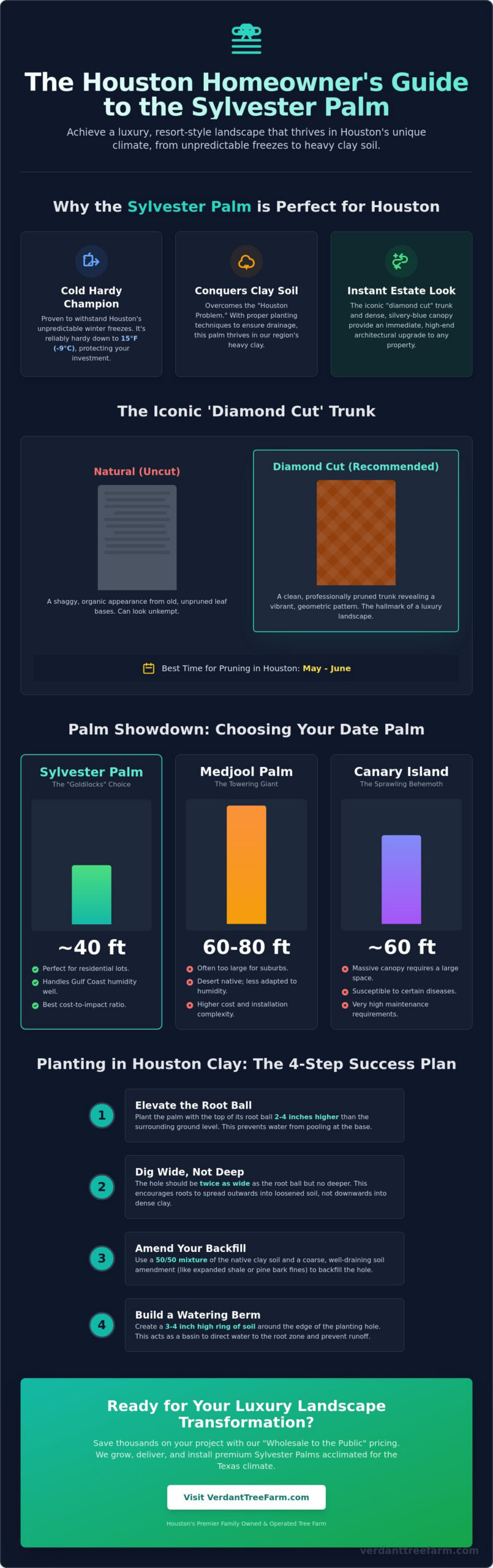
The most striking feature of this palm is the “diamond cut” trunk. This look isn’t natural; it’s achieved through professional pruning. When the old leaf bases are trimmed away, they leave behind a distinct diamond pattern that resembles the skin of a pineapple. A natural, un-cut trunk appears shaggy and organic. In contrast, a professionally cut trunk provides a clean, structured element for modern or Mediterranean designs. The canopy features hundreds of thin leaflets that create a symmetrical, weeping shape. This provides a soft texture that contrasts perfectly against the rigid geometry of the trunk.
Sylvester Palm vs. Medjool and Canary Island Date Palms
Choosing the right date palm depends on your yard size and maintenance goals. The Sylvester is often the “Goldilocks” choice for Houston suburbs for several reasons:
- Size Comparison: While a Medjool can reach heights of 60 to 80 feet, the Sylvester typically matures around 40 feet. This smaller footprint fits better in standard residential lots and under power lines.
- Hardiness Check: The Sylvester handles the high humidity of the Gulf Coast better than the desert-native Medjool. It’s also less susceptible to certain diseases that often impact the massive Canary Island Date Palm.
- Cost-to-Impact Ratio: You get the same luxury “estate” look of a Medjool at a more accessible price point. It provides an immediate visual upgrade to any landscape.
As Houston’s premier tree farm, we offer these trees wholesale to the public. We grow, deliver, and install to ensure your project is hassle-free. Our team understands the specific soil needs of Southeast Texas, making us a dependable partner for your next landscaping project.
The Iconic ‘Diamond Cut’ and Trunk Maintenance
The visual appeal of a sylvester palm often depends on the quality of its trunk maintenance. While the silvery-blue fronds provide the canopy, the trunk serves as the architectural centerpiece. The ‘Diamond Cut’ is a specialized pruning technique that exposes the palm’s geometric trunk pattern. This horticultural art form involves shaving the old leaf bases, or boots, to reveal a clean, triangular texture. Beyond aesthetics, this maintenance step is crucial for achieving a high-end look in luxury residential landscapes. Properly maintained trunks show off a vibrant orange-gold hue that contrasts beautifully with Houston’s green lawns.
Timing matters for this procedure. The best window for trunk trimming in the Houston area is late spring or early summer, typically between May and June. Pruning during this period allows the palm to recover quickly during its peak growing season. For mature specimens reaching heights of 15 to 25 feet, we strongly recommend professional help. Handling heavy chainsaws on ladders is dangerous; our team at Verdant Tree Farm uses specialized equipment to ensure safety and precision. As a family owned & operated business, we prioritize the long-term health of your investment over quick, cosmetic fixes.
How to Achieve the Diamond Cut
Achieving the perfect diamond cut requires precision and patience. Workers use a sharp linoleum knife or a specialized chainsaw to shave the leaf bases down to the trunk surface. You must use sterile equipment, cleaned with a 10% bleach solution, to prevent the spread of palm diseases like Fusarium wilt. According to Palmpedia, this species is prized for its hardy nature, but open pruning wounds are still vulnerable points. Once the old gray bark is removed, the inner gold color shines through, instantly elevating your property’s curb appeal.
Long-term Trunk Health
Trunk health goes beyond the initial cut. Avoid ‘pencil-topping,’ which is the mistake of over-pruning the top of the trunk to make it look thinner. This weakens the palm’s structural integrity. The deep texture of the diamond cut can act as a habitat for debris or organic matter. Keep the trunk clean to prevent moisture buildup, which leads to trunk rot. In Harris County, high humidity levels can invite pests like the Palmetto Weevil. Watch for small holes or oozing sap as early warning signs. If you’re looking for a healthy, pre-manicured specimen, visit Houston’s Premier Tree Farm to see our wholesale to the public inventory.
Is the Sylvester Palm Cold Hardy in Houston?
Houston sits in USDA Hardiness Zones 9a and 8b. This location presents unique challenges for tropical landscapes because of our occasional erratic winter weather. The sylvester palm is widely considered one of the most resilient options for the Texas Gulf Coast. Most specimens survive temperatures as low as 15 to 20 degrees Fahrenheit once they are established in the ground. This makes them significantly tougher than many other ornamental palms found in local neighborhoods.
Hardiness is not the same as being invincible. During the record-breaking freeze of February 2021, temperatures at Bush Intercontinental Airport plummeted to 13 degrees. Many palms across the city suffered foliage damage. While the sylvester palm showed a much higher survival rate than Queen palms or Mexican Fan palms, extreme events still require preparation. At Verdant Tree Farm, we emphasize that a palm’s health before a freeze determines its ability to bounce back afterward. We offer wholesale to the public to ensure every homeowner has access to the same specimen-grade trees used by professional contractors.
Winter Protection Strategies for Houston
Preparation starts the moment a Hard Freeze Warning is issued by the National Weather Service. You should focus your efforts on protecting the bud, which is the heart of the tree. If the heart survives, the palm survives. Follow these steps for effective protection:
- Wrap the trunk: Use burlap or specialized frost blankets to insulate the upper portion of the trunk near the base of the fronds.
- Add heat: Stringing traditional C9 incandescent Christmas lights around the trunk can provide just enough warmth to prevent the core from freezing. Do not use LED lights, as they don’t produce heat.
- Mulch heavily: Apply a 4-inch layer of organic mulch around the base to protect the root system from extreme soil temperature drops.
Recovering After a Texas Freeze
If your palm looks brown and crispy after a winter storm, don’t panic. The most important rule is to wait. Avoid the urge to chop the tree down or prune away brown fronds immediately. These dead fronds actually provide a layer of insulation for the trunk during subsequent cold snaps. Our team at this family owned and operated farm recommends waiting until late March or April to assess the damage.
Watch the center of the canopy for a “green spear.” This is the new growth emerging from the heart. If you see green pushing out, your palm is recovering. To support this growth, apply a high-quality palm fertilizer with an 8-2-12 ratio once the soil warms up. This provides the necessary potassium and magnesium to rebuild the canopy. As Houston’s premier tree farm, we have seen these resilient trees make incredible recoveries with just a little patience and the right nutrients.
Planting Your Sylvester Palm in Houston Clay
Houston’s heavy black clay is the primary obstacle for a healthy sylvester palm. This soil type retains water like a sponge, which often leads to root rot in tropical species. To ensure your palm thrives, you must prioritize drainage. Choose a location that receives at least six hours of direct sunlight. You should also ensure there is a 10 to 15 foot clearance for the canopy to expand without hitting rooflines or power lines. While these palms are remarkably drought-tolerant once established, they require a specific balance of moisture during their first year in the ground.
Step-by-Step Planting Guide
Dig a hole that is twice as wide as the root ball but no deeper than the root ball itself. A wide, shallow hole allows the roots to spread horizontally through the loosened soil. In Houston, you should sit the top of the root ball two to three inches above the surrounding ground level. Mix your native clay with 30 percent expanded shale and 20 percent organic compost to break up the density and improve aeration. For the first 90 days, your sylvester palm needs consistent moisture to establish its root system. Water it daily for the first 14 days, then transition to three times per week until the three-month mark is reached.
Avoiding Common Planting Mistakes
Planting too deep is a fatal error that many homeowners make. If the trunk is buried even a few inches too low, moisture traps against the sensitive bud and causes rot. This damage is often irreversible and can kill a mature specimen within a single season. Similarly, you should avoid “volcano mulching” where mulch is piled high against the bark. Keep mulch two to four inches away from the base of the tree to allow the trunk to breathe. Mound planting is essential for palms in poorly draining clay soils. This method elevates the root system, allowing excess water to run off rather than pooling around the roots during our heavy Gulf Coast rain events.
Managing irrigation is a balancing act. During the peak of Houston’s July heat, the soil can crack and pull away from the root ball. If you see gaps in the soil, it’s time to deep soak the area. However, don’t leave the palm in standing water for more than 24 hours. Our local expertise at Verdant Tree Farm ensures that every tree we install is positioned for long-term survival in these specific conditions.
Buy Sylvester Palms: Houston’s Premier Tree Source
Choosing the right nursery is the most critical step in your landscaping journey. At Verdant Tree Farm, we offer a “Wholesale to the Public” model that changes the math for local homeowners. Most retail centers buy their inventory from third-party growers and add significant markups. By purchasing directly from us, you often save 30% or more compared to traditional retail prices. This direct-from-the-farm approach allows you to invest in larger, more mature specimens that provide an immediate impact on your curb appeal without breaking your budget.
We pride ourselves on being Houston’s Premier Tree Farm. Our sylvester palm inventory is grown and acclimated specifically for the Texas climate. Palms brought in from different hardiness zones often struggle during our erratic winter freezes or intense summer heat waves. Our trees are hardened and ready for the local soil. Being family-owned and veteran-operated means we prioritize reliability and personal accountability. We don’t just drop off a tree; we build a relationship with our neighbors to ensure their landscapes succeed for decades. Our three-month warranty stands as a testament to the confidence we have in our stock.
Visit Our Houston Nursery
Seeing a sylvester palm in person is the only way to appreciate its true scale. When you walk our rows, look for specimen trees with deep root systems and clear, healthy crowns. You can personally select the exact tree that will go in your yard. This visit lets you inspect our “Diamond Cut” quality. Our specialists hand-carve each trunk to create the crisp, triangular pattern that defines luxury landscaping. While you’re here, ask about our 3D landscape design. We use high-resolution modeling to place your selected palms into a digital version of your yard, removing all the guesswork from the process.
Professional Installation & Maintenance
Large specimen palms require heavy equipment and specialized knowledge. A standard root ball for a mature palm can exceed 30 inches in diameter and weigh over 1,500 pounds. Our professional delivery and installation teams handle every detail. We ensure the soil pH is correct and the drainage is optimized for the Greater Houston area’s heavy clay. This professional start is a smart investment that protects the value of your property foliage. We provide the following services for every installation:
- Precision site preparation and hole excavation
- Proper root ball positioning for optimal drainage
- Initial deep-root fertilization treatment
- Staking and securing for wind resistance
Our service doesn’t end when the crew leaves. We offer ongoing maintenance consultations to guide you through seasonal fertilization and pruning schedules. If you’re ready to transform your property with a stunning specimen tree, our team is ready to execute your vision.
Transform Your Houston Property Today
Adding a sylvester palm to your landscape is a strategic investment in both durability and high-end aesthetics. These hardy specimens withstand Houston temperatures as low as 15 degrees Fahrenheit, making them a reliable choice for local winters. Success starts with proper placement in our regional clay soil, where elevated planting ensures the root system stays healthy and avoids rot. When you pair that resilience with the signature diamond cut trunk, you create a focal point that defines luxury for years to come.
Verdant Tree Farm is Houston’s largest independent nursery, offering a massive selection across our 20-acre location. We are veteran-owned and operated, bringing a sense of pride and discipline to every project we touch. To give you total peace of mind, we provide a 3-month warranty on all professional installations. We simplify the process by handling everything from selection to delivery and planting. It’s our mission to provide wholesale to the public prices without sacrificing the expert service you deserve. Our team is standing by to help you choose the perfect specimen for your home or commercial site.
Shop Sylvester Palms at Wholesale Prices in Houston and let’s get your project started. We look forward to helping your landscape thrive.
Frequently Asked Questions
How fast do Sylvester palms grow in Houston?
Sylvester palms grow at a slow to moderate rate, typically adding 6 to 12 inches of trunk height annually in the Houston climate. This steady growth makes them a reliable long-term investment for your landscape. Because they don’t outgrow their space overnight, you can enjoy their manicured look for decades. As Houston’s Premier Tree Farm, we ensure our palms are established for maximum health and longevity.
Do Sylvester palms have thorns or spikes?
Yes, the sylvester palm features sharp, needle-like spines located at the base of each leaf frond. These spikes can reach 2 to 4 inches in length and require careful handling during pruning or maintenance. We recommend wearing heavy-duty leather gloves and eye protection when trimming. Our team provides professional installation and maintenance tips to keep your family and pets safe around these specimen trees.
How often should I fertilize my Sylvester palm in Texas?
You should fertilize your palm 3 times per year during the growing season, specifically in March, June, and September. Use a high-quality 8-2-12 palm fertilizer that contains essential micronutrients like magnesium and manganese. This schedule ensures your trees remain vibrant and lush throughout the Texas heat. Verdant Tree Farm offers expert advice to help you maintain the health of your premium landscape investments.
What is the average price of a Sylvester palm in Houston?
Pricing for these palms in the Houston market varies based on trunk height, overall health, and the quality of the diamond cut. While costs fluctuate based on nursery stock and seasonal availability, buying direct from a grower often provides the best value. We offer wholesale to the public pricing to ensure you get a professional-grade specimen at a competitive rate without the retail markup.
Are the dates from a Sylvester palm edible?
The dates produced by this palm are technically edible, though they are much smaller and less fleshy than the commercial dates found in grocery stores. Most fruit clusters contain about 15% pulp and 85% seed, making them more of a decorative feature than a food source. These clusters add a burst of orange color to your garden in the late summer months, enhancing the tropical aesthetic.
Can I grow a Sylvester palm in a large pot or container?
You can grow these palms in large containers for 3 to 5 years before they require transplanting into the ground. Ensure your pot is at least 30 gallons and has excellent drainage to prevent root rot in our humid climate. This is a great solution for patios or pool decks. Eventually, the root ball will need the space of a permanent landscape home to reach its full potential.
What is the difference between a Silver Date Palm and a Sylvester Palm?
There is no difference between the two; Silver Date Palm is simply a common name for the sylvester palm. Both names refer to the Phoenix sylvestris species, known for its iconic silvery-blue foliage and rugged trunk. Whether you call it a Silver Date or a Sylvester, you’re getting the same hardy, drought-tolerant specimen. Being family owned & operated, we help you navigate these terms to find the right tree.
How much sun does a Sylvester palm need in the Houston summer?
These palms thrive in full sun and require at least 6 to 8 hours of direct sunlight daily to maintain their silver-blue color. They are exceptionally heat-tolerant and handle the 100-degree Houston summer days without scorching. Proper placement is key to ensuring your tree grows strong and stays disease-resistant. We provide direct delivery and expert planting to ensure your palm is positioned for success in your specific microclimate.