You don’t have to choose between a fast-growing tree and a sturdy, long-lived oak that survives our Gulf Coast climate. While many homeowners assume oaks take a lifetime to mature, the Shumard Oak tree Houston residents love can reach heights of 60 to 80 feet with a 50 foot spread at a surprisingly rapid pace. We understand the frustration of planting a new tree only to watch it struggle in heavy clay soil or fail to provide that iconic autumn glow. You want a reliable shade solution that won’t leave you waiting decades for results.
This guide will show you how to successfully integrate this resilient species into your landscape for immediate impact. You’ll discover why a 15-gallon Shumard Oak, priced at $190.00 as of May 2026, is the perfect starting point at 8 to 9 feet tall. We’ll also explain how to navigate the City of Houston’s Chapter 33 tree ordinances and why our professional installation ensures your specimen thrives from day one. From soil preparation to long-term maintenance, we’re sharing the local expertise that has made us Houston’s Premier Tree Farm.
Key Takeaways
- Learn how this native Texas species resists the “Urban Heat Island” effect and thrives in Houston’s high humidity.
- Discover the specific growth advantages of the Shumard Oak tree Houston landscapes benefit from compared to the slower-growing Live Oak.
- Identify the visual differences in fall foliage to ensure your yard displays vibrant red and orange colors every autumn.
- Master the professional “twice-as-wide” digging technique and root ball inspection tips necessary for survival in heavy clay soil.
- Understand the long-term value of purchasing premium specimen trees direct from the farm at wholesale prices.
What is a Shumard Oak? Houston’s Premier Shade Tree
The Shumard Oak, scientifically known as Quercus shumardii, is a native Texas deciduous powerhouse. It’s a favorite among local homeowners because it solves the biggest problem in Southeast Texas landscaping: the lack of autumn character. While many trees in our region simply turn brown and drop their leaves, the Shumard Oak tree Houston families plant delivers a reliable display of deep red and orange foliage. This tree is a member of the red oak family, but it carries a level of urban resilience that makes it a specimen tree of choice for modern residential developments.
You’ll recognize this tree by its stately, broad pyramidal crown that provides a massive canopy of shade during our 90-degree summers. Its leaves are deeply lobed with pointed, spiny tips, creating a lush texture that stays vibrant throughout the growing season. Unlike the slow-moving growth patterns of white oaks, the Shumard is classified as a medium-to-fast grower. This means you can expect your investment to establish quickly and start providing functional shade within just a few seasons.
Key Features of the Shumard Oak
In a typical Houston residential yard, you can expect this tree to reach a mature height of 40 to 60 feet. This size is ideal because it’s large enough to shade a two-story home without overwhelming a standard suburban lot. Wildlife enthusiasts will appreciate the small, rounded acorns it produces, which serve as a vital food source for local birds and squirrels. Because it’s deciduous, the tree lets the warm winter sun reach your home while blocking the harsh summer heat, helping you manage energy costs naturally.
Native Heritage and Texas Resilience
These trees are built for the local environment. Originally found in the rich, moist river bottoms of East Texas, they have evolved to handle the heavy soils and periodic flooding common in Harris County. A healthy Shumard is a legacy investment; these trees can easily live for over 100 years when planted correctly. The Shumard Oak tree Houston homeowners select is a top-tier choice for Harris County USDA Zone 9 because it thrives in our specific heat and humidity profile.
Performance in Houston: Climate, Soil, and Heat
Houston’s climate is a gauntlet of extreme humidity and intense thermal radiation. The “Urban Heat Island” effect in concrete-heavy areas like the Energy Corridor or Downtown can keep nighttime temperatures 10 degrees higher than rural outskirts. Despite these challenges, the Shumard Oak tree Houston residents plant remains a top performer. This species possesses a physiological toughness that allows it to thrive when other oaks wilt. Once your tree establishes its root system, it displays remarkable drought tolerance, surviving our frequent August dry spells without constant intervention.
Our local weather isn’t just about the heat. We also face erratic winter patterns. During the historic freeze of February 13 to 17, 2021, known as Winter Storm Uri, Shumard Oaks across Harris County showed incredible resilience. While citrus and palms suffered devastating losses, these hardy oaks remained dormant and emerged healthy in the spring. This ability to handle both 100-degree afternoons and single-digit nights makes them a secure long-term investment for your property. If you’re concerned about the long-term health of your landscape, our team offers maintenance consultations to ensure your trees stay ahead of the weather.
Navigating Houston Clay Soil
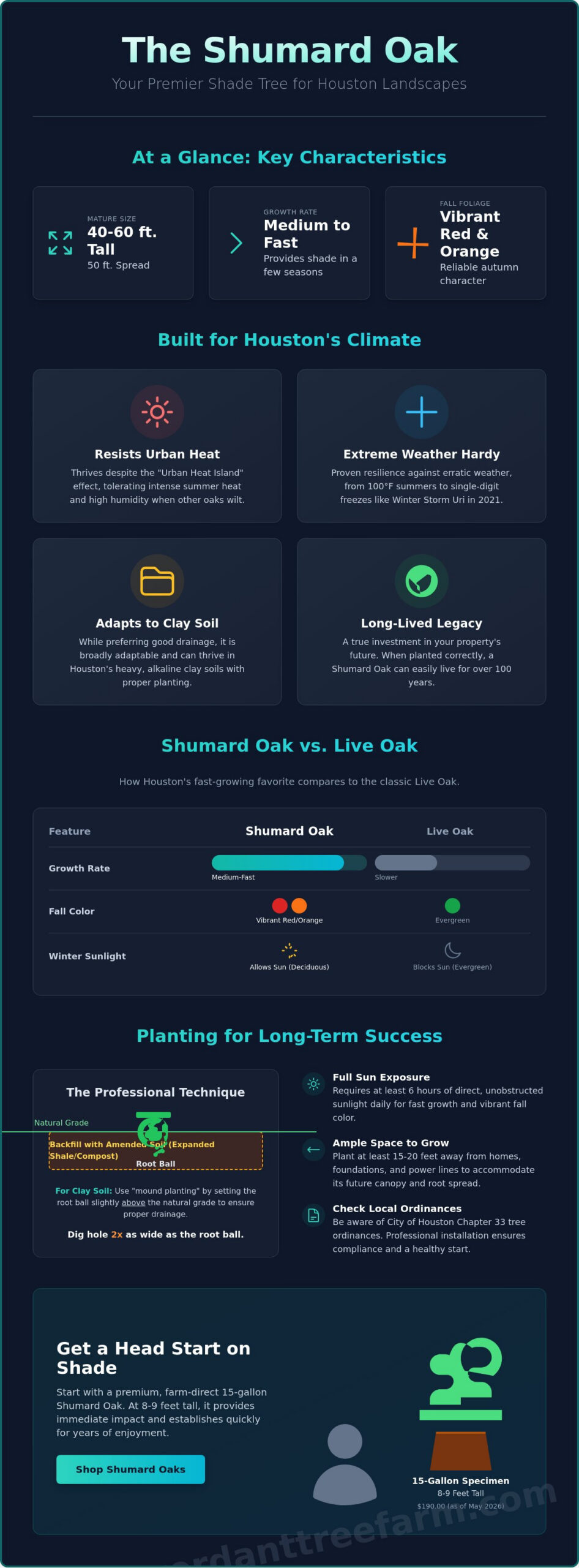
The biggest hurdle for any new planting in Southeast Texas is the transition from nursery potting mix to heavy, alkaline clay. While some resources suggest these trees prefer acidic sandy loams, data from the Lady Bird Johnson Wildflower Center confirms their broad adaptability. In Houston, drainage is your primary concern. Clay soil holds water like a sponge, which can lead to root rot if the tree sits in a low spot. We recommend adding expanded shale or organic compost to the backfill to improve aeration. If your yard has standing water after a rain, use the “mound planting” technique. By setting the root ball slightly above the natural grade, you allow excess moisture to drain away from the trunk.
Sun and Space Requirements
Sunlight is the fuel for this tree’s fast growth. A Shumard Oak requires at least 6 hours of direct, unobstructed sun daily to develop its signature broad canopy. Without enough light, the growth rate slows and the fall color becomes muted. You also need to plan for the tree’s future footprint. While the young Shumard Oak tree Houston homeowners start with looks small, the lateral root spread is significant. Always plant at least 15 to 20 feet away from home foundations, sidewalks, or underground utility lines to prevent future hardscape damage. This spacing ensures the tree has room to reach its full 50 foot spread without interference.
Shumard Oak vs. Live Oak: Which is Best for You?
Choosing between a Shumard and a Live Oak is the most common dilemma we hear at our farm. While the Live Oak is the iconic “Southern” tree, the Shumard Oak tree Houston homeowners often prefer provides a completely different aesthetic and functional benefit. Live Oaks are evergreen; they stay green through the winter but drop their old leaves in a messy yellow wave every spring. In contrast, the Shumard is deciduous. It offers a spectacular crimson show in late November before dropping leaves to let the winter sun through. This seasonal change is a rare treat in Southeast Texas, where many landscapes stay a monotonous green or brown all year.
Growth speed is another major differentiator. According to the Shumard Oak profile, this species is noted for its relatively fast development. In our local experience, a Shumard will often outpace a Live Oak in vertical height by 12 to 24 inches per year during its first decade. Visually, the Shumard maintains a formal, pyramidal shape that fits neatly into modern landscape designs. Live Oaks, however, want to grow wide. They develop massive, horizontal limbs that can eventually span 60 to 100 feet; this often requires significant pruning to keep them from hitting rooflines or blocking driveways.
Pros and Cons for Houston Homeowners
Every tree has its trade-offs. We want you to feel confident in your long-term investment, so consider these practical factors:
- Shumard Pros: Rapid shade production, vibrant red/orange fall color, and a manageable 40-foot spread that fits medium-sized lots.
- Shumard Cons: Requires annual leaf raking in December and produces acorns that need cleanup to prevent unwanted seedlings.
- Live Oak Pros: Provides year-round privacy screening and possesses that classic, sprawling Texas look.
- Live Oak Cons: Slower vertical growth and a root system that can be aggressive toward sidewalks and driveways if not given enough space.
Choosing Based on Lot Size
Most modern suburban lots in neighborhoods like Cypress or Katy are 50 to 60 feet wide. A Live Oak can quickly dominate this entire space, its roots and canopy pushing against fences and foundations. The Shumard Oak tree Houston nurseries recommend for these spaces is much more manageable. Because it grows up more than out, it provides high-reaching shade without eating your entire backyard. As Houston’s Premier Tree Farm, we always suggest looking at your available “sky space” before committing. If you have power lines or close neighbors, the Shumard’s controlled spread is often the smarter choice for a hassle-free landscape.
Planting and Maintenance for Long-Term Success
Success starts before the shovel hits the dirt. When selecting your Shumard Oak tree Houston, look for a visible trunk taper at the soil line. This “flare” indicates the tree hasn’t been buried too deep in its container during the nursery phase. Check the root ball for health; roots should be firm and white, not circling the pot like a bird’s nest. A healthy start ensures your specimen survives the transition to our local environment. If you want to skip the heavy lifting and ensure expert placement, our team provides professional installation services to get your tree in the ground correctly the first time.
The planting hole is the most common place for mistakes. In our heavy clay, you must dig the hole at least twice as wide as the root ball. This creates a zone of loose soil where new roots can easily penetrate. However, never dig deeper than the height of the root ball itself. If the tree sinks over time, the trunk flare stays wet, which leads to fungal rot and eventual death. Once the tree is positioned, apply a 3-inch layer of organic mulch around the base. This acts as a thermal blanket against the 100-degree Texas sun. Always keep the mulch 2 to 3 inches away from the bark to prevent moisture from trapping against the trunk.
Watering and Fertilization
Your watering schedule during the first 12 months is the single most important factor for survival. Forget shallow daily sprinkling; it doesn’t reach the deep roots. Instead, use the “Deep Soak” method. Apply 5 to 10 gallons of water per inch of trunk diameter twice a week during the summer months. Watch the leaves closely. Yellowing often signals overwatering in heavy clay, while brown, crispy edges indicate heat scorch and a need for more moisture. Don’t fertilize for at least one year. You want the tree to focus on root establishment rather than forcing new top growth that it can’t yet support.
Pruning and Pest Control
Pruning should only happen in late winter, specifically January or February, when the tree is fully dormant. This timing minimizes the risk of attracting pests or spreading diseases like oak wilt. While the Shumard Oak tree Houston homeowners plant is generally hardy, keep an eye out for aphids that leave a sticky residue or gall wasps that create small bumps on the leaves. These are usually cosmetic and don’t require chemical treatment. Always make your pruning cuts just outside the branch collar to allow the tree to seal the wound naturally without inviting decay.
Why Buy Your Shumard Oak from Verdant Tree Farm?
Verdant Tree Farm isn’t just a nursery; we’re your hardworking neighbors. As a veteran-owned and family-operated business, we take personal accountability for every root ball that leaves our soil. We’ve built our reputation as Houston’s Premier Tree Farm by offering “Wholesale to the Public” pricing. This means you gain access to premium specimen trees at direct-from-farm prices that traditional retail nurseries can’t match. When you choose a Shumard Oak tree Houston families trust from our inventory, you’re making a long-term investment in your property’s value and comfort.
We maintain the largest independent inventory in the region to ensure you never have to settle for a subpar specimen. Because we grow our trees right here in Southeast Texas, they are already acclimated to the local humidity and heavy alkaline clay. You aren’t buying a tree that was shipped in from a different climate; you’re buying a survivor that’s ready to thrive. We provide total transparency in our selection, allowing you to visit us and hand-pick the exact tree that will eventually shade your home.
Our Specimen Quality and Selection
Our inventory caters to every stage of landscape development. We offer a wide variety of sizes, ranging from 15-gallon starters to large, mature specimens that provide an instant canopy. As of May 2026, our 15-gallon Shumard Oaks are priced at $190.00, standing 8 to 9 feet tall with a sturdy trunk. If you’re looking for a more immediate impact, we have specimens reaching up to 95 gallons. Every tree we sell is inspected for trunk taper and root health to ensure it meets our professional standards before it reaches your yard.
Expert Installation and 3D Design
A great tree deserves a perfect start. Our professional installation services take the guesswork out of planting in Houston’s difficult soils. We ensure your Shumard Oak is planted at the precise depth required for the trunk flare to breathe, and we back our work with a three-month warranty for your peace of mind. For homeowners planning a larger project, our 3D Landscape Design service allows you to visualize your new Shumard Oak tree Houston placement before we ever break ground. This “can-do” approach ensures your project is handled with the technical precision of a contractor and the care of a family business.
Visit Verdant Tree Farm today for the best Shumard Oak selection in Houston!
Invest in a Vibrant, Shady Future for Your Property
Choosing a Shumard Oak tree Houston homeowners can rely on means securing a legacy of vibrant red fall color and rapid shade for decades to come. You’ve learned that this native powerhouse outperforms traditional options by thriving in our heavy clay soils and resisting the intense Urban Heat Island effect. By following the “twice as wide” planting rule and maintaining a deep soak watering schedule during that critical first year, you ensure your specimen reaches its full 80 foot potential. We’re here to make the process hassle-free from selection to survival.
As Houston’s largest independent tree nursery, Verdant Tree Farm provides the premium inventory and local expertise you need. We’re a veteran-owned and family-operated team that stands behind our work with a 3-month warranty on all professional installations. Don’t settle for slow growth or dull autumns when the perfect shade solution is waiting at our farm. Browse our Shumard Oak inventory and request a quote today! We look forward to helping you grow a more beautiful, sustainable Houston landscape.
Frequently Asked Questions
How fast does a Shumard Oak grow in Houston?
It typically grows at a medium-to-fast rate of 12 to 24 inches per year once it has established its root system. This rapid development makes it a preferred choice for homeowners who want functional shade within 5 to 7 years. Its growth outpaces the Live Oak, which often averages less than 12 inches of vertical height annually in similar urban conditions.
Does the Shumard Oak lose its leaves in winter?
Yes, this species is deciduous and will lose all its leaves every winter after a vibrant fall display. In Harris County, leaf drop usually occurs in late November or early December. This allows the low winter sun to warm your home, which can reduce heating energy consumption by approximately 10% during the coldest months.
Is the Shumard Oak native to Texas?
The Shumard Oak tree Houston landscapes feature is 100% native to Texas, originally thriving in the moist river bottoms of the eastern and central parts of the state. Because it’s a native species, it has a natural resistance to local pests and the erratic weather patterns of Southeast Texas. This native heritage ensures it can survive for over 100 years in our specific regional climate.
How much space does a Shumard Oak need?
You should provide at least 50 feet of lateral space to accommodate its mature canopy spread. For residential safety, plant the tree at least 15 to 20 feet away from home foundations, swimming pools, and power lines. Giving the tree this breathing room prevents its broad pyramidal crown from interfering with your roofline as it reaches its full 60 foot height.
What is the best time of year to plant an oak tree in Houston?
The ideal planting window in Southeast Texas is from late October through early March. Planting during this dormant period allows the root system to establish itself in the cool, moist soil before the 95 degree heat of July arrives. Trees planted in this window generally require 20% less supplemental watering during their first summer compared to those planted in late May.
Are Shumard Oak roots invasive?
They aren’t classified as invasive, but they do develop a powerful root system consisting of a deep taproot and wide spreading lateral roots. To avoid hardscape damage, keep the tree at a distance of at least 10 feet from sidewalks and driveways. When given proper space, the roots remain manageable and won’t lift concrete as aggressively as some surface rooting species like the Willow Oak.
Do Shumard Oaks have messy acorns?
They do produce acorns, which usually drop in the fall and provide a primary food source for local wildlife like squirrels and blue jays. While some consider this a cleanup task, the acorns are relatively small, typically measuring about 1 inch in length. If you want to minimize mess, regular lawn mowing during the drop season will easily mulch these small seeds into the turf.
Why are the leaves on my Shumard Oak turning brown in summer?
Brown, crispy leaf edges in July or August usually indicate heat scorch or drought stress from insufficient deep watering. This happens when the tree’s roots can’t pull moisture fast enough to replace what’s lost through the leaves in 100 degree heat. To fix this, increase your deep soak sessions to twice weekly, ensuring the water reaches 12 inches below the surface to cool the root zone.