The Pindo Palm is the ultimate insurance policy for your Houston landscape. You shouldn’t have to choose between a tropical aesthetic and the peace of mind that your trees will survive a “Blue Norther” freeze. We know the frustration of investing in beautiful greenery only to see it turn brown when the mercury drops. If you are searching for a Pindo palm for sale Houston, you’re looking for a specimen that handles our unique climate with ease.
This guide covers why this specific variety, often called the Jelly Palm, is the perfect fit for our local Zone 9a environment. You’ll discover how these palms tolerate temperatures down to 14 degrees Fahrenheit and produce delicious, edible fruit for jelly making. We’ll also explain how to manage Houston’s heavy clay soil and why professional installation is the key to a healthy, long-term investment. Our team simplifies the logistics of transporting and planting these heavy specimens, providing you with direct-to-consumer value and expert results that ensure your yard thrives for years to come.
Key Takeaways
- Understand the slow growth and rugged anatomy that make the Pindo a durable, long-term investment for your property.
- See how the Pindo outperforms the Queen Palm in local freeze resistance and maintenance requirements.
- Learn the essential steps for planting in heavy clay soil to guarantee proper drainage and root health.
- Find out where to secure a high-quality Pindo palm for sale Houston from a trusted local source with professional installation capabilities.
- Explore the “Jelly Palm” nickname and how to utilize the unique, edible fruit produced by these trees.
Why Pindo Palms are Houstons Favorite Cold-Hardy Palm
The Pindo Palm, or Butia capitata, is a slow-growing, pinnate-leaved evergreen that has earned its place as a cornerstone of Texas landscaping. Unlike many tropical plants that struggle in our local climate, this palm is built for the Gulf Coast. It features distinctive silver-blue or blue-green fronds that curve gracefully toward the ground, creating a soft, weeping silhouette. If you are searching for a Pindo palm for sale Houston, you are looking for a tree that provides an exotic look without the constant worry of seasonal damage. Before you make a purchase, understanding the Butia Capitata and its specific growth habits will help you plan your landscape for long-term success.
Locals often call it the “Jelly Palm.” This nickname comes from the clusters of bright orange, edible fruit the tree produces. The fruit is tart and sweet, frequently harvested by enthusiasts to make preserves and jellies. This unique feature adds a layer of functionality to its beauty, making it a favorite for homeowners who value multi-purpose plants. It’s a hardy, hardworking neighbor in your garden that offers both visual appeal and a harvest.
The “Freeze-Proof” Reputation in Southeast Texas
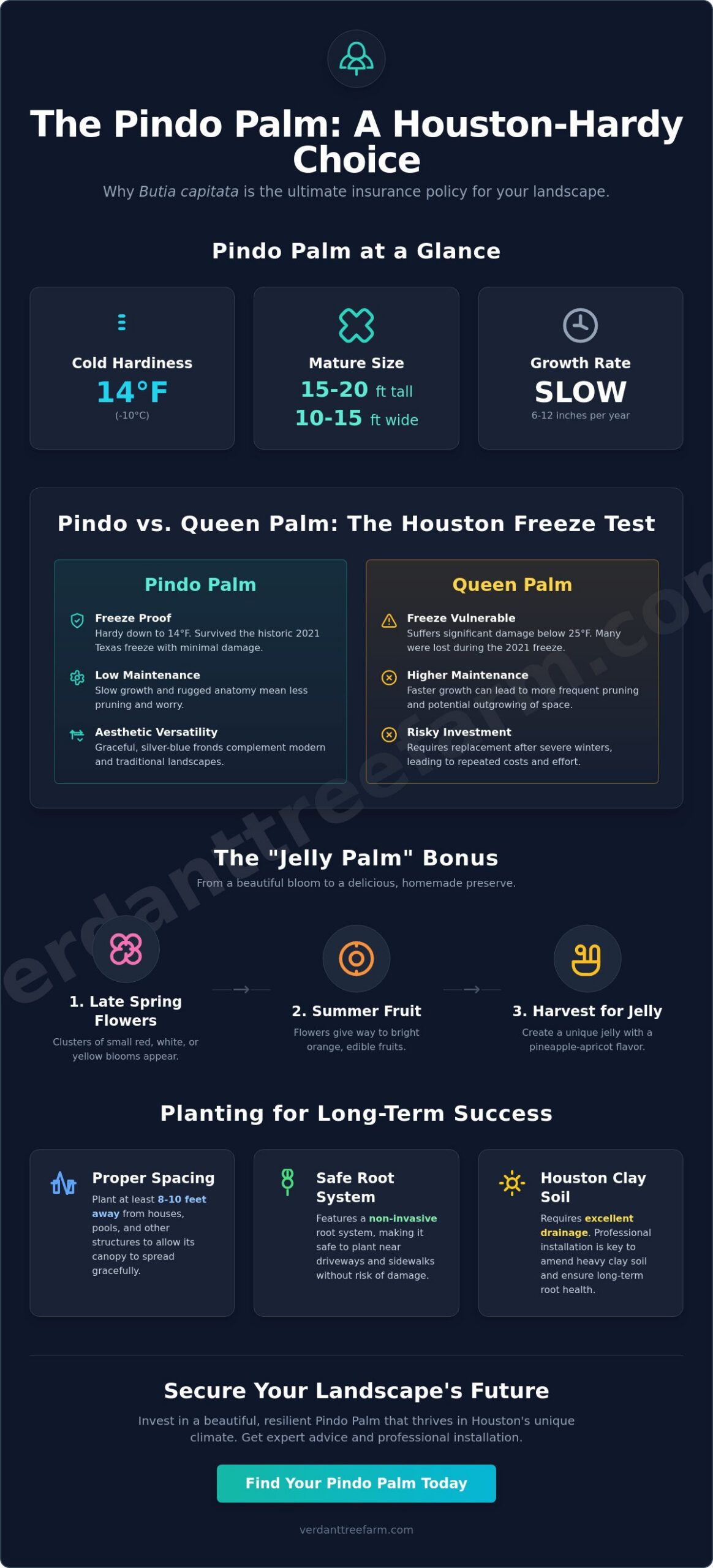
Houston winters are notoriously unpredictable. The historic 2021 Texas freeze proved to be a turning point for local gardeners. While many Queen palms and other tropical species didn’t make it, the Pindo palms largely survived. They have a hardiness threshold of 10 to 15 degrees Fahrenheit. In fact, research shows they can tolerate temperatures as low as 14 degrees Fahrenheit without significant damage. This resilience makes them a smart investment for anyone tired of replacing frost-sensitive plants every few years. Once established, they also show impressive drought tolerance, standing up to the intense heat of a Texas July just as well as they handle a sudden cold snap.
Aesthetic Versatility for Modern Houston Yards
Finding a Pindo palm for sale Houston is a great move for homeowners with smaller suburban lots. These palms reach a manageable mature height of 15 to 20 feet. They don’t overwhelm a standard yard like some of the taller species. The single-trunk structure is thick and rugged, often reaching 1.5 feet in diameter, which creates a strong focal point in any landscape design. The silver-blue foliage provides a stunning contrast against the neutral tones of Texas native limestone or the clean lines of modern architecture. Whether you’re aiming for a lush tropical retreat or a sophisticated contemporary look, these trees fit the bill perfectly.
Understanding the Butia Capitata: Growth and Characteristics
Investing in a palm requires a clear understanding of its future size and development. The Pindo is a patient grower. Most specimens add less than 6 to 12 inches of trunk height per year. This slow pace is actually a benefit for many homeowners. It means your tree won’t quickly outgrow its intended space or require frequent, aggressive pruning. For a technical breakdown of Pindo Palm Growth and Characteristics, botanical resources highlight how its rugged anatomy supports this steady development. When you look for a Pindo palm for sale Houston, you’re choosing a tree that remains manageable for decades.
The trunk is one of its most striking features. It’s thick, rugged, and can reach up to 1.5 feet in diameter. This sturdy base supports a crown of heavy, arching fronds. In late spring, the tree enters its flowering cycle. You’ll see clusters of small blooms that can range in color from red and white to pale yellow. These flowers eventually give way to the famous orange fruit. Harvesting typically happens in mid to late summer when the fruit is soft and fragrant. To make the namesake jelly, the fruit is boiled and strained to create a sweet, tropical preserve that tastes like a mix of pineapple and apricot.
Size and Spacing Requirements
A mature Pindo palm features a canopy spread of 10 to 15 feet. It needs breathing room to show off its graceful, weeping form. We recommend planting it at least 8 to 10 feet away from house foundations or pool edges. This distance prevents the fronds from brushing against structures or dropping fruit into your pool water. One major advantage for Houston properties is the root system. These palms don’t have aggressive, invasive roots. They’re safe to plant near driveways and sidewalks without the risk of buckling the concrete. If you’re ready to see these characteristics in person, browsing a local inventory of Pindo Palms is the best way to choose the right specimen for your yard.
Sun and Water Needs for the Gulf Coast
Success starts with proper placement. These trees require full sun to thrive, which means at least 6 to 8 hours of direct Houston sunlight daily. While they’re tough, they need a specific water balance. Our high humidity can be a challenge, so it’s vital to keep the soil moist but never waterlogged. Pindo palms have adapted well to our intense UV rays and high heat. They use their thick, waxy fronds to retain moisture during the peak of summer. Once the root system is established, they become significantly more self-sufficient, requiring only supplemental watering during extended dry spells.
Pindo vs. Queen Palm: Choosing the Right Tree for Houston
Many homeowners are torn between the Queen palm and the Pindo palm when designing their backyard oasis. While Queen palms offer height and a classic “California” look, they often struggle in the specific environmental conditions of Southeast Texas. If you’re browsing for a Pindo palm for sale Houston, you’re likely looking for a tree that provides long-term value rather than a quick, temporary fix. The following table highlights the technical differences that impact your landscape’s success.
| Feature | Pindo Palm | Queen Palm |
|---|---|---|
| Hardiness | 10-15°F (Zone 8) | 20-25°F (Zone 9b) |
| Growth Rate | Slow (6-12″ trunk/year) | Fast (2+ feet/year) |
| Mature Height | 15-20 Feet | 30-50 Feet |
| Maintenance | Low | Moderate to High |
The cost-to-longevity ratio is the most important factor to consider. Queen palms are often cheaper upfront because they grow so quickly in nursery settings. However, their tall, slender trunks are vulnerable to high winds and severe cold. Experts at the University of Florida note that Pindo Palms are Houston’s Favorite Cold-Hardy Palm because they offer a “one-and-done” investment. You won’t have to spend money on removal and replacement after a typical Gulf Coast winter.
Hardiness Zone Showdown
The primary reason Queen palms fail in our area is their Zone 9b classification. While Houston is technically Zone 9a, we frequently experience “Blue Norther” events where temperatures plummet rapidly. A single night of 20-degree weather can cause terminal bud damage to a Queen palm, effectively killing the tree. Pindos are rated for Zone 8, meaning they can handle temperatures nearly 10 degrees colder without stress. The Pindo palm is the superior long-term investment for Houston homeowners who want a freeze-resistant landscape.
Maintenance and “Self-Cleaning” Fronds
Neither of these species is truly “self-cleaning,” which means they don’t drop their dead fronds automatically. You’ll need to prune the lower, brown fronds once or twice a year to keep the trunk looking tidy. However, the debris they produce is different. Queen palms drop heavy, woody seed pods that can be a tripping hazard or a nuisance for lawnmowers. Pindos produce soft fruit that, if not harvested for jelly, will drop to the ground. For a “set it and forget it” landscape, the Pindo’s shorter stature makes DIY pruning much safer and easier than reaching the high canopy of a Queen palm. When you find a Pindo palm for sale Houston, you’re choosing a tree that is as practical as it is beautiful.
Planting and Caring for Pindo Palms in Houston Clay Soil
Houston’s heavy clay soil, often called “gumbo,” presents a unique challenge for palm enthusiasts. While the Pindo is tough, its roots will rot if they sit in standing water. When you find a Pindo palm for sale Houston, the success of your investment depends entirely on how you put it in the ground. You must prioritize drainage from day one to ensure your tree thrives in our local environment. Proper site preparation prevents the common pitfalls that lead to stunted growth or fungal issues.
Follow this 5-step guide for professional planting results:
- Dig wide, not deep: Create a hole 2 to 3 times the width of the root ball to allow roots to spread through loosened soil.
- Test the drainage: Fill the empty hole with water; it should drain completely within 24 hours.
- Mound the base: Set the root ball 2 to 3 inches above the surrounding soil grade to prevent water from pooling at the trunk.
- Backfill with amendments: Use a mix of native soil and materials that improve porosity.
- Mulch heavily: Apply a 3-inch layer of organic mulch, but keep it a few inches away from the trunk to avoid rot.
Nutrition is the next step for long-term health. Texas soils often lack the specific micronutrients palms crave. We recommend using a “Palm Special” 8-2-12 fertilizer. This specific ratio provides the slow-release nitrogen and potassium needed for vibrant, silver-blue fronds. Watch for common pests like spider mites or scale, which flourish in our high humidity. A quick blast of water or a light application of horticultural oil usually keeps these in check. For expert help with your specific landscape needs, you can schedule a maintenance consultation with our local team.
Soil Amendments and Drainage Hacks
Standard potting soil won’t fix Houston clay. You need coarse materials to create permanent air pockets. We suggest mixing in expanded shale or sharp sand to break up the heavy texture. This prevents the “bathtub effect,” where a planting hole holds water like a bucket and drowns the root system. Always test your drainage before the tree goes in. If the water sits for more than a day, you may need to increase the height of your planting mound. A thick layer of mulch is also essential. It protects the root system from the blistering 100-degree summer heat while retaining necessary moisture during dry spells.
Seasonal Care and Winter Prep
Even though Pindos are cold-hardy, younger trees need extra help during their first few seasons. If a “Hard Freeze” warning is issued, wrap the trunk and the central “heart” of the palm with burlap or a frost blanket. Our winters are often dry, so don’t forget to water. While you’ll water heavily during wet springs, a monthly deep soak in January prevents root desiccation. Keep an eye out for “Palm Heart Rot,” which shows up as browning or pulling of the centermost fronds. Catching this early with a copper fungicide treatment can save the entire tree. When searching for a Pindo palm for sale Houston, choosing a healthy specimen from the start makes this seasonal care much simpler.
Where to Buy Pindo Palms in Houston: The Verdant Advantage
Finding a Pindo palm for sale Houston shouldn’t be a gamble. While many retailers treat trees like seasonal inventory, we treat them as long-term investments in your property. Verdant Tree Farm stands as Houston’s largest independent tree nursery. We’re a veteran-owned operation with deep roots in the local community. Our team understands that a palm tree isn’t just a purchase; it’s a centerpiece for your home. We’ve built our reputation on providing the rigorous quality standards that professional contractors demand while maintaining the approachable warmth of a neighborly business.
One common frustration for Houstonians is the lack of medium-sized stock. You’ll often find either tiny 5-gallon pots that take years to establish or massive field-grown trees that are difficult to transport. We bridge that gap by offering a full range of sizes. Our inventory includes 15-gallon and 30-gallon containers that provide immediate impact without the logistical headache of a crane. For those looking for an instant tropical canopy, we also maintain a selection of large, field-grown specimens. This variety ensures that every homeowner can find a tree that fits their specific budget and landscape scale.
Professional Installation and 3D Design
We don’t just sell you a tree and leave you to figure out the rest. Our “white-glove” installation service handles the heavy lifting from start to finish. This comprehensive process includes professional staking to ensure straight growth and proper mulching to protect the root system. If you’re struggling to visualize how a Pindo will look in your yard, our 3D landscape design service provides a digital preview of the final result. This eliminates the guesswork and ensures perfect placement. When our team handles the installation, we provide a 3-month warranty on your new palm. We also offer maintenance consultations to guide you through the tree’s establishment phase, ensuring it remains healthy for the long haul.
Why Independent Nurseries Beat Big-Box Stores
Big-box retailers often stock palms that have been sitting on hot concrete for weeks with minimal care. These trees frequently arrive stressed and are more prone to failure once planted. At our nursery, we provide specialized horticultural care for every specimen. Our “No Haggle” pricing model ensures you get direct-to-consumer value without the stress of negotiations. You’re buying directly from the experts who managed the tree’s growth, which means you get a more resilient plant and a more reliable purchase process. We take pride in our role as regional market leaders, providing the expertise you won’t find at a generic garden center.
Visit our Houston nursery to see our Pindo Palm inventory in person!
Secure Your Freeze-Resistant Houston Landscape Today
Choosing the right palm means looking beyond the summer heat and planning for the inevitable winter chill. The Pindo palm offers the perfect balance of tropical beauty and rugged resilience, handling temperatures down to 14 degrees Fahrenheit while providing unique edible fruit. By selecting this species over the more vulnerable Queen palm, you’re making a smart, long-term investment in your property’s value and aesthetic appeal.
When you look for a Pindo palm for sale Houston, you deserve the expertise of a team that understands local soil conditions and climate cycles. As the largest independent nursery in Houston, we take pride in our veteran-owned and operated heritage. We don’t just provide trees; we provide peace of mind through professional installation services that include a 3-month warranty. Our team is ready to help you navigate clay soil challenges and ensure your new specimen thrives for decades to come.
Browse Our Current Pindo Palm Stock & Request a Quote
Transform your backyard into a durable tropical retreat that stands up to whatever the Gulf Coast weather brings. We look forward to seeing you at our nursery soon to help you pick the perfect tree.
Frequently Asked Questions
Are Pindo palms messy because of the fruit?
Pindo palms can be messy if you don’t harvest the fruit before it ripens and drops. The heavy orange clusters fall to the ground in mid-summer, which can attract insects if left alone. You can easily manage this by picking the fruit for jelly making or simply trimming the flower stalks in late spring before the fruit even develops.
How fast do Pindo palms grow in the Houston climate?
These palms are slow growers, typically adding less than 6 to 12 inches of trunk height annually in the Houston area. This steady pace is a major benefit for homeowners who want a tree that won’t quickly outgrow its intended landscape space. If you want an immediate tropical look, it’s best to find a larger Pindo palm for sale Houston at a local nursery to skip the early years of slow development.
Do I need to wrap my Pindo palm during a Houston freeze?
Most established Pindo palms don’t require wrapping because they are hardy down to 14 degrees Fahrenheit. You only need to provide extra protection during an extreme “Hard Freeze” or for very young trees planted within the last year. In those cases, wrapping the trunk and the central heart with a frost blanket or burlap helps prevent terminal bud damage during record-breaking cold snaps.
Can Pindo palms grow in full shade?
Pindo palms won’t thrive in full shade and will likely become stunted. They require at least 6 to 8 hours of direct sunlight daily to maintain their signature silver-blue color and dense frond structure. Planting them in deep shade often leads to weak, elongated fronds and increases the risk of fungal issues due to Houston’s high humidity levels.
Is the fruit of the Pindo palm actually edible?
The fruit is completely edible and has a unique flavor often described as a blend of pineapple, apricot, and vanilla. It’s naturally high in pectin, which is why it’s a traditional favorite for making tropical preserves and jellies. When you find a Pindo palm for sale Houston, you’re not just buying a landscape tree; you’re adding a fruit-producing specimen to your yard.
What is the best fertilizer for Pindo palms in Texas?
The best choice for our local soil is a slow-release “Palm Special” fertilizer with an 8-2-12 ratio. This specific blend contains the high levels of potassium and magnesium necessary to prevent common nutrient deficiencies in Texas. We recommend applying this fertilizer three times a year, starting in early spring, to support vibrant growth and long-term health.
How much space does a Pindo palm need from a pool?
You should plant a Pindo palm at least 8 to 10 feet away from any pool edge. This distance allows the 10 to 15 foot canopy to spread gracefully without the arching fronds hanging over the water. Proper spacing also ensures that any unharvested fruit or spent flower clusters don’t fall directly into your pool’s filtration system.
Why are my Pindo palm fronds turning yellow?
Yellowing fronds are usually a sign of a nutrient deficiency or poor drainage in Houston’s heavy clay soil. If the oldest fronds turn yellow first, the tree likely needs a boost of magnesium or potassium. However, if the yellowing is accompanied by a wilting center, the roots might be sitting in standing water. We provide maintenance consultations to help you identify and fix these common growth challenges.