The tree with the showiest flowers isn’t always the best choice for your garden. Ornamental trees for Houston gardens need to fit more than a color palette: Houston’s heat, humidity, occasional freezes, and often heavy clay soils all affect how a tree may grow. A beautiful selection can become a frustrating one if its mature canopy crowds a walkway, roof, or utility line.
Seasonal interest is a useful starting point, but purpose, mature size, and site conditions help you make a more practical choice. This guide compares options such as crape myrtles, redbuds, magnolias, Vitex, and Desert Willow, including their seasonal appeal and potential roles in a landscape. You’ll also find steps for checking space, soil, and establishment needs before you buy. A Houston nursery can help you compare current selections, while 3D design, professional installation, and maintenance consultations can support the next steps.
Key Takeaways
- Choose a tree for its landscape role and mature footprint, not flower color alone.
- Compare ornamental trees for Houston gardens by seasonal interest, available space, sunlight, drainage, and care needs.
- Check verified mature dimensions to make sure a shortlisted tree will fit clear of buildings, walkways, utilities, and existing landscape features.
- Assess the specific planting spot and confirm the tree’s growing needs match its conditions before planting.
- A local nursery’s current options, landscape design, professional installation, and maintenance consultations can help turn your shortlist into a practical plan.
What makes an ornamental tree a good fit for a Houston garden?
An ornamental tree is chosen mainly for its visual contribution to a landscape, such as its form, foliage, flowers, bark, or seasonal interest. That broad definition, also reflected in this overview of the ornamental tree, includes more than trees grown for showy blooms. A well-placed tree can create a focal point, add structure, or bring interest to a particular season.
For ornamental trees for Houston gardens, appearance is only one part of the decision. Heat, humidity, occasional freezes, and local soil conditions can all affect a tree’s performance. Houston-area soils can be heavy and clay-based, but drainage and growing conditions vary even within one property. Balance the look you want with mature height and canopy spread, the planting site, and the care you can provide.
Which landscape roles can ornamental trees fill?
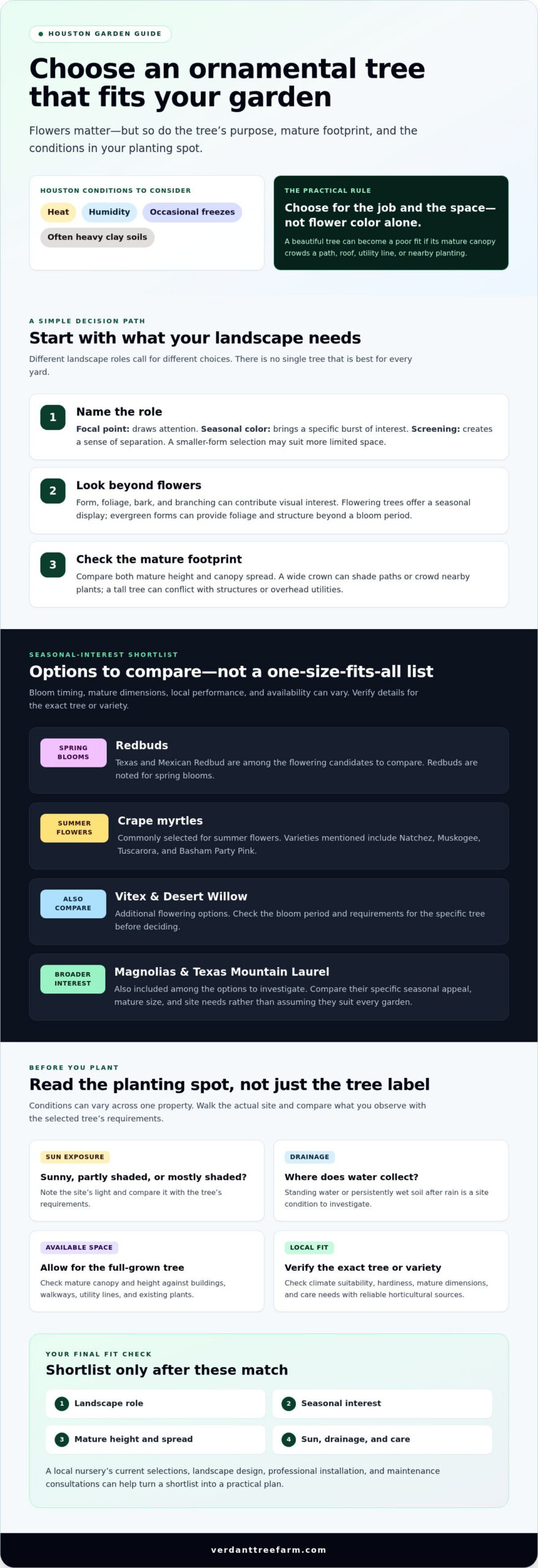
Start by deciding what you want the tree to do. A focal-point tree draws attention; a smaller-form selection may suit a more limited space; a tree chosen for seasonal color brings a specific burst of interest; and a screening tree can add a sense of separation. These roles call for different choices, rather than one tree being universally best.
Check both mature height and canopy spread. A wide crown may shade paths or crowd nearby plants, while a tall tree can conflict with structures or overhead utilities. Flowering trees offer seasonal display, while evergreen forms can provide foliage and structure beyond a bloom period. Bark, branching form, and foliage can also contribute visual interest, so compare more than flowers when you build your shortlist. For homeowners working with smaller courtyards or patio spaces, container-grown specimens and miniature ornamental trees offer another way to incorporate sculptural greenery; you can learn more from Mori Bonsai Dubai about how tropical and sub-tropical varieties are trained and cared for in warm climates.
What should Houston gardeners check before choosing a tree?
Walk the planting area and note how much direct sun it receives, where water collects after rain, and how much room the tree will have above and around it. Check the distance to sidewalks, buildings, utility lines, and existing plants. Drainage can differ across a yard, so evaluate the actual planting spot rather than assuming the whole property has the same soil conditions.
- Sun exposure: Note whether the site is sunny, partly shaded, or mostly shaded, and compare that with the selected tree’s requirements.
- Drainage: Look for standing water or persistently wet soil after rainfall. These observations can flag a site condition to investigate before planting.
- Available space: Allow for the tree’s mature canopy and height, not just its size at planting.
- Local fit: Check climate suitability, hardiness, mature dimensions, and care requirements against reliable horticultural sources for the specific tree or variety.
A tree’s name alone can’t guarantee it will suit every Houston yard. Verify its requirements and compare them with the conditions at your planting spot before you narrow the list.
Which ornamental trees can Houston gardeners compare for seasonal interest?
Instead of searching for one universal “best,” start with the kind of interest and the space you want the tree to serve. Confirmed nursery offerings include flowering candidates such as Vitex, crape myrtles, Desert Willow, and Texas and Mexican Redbud, as well as magnolias and Texas Mountain Laurel. Treat these as options to investigate, not a guarantee that every tree will suit every site or be available when you’re ready to buy.
Which flowering ornamental trees should make a shortlist?
For seasonal color, compare the form and timing of each tree’s display along with its mature footprint. Crape myrtles, including Natchez, Muskogee, Tuscarora, and Basham Party Pink, are commonly selected for summer flowers. Redbuds are known for spring blooms, while Vitex and Desert Willow offer additional flowering options to compare. Bloom periods, mature dimensions, and local performance can vary, so verify details for the exact variety before choosing.
This comparison helps you match a tree to the garden’s seasonal rhythm. Decide whether you want spring color, warm-season flowers, or interest that complements other plantings. For a fuller bloom-focused comparison, see our guide to flowering trees for Houston. You can also use the Texas A&M Forest Service Texas Tree Selector tool to explore tree choices by Texas county. Confirm a specific tree’s requirements with reliable horticultural references and compare them with your site.
When might a magnolia or Texas Mountain Laurel suit the design?
If flowers aren’t your only priority, consider trees that contribute foliage and structure as well as seasonal display. Verdant Tree Farm’s confirmed offerings include Little Gem Magnolia, DD Blanchard Magnolia, Bracken’s Brown Beauty Magnolia, and Texas Mountain Laurel. Compare each tree’s growth habit, foliage, flowers, and mature size with the space you have. Check cultivar-specific details rather than assuming all magnolias or laurels grow alike.
Make the shortlist practical by checking mature dimensions and site requirements in dependable horticultural sources, then comparing them with your garden’s sunlight, drainage, and available room. Those factors matter as much as bloom color. To compare selections, ask about current ornamental tree options and confirm availability before planning around a particular variety.
How do you compare ornamental trees for Houston heat, space, and care?
A tree’s name alone can’t tell you whether it will thrive in a particular yard. When comparing ornamental trees for Houston gardens, weigh mature size and seasonal interest against the site’s sunlight, drainage, and exposure to heat or freezes. Use the table as a shortlist, not a performance guarantee, and confirm details for the exact species or variety before planting.
| Candidate | Mature size | Site fit to assess | Seasonal interest | Care questions |
|---|---|---|---|---|
| Crape myrtle | Verify mature height and spread for the selected variety. | Check sunlight, planting space, and distance from paving and structures. | Flowering interest in the warm season. | Confirm local climate suitability and establishment needs. |
| Texas or Mexican Redbud | Look up dimensions for the exact redbud type. | Assess canopy room and exposure to sun and freezes. | Spring flowers can provide seasonal color. | Verify soil, drainage, and care requirements for your site. |
| Vitex or Desert Willow | Check reliable references for mature height and spread. | Compare the planting area’s sun and drainage with each tree’s needs. | Flowering can add interest during the growing season. | Ask what watering and establishment care each selection needs. |
| Magnolia | Confirm dimensions for the selected magnolia variety. | Allow room for its mature canopy and consider nearby structures. | Can contribute foliage as well as flowers. | Check site-specific soil, drainage, and climate requirements. |
How much space does an ornamental tree need at maturity?
Compare the planting area with both mature height and canopy spread, not the nursery-size tree. Look up as well: overhead utilities and roofs can constrain growth. Check nearby paving, sightlines, existing trees, and neighboring plants so the canopy won’t crowd paths or compete for space. For small-tree ideas, consult the Lady Bird Johnson Wildflower Center’s Great Small Trees for Houston, then verify dimensions for your chosen variety using authoritative horticultural references.
Can ornamental trees handle Houston weather and local soils?
Houston’s heat, humidity, occasional freezes, and variable drainage can affect suitability and establishment. Heavy or poorly drained soil at one planting spot doesn’t describe every yard. The right tree is the one whose verified needs match the conditions at its specific planting site. Check freeze suitability and care guidance against reliable sources, and plan for establishment rather than assuming a locally offered tree needs no follow-up.
If year-round foliage is a priority, compare evergreen candidates in our Houston evergreen trees guide.
Steps before planting an ornamental tree in Houston
A site check can help you catch a poor match before it becomes a landscape problem. Follow these steps before choosing from the ornamental trees for Houston gardens:
- Assess the planting area. Note how much sun it receives, whether water drains away or collects, and how much room is available at ground level and overhead. Check access for bringing in a tree, along with possible conflicts involving roofs, utilities, paving, sightlines, and established plants.
- Shortlist by purpose. Decide whether you want shade, flowers, evergreen foliage, or a compact form. Compare those priorities with verified tree traits and the planting site’s conditions.
- Verify mature dimensions. Check reliable horticultural references for the selected species or variety. Make sure its expected height and spread fit the space, not just the planting hole.
- Plan the planting. Consider placement and establishment care before purchasing. For detailed planting technique, follow guidance specific to the tree and your site.
Before planting in Houston, check sunlight, drainage, access, mature dimensions, and nearby structures so the tree fits both the site and your care expectations.
How can you shortlist trees for your property?
Rank your priorities first. For example, decide whether spring flowers matter more than year-round foliage, or whether a smaller form is essential because the garden is tight. Then compare each candidate’s documented features, mature size, site needs, and care expectations. Bring photos of the proposed planting spot and basic measurements when you ask a nursery for guidance. That context makes it easier to discuss realistic options and check current availability.
When should you ask for local design or planting help?
Professional input can help when planting space is restricted, drainage is a concern, or several trees need to work together in different parts of the property. A landscape plan can clarify placement before planting begins. Explore Houston landscaping design and installation to learn about the available design and installation services.
Verdant Tree Farm is a Houston-area nursery offering 3D landscape design, professional installation, and maintenance consultations. If you have a shortlist, bring site photos and measurements to a conversation with a local nursery. Discuss your ornamental tree shortlist and confirm current options before planning around a specific selection.
How can Verdant Tree Farm help you choose ornamental trees in Houston?
Comparing a shortlist with the conditions in your yard is easier when you have local guidance. Verdant Tree Farm is a Houston-area nursery with ornamental offerings that include Vitex, crape myrtles, Desert Willow, Texas and Mexican Redbud, magnolias, and Texas Mountain Laurel. Inventory changes, so check which options are currently available before building your plan around a specific tree.
Bring photos and measurements of the planting area, along with your priorities for flowers, foliage, or form. The nursery team can discuss current options in relation to your site and design goals. Use the conversation to check variety-specific details rather than assuming a species will suit every yard.
What can you ask when comparing trees at the nursery?
Ask focused questions that help you judge both fit and follow-up care:
- Is this tree currently available, and are there other options that meet the same design goal?
- What mature height and canopy spread should I plan for?
- What site conditions, including sunlight and drainage, should I verify?
- What establishment care should I expect after planting?
- How does Verdant Tree Farm’s three-month warranty apply to this tree, and what are the terms and conditions?
Confirm variety-specific dimensions and care guidance before you purchase. If warranty coverage affects your decision, ask how its terms apply to the specific tree you’re considering.
When is design or professional installation worth considering?
3D landscape design may help if you’re deciding where a tree should sit within a larger planting plan or comparing how different placements relate to the rest of your yard. Professional installation is an option if you’d like help carrying out the planting. For questions about care after planting, Verdant Tree Farm also offers maintenance consultations.
These services can support different stages of the decision, from visualizing a layout to discussing ongoing care. Ask which options suit your project, and verify current tree availability before making a selection. To start a conversation or learn more about the nursery, explore Verdant Tree Farm and discuss which ornamental trees for Houston gardens fit your priorities.
Choose a tree that fits your garden for years to come
The right ornamental trees for Houston gardens do more than add seasonal color. They suit the space they’ll occupy, complement your landscape goals, and match the site’s sunlight, drainage, and care needs. Compare mature dimensions before deciding, and verify species-specific growing details rather than assuming one tree will perform the same in every yard.
A thoughtful shortlist makes the next step easier. Verdant Tree Farm is a Houston-area nursery with ornamental offerings that include crape myrtles, redbuds, magnolias, Vitex, and Desert Willow. Current availability can vary, so confirm options and ask about site fit and establishment care. If your plan needs more support, 3D landscape design, professional installation, and maintenance consultations are available.
Ready to compare possibilities for your property? Explore ornamental trees and local services at Verdant Tree Farm. Bring your measurements, photos, and priorities to discuss current options for your Houston garden.
Frequently Asked Questions
What is an ornamental tree?
An ornamental tree is chosen partly for its visual contribution to a landscape, such as its form, foliage, flowers, bark, or seasonal interest. It can also provide shade or structure. In a Houston garden, the best fit depends on the tree’s purpose, mature size, and planting conditions. Consider sunlight, drainage, and available space before choosing a tree for appearance alone.
Which ornamental trees grow well in Houston?
Several types are worth comparing, but suitability depends on the exact planting site. Houston gardeners can explore crape myrtles, redbuds, magnolias, Vitex, and Desert Willow, then verify each tree’s requirements for sunlight, drainage, soil, and exposure to freezes. No single choice suits every yard. A local nursery can help compare current options, but confirm the specific variety’s mature dimensions and care needs before selecting it.
Can I plant a flowering tree in a small Houston yard?
Yes, if the tree’s mature size and site requirements fit the available space. Check both height and canopy spread rather than judging by the tree’s size at purchase. Also consider nearby buildings, overhead utilities, paving, and sunlight. For a small Houston yard, bring site measurements or photos to a local nursery and ask staff to compare the candidate tree’s verified dimensions and growing needs with your planting area.
How do I choose an ornamental tree for Houston heat and humidity?
Start by assessing your yard, then match its conditions to reliable guidance for the exact tree. Note sun exposure, drainage, soil, available space, and exposure to freezes. Houston’s heat and humidity don’t make every tree suitable for every property, and conditions can vary from one planting spot to another. A knowledgeable nursery or horticultural professional can help evaluate the site and check species-specific requirements before you choose.
When is the best time to plant an ornamental tree in Houston?
The best planting time depends on the tree species, current weather, and conditions at your site. Check current local horticultural guidance before setting a date, and avoid planting when conditions could make establishment difficult. Ask a Houston-area nursery or installation professional about timing for your specific selection. Before planting, discuss the establishment care it will need so you can plan for watering and follow-up attention.
Do ornamental trees need a lot of maintenance?
Care needs vary by species, planting location, and how well the tree establishes. Before buying, ask about watering during establishment, pruning, and site-specific concerns, then compare those needs with the time you can provide. Don’t assume every ornamental tree requires the same routine. Confirm care guidance for the exact variety you’re considering, and ask a local nursery about maintenance consultations if you want help planning follow-up care.
Should I hire a professional to plant an ornamental tree?
Professional planting may be useful if access is difficult, drainage needs careful consideration, or the tree must fit into a broader landscape plan. Ask what the installation service includes, who handles follow-up care, and whether the selected tree suits your property. In Houston, Verdant Tree Farm offers professional installation, 3D landscape design, and maintenance consultations. Discuss your site and priorities with the nursery before deciding what support you need.