Medjool palm root system concerns center on a wide, fibrous network rather than a deep, forceful taproot. The roots grow outward from the trunk and can extend 30 to 50 feet, where they may compete with nearby plants for water and nutrients. They generally don’t damage foundations, sidewalks, or underground utilities, but placement and soil conditions still matter.
It’s understandable to worry about roots near a home, patio, or planting bed. Medjool palm roots behave differently from the large, thick roots associated with many trees: they form numerous fine roots that spread through the soil rather than bulky roots. Understanding how this system grows helps you assess potential conflicts without assuming every nearby surface is at risk.
This article explains how Medjool roots spread, how they interact with neighboring plants, and what to consider around structures and utilities. You’ll also learn why the palm’s root initiation zone matters and how to use that information when choosing a planting site and protecting the tree as it grows.
Key Takeaways
- Learn why a palm’s root initiation zone matters, and which changes at the trunk base can be part of normal growth.
- Plan planting beds with the palm’s wider root zone in mind, and choose ground cover that won’t compete heavily for water and nutrients.
- Understand why cutting roots can stress a palm, even though new roots can grow from the base.
- Assess nearby foundations, paving, and utilities based on root behavior, soil conditions, and the age of existing plumbing.
- See how soil testing at the beginning of the growing season and before dormancy can help guide care.
Competition with nearby plants for water and nutrients
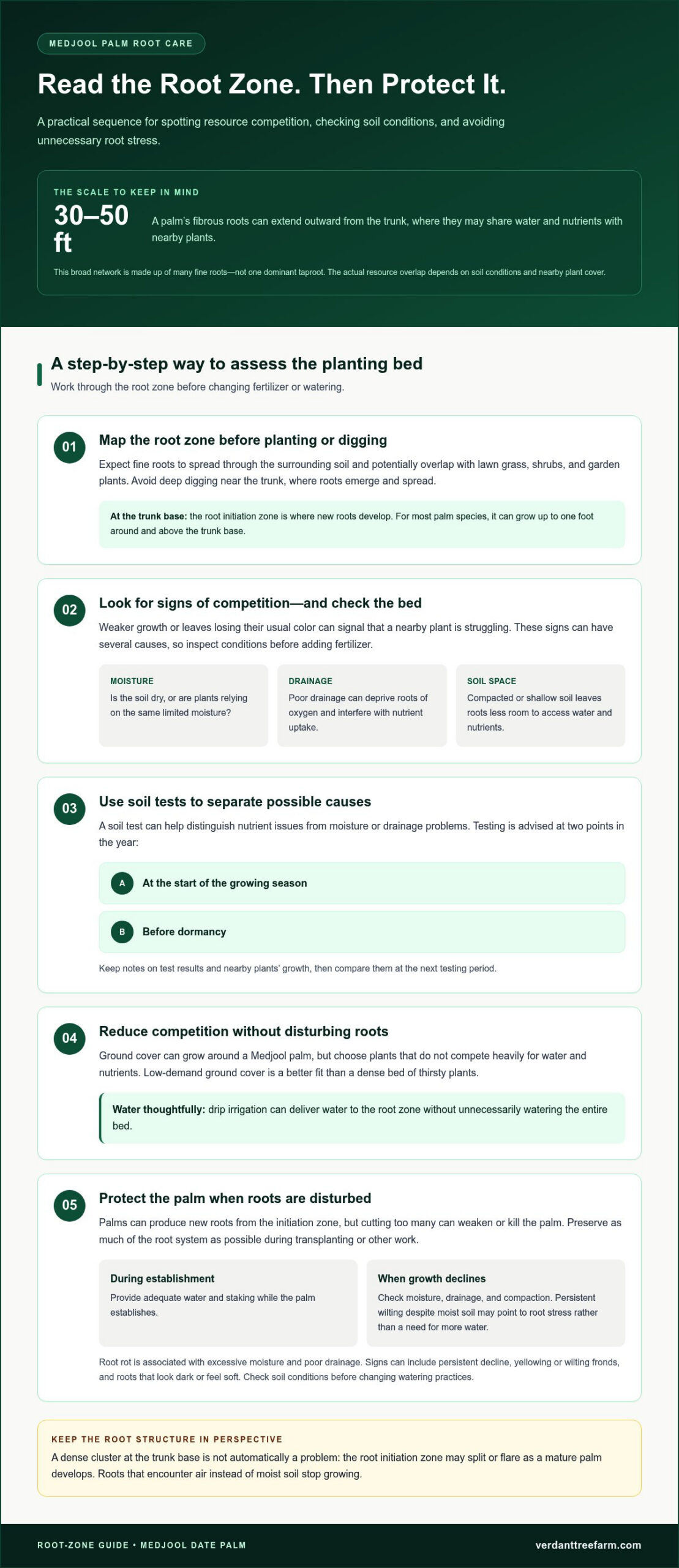
A Medjool date palm absorbs water and nutrients through numerous fine roots spread through the soil. These roots can overlap with the root zones of lawn grass, shrubs, and garden plants. Competition is more noticeable when several plants rely on the same limited soil moisture or nutrients. A palm’s broad root network may therefore affect nearby growth even when no roots are visible at the surface.
Soil conditions influence how much plants compete for resources. In compacted or shallow soil, roots have less room to access moisture and nutrients. Poor drainage can also deprive roots of oxygen and interfere with nutrient uptake. Well-drained soil allows water to move through the root zone while keeping nutrients available for absorption. Soil texture, drainage, and existing plant cover all affect how resources are shared.
Watch neighboring plants for weaker growth or leaves that lose their usual color. These signs can have several causes, so inspect the planting bed before adding fertilizer. A shrub near the palm, for example, may struggle because the soil is dry, poorly drained, or short of nutrients. Fertilizer won’t solve the problem if the cause is something else. A soil test can help distinguish nutrient issues from moisture or drainage problems.
Date palm soil testing is advised twice a year: at the start of the growing season and before dormancy. Use the results to understand which nutrients the soil supplies and whether an amendment may be needed. Keep notes on test results and nearby plants’ growth, then compare them at the next testing period. This gives you a clearer picture of changing soil conditions than leaf color alone.
Ground cover can grow around a Medjool palm, but planting and maintenance should avoid disturbing its roots. Choose plants that don’t compete heavily for water and nutrients. Avoid deep digging near the trunk, where roots emerge and spread through the surrounding soil. Low-demand ground cover is a better fit than a dense bed of thirsty plants. Drip irrigation can deliver water to the root zone without unnecessarily watering the entire bed.
Planting or removing a Medjool palm in Houston may involve local requirements if the work affects a public right-of-way or utilities. Property-specific restrictions may also apply, depending on the location and scope of the work.
Resource competition is only one part of palm care. Soil testing, careful plant selection, and attention to drainage can help show whether nearby plants are sharing resources successfully or struggling in the same root zone.
Fibrous and adventitious palm root systems
Medjool palms anchor themselves with many slender roots rather than one dominant taproot. This structure makes careful root handling near the trunk important during planting, maintenance, and relocation.
Transplanting and Root Handling
Medjool palms can survive transplanting, but careful root handling and aftercare help limit stress. Their roots regrow from the root initiation zone near the trunk base, but cutting too many can weaken or kill the palm. Preserve as much of the root system as possible, then provide adequate water and staking while the palm establishes. Root pruning isn’t a casual shortcut.
Root Rot and Other Root Problems
Root rot is root damage associated with excessive moisture and poor drainage. Signs can include persistent decline, yellowing or wilting fronds, and roots that look dark or feel soft. Overwatering can suffocate roots, while poorly drained soil can contribute to rot and limit nutrient uptake. Check soil moisture and drainage before changing watering practices, since symptoms alone don’t identify the cause.
Unlike many trees, palms don’t develop a significant taproot. They produce numerous fine, fibrous roots from a root initiation zone at the trunk base. The roots stay about the same diameter as they grow instead of thickening into large, woody roots. This anatomy shapes how a Medjool palm anchors itself and responds to disturbance.
Some palm species also form adventitious roots from their trunks or stems. These roots can provide support and absorb nutrients. For most palm species, the root initiation zone can grow up to one foot around and above the trunk base. Roots that encounter air instead of moist soil stop growing, so exposed root tips don’t continue extending without suitable conditions.
A dense cluster at the trunk base isn’t automatically a problem. The outer cortex may split or flare as a mature palm’s root initiation zone develops, and that change can be normal. By contrast, widespread root cutting limits the palm’s ability to absorb water and nutrients, creating stress during a move or other disturbance.
Root pruning requires care. Palms can produce new roots from the initiation zone, but that doesn’t make extensive cutting safe. During transplanting, damage to too many roots can compromise establishment. Adequate water supports recovery, while staking helps keep the palm stable as it adjusts. Avoid disturbing roots unnecessarily around the trunk.
For a Medjool palm with poor growth, inspect drainage and soil compaction as well as visible roots. Saturated soil can limit oxygen around roots, while compacted soil can restrict their growth. Persistent wilting despite moist soil may point to root stress rather than a need for more water. Match care to the conditions you observe.
Understanding this anatomy helps you protect roots during planting and recognize when drainage or root disturbance may be affecting palm health. For planting information, explore Medjool date palms.
Potential damage to foundations, sidewalks, and utilities
Medjool palm roots are generally not considered damaging to foundations, sidewalks, or underground utilities. Their fine, fibrous growth differs from thick, expanding roots that can lift paving or press against structures. This lower risk doesn’t eliminate the need for thoughtful placement. Soil depth, existing hardscape, and the condition of nearby plumbing all affect the space available as a palm grows.
As a practical spacing guide, plant palms at least 10-15 feet from foundations, driveways, and plumbing. This gives the root system room to spread while keeping the trunk away from structures and access areas. Treat that distance as a planning baseline, not a guarantee against every site issue. A narrow planting strip beside a driveway, for example, may offer less suitable growing space than an open yard.
Older plumbing and septic fields deserve particular attention. Palm roots typically don’t seek water aggressively, but older infrastructure may still be vulnerable because of its condition and proximity. Consider the location of underground lines and septic areas before choosing a planting spot. If a palm is already established, don’t dig blindly around its base to locate utilities. Unplanned excavation can disturb roots and complicate maintenance.
Sidewalk movement needs context. A lifted slab near a palm doesn’t prove that the palm’s roots caused it. Soil movement, installation conditions, and other nearby trees can also affect paving. Note where the displacement occurs, whether roots are visible beneath the slab, and how close the palm stands. These observations can help distinguish a possible root conflict from unrelated surface movement.
If roots appear to press against a structure, don’t start cutting them without assessing the palm. Root pruning may relieve pressure from invasive roots, but cutting too many can stress or kill a palm. The risk is especially important near the trunk, where roots originate. An expert assessment can weigh the location and extent of pruning against the palm’s stability and health.
For a planting plan, assess the site before putting the palm in the ground:
- Measure the space between the proposed trunk location and nearby foundations, driveways, and plumbing.
- Note older plumbing and septic areas, then keep the palm at least 10-15 feet away.
- Check whether sidewalks already show movement before planting, so later changes have a clear baseline.
- Leave access around the palm for maintenance without disturbing its roots or nearby utilities.
These steps help manage property risks without treating every surface crack as palm damage. A palm’s typical root behavior is generally compatible with nearby structures, but spacing and existing infrastructure still matter. If roots are already creating pressure, careful evaluation is safer than removing them based on appearance alone.
Horizontal root spread
A Medjool palm’s roots spread outward through the soil rather than forming one deep, thick anchor. This horizontal growth helps the palm absorb moisture and nutrients across a broad area. The visible trunk marks the center of the root system, not its outer edge. That distinction matters when planning nearby planting beds or interpreting roots found away from the palm.
Palm roots are fine and fibrous, and they generally don’t thicken much as they grow. They may extend as far as the canopy or slightly beyond it. Some estimates describe palm roots as reaching up to three times the tree’s height, but that is a potential spread, not a uniform boundary around every palm. Soil depth, compaction, and moisture influence where roots can grow.
For example, roots may extend farther through loose, moist soil than through compacted ground. Roots also follow available resources, so watering in one area can encourage root activity there. Paving or shallow soil may limit growth in one direction, while open soil offers fewer physical barriers. As a result, root spread may be uneven rather than circular.
Use the canopy as a practical visual reference, while remembering that roots may reach beyond its edge. A garden bed beneath the outer fronds may share soil with the palm’s roots. A lawn several feet beyond the trunk may overlap with them, too. Root presence alone doesn’t show that paving or a foundation is being damaged: palm roots are fine, not large, expanding woody roots.
When evaluating a planting area, consider the full growing space rather than measuring only from the trunk. Note the canopy’s current reach, nearby open soil, and any barriers that could redirect root growth. For a Medjool palm beside a garden bed, leave enough room to tend plants without repeatedly digging through the palm’s root zone. Surface roots can appear where soil is shallow or compacted, so take care with routine cultivation near the trunk.
These observations help distinguish the palm’s broad root footprint from structural damage. If roots appear near a path, consider their size and growth pattern before drawing conclusions. Fine roots in soil differ from roots visibly lifting a slab. The palm’s horizontal spread can reach beyond what the crown suggests, but its delicate root form usually doesn’t interfere with structures.
For planting decisions, map the available soil around the palm and account for the canopy’s likely spread. Keep maintenance access in mind, and avoid disturbing roots during routine landscaping. This approach makes room for the palm’s wide, shallow root network while helping nearby plants and hardscape fit the site.
How deep and wide do Medjool date palm roots grow?
Medjool date palms develop thousands of smaller fibrous roots from the trunk base, rather than a deep taproot. Root depth varies with soil, moisture, and access to groundwater. Most date palm roots are found within the top 3 to 10 feet of soil. Many grow laterally, spreading through the upper layers where water and nutrients are available.
Descriptions also place palm roots typically in the top 12-36 inches of soil. This does not mean every root stays within that layer. The topsoil range describes where roots commonly grow, while the broader 3 to 10 feet describes the soil depth where most date palm roots occur. A palm can also take advantage of moisture near the surface or deep water tables.
Width can be substantial. Date palm roots may extend 30 to 50 feet outward from the tree. That distance describes possible reach, not a uniform circle or a fixed boundary for every Medjool. Soil conditions shape the pattern: roots can spread through available soil and moisture, while shallow, compacted, or obstructed ground can limit their growth.
For example, a palm beside an open lawn may have more soil available for lateral growth than one surrounded by paving. A garden bed near the trunk may overlap with fine roots, even if the surface looks undisturbed. The visible crown and trunk therefore don’t show the full underground footprint. Allow room for root growth when planning paths, planting beds, and maintenance access.
Root initiation begins at the base of the trunk. In most palm species, this zone can grow up to one foot around and above the trunk base. Roots emerge from this area and grow into soil where moisture is present. Aerial roots that encounter air instead of soil stop growing when they lack moisture. This explains why exposed roots don’t keep extending across dry, open air.
Use these measurements as planning context, not as a precise map for excavation. Before digging near a mature palm, consider its wide root reach and avoid cutting roots without assessing the consequences. If surface roots appear, note whether the soil is shallow or compacted. Those conditions can bring roots closer to the surface without indicating a problem with the palm.
For a planting plan, account for both the palm’s broad lateral reach and its root-zone depth. Keep future access and nearby landscaping in view, not just the young tree’s current size. Choose a Medjool date palm with its mature growing space in mind.
Verdant Tree Farm: Live Oak
Verdant Tree Farm offers tree options for homeowners planning a landscape around a Medjool palm or considering a different tree for their property. Its selection includes Shumard Oak, Mexican White Oak, and Drummond Red Maple. Start by considering the available space, planting site, and role you want the tree to play in your landscape. These factors matter alongside palm root growth, especially when planning multiple trees in one yard. If you’re weighing a palm against another tree or adding planting to an established landscape, discuss your plans with Verdant Tree Farm.
Plan a Landscape That Fits Your Property
Turn what you’ve learned into a planting plan that suits your property’s layout and long-term goals. Addressing Medjool palm root system concerns early can help you decide where the palm belongs and whether another tree is a better fit for a particular area. Consider how each planting choice will work with your yard, outdoor living spaces, and future landscape plans.
If you’re considering alternatives, Verdant Tree Farm offers Live Oak, Shumard Oak, and Mexican White Oak. These options offer a starting point for planning a landscape that complements your property. Consider the whole site, not just one planting space. A thoughtful plan can clarify the next steps and help your landscape feel cohesive.
Explore your landscape options with Verdant Tree Farm, and move forward with a plan that feels right for your property.
Frequently Asked Questions
Do Medjool palm roots damage foundations, sidewalks, or pipes?
Medjool palm roots generally don’t damage foundations, sidewalks, or underground pipes. Their fine growth differs from thick roots that push against hardscape. For a Houston property, assess nearby plumbing and paving as well as the palm’s position. Older plumbing and septic fields warrant extra consideration. A crack or lifted sidewalk alone doesn’t establish that palm roots caused the change; inspect the location and surrounding conditions before deciding what to do.
How far should a Medjool palm be planted from a house, pool, or sewer line?
Use at least 10-15 feet from foundations, driveways, and plumbing as a planning guide. For a pool, allow room for the mature crown and maintenance access, rather than relying on a root-distance figure. Before planting, map the house, pool edge, and known sewer route on the site. Keep the trunk clear of access areas, and account for existing infrastructure when choosing a location in your Houston yard.
Are Medjool palm roots invasive or likely to lift paving?
Medjool roots aren’t typically invasive like thick, woody roots, and their fine growth usually doesn’t interfere with structures. Surface roots can still appear in shallow or compacted soil, so avoid deep excavation or repeated cultivation over them. If paving shifts, compare the palm’s position with the affected slab and look for visible roots before assigning a cause. Soil conditions and other nearby trees matter, too.
How much space do Medjool date palms need for root growth?
Plan for a broad underground footprint, not just the space directly beneath the trunk. Date palm roots can extend outward, while most root growth occurs within the upper soil layers. Keep planting beds and digging projects far enough away to avoid repeatedly disturbing roots. Also reserve room around the palm for its mature crown and maintenance access, especially in a compact Houston yard.
How often should Medjool palms be watered to prevent root problems?
A deep watering every 10-14 days is a general guide for date palms, adjusted for Houston’s season and local conditions. Let the surface 5 cm (2 inches) of soil dry before watering again. Check the soil rather than following the calendar alone: saturated ground calls for less water, while dry soil indicates the root zone needs moisture. Excess water can suffocate roots and contribute to root rot.
Do soil type and drainage affect Medjool palm root growth?
Yes. Soil texture, compaction, and drainage influence where roots can grow and how effectively they absorb water and nutrients. Compacted soil, for example, restricts root movement, while poorly drained ground holds excess moisture around roots. If a Medjool palm declines, note whether water pools after irrigation and whether the soil stays wet. These observations can help distinguish drainage trouble from dry soil or nutrient issues in a Houston landscape.