A yard plan should do more than show where plants go. Long-term landscape planning turns your goals and property conditions into a practical roadmap, mapping existing features, planting zones, materials, drainage, and proposed improvements. It can also organize the work into manageable stages.
It makes sense to want a cohesive yard without committing to every change at once. A landscape master plan gives homeowners and everyone working on the property a shared reference, clarifying priorities and connecting decisions as the landscape matures.
This article explains what a master plan can include and how to build one around a careful site assessment. You’ll learn how sunlight, soil, drainage, and mature tree canopies guide plant choices, and how water-wise decisions and clear visual communication can support a landscape over time. The result is a more confident way to decide what to do now, what can wait, and how each step fits the bigger picture.
Key Takeaways
- Use a landscape master plan to connect planting areas, paths, drainage, and future improvements in one practical roadmap.
- Assess sunlight, soil, drainage, and existing features before choosing plants or deciding where changes should go.
- Plan for water use and mature plant growth so your yard can support healthy plant communities and habitat connections over time.
- Use clear drawings and shared priorities to help everyone understand what happens first and how each step fits the overall vision.
1. What Is a Landscape Master Plan?
A landscape master plan is a coordinated drawing and decision guide for a property. It records existing structures, slopes, utilities, and plants, then maps proposed planting zones, pathways, patios, materials, and drainage. This gives each improvement a place within a shared vision instead of treating every yard change as a separate project.
Plant communities work best when their layers are planned together. For example, a canopy tree, understory shrubs, and ground cover can provide varied habitat and connect planting areas into a wildlife corridor. Native plants often suit local conditions and can require less water, fertilizer, and pesticide than other plant materials. Choose species for site conditions and mature size, not just their appearance at planting.
Low-maintenance choices start with matching materials and plants to how the yard will be used. A permeable walkway lets rain soak into the ground, while mulch protects roots and slows moisture loss. Efficient irrigation directs water toward plant roots. Heat-tolerant, disease-resistant plants can also help the landscape hold up as weather and property conditions change.
Permits, zoning rules, and HOA restrictions can affect where structures, paving, and planting may go. Requirements depend on the project and property, so build any necessary approvals into the plan before scheduling construction.
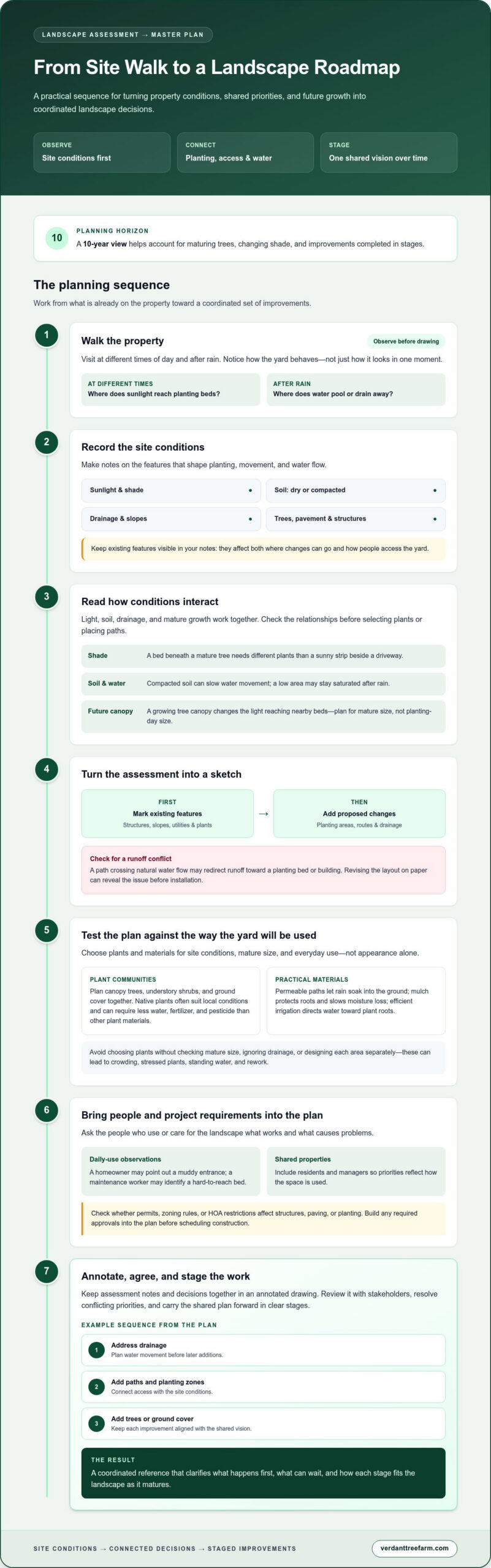
How far ahead should a landscape plan look? A 10-year horizon helps account for maturing trees, changing shade, and staged improvements. It also gives homeowners a way to maintain a consistent design as the yard develops.
How can landscape plans reduce water use and maintenance costs? They can combine native plants, efficient irrigation, mulch, and spacing that allows for mature growth. These choices reduce wasted water and avoid crowding that can increase plant stress and upkeep.
How do homeowners phase landscape improvements over several years? Divide the plan into practical stages, such as drainage first, then paths and planting zones, followed by additional trees or ground cover. A shared plan keeps each stage aligned while spreading work across 10 years.
2. Landscape assessment and master planning
Start with a site assessment before developing your landscape design. Walk the property after rain and at different times of day. Record where sunlight reaches planting beds, where water pools, and where soil stays dry. Note slopes, existing trees, pavement, and structures that affect planting or access. These observations help turn a broad vision into a workable master plan.
Soil, light, and drainage work together. A shaded bed beneath a mature tree needs different plants than a sunny strip beside a driveway. Compacted soil can slow water movement, while a low area may stay saturated after rain. Map these conditions before selecting plants or placing paths. Also consider how a tree’s growing canopy will change the light reaching nearby beds.
Design development connects the assessment to specific choices. Mark existing features first, then sketch proposed planting areas, circulation routes, and drainage solutions. For example, a path crossing a natural water flow may redirect runoff toward a planting bed or building. Revising the layout on paper can reveal that conflict before installation begins.
Common planning mistakes include choosing plants without checking their mature size, ignoring drainage, or designing each area separately. These choices can cause overcrowding, stressed plants, standing water, and expensive rework. A coordinated plan aligns planting, access, and water movement from the start.
Invite the people who use or care for the landscape to share what works and what causes problems. A homeowner may identify a muddy entrance, while a maintenance worker may point out a hard-to-reach bed. Combining those observations with site conditions creates a more useful plan. For a shared property, include residents and managers so priorities reflect daily use.
Keep assessment notes and design decisions together. An annotated site drawing can show sun patterns, drainage concerns, existing vegetation, and proposed changes. Review it with stakeholders, resolve conflicting priorities, then develop the master plan in clear stages. This makes each landscape decision easier to explain and carry forward.
3. Sustainable landscaping and resource conservation
A sustainable landscape uses water, soil, and planting space with care. In Houston, hotter summers, heavier rainfall, and longer dry periods can challenge established yards. A resilient planting plan considers these contrasting conditions rather than relying on one weather pattern. Choose plants suited to the site, then group them by similar water needs so irrigation can be targeted instead of applied uniformly.
Resource efficiency also depends on how plants are arranged. Leave enough room for tree canopies to widen and cast shade as they mature. Beneath trees, permanent ground cover or rock can be more practical than turf, especially where mowing and trimming are difficult. Avoid squeezing young trees or shrubs into undersized beds, since crowding can increase plant stress and disease risk.
Soil and stormwater choices matter, too. Adding compost can improve drainage and moisture retention while supporting beneficial soil microorganisms. A rain garden can direct excess stormwater away from a home, while permeable paths allow more rainfall to soak into the ground. These features address runoff at its source and help make a residential yard part of a more resilient urban environment.
Build a clear sustainability vision by ranking needs: reduce irrigation demand, manage runoff, protect soil, or expand habitat. Then select measures that work together. For example, a planting bed can combine soil improvement, plants suited to local conditions, and rainwater capture. Review how the system performs through wet and dry periods, then adjust plant choices or watering zones as the landscape responds.
For homeowners’ associations, consider how shared green spaces may function over 10 to 20 years. Staged planting can introduce lower-water-demand plants gradually, while efficient irrigation delivers moisture near roots and limits waste. Choosing a range of plants suited to varied site conditions also helps the landscape adapt when weather or property conditions shift. Resource conservation works best as a continuing design principle, not a one-time installation decision.
4. Communication and visualization in landscape planning
A useful landscape plan makes decisions visible, not just attractive. Pair a scaled site drawing with a written list of priorities, such as shade, privacy, outdoor dining, or easier upkeep. The drawing shows where each feature belongs; the written brief explains why it matters. Together, they give homeowners, designers, and installation teams a shared reference.
Use a visual plan to compare choices before work begins. For example, mark a proposed patio, pathway, and planting beds on the same drawing. Label materials, plant locations, and drainage direction. A separate view showing mature tree canopies can reveal future shade and possible conflicts with nearby plants. Clear labels reduce guesswork during each stage.
Make the plan easy to review. Use one symbol for existing trees, another for proposed plants, and a distinct line for paths. Include a legend and identify which features belong to each project phase. If a family prefers an open lawn while another wants more planting, showing both layouts helps them discuss the trade-offs directly.
Communication should continue as the outdoor space evolves. Record approved changes on the master drawing, including moved beds or revised materials. Share the current version with everyone involved instead of relying on old sketches or verbal instructions. A brief review at each project milestone can catch mismatched expectations before the next task begins.
Visuals can balance beauty with practical details. A planting plan might show a shaded seating area beside a sunny garden bed, while notes clarify intended use and material choices. This makes the design easier to understand and helps keep decisions connected to the original vision. To discuss a visual planting plan, start planning your landscape.
Verdant Tree Farm: Live Oak
Verdant Tree Farm helps turn a planting plan into practical tree choices for your Houston yard. Once your assessment identifies available space, sunlight, and landscape priorities, consider how each selected tree will fit its intended location as it matures.
Options include Shumard Oak, Mexican White Oak, Drummond Red Maple, October Glory Maple, and Mexican Redbud. Each can serve a different role, from creating a focal point to adding variety among planned trees. Match your selection to the site conditions and the overall design, rather than choosing by appearance alone.
When you’re ready to move from planning to selecting trees, contact Verdant Tree Farm or visit verdanttreefarm.com.
Make Your Next Yard Decision Count
A useful plan is not a finished picture to preserve unchanged. It’s a working guide that can evolve as your needs shift, new shade develops, or a planting area performs differently than expected. Keep the original vision clear, but use each decision to make the property more functional and comfortable. That’s the practical value of long-term landscape planning: choices today can support a yard that continues to serve you.
When you’re ready to turn a planting priority into a tree selection, Verdant Tree Farm offers Live Oak, Shumard Oak, and Mexican White Oak. Choose with the planned location and your landscape goals in mind, so the tree has a clear role in the design.
Contact Verdant Tree Farm to take the next step with your yard plan. A thoughtful decision now can help your outdoor space grow in the direction you want.
Frequently Asked Questions
What Is a Landscape Master Plan?
A landscape master plan is a coordinated guide for arranging and improving outdoor areas over time. It connects planting, access, materials, and project priorities in one view. For example, a homeowner planning a play area can see how its location relates to existing trees, future shade, and routes across the yard before committing to changes.
What is long-term landscape planning?
Long-term landscape planning means making yard decisions with future growth and changing needs in mind. Rather than selecting plants or features in isolation, consider how a new tree, gathering space, or planting bed will affect later choices. In Houston, a yard plan can also account for changing household needs, such as creating more shade or simplifying care.
What are the key steps in creating a long-term landscape plan?
Begin by listing how you want to use the yard, such as relaxing, gardening, or providing play space. Next, document existing features and site conditions, then draft a layout that connects those priorities. Choose plants and materials for their intended locations, set a practical order for improvements, and record decisions in a drawing everyone involved can use.
How much does landscape planning and installation cost in the United States?
There isn’t one standard cost for landscape planning and installation across the United States. Project scope, site preparation, selected plants and materials, design detail, and installation work all affect the cost. A planting refresh differs from a plan that includes grading, pathways, drainage, and mature trees. Define the project components first to make an estimate specific and useful.
What factors should a long-term landscape plan consider, including climate and soil?
Account for local weather patterns, soil drainage, sunlight, available space, and how the yard is used. In Houston, consider both intense heat and periods of heavy rain when placing plants and outdoor features. Soil that stays wet calls for different planting decisions than a well-drained area. Also consider nearby buildings, utilities, and mature tree roots before setting locations.
Which native plants and trees are best for long-term landscapes in different U.S. regions?
The best choices depend on a region’s growing conditions and the specific property, so a plant suited to Houston may not suit a colder or drier region. Houston landscape plans can include trees such as Live Oak, Shumard Oak, and Mexican White Oak. Compare each tree’s site needs and mature form with the planting location, and choose regionally suitable plants rather than relying on a nationwide list.