Last winter, many Houston neighbors stood in their yards wondering if their prized Windmill Palms would survive the sudden drop in temperature. It’s a stressful sight to see your landscape investment at risk, especially when you aren’t sure which frost cloth actually works or if you should be pruning away brown leaves. We understand that your trees are more than just plants; they’re a long-term investment in your home’s value and beauty. You want clear answers and a plan that works before the next cold front hits.
Learning how to protect trees from Texas freeze conditions doesn’t have to be a guessing game. This 2026 guide provides the exact steps you need to safeguard your property, from utilizing affordable frost cover rolls to understanding why the City of Houston requires a 20-day notice for removing protected species. We will walk you through a complete freeze-prep checklist, explain why you should wait until spring to prune, and share a list of hardy trees like the Shumard Oak and Bald Cypress that thrive in our unpredictable climate. You’ll gain the confidence to act quickly and protect your landscape when the temperature starts to tumble.
Key Takeaways
- Identify which Houston favorites, such as tropical palms and young saplings, face the highest risk during a hard freeze.
- Use deep hydration as your primary defense by watering root systems 24 to 48 hours before the temperature drops.
- Master the “tenting” technique and learn how to protect trees from Texas freeze damage using breathable cloths that reach the ground.
- Avoid the urge to prune immediately after a storm; those damaged leaves provide a vital layer of insulation for the rest of winter.
- Plan for long-term resilience by selecting native species like Cedar Elms and Shumard Oaks that are built for local conditions.
Assessing Your Risk: Which Houston Trees are Most Susceptible to Freeze?
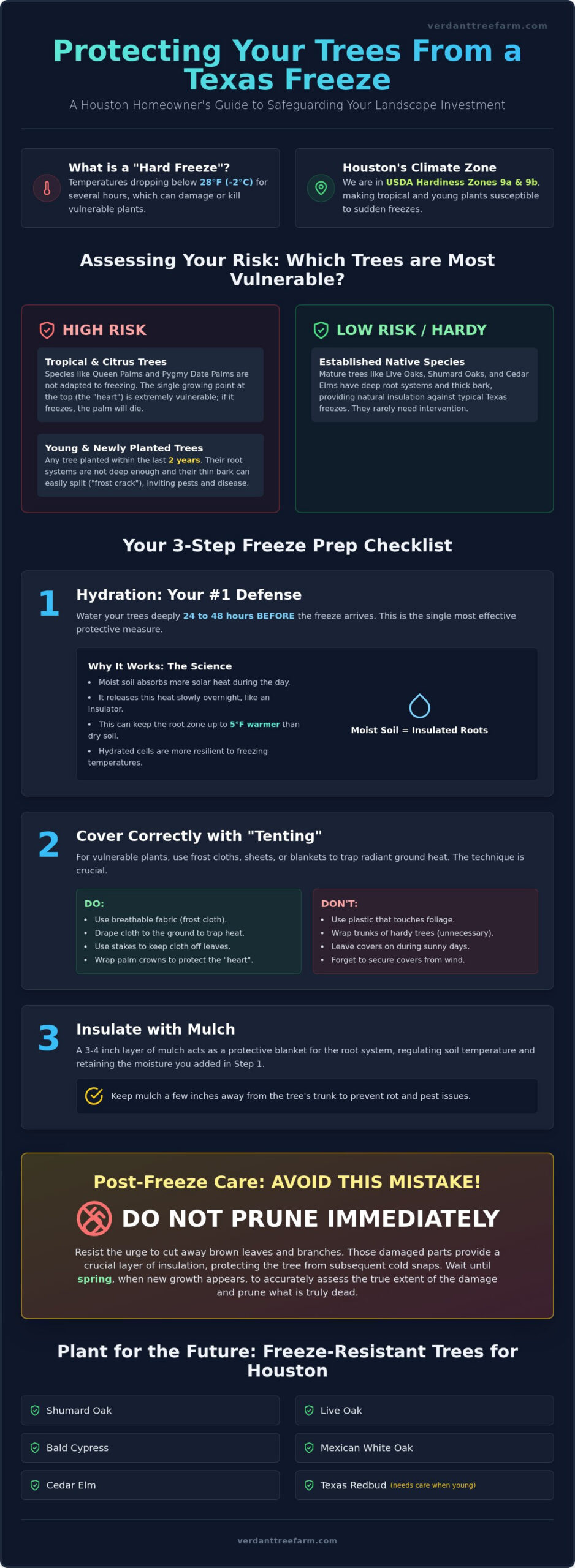
In Houston, we live in USDA Hardiness Zones 9a and 9b. We don’t see many “hard freezes,” which occur when temperatures drop below 28 degrees for several hours. A light frost might nip your grass, but a sustained hard freeze is what threatens your landscape. Understanding how to protect trees from Texas freeze events starts with knowing that the duration of the cold often matters more than the lowest temperature reached. A tree might survive 25 degrees for an hour, but twelve hours at 30 degrees can be much more damaging to internal tissues. When the ground freezes, roots cannot take up water, leading to severe dehydration.
Established native species like the Live Oak, Shumard Oak, and Mexican White Oak are built for our region. They’ve seen these cycles before. Their deep root systems act as a natural heat sink, pulling warmth from the soil. Unless we face a truly historic weather event, these mature giants rarely need intervention. Your focus should remain on the “tender” residents of your garden, such as citrus trees, tropical accents, and anything recently added to your property.
The Vulnerability of Tropical Palms
Many Houston landscapes feature Queen Palms and Pygmy Date Palms for that coastal feel. These species struggle when temperatures stay below freezing for long periods. The most critical part of any palm is the “heart,” also known as the apical meristem. This is the single growing point at the top of the trunk. If the heart freezes, the palm dies. You might see brown, crispy leaves after a storm, which is mostly an aesthetic issue. However, if the trunk becomes soft or the center spear pulls out easily, the damage is likely fatal. Protecting the crown is the difference between a spring recovery and a total loss.
Young vs. Mature Trees
Age is a primary factor in cold tolerance. We generally consider any tree planted within the last two years to be at high risk. These saplings haven’t developed the thick bark or deep root systems needed to insulate themselves against the cold. When sapwood freezes and expands rapidly, it can cause the bark to split. You might wonder, What is a frost crack? It is a vertical split in the trunk caused by these temperature fluctuations that leaves the tree vulnerable to pests and disease long after the ice melts. Protecting these young investments is a top priority for any homeowner learning how to protect trees from Texas freeze cycles. Even hardy species like the Cedar Elm or Texas Redbud need a little extra help during their first few winters in the ground.
Hydration as Insulation: Why Watering is Your #1 Defense
Many homeowners are surprised to learn that the best way to prepare for a cold snap isn’t found in a hardware store aisle, but at the end of a garden hose. When you’re figuring out how to protect trees from Texas freeze damage, deep hydration is your first line of defense. Moist soil acts as a thermal blanket for the root system. Unlike dry soil, which has air pockets that allow cold air to penetrate deep into the ground, wet soil fills those gaps with water that stays warmer for longer. This thermal mass releases heat slowly overnight, keeping the critical root zone just a few degrees above the danger point.
Timing is everything for effective winter watering. You should aim to water your trees deeply 24 to 48 hours before the freeze arrives. This gives the soil plenty of time to absorb the moisture without leaving the surface saturated when the ice hits. In Houston, we deal with heavy clay soil that holds onto water much longer than sandy loam. While this is helpful for heat retention, you must be careful not to create standing water. If the water pools and freezes, it can damage the trunk or roots. Follow these Texas Trees Foundation winter care tips to ensure your watering schedule aligns with the best horticultural practices for our region.
The Thermodynamics of Wet Soil
The science is straightforward: water holds more heat than air. Moist soil can be up to 5 degrees warmer than dry soil during a freeze. This small temperature difference is often enough to save a tree from root death. Drought-stressed trees are almost always the first to succumb to a Texas freeze because their cellular structures are already weakened. If you’re concerned about the health of your landscape before the next storm, our team offers maintenance consultations to help you assess your watering needs and soil health.
Mulching for Root Protection
Once you’ve hydrated the soil, you need to lock that heat in. Apply a 3-4 inch layer of organic mulch around the base of your trees to act as additional insulation. This is especially important for protecting the graft union on citrus trees or specialty palms like the Pindo Palm or Windmill Palm. However, avoid the “mulch volcano” mistake. Never pile mulch directly against the bark of the trunk, as this traps moisture and promotes rot. Keep the mulch a few inches away from the trunk while covering the entire dripline to maximize ground heat retention.
The Right Way to Cover: Using Freeze Cloths and Trunk Wraps
Physical barriers are your second line of defense once your soil is hydrated. Many homeowners reach for plastic tarps or trash bags, but this is a dangerous mistake. Plastic does not breathe. If it touches the foliage, it conducts the cold directly into the leaves and traps moisture that can lead to fungal issues. Instead, use breathable freeze cloths or heavy burlap. These materials allow air circulation while creating a microclimate around the plant. Understanding how to protect trees from Texas freeze events involves more than just throwing an old sheet over a branch. You must ensure the cover reaches all the way to the ground.
The “tenting” method is the only effective way to cover your plants. You aren’t trying to wrap the tree like a lollipop. You are trying to trap the radiant heat rising from the soil you recently watered. Use bricks, stones, or landscape staples to anchor the edges of the cloth to the earth. Houston cold fronts often arrive with sharp North winds that can gust over 30 miles per hour. If your covers aren’t secured, they will blow away, leaving your tender species exposed during the coldest hours of the night. For young trees and thin-barked species, trunk wraps are also essential to prevent the bark from splitting as temperatures fluctuate.
Wrapping Palms for Winter Survival
Tropical favorites like the Queen Palm, Sylvester Palm, and Medjool Palm require a specific approach. To protect the “heart” or the growing bud, gently pull the fronds upward and tie them together in a bunch. Wrap the center of this bundle and the top few feet of the trunk with burlap or professional frost blankets. When exploring the different palm trees for sale Houston growers provide, always ask about the specific cold-hardiness of your variety. Remember to remove these wraps as soon as the sun comes out and temperatures rise above 50 degrees. Leaving them on during a warm, sunny afternoon can cause the tree to overheat and sweat, which invites rot.
Protecting Small Shrubs and Understory Trees
Delicate shrubs and understory plants can easily be crushed by the weight of a heavy frost blanket. Use tomato cages or wooden stakes to create a frame that supports the cloth. This keeps the fabric from resting directly on the branches. If the forecast calls for a particularly deep freeze, you can add a heat source under the cover. A string of old-fashioned, incandescent Christmas lights (the ones that feel warm to the touch) can raise the temperature under the tent by several degrees. Avoid modern LED lights for this purpose, as they don’t produce enough heat to make a difference. Always ensure your lights are rated for outdoor use and kept away from flammable materials.
Post-Freeze Care: Why You Shouldn’t Prune Damage Immediately
When the ice thaws and the sun returns to Houston, your first instinct might be to grab the shears and clear away the brown, unsightly foliage. Don’t do it. The golden rule for tree recovery in our region is to wait until the final threat of frost has passed, which is usually late February. Those dead-looking, crispy leaves might be unattractive, but they serve a vital purpose. They provide a protective layer of insulation for the living wood underneath. If another cold front arrives, that dead material takes the hit instead of your tree’s healthy tissue.
Before you assume a tree is a total loss, perform the “scratch test.” Use your thumbnail or a small pocketknife to gently scratch a tiny patch of bark on a small branch. If you see bright green tissue underneath, the cambium is still alive and the tree will likely recover. If it’s brown or brittle, move further down the branch toward the trunk and try again. If you’re still unsure about the survival of your landscape after learning how to protect trees from Texas freeze damage, it’s time to book maintenance consultations to get a professional assessment before you make any permanent removal decisions.
Assessing Palm Damage
Palms respond to cold in unique ways. A Mediterranean Fan Palm is naturally more resilient and might show green growth much sooner than a Queen Palm or a Sylvester Palm. The real test for a palm is the “spear pull.” Gently tug on the newest leaf emerging from the center of the palm. If it stays firm, the heart is likely alive. If it pulls out easily and smells of rot, the palm is in trouble. Apply a copper-based fungicide to the crown immediately. This helps prevent “bud rot” from setting in while the plant is in a weakened state.
Nutrient Support for Stressed Trees
Do not rush to fertilize with high-nitrogen products immediately after a freeze. Forcing a tree to produce new growth while it’s still recovering from cold stress can actually do more harm than good. This tender new growth is highly susceptible to any late-season cold snaps. Instead, focus on maintaining consistent soil moisture as the ground thaws. Keep a close eye out for pests like wood-boring beetles. These insects often target weakened or freeze-damaged wood. Your primary goal is to support the root system and wait for natural spring growth to reveal the true extent of the damage.
Planting for the Future: Selecting Freeze-Resistant Trees
While immediate triage saves lives during a storm, the most effective strategy for a resilient landscape is choosing species naturally equipped for our climate. The best way to reduce the stress of knowing how to protect trees from Texas freeze events is to plant varieties that don’t require constant monitoring. Selecting stock from a local tree nursery Houston homeowners trust ensures your trees are already acclimated to our specific humidity and temperature swings. Native superstars like the Cedar Elm, Shumard Oak, and Texas Redbud are excellent choices because they have evolved to handle the erratic nature of Gulf Coast winters.
If you love the look of a tropical oasis but worry about cold damage, consider hardier alternatives. Windmill Palms and Pindo Palms offer the same aesthetic appeal as more sensitive species but can withstand significantly lower temperatures without the need for intensive wrapping. Professional installation is also a major factor in winter survival. Our team ensures proper root-to-soil contact and correct planting depth. This allows the root system to establish quickly and use the earth’s natural warmth as a heat sink during a hard freeze. A well-installed tree is a long-term investment that pays off in durability and peace of mind.
Top Freeze-Hardy Recommendations
- Live Oaks: These remain the gold standard for Houston. They provide massive shade and possess an incredible ability to bounce back from ice and wind.
- Bald Cypress: This native tree is uniquely adapted to our region. It handles “wet feet” during rainy seasons and remains completely unfazed by deep freezes.
- Nellie R. Stevens Holly: A top evergreen tree Houston residents use for privacy. It maintains its deep green foliage and red berries even when the mercury drops.
Nursery-Direct Advantage
Verdant Tree Farm is a veteran-owned operation. We take pride in managing our inventory from the field to your front yard. Because we are a direct-to-consumer nursery, our trees aren’t sitting on hot asphalt in a retail parking lot; they are grown and hardened to survive local conditions. We recommend requesting a landscaping consultation to help you plan a yard that looks beautiful in July and stays strong in January. We stand behind our work with a three-month warranty on newly planted trees. This gives you the confidence that you are making a smart, direct, and uncomplicated purchase for your home’s future.
Build a Weather-Resistant Houston Landscape
Success in the garden often comes down to timing and local knowledge. You now have a clear roadmap for how to protect trees from Texas freeze events, from the initial deep watering to the patient assessment of spring growth. Remember that hydration acts as your primary thermal blanket; those brown leaves are actually guarding the living heart of your trees. By choosing native species and hardy palms, you aren’t just planting a tree. You’re making a long-term investment in your property’s resilience and beauty.
As the largest independent tree nursery in Houston, Verdant Tree Farm is here to help you navigate every season. We are a veteran-owned and operated business. We offer everything from professional 3D landscape design to expert installation services. Our team is dedicated to providing the high-quality, acclimated stock your yard deserves. Browse our freeze-hardy tree inventory at Verdant Tree Farm today to find the perfect additions for your home. We’re proud to be your neighborhood partner in growing a beautiful, durable Houston landscape that stands the test of time.
Frequently Asked Questions
Is it too late to water my trees if the freeze starts tonight?
It is not too late to water, but you should act immediately. Watering even a few hours before the temperature drops provides a critical layer of insulation for the root zone. Moist soil retains heat much better than dry, aerated soil. Focus your efforts on the dripline and avoid getting water on the trunk or foliage, as surface ice can cause unnecessary stress to the tree’s exterior bark.
Can I use plastic tarps to cover my lemon and lime trees?
You should avoid using plastic tarps directly against the foliage of your citrus trees. Plastic conducts cold and traps moisture, which often leads to severe leaf burn or rot. If plastic is your only option, use stakes to create a frame so the material never touches the leaves. Breathable frost cloths or burlap are much more effective tools when you are learning how to protect trees from Texas freeze conditions.
How do I know if my palm tree died after the freeze?
Check the center “spear” or the newest leaf emerging from the top of the trunk. If this spear stays firm when you give it a gentle tug, the heart of the palm is likely still alive. If the spear pulls out easily or feels mushy, the plant has sustained serious damage. Don’t remove the palm immediately; many varieties take until May or June to show signs of a full recovery.
Should I put a heater or lights under my tree cover?
Yes, adding a heat source like incandescent Christmas lights can raise the temperature under a cover by several degrees. Make sure you use the older, larger bulbs that feel warm to the touch, as modern LEDs do not produce enough heat to be effective. Ensure all lights and extension cords are rated for outdoor use. Keep the bulbs from touching the tree or the cover to prevent any fire hazards.
Why are the leaves on my Live Oak turning brown after the cold?
Brown leaves on a Live Oak usually indicate temporary foliage damage rather than a dead tree. Live Oaks are semi-evergreen and typically shed their old leaves in the spring anyway. A hard freeze simply speeds up this process. Perform a scratch test on a few small branches to look for green tissue. If you see green under the bark, your oak will produce new leaves as soon as the weather stabilizes.
What happens if I prune my freeze-damaged trees too early?
Pruning too early removes the natural insulation that dead leaves provide and can trigger the tree to produce new growth. This tender new growth is highly susceptible to any late-season frosts that might hit Houston in February. If you cut back to live wood too soon, you risk killing the entire branch during the next cold snap. It’s best to wait until you see new buds forming in the spring.
Do I need to protect my mature Pecan or Oak trees?
Mature Pecan and Oak trees generally do not need any special protection during a Houston freeze. These established native species have thick bark and deep root systems that act as natural insulators against the cold. Your efforts are better spent on young saplings planted within the last two years or tropical species. Mature natives are built to handle our regional climate shifts without any extra help from homeowners.
How much mulch is too much when preparing for winter?
A layer of 3 to 4 inches is the perfect depth for winter insulation. Piling mulch higher than 4 inches can actually suffocate the root system and prevent oxygen from reaching the soil. Always remember to keep the mulch a few inches away from the base of the trunk. This prevents moisture from being trapped against the bark, which is a common cause of fungal rot and pest issues during the damp winter months.