A front yard looks expensive when it feels intentional, not when it’s packed with costly features. If you’re wondering how to make my front yard look expensive, start with the details that bring the whole space together: balanced proportions, a clear focal point, and plants suited to Houston’s challenging weather.
A plain or cluttered yard can be frustrating, especially when it’s hard to tell which upgrade will make the biggest difference. Houston’s heat, humidity, heavy rain, and occasional freezes all affect plant choices and long-term curb appeal. A polished look doesn’t have to mean a complicated, high-maintenance landscape.
This guide will help you create a cohesive design, choose plants suited to local conditions, and prioritize improvements that make a visible difference. Thoughtful placement, clean lines, and a well-chosen focal point can give your front yard a refined feel while keeping maintenance manageable.
Key Takeaways
- Use proportion, repetition, and clean edges to make a front yard feel cohesive without adding unnecessary features.
- Combine a focal tree, supporting shrubs, and lower planting to create depth that complements the home.
- Learn how to make my front yard look expensive by prioritizing practical upgrades and careful execution over decorative clutter.
- Follow a sensible project order: assess the space, address drainage and access, plan the layout, then choose plants and details.
- Use 3D landscape design to visualize plant scale and placement before installation.
How to Make My Front Yard Look Expensive: Start with a Clear Design
A polished front yard doesn’t come from adding the most features. It comes from making the house, planting, and pathway feel like parts of one plan. Before choosing plants or decorative details, look at what’s already there and decide what should draw the eye.
An expensive-looking yard is cohesive and well maintained, with balanced proportions, healthy plants, clean edges, repeated forms, and one deliberate focal point. These visual cues make even a simple space feel considered. For a broader foundation, review these principles of landscape design, including composition, scale, and how outdoor spaces are defined.
What makes a front yard look high-end?
Choose a limited palette of materials and repeat a few plant forms to create visual unity. A broad, low planting bed can complement a wide home, while a narrow path may look out of proportion beside a large façade. Compare the scale of the house, entry, walkway, beds, and trees. Then select one focal point, such as a well-placed tree, instead of letting several ornaments compete for attention.
How to assess your Houston front yard before making changes
Study the yard at different times of day. Note sun exposure, planting space, existing irrigation, and where water collects after heavy rain. Houston heat, humidity, downpours, and occasional freezes can affect plant performance, so match selections to the conditions on your property.
Take photos from the street, front door, and main windows. On a simple sketch, mark fixed features such as the driveway, walkway, porch, mature plants, and downspouts. These views help you see where a focal point will be noticed and whether a new tree or bed could block access or sightlines. Be realistic about the time you want to spend on upkeep, too. A refined plan should fit your maintenance routine.
Use your photos and sketch to decide what should stay, what feels out of balance, and where the entry needs more emphasis. A 3D landscape design can help you visualize scale and placement before installation, especially if you’re considering a focal tree or changes across several planting areas. With a clear picture of the site, you can make deliberate choices instead of adding features one at a time.
Use Scale, Symmetry, and Layered Planting for a Polished Front Yard
Once you understand the site, use plant placement to bring the design together. A focal tree can anchor the composition, shrubs can add structure around it, and lower planting can soften bed edges. The goal isn’t to fill every open space. It’s to balance plants with the house and entry.
Repeated plant forms and a scale that suits the house make planting beds feel intentional, not crowded. Michigan State University Extension explains how six principles of design, including balance, focalization, proportion, and unity, work together in a landscape. Apply those ideas by repeating a few shapes or colors rather than mixing many varieties. A thoughtful plan can help answer how to make my front yard look expensive without making it feel overdone.
Choose one focal point and protect the entry
A specimen tree can draw the eye toward the home, or a carefully framed entrance can serve as the focal point. Before planting, consider the tree’s mature size and required clearance. Review species-specific growth information and avoid locations that could block windows, paths, street views, or architectural details. A Live Oak, Cedar Elm, or Texas Redbud may suit a design when the site conditions and scale of the home are a good fit.
Layer plants from tall to low
Build depth in simple steps: place a structural tree where it has room to grow, group supporting shrubs to create a middle layer, then use lower planting to define the bed edge. Repeat shrubs or plant forms to visually connect separate areas. For seasonal color ideas, explore flowering trees for Houston. A 3D landscape design can help you picture tree scale and placement before installation. For guidance on trees suited to Houston landscapes, browse Houston tree and palm options.
Match the layout to the home
| Layout | Visual effect | Upkeep considerations |
|---|---|---|
| Formal and symmetrical | Balanced, orderly, and well suited to homes with a centered entry or strong architectural lines. | Matching plants and crisp edges may call for regular trimming to preserve the pattern. |
| Informal and naturalistic | Relaxed, varied, and a natural fit for less rigid architecture or gently flowing beds. | Pruning can be less focused on perfect matching, but plants still need room and deliberate placement. |
Neither layout is automatically more refined. Choose one that complements the house and fits the level of maintenance you’re comfortable keeping up with.
Which Front-Yard Upgrades Make the Biggest Visual Difference?
The upgrades that look most refined are often the ones that make the yard feel finished. Clear transitions between lawn, planting beds, pathways, and other hard surfaces give the eye an orderly route to the front door. A clean bed edge sharpens the composition, while an unobstructed path makes the entry easier to find. These details can have more impact than adding another decorative object.
Prioritize the details that bring the yard together
- Defined bed edges: A crisp boundary separates lawn from planting and makes beds look intentional. Edges need occasional upkeep, and elaborate edging may not suit a simple home or a yard where mowing access is already tight.
- A clear path: An easy-to-follow route supports access and gives the front yard structure. Repair or clarify the existing route before adding a new one. Extra paving may make a small entry area feel crowded.
- A healthy lawn: Even, well-kept turf provides a calm backdrop for trees and beds. It takes regular care, and expanding lawn may be a poor fit where shade, drainage, or your preferred maintenance level makes turf difficult to sustain.
- Restrained lighting: Thoughtful lighting can guide visitors along a path and draw attention to one focal feature. Keep fixtures and brightness in proportion to the entry. Too many competing points of light can make the design feel busy.
- Plant structure and a tidy bed surface: Healthy plants provide shape and seasonal interest, while a neat mulch layer can give a bed a finished appearance. Choose materials and application practices suited to the plants and site, and avoid piling mulch against trunks or stems. A heavily planted bed may not suit homeowners who prefer simpler upkeep.
Choose polish you can maintain
Formal planting, clipped shapes, and precisely repeated patterns can look crisp, but they need regular attention to stay that way. A simpler plan with well-spaced, region-appropriate plants may need less shaping, though care still depends on species, sun exposure, soil, and irrigation. Texas A&M AgriLife Extension’s Planning the Home Landscape offers guidance for making thoughtful, resource-conscious landscape choices.
For year-round structure, explore evergreen trees for Houston and consider how an evergreen might fit your space and maintenance preferences. If you’re deciding which tree could anchor your plan, browse Houston tree options. A tidy, consistent landscape usually feels more polished than one crowded with accents.
How to Upgrade Your Front Yard in a Practical Order
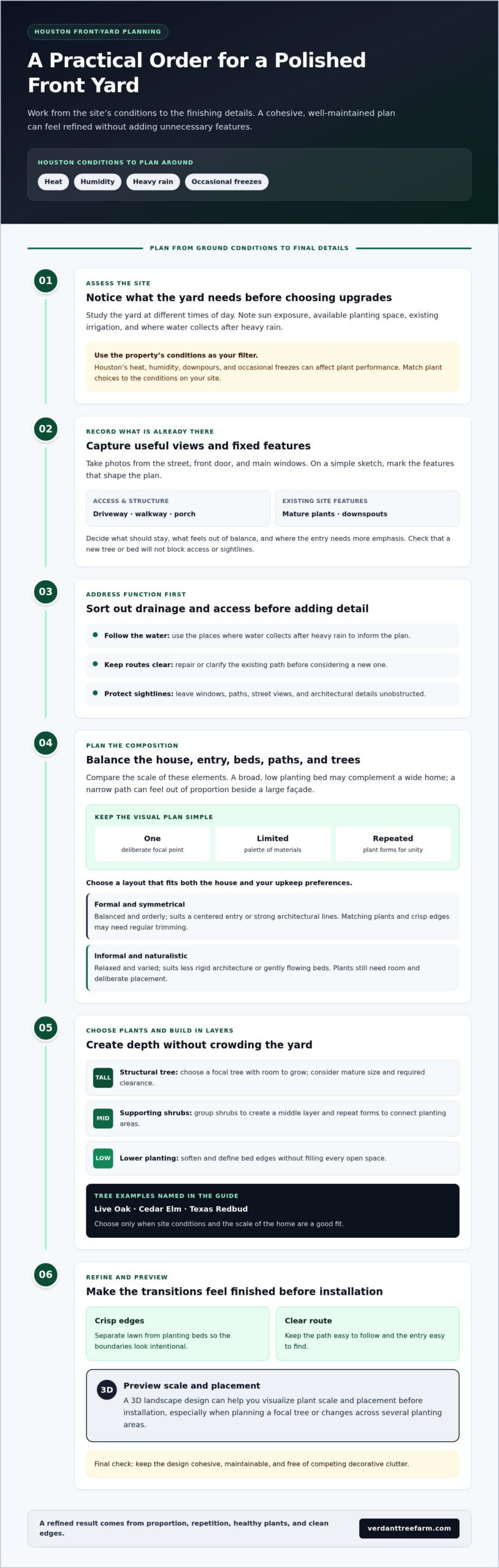
A clear sequence helps prevent attractive individual choices from turning into a disconnected yard. Address site needs first, then make design decisions, select plants, and add finishing details. If you’re working in phases, repeat the same plant forms, bed lines, or material choices so each finished area feels connected.
Plan before planting
Map existing trees, utility locations, paths, roof drainage, and areas with different sun exposure. Choose one visual priority, such as framing the entry or improving a street-facing bed. Before selecting a tree or shrub, review current, species-specific information on mature dimensions and site needs.
Planning for a plant’s mature size before installation helps prevent a crowded look later. Resolve drainage and access concerns, and settle the overall layout before choosing decorative details.
A practical sequence for the work
- Assess: Walk the property and note existing plants, sun and shade, water flow, paths, and views from the street and entry.
- Set priorities: Decide which change will make the most meaningful difference, such as clarifying the entrance or refreshing one bed.
- Sketch: Draw fixed features and proposed planting areas. Leave room for access and for plants to grow.
- Select plants: Match choices to site conditions, mature size, and the level of care you can maintain. Use reliable, current horticultural guidance.
- Prepare: Address drainage, soil, irrigation, and access needs before planting or adding decorative features.
- Install: Complete the layout in a coordinated way, or work in phases that follow the same design direction.
- Maintain: Keep up with watering, pruning, and other care suited to the plants and their conditions.
Know when design or planting support can help
For a larger project, 3D landscape design can help you see how plant scale, placement, and the overall composition work together before installation. Professional installation can coordinate planting across multiple areas, while maintenance consultations provide practical guidance for caring for established plants over time. Industry guides and construction insights from specialists like EcoShine Kft. illustrate how structured garden design, ground preparation, and skilled planting combine to bring ambitious outdoor concepts to life. These services help keep the plan and its execution aligned.
Verdant Tree Farm provides Houston landscape design and installation to bring design and planting together in a coordinated project. For a refined front yard that suits your home and site, explore landscape design and installation.
Create a Refined Houston Front Yard with a Cohesive Long-Term Plan
A lasting, polished front yard depends on choices that work together: one focal point, plants sized for the space, repeated forms, crisp bed edges, and a care plan you can maintain. If you’re still asking how to make my front yard look expensive, focus on how the elements fit together rather than adding a feature to every empty spot.
Match plant choices to your property
Houston’s heat, humidity, heavy rain, and occasional freezes make site conditions part of the design. Start with the amount of sun each planting area receives, how water drains, the space available, and the upkeep you want to handle. Native Texas plants and varieties suited to regional conditions can be useful choices, but no tree or shrub is right for every yard.
Keep design, planting, and care connected
A design-to-installation plan helps preserve the connection between the idea and the finished yard. 3D landscape design can show how a tree’s scale and position relate to the home, entry, and surrounding planting before work begins. Professional installation can coordinate trees, shrubs, and bed composition so the result reads as one landscape rather than a series of separate additions.
Verdant Tree Farm’s Houston nursery offers trees, palms, and shrubs, along with landscape design, professional installation, and maintenance consultations. Its veteran-owned team serves residential and commercial clients. Maintenance guidance can help homeowners care for established plants as the landscape grows and changes.
A refined look develops over time through suitable plants and consistent care. Choose forms and placement with the property in mind, then maintain the edges, plants, and overall composition so the design stays intentional. Explore Verdant Tree Farm’s landscaping services to take the next step toward a coordinated Houston front yard.
Bring Your Front Yard Plan to Life
Knowing how to make my front yard look expensive starts with a clear plan, not a longer feature list. Choose a focal point, keep plant scale in proportion to the home, repeat a few forms, and maintain clean edges. In Houston, match plant choices to each site’s sun, drainage, space, and care needs so the design remains practical as it grows.
Strong curb appeal comes from thoughtful choices and consistent upkeep. Start with one area, then carry the same design approach into the rest of the yard. A clear path, healthy planting, and a well-framed entry help the whole space feel connected. Verdant Tree Farm is a veteran-owned and operated Houston business with native Texas plants and region-suited varieties, plus 3D landscape design, professional installation, and maintenance consultations to support a coordinated plan.
Ready to shape a front yard that feels polished and fits your property? Explore landscape design and installation with Verdant Tree Farm, and take the next step toward a welcoming entry you’ll enjoy coming home to.
Frequently Asked Questions
How can I make my front yard look expensive on a budget?
If you’re asking how to make my front yard look expensive on a budget, focus first on order and upkeep rather than adding features. Define bed edges, clear the path, remove weeds, and prune plants that have outgrown their space. Then repeat a few existing plant forms or colors to tie the yard together. A simple, well-maintained design often feels more polished than a crowded mix of new decorations.
What plants make a front yard look expensive?
Plants look refined when their scale, shape, and placement suit the house and work well together. A focal tree can anchor the composition, with repeated shrubs and lower planting creating a tidy transition to the lawn or path. Houston homeowners can explore native Texas plants and region-suited varieties, including trees, magnolias, and hollies. Check each plant’s mature size and requirements for your property before choosing it.
How do I make my front yard look more professional?
Make the layout look deliberate: give the entry a clear focal point, keep paths easy to follow, and create crisp transitions between lawn and beds. Repeat a small number of plant shapes rather than scattering many varieties throughout the yard. Healthy plants and consistent trimming help the plan hold together. For larger changes, landscape design can help coordinate plant placement and overall scale before installation.
Can landscaping make a small front yard look expensive?
Yes. A small front yard can feel polished when the design is scaled to the home and avoids visual clutter. Keep the route to the door clear, use a defined planting bed, and choose a few plants that fit the available space at maturity. Repeating a limited palette can make the area feel cohesive. Avoid oversized features or crowded planting that competes with the entrance.
Which front-yard features make the biggest difference?
Defined bed edges, a clear walkway, healthy plants, and a well-kept lawn often make the strongest visual difference because they make the yard feel complete. A focal tree or restrained outdoor lighting can add structure and guide attention to the entry. The right priority depends on the property: improve access first if the path is unclear, or refresh planting where beds look overgrown or disconnected.
How do I choose front-yard plants for Houston’s climate?
Choose plants based on the conditions at the planting site, not just the city’s general climate. Consider sun exposure, drainage, available space, irrigation, and your preferred level of care. Houston heat, humidity, heavy rain, and occasional freezes all matter. Review current, species-specific guidance for mature size, seasonal interest, and freeze tolerance. Native Texas plants and region-suited varieties can be good candidates when their requirements match your property.
Does a front yard need symmetry to look expensive?
No. Symmetry can suit a home with a centered doorway or strong, formal lines, but it isn’t required for a refined look. An informal layout can complement a home with more relaxed architecture. In either approach, balance matters: repeat selected plant forms, keep the scale appropriate, and give the eye a clear focal point. Choose the arrangement that feels connected to your home rather than forcing a matching design.
How can I make my front yard look expensive without high-maintenance plants?
Start with a simple layout and choose plants whose site needs and care requirements fit your routine. Repeating a few well-placed forms can create structure without relying on intricate beds or frequent shaping. Consider the available sun, drainage, and irrigation before selecting plants, and leave room for mature growth. Maintenance consultations can also help you care for established plants as your Houston landscape develops.