Most Houston backyards aren’t actually built for Houston; they’re built for a climate that doesn’t hit triple digits in July or face sudden winter freezes. If you’ve ever felt trapped inside while your lawn struggles against heavy clay soil and humidity, you aren’t alone. Creating a backyard oasis in Houston requires more than just a few patio chairs and a sprinkler. It demands a strategic approach that works with our unique Gulf Coast environment rather than fighting against it.
We understand the frustration of losing a beautiful landscape to unpredictable weather or feeling like the neighbors are always watching. You deserve a private, shaded retreat that adds real value to your property and stands up to the Texas heat. This guide will teach you how to transform your yard into a resilient, lush sanctuary using professional horticultural strategies and smart design. We’ll show you how to select the right species, such as the Live Oak or Little Gem Magnolia, solve drainage problems, and build a landscape that thrives in 2026 and beyond.
Key Takeaways
- Learn how to mitigate 100-degree heat using natural shade and privacy screening to build a functional outdoor retreat.
- Discover the best canopy anchors, such as Live Oaks and Medjool Date Palms, for creating a backyard oasis in Houston that lasts.
- Apply the “70/30 Rule” to balance your hardscape with living material that naturally cools your environment and protects tree root zones.
- Master the “Mound Method” and soil amendment strategies to help your landscape survive heavy clay drainage issues and sudden freezes.
- Understand the benefits of using 3D design visualization and nursery-direct installation to ensure your plants are healthy and local-ready.
What Defines a Backyard Oasis in Houston?
A true Houston oasis isn’t just a collection of patio furniture or a high-maintenance pool. It’s a multi-sensory retreat designed specifically to combat our brutal 100-degree summers. While many homeowners focus solely on hardscaping, we believe in “living architecture.” This approach uses plants and trees as functional building blocks to create a cooler, more private environment. By following the core principles of landscape design, you can transform a standard yard into a resilient ecosystem that actually improves your quality of life.
Creating a backyard oasis in Houston means building a space where you can actually breathe in July. It involves three key pillars: natural shade, effective privacy screening, and climate-resilient greenery. This isn’t just about aesthetics; it’s a long-term investment in your property value and your mental health. When you’re creating a backyard oasis in Houston, the goal is to shift from a high-maintenance lawn to a self-sustaining ecosystem that thrives in our unique Gulf Coast climate.
The Cooling Power of Transpiration
Trees do more than just block the sun. They act as natural evaporative coolers. Through a process called transpiration, leaves release moisture into the air, which lowers the surrounding temperature. If you’ve ever walked across a stone patio in August, you know it feels like an oven. Hard surfaces like concrete and dark stone absorb solar radiation, creating “heat islands” right outside your back door. Strategic tree placement changes that dynamic entirely. A well-placed tree canopy can lower surface temperatures by as much as 20 degrees compared to unshaded areas.
Privacy as the Foundation of a Retreat
You can’t relax if you feel like the whole neighborhood is watching. A real retreat provides a sense of security and seclusion. While wooden fences offer a basic boundary, they don’t solve the problem of multi-story views or street noise. Living screens are the solution. By integrating height through species like the Eagleston Holly or Savannah Holly, you create a soft, green wall that blocks sightlines and dampens sound. This psychological “walled-in” effect turns a vulnerable yard into a private sanctuary. It lets you disconnect from the bustle of the city and reconnect with your own space.
The Green Pillars: Selecting Trees for Shade and Privacy
While hardscape provides the basic structure, the plants you choose are the soul of your retreat. Success in creating a backyard oasis in Houston starts with selecting anchor specimens that can handle the city’s humidity and heavy clay soils. According to the Texas A&M AgriLife Extension guide on Planning the Home Landscape, choosing the right plant for the right place is critical for long-term health. We recommend starting with high-impact trees that provide both vertical interest and immediate cooling.
The Shade Anchors: Oaks and Elms
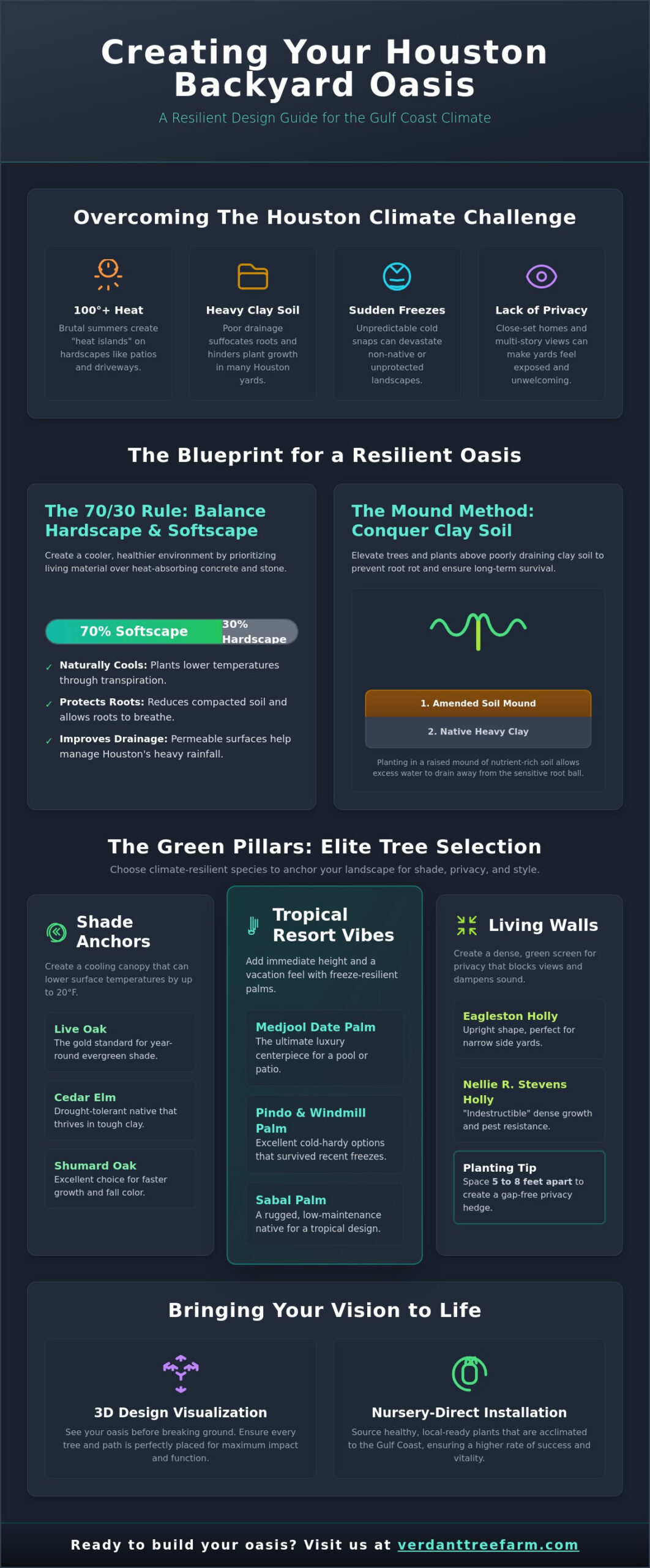
The Live Oak is the gold standard for Houston shade. Its wide, evergreen canopy offers year-round protection from the sun and creates a majestic profile for any property. If you have particularly tough clay, the Cedar Elm is a reliable, drought-tolerant native that thrives where other trees struggle. For homeowners who want faster growth and a splash of fall color, the Shumard Oak is an excellent choice. These species provide the “bones” of your landscape, ensuring your yard remains comfortable even in the peak of August.
Tropical Resort Vibes with Freeze-Resilient Palms
Nothing says “resort” like a Medjool Date Palm. It’s the ultimate luxury centerpiece when creating a backyard oasis in Houston, especially near a pool or patio. If you’re concerned about winter weather, the Pindo Palm and Windmill Palm are fantastic, cold-hardy options that survived recent Houston freezes with minimal protection. For a rugged, low-maintenance look, the native Sabal Palm is a dependable option that fits perfectly into a tropical design. These palms add immediate height and a vacation feel without the constant worry of cold damage.
Living Walls: Holly and Bamboo Alternatives
Privacy is a top priority for most homeowners in our growing city. The Eagleston Holly is a favorite because it grows in a tight, upright shape, making it perfect for narrow side yards or blocking a neighbor’s second-story window. For a more robust barrier, the Nellie R. Stevens Holly is often called “indestructible” because of its dense growth and pest resistance. To create a gap-free privacy hedge, space these specimens 5 to 8 feet apart depending on the desired density. This creates a soft, green wall that dampens street noise and keeps your sanctuary private.
Don’t forget to add seasonal interest with smaller ornamental trees. A Texas Redbud provides early spring blooms, while the Little Gem Magnolia offers glossy leaves and fragrant white flowers throughout the summer. If you’re ready to start your project, we can help with professional installation to ensure your new trees get the best start possible in our local soil.
Balancing Hardscape with Softscape in a Coastal Climate
Houston summers don’t forgive poor planning. If you fill your yard with concrete, you’ll feel every degree of that heat reflecting back at you. We recommend the “70/30 Rule” for creating a backyard oasis in Houston. This strategy dictates that your landscape should consist of at least 70% living material and no more than 30% hardscape. By prioritizing softscape, you ensure your yard remains a cooling environment rather than a sweltering heat island. Living plants absorb sunlight and release moisture, while stone and concrete simply store heat and radiate it long after the sun goes down.
Living architecture provides the natural ceiling for your outdoor rooms. While a pergola offers some relief, a mature tree canopy provides superior cooling through transpiration. This is a foundational step when creating a backyard oasis in Houston. Proper Soil preparation for Houston gardens is also essential when integrating these elements. You must ensure that your hardscape doesn’t compromise the drainage or soil quality required for your trees to reach their full potential. A beautiful patio is worthless if it eventually kills the shade trees surrounding it.
Designing Around the Root Zone
Your trees are a long-term investment in your property. Protecting them starts with respecting the critical root zone. You should never pave directly over the root systems of established species like a Live Oak or Cedar Elm. Doing so suffocates the tree by cutting off oxygen and water. If you must build near a tree, choose permeable pavers or loose gravel. These materials allow moisture to reach the nursery stock below. Also, think about the specific habits of your trees. Keep species like the Drummond Red Maple away from swimming pools to minimize the time you spend cleaning leaves out of the filter. Strategic placement saves you hours of maintenance later.
Hardscape for Function, Softscape for Comfort
Position your functional areas where they benefit from natural cooling. An outdoor kitchen is far more usable when placed under the dappled shade of a Cedar Elm. To further enhance comfort, use mulch and groundcovers around your stone surfaces. These organic materials reduce the intense glare and heat reflection from flagstone or concrete. Finally, use lighting to tie the two worlds together. Uplighting the trunks of Sylvester Palms or the sprawling limbs of a Shumard Oak creates a dramatic, resort-like atmosphere at night. It extends the usability of your sanctuary long after the temperature begins to drop.
The Houston Blueprint: Soil, Drainage, and Freeze Prep
Many homeowners start creating a backyard oasis in Houston by picking out beautiful plants, only to see them struggle months later. The culprit is usually what locals call “Houston Gumbo.” This heavy, alkaline clay soil holds water like a bathtub and lacks the oxygen roots need to breathe. Without a solid technical foundation, even the most expensive specimens won’t survive the season. You have to address soil composition and drainage before the first tree goes in the ground.
The “Mound Method” is our secret to success in this region. Instead of digging a deep hole that traps water, we plant trees slightly above the natural grade. This creates a raised area that allows excess water to shed away from the trunk. It’s a simple change that makes a massive difference for species sensitive to “wet feet.” When creating a backyard oasis in Houston, this elevation protects your investment during our frequent heavy downpours. It ensures that your root systems aren’t suffocated by standing water.
Mastering the Clay Soil
Standard potting soil often fails here because it’s too light and washes away, or it doesn’t bond with the surrounding clay. We recommend amending your beds with expanded shale and high-quality compost. Expanded shale is a porous ceramic material that opens up the clay, creating permanent spaces for air and water movement. Proper soil aeration through the addition of these porous materials prevents root rot by ensuring oxygen reaches the root system during our intense rainy seasons. This creates a sustainable environment where roots can actually expand and anchor the tree properly.
Drainage: The Silent Oasis Killer
Identifying low spots in your yard is critical before you plant. If you have a corner that stays soggy for days after a rain, don’t put a sensitive palm there. Instead, consider water-loving trees like the Bald Cypress or Montezuma Cypress. These species thrive in wet conditions and can even help manage excess moisture in the soil. For more complex issues, we often integrate French drains or rain gardens to move water away from your foundation and patio areas. Professional installation ensures your trees aren’t “drowned” in clay holes that act like underground buckets. We verify the grade and drainage of every site to ensure long-term health.
Freeze-proofing is the final piece of the blueprint. While our climate is generally hot, recent years have proven that we must prepare for sudden, extreme drops in temperature. Choosing cold-hardy varieties like the Sabal Palm or Pindo Palm provides peace of mind when the forecast turns cold. If you’re feeling overwhelmed by the technical side of landscaping, our team provides expert maintenance consultations to help you navigate soil health, drainage planning, and freeze protection.
Bringing Your Vision to Life with 3D Design and Installation
The best design in the world won’t matter if the execution fails. When you’re finally ready to start creating a backyard oasis in Houston, you need a partner who values accountability as much as you do. As a veteran-owned operation, we bring a level of discipline and personal responsibility to every project that is hard to find elsewhere. We don’t just sell you a tree; we provide a long-term investment in your home’s legacy. Because we manage our own inventory, you benefit from nursery-direct value and plants that are already acclimated to our local weather patterns.
Buying direct from the grower means your trees haven’t spent weeks on a hot truck arriving from another state. They’ve grown up in the same Houston humidity they’ll face in your yard. This local acclimatization is the key to survival. It means your Shumard Oak or Little Gem Magnolia is ready to hit the ground running from day one. You’re getting better quality, better prices, and the peace of mind that comes from knowing exactly where your landscape originated.
Visualize Before You Dig
Modern 3D design is a game-changer, especially for smaller Houston lots where every square foot counts. It’s easy to look at a 30-gallon Live Oak and think it fits perfectly next to the patio. A 3D model shows you what that tree looks like in ten years when its canopy spans 40 feet. This visualization prevents expensive mistakes with tree placement and ensures you aren’t blocking essential sun patterns or wind blocks. You can see exactly how the shadows fall across your outdoor kitchen throughout the day before a single shovel hits the dirt. It’s the most effective way to ensure your vision for creating a backyard oasis in Houston translates perfectly to reality.
The Value of Professional Installation
Proper installation is about more than just digging a hole. It involves precise staking, root stimulants, and specific initial care instructions tailored to the species. We provide a three-month warranty on our professional plantings because we’re confident in our process. This initial window is critical for identifying any transplant stress and ensuring the tree is properly established in its new home. During a maintenance consultation, we can walk you through the specifics of irrigation and fertilization to keep your sanctuary thriving for years to come. Professional installation protects your investment and takes the guesswork out of plant health.
Ready to see your yard’s potential? Schedule your 3D landscape design consultation with Verdant Tree Farm today!
Build Your Legacy Sanctuary Today
Creating a backyard oasis in Houston is a long-term investment in your home’s comfort and resale value. You don’t have to settle for a yard that’s unusable for half the year. By prioritizing a living canopy of shade trees and addressing our unique drainage challenges, you can build a retreat that thrives in any season. We’ve shown you how to master the soil, select resilient species like the Live Oak, and visualize the final result with 3D technology.
We’re proud to be the largest independent tree nursery in Houston. As a veteran-owned and operated business, we stand behind our work with a 3-month warranty on all professional installations. Our team is here to ensure your project is completed with precision and care. You can trust our local expertise to guide you through every step of the process. Transform your backyard with Houston’s largest tree nursery, browse our inventory today! Your private sanctuary is just a phone call away.
Frequently Asked Questions
What are the best low-maintenance trees for a Houston backyard?
The best low-maintenance trees for our region are native or well-adapted species like the Live Oak, Shumard Oak, and Cedar Elm. These varieties are naturally equipped to handle heavy clay soil and extreme summer humidity without constant intervention. Once these trees are properly established, they require significantly less supplemental water than non-native alternatives. We also recommend the Little Gem Magnolia for homeowners who want year-round greenery and flowers with minimal pruning requirements.
How do I create privacy in a small Houston yard?
You can create effective privacy in tight spaces by using upright, narrow-growing evergreens like the Eagleston Holly or Savannah Holly. These trees provide a dense, living screen that blocks sightlines from neighboring second-story windows without taking up your entire patio. They grow vertically rather than sprawling outward, making them perfect for narrow side yards. Using these “living walls” is a much more attractive and durable solution than relying solely on a wooden fence.
Which palm trees can survive a Houston freeze?
Pindo Palms, Windmill Palms, and native Sabal Palms are the most reliable choices for surviving a Houston freeze. These species have proven their resilience during recent extreme winter events that damaged more sensitive tropical varieties. While the Medjool Date Palm is a stunning luxury centerpiece, it may require more protection during record-breaking cold. Choosing cold-hardy palms ensures your landscape maintains its resort-like feel even after a tough winter season.
How much does it cost to professionally landscape a backyard in Houston?
Professional landscaping costs in Houston depend on the size of your lot, the maturity of the trees you select, and the complexity of your drainage needs. A complete transformation involves several variables, including soil amendments, 3D design planning, and professional installation. Since every property has unique challenges like heavy clay or existing structures, we recommend a personalized consultation to determine the specific investment required to bring your vision to life safely and effectively.
When is the best time of year to plant trees in Houston?
October through February is the ideal window for planting trees in the Houston area. Planting during the dormant season allows root systems to establish themselves in cooler soil before the stressful summer heat arrives. This timing is a critical part of creating a backyard oasis in Houston because it ensures your new plants are strong enough to handle their first 100-degree day. Fall planting also reduces the amount of supplemental watering needed during the initial establishment phase.
How do I improve drainage in my Houston backyard for new plants?
The most effective way to improve drainage is to use the “Mound Method” and amend your soil with expanded shale and organic compost. Planting trees slightly above the natural grade prevents water from pooling around the root ball in our heavy clay. Expanded shale is a permanent solution that creates air pockets in the soil, allowing roots to breathe during heavy rains. These steps are essential for the long-term health of your landscape in our coastal climate.
Can I plant a Live Oak near my swimming pool?
It’s generally best to avoid planting a Live Oak directly next to a swimming pool. Their extensive root systems can eventually cause issues with pool plumbing or concrete decking, and their small leaves can overwhelm your filtration system. If you want shade near the water, consider species with less invasive roots and larger leaves, such as a Little Gem Magnolia or a Sylvester Palm. They provide the aesthetic you want without the high maintenance costs.
What is the fastest-growing privacy hedge for the Houston area?
The Nellie R. Stevens Holly is the most reliable fast-growing privacy hedge for local homeowners. This evergreen can grow up to 3 feet per year under the right conditions, quickly forming a thick, dark green barrier that stays lush all year. It’s an indestructible choice for anyone creating a backyard oasis in Houston who needs immediate seclusion. For a softer look with seasonal color, the Natchez Crape Myrtle also offers rapid growth, though it’ll lose its leaves in the winter.