That stunning summer bloom you’re dreaming of can quickly turn into a maintenance nightmare if you choose the wrong variety for Houston’s heavy clay and humidity. Many homeowners invest in a tree only to watch it struggle with poor drainage or succumb to the dreaded powdery mildew. We understand the frustration of seeing a beautiful landscape lose its luster because of local environmental challenges. You deserve a show-stopping tree that thrives in the Texas heat without constant worry.
In this guide, you’ll discover which varieties are best suited for our unique climate, including the popular Natchez Crape Myrtle Houston residents rely on for its massive white blooms and cinnamon-colored bark. We’ll share expert care secrets to help you avoid common pitfalls like “crape murder” and aphid infestations. By the end of this article, you’ll know exactly how to plant, prune, and protect your trees for a low-maintenance landscape that lasts. We’ve spent years perfecting these techniques at our local nursery to ensure your investment pays off in vibrant, healthy growth every season.
Key Takeaways
- Identify the best heat-tolerant varieties for your specific space, including the popular Natchez Crape Myrtle Houston residents use for stunning summer displays.
- Solve the “gumbo” clay challenge with specific planting strategies designed to improve drainage and root health in local soil.
- Understand the critical sun requirements and pruning techniques needed to prevent “Crape Murder” and encourage maximum blooming.
- Protect your landscaping investment with professional installation services and our signature 3-month warranty on all native-grown trees.
Why Crape Myrtles are the ‘Queens of the Houston Summer’
The Crape Myrtle (Lagerstroemia indica) is a heat-loving deciduous tree that has earned its place as a Houston staple. Known for ruffled, crepe-like blooms, these trees aren’t just an ornamental choice; they’re a landscaping necessity for our region. They thrive when other plants wilt under the Texas sun. Their high heat tolerance and natural drought resistance make them the backbone of local curb appeal. We see them in every neighborhood because they offer a reliability that few other species can match.
As we look at the 2026 landscape, these specimens remain the top choice for flowering trees in Houston. They provide a high-value investment for both new builds and established homes. Beyond the summer color, you get a show that lasts all year. In autumn, the leaves turn brilliant shades of orange and red. During the winter, the bark peels away to reveal smooth, multi-toned trunks that look like living sculptures. For many homeowners, the Natchez Crape Myrtle Houston variety is the gold standard because its cinnamon-colored bark provides a striking architectural element even when the leaves are gone.
The Longest Bloom Cycle in Texas
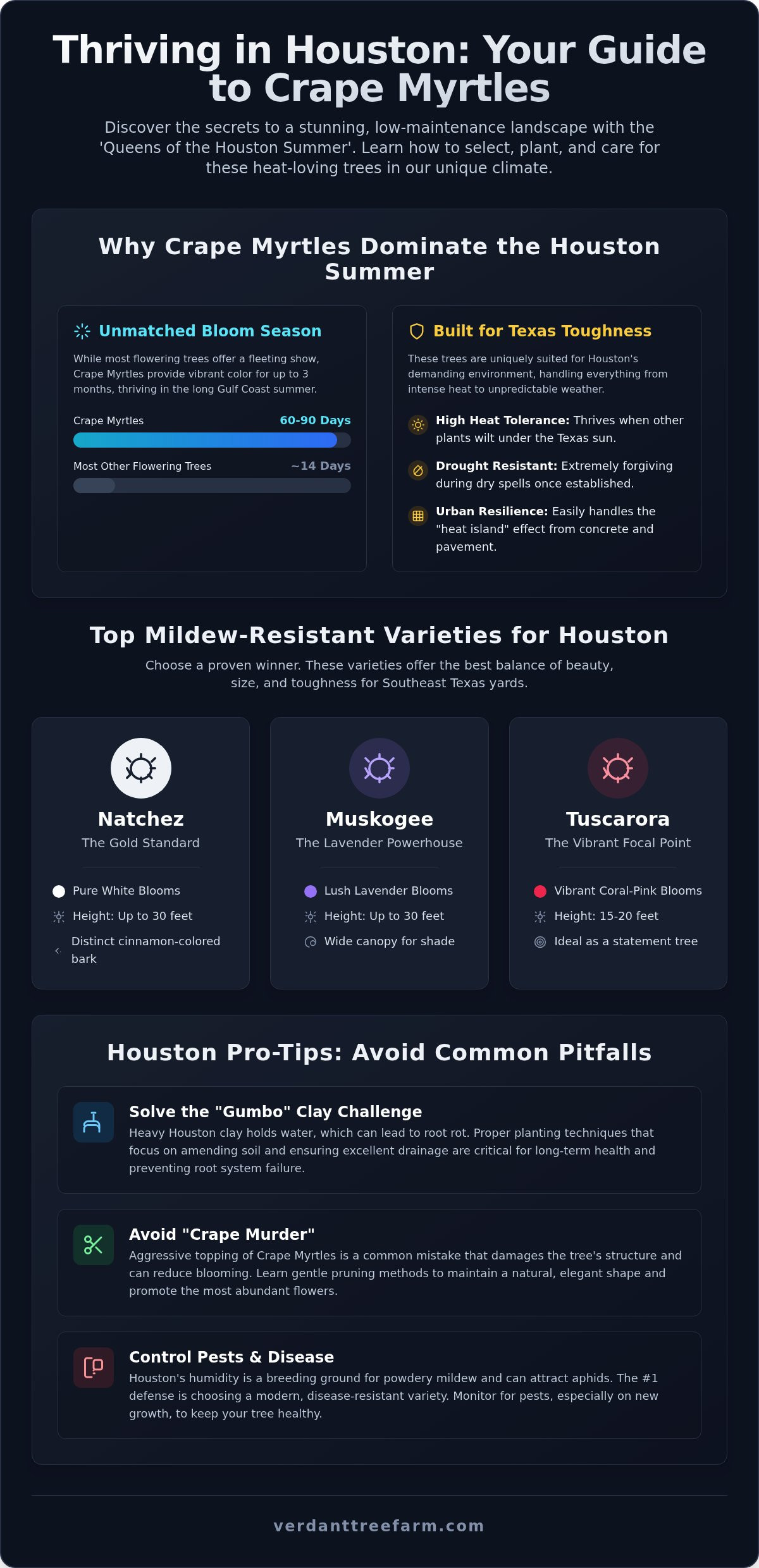
Most flowering trees give you only two weeks of color. Crape Myrtles give you a 60 to 90-day window. In the Gulf Coast region, our long summers mean more time for these trees to shine. Our high humidity actually helps. It prevents the delicate petals from drying out too quickly, which lets the colors stay deep and saturated. The “crepe” texture of the petals is more than just a pretty feature. These thin, crinkled surfaces increase the surface area of the bloom. This helps with heat dissipation and keeps the flower healthy in 100-degree weather. Varieties like the Natchez Crape Myrtle Houston homeowners prefer can stay in bloom well into September.
Drought Tolerance and Urban Resilience
Houston yards often face the “heat island” effect. Concrete driveways and brick walls trap heat, which makes suburban environments even hotter than the surrounding countryside. Crape Myrtles handle this environmental stress with ease. Once their root systems are established, they are incredibly drought resistant. If you compare them to other popular local choices like Little Gem Magnolias, Crape Myrtles are much more forgiving during a dry July. While a Magnolia might drop leaves or show scorched edges, a well-placed Crape Myrtle keeps its composure. They also show remarkable resilience after extreme weather events common in Southeast Texas. They recover from heavy winds and temporary flooding better than many delicate ornamental species. They’re truly built for the unpredictability of our regional climate.
Top Crape Myrtle Varieties for Houston Landscapes
Choosing the right variety isn’t just about picking a favorite color. It’s about survival. Houston’s 90 percent humidity is a breeding ground for fungus. If you pick a variety without high mildew resistance, your summer display will suffer. At Verdant, we focus on the “Big Four” because they’ve proven their resilience in our local environment. These varieties offer the best balance of beauty and toughness for Southeast Texas yards. Whether you need a 30-foot shade provider or a smaller focal point, there’s a specific tree for your space.
Size is the most common mistake homeowners make. A tree that looks small in a nursery pot can easily reach the roofline of a two-story house in a few years. You also need to consider your home’s exterior palette. White blooms offer a crisp, modern look. Lavender and coral provide a softer, more traditional aesthetic. Matching the bloom color to your brick or siding ensures your landscaping adds maximum value to your property.
The ‘Natchez’ and ‘Muskogee’ Standard
The Natchez Crape Myrtle Houston homeowners choose most often is a true powerhouse. It’s famous for its pure white flowers and spectacular exfoliating bark. When you look at Natchez Crape Myrtle characteristics, you’ll see it’s a hybrid specifically bred for disease resistance. It reaches 30 feet easily. This makes it perfect for providing shade or lining a long driveway. Muskogee is its lavender counterpart. It grows just as tall but offers a slightly different canopy shape. Both provide excellent resistance to local pests and the powdery mildew that plagues older, non-hybrid varieties. Their wide canopies create a natural ceiling for outdoor living spaces.
Vibrant Alternatives: Tuscarora and Basham Party Pink
If you want a splash of color, Tuscarora is the answer. Its coral-pink blooms are intense and vibrant. It’s a bit smaller than the Natchez, usually topping out around 15 to 20 feet. This makes it a great focal point for smaller suburban lots where space is at a premium. For those who want a local legend, Basham Party Pink is a standout. It’s a Texas native variety known for its massive trunks and soft pink flowers. While the Tuscarora provides a steady, moderate growth rate, the Basham Party Pink is known to grow significantly faster, often establishing its height and canopy in just a few seasons. If you’re unsure which size fits your property, you can browse our current inventory to see these specimens in person.
Planting Crape Myrtles in Houston Clay Soil
Success in a Houston garden starts beneath the surface. Our local “gumbo” clay is notorious for trapping water and suffocating roots. This heavy soil poses a significant challenge for many ornamental trees. However, the Natchez Crape Myrtle Houston homeowners favor has proven its grit time and again. Even after the record-breaking freezes of recent years, these trees showed remarkable recovery. While many tropicals and evergreens were lost, most Crape Myrtles pushed new growth from their hardy root systems by late spring. This resilience makes them a smart long-term investment for any local property.
Sunlight is your tree’s primary fuel. For a full canopy of blooms, 6 or more hours of direct light is non-negotiable. If you plant in a shaded corner, you’ll get plenty of green leaves but very few flowers. Timing also matters in Zone 9. While most of the country plants in spring, our mild winters make late fall an ideal time. Planting between October and February allows the tree to establish its root system before the brutal July heat arrives. This head start is the secret to seeing blooms in your very first summer.
Soil Amendments and Drainage Solutions
To beat the clay, we recommend the “mound” planting technique. Instead of burying the root ball deep in a pit of standing water, set it slightly higher than the surrounding grade. This allows excess water to run off rather than sitting around the roots and causing rot. Use a mix of native soil and high-quality compost or expanded shale to backfill. Don’t forget a thick layer of mulch. In August, soil temperatures can soar. A 3-inch layer of hardwood mulch regulates these temperatures and keeps moisture where it belongs. It also prevents weeds from competing with your new tree for nutrients.
Watering During the Establishment Phase
New trees need a “deep soak” rather than a light sprinkle. During the first summer, water your tree two to three times a week depending on rainfall. You want the water to reach 12 inches deep to encourage the roots to grow downward. Watch for yellowing leaves; this can signal overwatering in our humid climate. Conversely, drooping leaves in the afternoon usually mean it’s time for a drink. After the second year, these trees become incredibly drought-tolerant. They fit perfectly into a xeriscaping-friendly landscape that requires minimal supplemental water once established.
For large-caliper specimens, the weight and precision required for planting can be overwhelming for the average homeowner. We highly recommend professional installation to ensure your tree is set at the correct depth and stabilized against Gulf Coast winds. Proper placement today prevents a lifetime of maintenance headaches tomorrow.
Maintenance: Avoiding ‘Crape Murder’ and Managing Pests
Don’t fall for the “Crape Murder” trend that plagues many Houston neighborhoods every February. Topping your trees by cutting large branches back to blunt stubs is the most common mistake local homeowners make. This practice forces the tree to produce weak, spindly shoots that often break under the weight of summer blooms. It also ruins the graceful, natural silhouette of the tree. Proper maintenance should focus on enhancing the plant’s inherent structure rather than fighting against it. A well-maintained Natchez Crape Myrtle Houston specimen will reward you with stronger branches and a more impressive floral display.
Nutrition is the final piece of the maintenance puzzle. While these trees are hardy, a balanced fertilizer application in early spring provides the nutrients needed for vigorous growth. If you want to maximize your landscape’s impact, a second light feeding after the first bloom cycle can often trigger a smaller encore performance in late August. This ensures your yard remains the envy of the block until the first cool front arrives.
Pruning for Beauty and Health
Late winter is the ideal window for pruning before new growth begins. Start by removing the “Three Ds”: dead, damaged, or diseased wood. Next, clear out suckers growing from the base of the trunk to maintain a clean, multi-trunk appearance. You should also cut away any branches that cross or rub against each other, as these wounds invite pests. Thinning the canopy reduces powdery mildew risk by allowing sunlight and wind to reach the interior leaves. This technique also highlights the mottled, cinnamon-colored bark that makes the Natchez variety a structural standout in the winter months.
Managing Fungal Issues in High Humidity
Since 2010, Crape Myrtle Bark Scale has become a significant issue for Southeast Texas gardeners. Look for white or gray felt-like patches on the branches. These pests secrete a sticky honeydew that leads to black sooty mold, which can cover the trunk and leaves. Aphids are another common threat; they cluster on new growth and suck the sap. For fungal issues, powdery mildew is the most frequent offender. It appears as a white, flour-like substance on young leaves and buds. Airflow is your best defense against fungal leaf spot and mildew. If you notice these issues early, organic neem oil or specific systemic treatments can stop the spread. If your current trees are struggling with persistent infestations, you can schedule a maintenance consultation with our experts to find a long-term solution.
The Verdant Advantage: Houston’s Best Crape Myrtle Source
Choosing a tree is a long-term investment in your property’s value and curb appeal. As the largest independent tree nursery in Houston, we provide a selection that big-box retailers simply can’t match. Our massive inventory allows you to hand-pick the exact Natchez Crape Myrtle Houston homeowners trust for spectacular summer displays. We offer everything from manageable 15-gallon containers to mature, large-caliper trees for immediate shade. Our veteran-owned operation stands behind every plant with a 3-month warranty. This guarantee provides the peace of mind you need when planting in our challenging local climate. You aren’t just buying a plant; you’re gaining a partner dedicated to your landscape’s success.
Our business model is built on direct-to-consumer value. By managing our own inventory and internal management structure, we cut out the middleman. This ensures higher quality control and more accessible pricing for our clients. We take immense pride in being a multi-generational enterprise that understands the specific needs of Southeast Texas soil. Whether you are a professional contractor or a first-time homeowner, we maintain the same rigorous standards. Our team is equipped to handle professional installation for large specimens, ensuring they are stabilized and positioned for optimal growth from day one.
Expert Consultations and 3D Design
We believe in getting it right the first time. Our team offers 3D landscape design services to help you visualize how a Natchez Crape Myrtle Houston specimen will look against your home’s architecture. This takes the guesswork out of spacing and color coordination. Every tree in our yard is native-grown. This means they’re already toughened up by our local humidity and heat before they reach your yard. We also provide on-site maintenance consultations. These sessions empower you with the specific knowledge needed to keep your trees thriving. Our goal is to simplify the technical side of horticulture for every homeowner we serve.
Visit Our Houston Farm Today
Experience the difference of a personalized shopping journey at our local farm. We provide a straightforward, “no-haggle” pricing model that ensures you get the best nursery-direct value. You can expect same-day quotes and a team ready to handle projects of any scale. We offer flexible delivery and professional installation scheduling to fit your timeline. We also take pride in supporting those who serve with special military discounts. Our reputation as a regional market leader is built on reliability and quality. Visit us today to find the perfect addition to your Texas landscape.
Build a Vibrant, Heat-Resistant Landscape Today
A thriving Houston yard starts with selecting the right specimens and providing expert care. You now know how to navigate our heavy clay soil and avoid the pruning mistakes that hinder summer blooms. Whether you choose the iconic Natchez Crape Myrtle Houston residents love for its white flowers or a vibrant pink alternative, your success depends on quality stock and proper installation. These trees aren’t just plants; they’re a long-term investment in your property’s beauty and resilience against the Texas heat.
As Houston’s largest independent tree nursery, we take pride in being a veteran-owned and operated partner for our community. We provide the expertise and inventory you need to transform your outdoor space. Every purchase is backed by our 3-month warranty, ensuring you feel confident in your landscape’s future. Our team is ready to help you choose the perfect size for your budget and goals. We offer nursery-direct value that makes professional-grade landscaping accessible to every homeowner.
Visit Verdant Tree Farm today to find your perfect Houston Crape Myrtle! We look forward to helping you grow a show-stopping garden that lasts for generations.
Frequently Asked Questions
What is the best time of year to plant a Crape Myrtle in Houston?
The best time to plant in Houston is from late October through February. Planting during these cooler months allows the root system to establish itself before the intense summer heat arrives. While you can plant year round with careful watering, our local climate favors a dormant season start. This timing ensures your tree is resilient enough to handle its first July without excessive stress.
How fast do Crape Myrtles grow in the Houston area?
Most varieties grow rapidly in our region, often adding 2 to 3 feet of height annually under ideal conditions. The Natchez Crape Myrtle Houston homeowners favor is particularly vigorous and can reach its mature height of 30 feet in about a decade. Factors like soil quality, consistent moisture, and full sun exposure will directly impact how quickly your specific tree establishes its canopy.
Is it too late to fix a tree that has been ‘Crape Murdered’?
You can fix a tree that has been topped, though it requires patience and several seasons of corrective pruning. Start by selecting the strongest new shoots to become main trunks and remove the spindly water sprouts. Over time, these chosen branches will thicken and restore a more natural silhouette. It is much easier to prevent the damage, but we can help you develop a restoration plan through a maintenance consultation.
Why are the leaves on my Houston Crape Myrtle turning black?
Black leaves are typically caused by sooty mold, a fungus that grows on the sticky honeydew left behind by aphids or Crape Myrtle Bark Scale. You must treat the underlying insect infestation to clear up the mold. Washing the leaves with a blast of water or using neem oil can help manage the pests. Once the insects are gone, the black mold will eventually weather away or wash off naturally.
Do I need to water my established Crape Myrtle during a Houston drought?
Established trees still need supplemental water during prolonged Houston droughts or extreme heat waves. While they are drought tolerant once mature, a deep soaking every two weeks during dry spells prevents stress and leaf drop. This occasional deep watering keeps the root system healthy and ensures the tree has enough energy to maintain its bloom cycle. Check the soil moisture four inches deep before watering to avoid over saturation.
Which Crape Myrtle variety has the best peeling bark for winter interest?
The Natchez Crape Myrtle Houston residents prefer is widely considered to have the best peeling bark for winter interest. As the tree matures, its outer bark exfoliates to reveal a smooth, cinnamon colored trunk underneath. This creates a striking architectural look even after the leaves have fallen. Other varieties like Muskogee also offer attractive bark, but the deep reddish brown tones of the Natchez remain the local gold standard.
Can Crape Myrtles grow in partial shade in Houston?
Crape Myrtles can survive in partial shade, but they won’t produce the heavy bloom clusters they are known for. These trees require at least six hours of direct sunlight to maximize flower production. In shaded areas, you may also see more issues with powdery mildew due to decreased airflow and slower leaf drying. If your yard is mostly shaded, consider other flowering options better suited for lower light environments.
How do I get my Crape Myrtle to bloom more than once a year?
You can encourage a second bloom cycle by deadheading or removing spent flower clusters before they turn into seed pods. This practice directs the plant’s energy back into flower production rather than seed development. Combining this with a light application of balanced fertilizer in mid summer often triggers a fresh wave of color. Our native grown stock is specifically acclimated to handle the long growing season required for multiple bloom cycles.