The palm that looks perfect beside a pool may become the one you’re constantly cleaning up after. Choosing the best palms for around a pool in Houston means balancing tropical style with heat and humidity, occasional hard freezes, fallen fruit or fronds, and the space between the trunk, pool coping, and paving.
A good choice should suit Houston weather, fit the planting area as it matures, and have cleanup needs you’re comfortable managing. This guide compares palms by cold tolerance, mature size, maintenance needs, and fit for different yards. You’ll also find practical checks for utilities and planting space. When you’re ready to assess your site, Verdant Tree Farm can help you compare palm choices and consider placement, design, and installation.
Key Takeaways
- Compare the best palms for around a pool in Houston by cold tolerance, mature size, cleanup needs, and available planting space.
- Use species-specific guidance to weigh options such as Sabal, Windmill, Pindo, Mule, and Mediterranean Fan palms.
- Plan for fallen fronds or fruit, and get advice on root behavior before planting close to pool hardscape.
- Map paving, gates, utilities, sightlines, and clear-access areas before settling on a palm’s location.
- Before purchasing, confirm the palm’s identity, mature dimensions, condition, current availability, and warranty terms.
What Makes a Palm a Good Fit Around a Houston Pool?
A poolside palm has to do more than create a tropical look. The best palms for around a pool in Houston balance local climate tolerance, mature height and canopy spread, potential debris, and the room between the pool and nearby features. Palms belong to a diverse plant family, as this overview of the palm family explains, so don’t assume every species grows or performs the same way.
Houston’s heat and humidity support many warm-climate plants, but heavy rain, soils that may drain poorly, and occasional severe freezes can challenge palms. Cold tolerance matters even in a warm city. Check current local guidance for the specific palm you’re considering, and treat hardiness information as a guide rather than a guarantee for your property.
Which poolside conditions matter most in Houston?
Start by assessing the site. Note how many hours of direct sun the planting area receives, where rainwater collects, how irrigation reaches the root zone, and whether strong winds funnel through the yard. Check the pool coping, deck edges, fences, buildings, and overhead clearance. These details will help you determine whether a palm can grow without crowding access or structures.
Also consider how close the planting area is to the water and paved surfaces. A palm that fits an open lawn may not suit a narrow bed beside the pool. Confirm the mature dimensions and care needs of the exact species before deciding.
How can palms affect pool cleanup and usable space?
Cleanup varies by species, age, and growing conditions. Before choosing, check whether the palm produces fruit and how its fronds shed. Don’t rely on a broad label such as “low maintenance” to predict what may land in the pool. Ask for species-specific guidance about debris and routine care.
Plan for the canopy as well as the trunk. Shade may make seating more comfortable, but a canopy over swimming or gathering areas can affect light and add cleanup. Leave room for mature growth rather than judging the fit by nursery size. A simple site sketch can help you compare the palm’s expected footprint with the deck, seating, gates, and clear paths.
- Check the growing conditions: sun, drainage, irrigation, and wind exposure.
- Measure the available space: include coping, paving, fences, and overhead clearance.
- Verify species traits: cold tolerance, mature size, fruiting, frond drop, and care.
Which Houston Poolside Palms Deserve a Place on Your Shortlist?
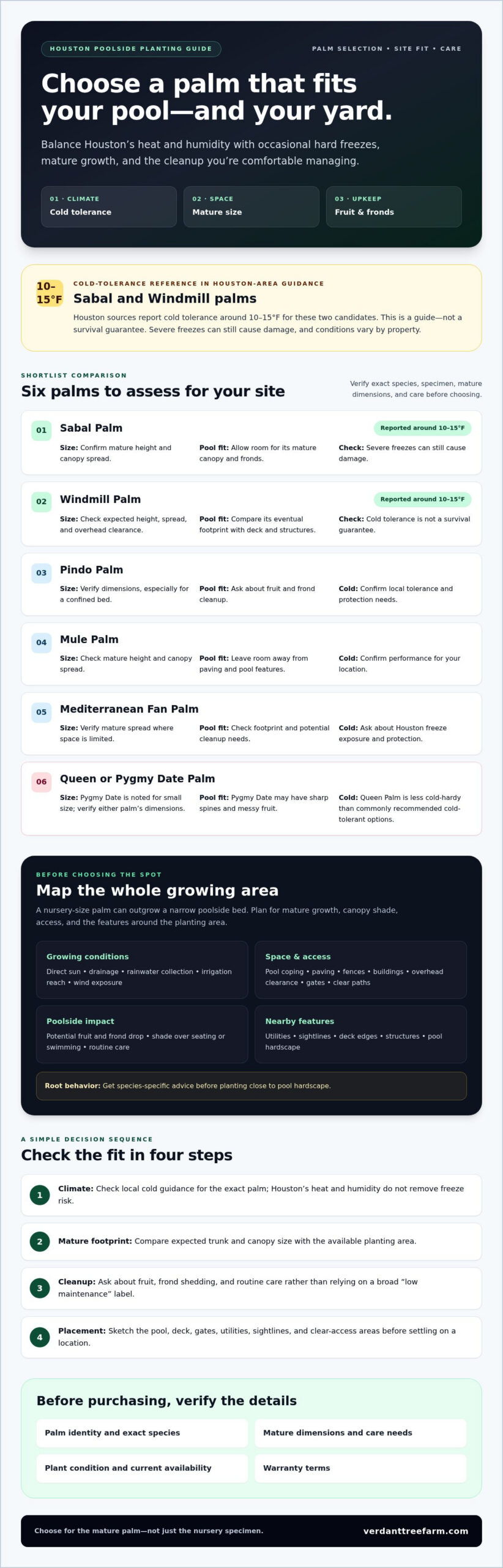
The best palms for around a pool in Houston depend as much on your site as on the species. Use this comparison to narrow your options, then confirm the mature dimensions and care requirements of the exact palm before placing it near a deck, fence, or pool structure.
| Candidate | Mature-size check | Cold-risk check | Poolside consideration |
|---|---|---|---|
| Sabal Palm | Confirm mature height and canopy spread for the species and specimen. | Houston sources report cold tolerance around 10-15°F, but severe freezes can still cause damage. | Consider it where there’s room for its mature canopy and fronds. |
| Windmill Palm | Check expected height and spread, including overhead clearance. | Houston-area palm guidance places cold tolerance around 10-15°F. That is not a survival guarantee. | Compare its eventual footprint with the deck and nearby structures. |
| Pindo Palm | Verify mature dimensions before choosing it for a confined planting bed. | Confirm local cold tolerance and protection needs for the specific plant. | Ask about species-specific fruit and frond cleanup. |
| Mule Palm | Check mature height and canopy spread against available clearance. | Confirm cold performance for your location rather than assuming it matches other palms. | Allow room for mature growth away from paving and pool features. |
| Mediterranean Fan Palm | Verify mature spread, particularly where space is limited. | Ask for Houston-specific guidance on freeze exposure and protection. | Check the planting area’s footprint and potential cleanup needs. |
| Queen or Pygmy Date Palm | Pygmy Date Palm is noted for its small size; verify the mature dimensions of either choice. | Queen Palm is less cold-hardy than commonly recommended cold-tolerant options. Confirm site risk. | Pygmy Date Palm may have sharp spines and messy fruit. Weigh that carefully near a pool. |
Which candidates may suit different pool layouts?
For a tight yard, check the Pygmy Date Palm’s mature footprint, but account for its spines and fruit. Larger palms need room for both trunk and canopy, plus clear access around the pool. Cultivar, growing conditions, and maintenance can affect the practical fit, so compare verified dimensions rather than choosing by nursery size alone.
How should cold sensitivity shape the shortlist?
Cold-tolerant doesn’t mean freeze-proof. Rosehill Palms and Sabal Palms Houston cite tolerance around 10-15°F for Windmill and Sabal palms, but exposure and freeze duration still matter. For Texas-specific care considerations, review Palm tree care in Texas. Sago Palm is a cycad, not a true palm, and all parts are highly toxic if ingested by people or pets. Keep it off a family-pool shortlist where accidental access is a concern.
For broader species comparisons and help matching a palm to your pool layout, explore Verdant Tree Farm’s palm selection. Confirm current availability and site suitability before choosing.
How Do Poolside Palms Compare on Cleanup, Roots, and Maintenance?
A palm’s maintenance needs go beyond watering and cold protection. Near a pool, flowers, fruit, and shedding fronds can mean extra skimming or sweeping. Planting distance and root-zone space also affect how well the palm fits beside hardscape. The best palms for around a pool in Houston are not automatically the tidiest, so compare verified traits for the exact species and site.
Which palm traits can reduce pool cleanup?
Before choosing, ask how the shortlisted palm sheds and whether it produces flowers or fruit that could fall into the water or onto seating areas. These traits vary by species, and growing conditions can affect what you see in your yard. Request species-specific guidance rather than relying on a broad “low-litter” description.
Consider where debris would land. A fruiting palm may be a better fit away from the pool edge and high-traffic seating. A shedding canopy may be less disruptive if it doesn’t hang over the water. No palm should be treated as maintenance-free. Pruning should follow the species’ care needs and safe professional practices. Avoid climbing or cutting fronds without the proper experience and equipment.
What should homeowners know about roots and pool hardscape?
Palm roots are often described as fibrous and non-invasive, but that general description is not a site assessment or a promise that nearby hardscape can’t be affected. Species, planting distance, soil, drainage, and existing conditions all matter. Ask a qualified local professional to evaluate the proposed spot in relation to the pool structure, deck, and underground utilities.
Use reliable references to confirm the mature root-zone expectations and canopy dimensions for the species. Don’t estimate planting clearance from the size of the nursery specimen. A palm needs room to establish and grow, and the planting plan should account for both the canopy above ground and site features below it.
Does a saltwater pool change the choice?
A saltwater pool can change the exposure a palm experiences, but don’t assume a species is suitable just because it grows in a warm climate. Consider where splash or windblown pool water reaches, then confirm the candidate’s tolerance with a reliable horticultural source or local professional. Make the same check for irrigation and drainage near the pool.
- Verify cleanup traits: fruit, flowers, and frond shedding for the specific palm.
- Assess the site: planting distance, hardscape, drainage, utilities, and pool-water exposure.
- Plan care: confirm appropriate pruning and ongoing maintenance before planting.
How Should You Plan Palm Placement Around a Houston Pool?
A good placement plan starts with measurements, not a palm purchase. Map the pool and surrounding yard, compare candidates’ verified mature dimensions with the available space, assess site conditions, and then decide which species fits. This order can help prevent a palm from crowding the coping, blocking a gate, or growing into a sightline you want to keep open.
What should you measure before choosing a planting spot?
Sketch the pool, planting beds, deck edges, walls, fences, gates, and paths. Mark underground utilities and note overhead obstructions that could limit future growth. Measure the bed’s width and each proposed planting point’s distance from pool coping and nearby structures. Before digging, confirm the location of buried services with the appropriate utility-marking service.
Record how sun and wind vary across the yard. Note where rainwater collects, how irrigation reaches the planting area, and whether runoff flows toward the pool. Then compare these observations with reliable mature-height and spread information for the exact species. A palm that fits the bed as a nursery plant may not fit once its canopy develops.
When should you ask for local design or installation help?
Get local input if the planting area is tight, you’re planning several palms, or drainage and soil conditions are unclear. Professional review is also sensible near a pool structure or underground service. A landscape plan can coordinate palm locations with seating, paths, gates, and sightlines while accounting for mature growth.
Verdant Tree Farm offers 3D landscape design, professional installation, and maintenance consultations. Its Houston landscaping services can help you understand the available support. Confirm which options suit your project and site. A local review can also help you compare species and placement before you commit.
- Map: pool, coping, paving, gates, paths, seating, and sightlines.
- Measure: planting-bed width, clearance from structures, and overhead space.
- Assess: sun, wind, drainage, irrigation, and underground utilities.
- Confirm: species identity, mature dimensions, and site suitability before planting.
For help matching a palm to your pool layout, discuss your palm placement plan with Verdant Tree Farm.
How Can You Choose and Source the Right Poolside Palm in Houston?
Once you’ve narrowed your shortlist, compare it with your actual pool layout and care expectations. The best palms for around a pool in Houston should suit local freeze exposure, fit their mature planting space, and have cleanup needs you’re comfortable managing. A palm’s appearance at the nursery is only one part of the decision.
Use this checklist before you buy:
- Climate fit: Ask how the species handles Houston conditions and the freeze exposure at your property.
- Mature size: Confirm expected height and spread for the exact species or cultivar, then compare them with your measured space.
- Poolside upkeep: Ask about fruit, flowers, frond shedding, irrigation, and ongoing care.
- Planting location: Check clearance from coping, paving, fences, structures, utilities, and overhead obstacles.
- Plant condition: Inspect the palm and confirm its identity before purchase.
What questions should you ask a Houston palm nursery?
Bring a site sketch or photos and ask which palms may suit your space and expected freeze exposure. Confirm mature dimensions, maintenance needs, and potential debris or placement concerns near the pool. Before committing, verify the species identity, current availability, and condition of the specific plant. Ask whether professional installation is available for your project and review any warranty terms directly, including what they apply to.
These questions help distinguish a palm that looks right today from one that fits the site as it grows. If you’re comparing candidates, ask for guidance on each species rather than assuming similar-looking palms share the same cold tolerance or care needs.
How can local design and installation support simplify the project?
Design support can connect the palm choice to access, sightlines, seating, and the rest of the pool layout. It may be useful for tight planting areas or projects with multiple palms, but it isn’t required for every homeowner. Verdant Tree Farm offers palm inventory, 3D landscape design, professional installation, and maintenance consultations. Confirm current availability and site suitability before selecting a palm or arranging installation.
After you’ve measured the space and narrowed your shortlist, Talk with Verdant Tree Farm about your Houston poolside palm plan.
Choose a Palm That Fits Your Pool and Your Yard
The best palms for around a pool in Houston balance cold tolerance with mature size, cleanup needs, and the space available beside paving and pool structures. A palm’s nursery size is only a starting point. Confirm the exact species’ mature dimensions, care requirements, and fit for your site before choosing.
Compare your shortlist with conditions in your yard, including drainage, sun exposure, and the amount of freeze protection a candidate may need. Check the plant’s identity and condition, current availability, and warranty terms before purchase. These steps keep the long-term layout in view.
Verdant Tree Farm is a veteran-owned, independent Houston-area nursery with palm inventory, professional installation, and 3D landscape design. To get help weighing options against your pool layout, discuss your Houston poolside palm project with Verdant Tree Farm. Careful planning and local guidance can help you create a poolside landscape that suits your home and has room to grow.
Frequently Asked Questions
What is the best palm to plant around a pool in Houston?
There isn’t one best palm for every Houston pool. The right choice depends on freeze exposure, space, and cleanup preferences. Sabal and Windmill palms are candidates often considered for their cold tolerance, while Pindo, Mule, and Mediterranean Fan palms may suit other site conditions. Compare verified mature dimensions and maintenance needs for the exact species, then match them to your pool layout.
Can palm trees damage a swimming pool or deck?
They can create problems if planted too close or in a poorly suited location, but damage isn’t inevitable. Palm roots vary, and hardscape risk depends on the species, planting distance, soil, drainage, and existing conditions. Don’t rely on blanket claims that palm roots never cause issues. Before planting near a pool structure, deck, or underground utility, have the proposed location assessed by a qualified local professional.
Which palm trees are cold hardy enough for Houston?
Windmill and Sabal palms are among the more cold-tolerant candidates commonly considered for Houston. Rosehill Palms reports that cold-hardy palms such as these may tolerate temperatures around 10-15°F, but that range doesn’t guarantee survival in a severe freeze. Exposure, duration of cold, plant condition, and care can affect outcomes. Check current local guidance and ask about protection needs for the specific palm and your property.
Do palm trees around a pool create a lot of mess?
Cleanup depends on the palm and where it’s planted. Fruit, flowers, and shedding fronds can end up in pool water, on paving, or around seating. Before buying, ask for species-specific information about fruiting and frond drop, then position potential debris away from high-use areas where possible. No palm is maintenance-free, and pruning should follow appropriate care guidance and safe practices.
How far should a palm tree be planted from a pool?
There isn’t one reliable distance for every palm and pool. Measure from the coping, deck, walls, and fences, then compare the available space with verified mature height and canopy spread for the exact species. Consider underground utilities, overhead clearance, and access paths too. If the planting spot is close to the pool structure or a service line, ask a qualified local professional to assess placement before digging.
Are palm trees suitable for a saltwater pool?
Some palms may tolerate the conditions around a saltwater pool, but don’t assume a species is suitable based on its general climate fit. Consider how much splash or windblown water reaches the planting area, along with drainage and irrigation. Confirm salt exposure tolerance for the exact palm with a reliable horticultural source or local professional. Placement that limits direct exposure may also be worth discussing.
Is a Sago Palm a true palm, and is it safe around pets?
No. A Sago Palm is a cycad, not a true palm, and it isn’t safe around pets. All parts of the plant are highly toxic to people and animals if ingested. For a family pool area where pets may roam or plant material could be accessible, consider a different candidate. Confirm plant identity before purchase, since common names can cause confusion.