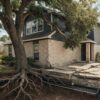
Why does your Houston yard seem to thrive in April only to struggle by August? It’s a cycle many neighbors know too well. You invest in beautiful palms and oaks, only to watch them succumb to the next “once-in-a-century” freeze or a 12-inch rainfall deficit like we saw in 2025. It’s frustrating when your hard work and money wash away in the next heavy downpour because of that stubborn “Houston Gumbo” clay soil.
We agree that your home deserves a landscape as resilient as it is beautiful. This guide focuses on avoiding common landscaping mistakes in Houston by matching nursery-direct, hardy species to our unique Gulf Coast environment. You’ll learn how to leverage new Texas laws like House Bill 517 to protect your right to a drought-tolerant yard while increasing your property value by up to 15%.
We will walk you through managing poor drainage, selecting the right trees like the Drummond Red Maple or Windmill Palm, and planning a yard that survives everything from summer droughts to sudden winter freezes.
Key Takeaways
- Identify why Houston’s “Gumbeaux” clay soil requires specialized drainage planning to keep roots healthy during our extreme weather cycles.
- Learn the secret to avoiding common landscaping mistakes in Houston by prioritizing climate-resilient species over the short-lived options found at generic big-box stores.
- Master the technical installation details, including proper root flare depth and first-year watering schedules, that determine the long-term survival of your trees.
- Explore how to integrate drainage solutions early in the design phase to prevent water damage to your property and landscape investment.
- Discover the financial and health benefits of buying direct from a local tree farm to ensure you receive hardy, acclimated plants.
The Houston Climate Challenge: Why Standard Landscaping Fails Here
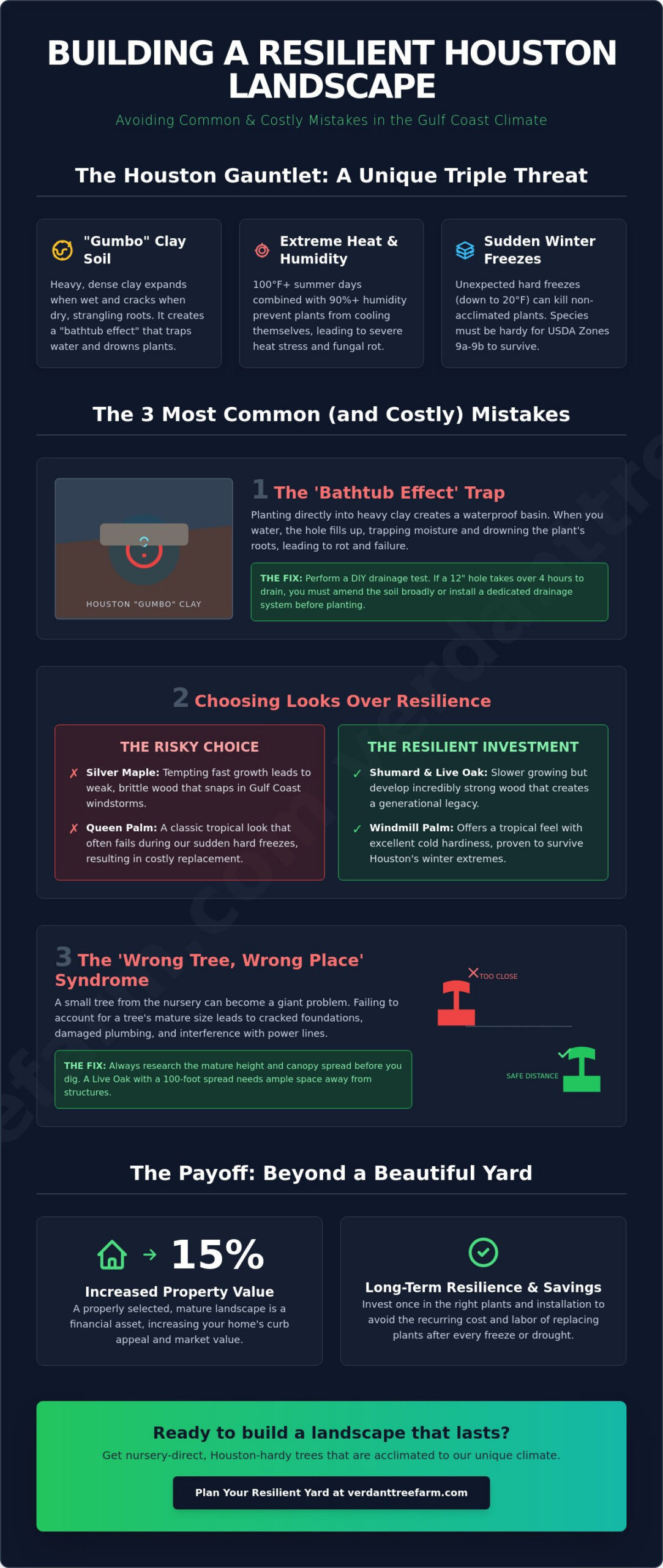
Houston’s environment is a paradox. It’s often too wet or too dry, but rarely just right for standard nursery plants. Successful yards start with understanding the ground beneath your feet. Avoiding common landscaping mistakes in Houston begins with acknowledging our “Gumbeaux” clay soil. This heavy, dense material expands when wet and shrinks when dry, creating a physical tug-of-war on young root systems. During the 12-inch rainfall deficit we experienced in 2025, many homeowners watched their soil pull away from root balls, leaving plants vulnerable to extreme heat stress.
Our weather isn’t just hot; it’s volatile. We face 100-degree summer afternoons followed by high humidity that prevents plants from cooling themselves through transpiration. This is why a species that thrives in the dry heat of El Paso might rot in the Bayou City. By following sustainable landscaping principles, you can design a yard that works with these extremes rather than fighting them. You must also account for micro-climates. A south-facing brick wall can become a “scorch zone” that reflects heat, while a low spot near a fence might remain a “swamp zone” for days after a thunderstorm.
Understanding Houston’s Heavy Clay Soil
Clay soil is composed of tiny, flat particles that pack together tightly. When you dig a hole in this “gumbo” and fill it with loose potting soil, you often create the “bathtub effect.” The surrounding clay acts as a waterproof basin, trapping water around the roots and literally drowning the plant. To check your yard’s health, perform a simple DIY drainage test. Dig a hole 12 inches deep, fill it with water, and let it drain completely. Fill it again and track how long it takes to empty. If it takes longer than four hours, you have a drainage issue that must be addressed before planting expensive trees.
The Boom-and-Bust Cycle: Droughts vs. Hard Freezes
Many homeowners make the mistake of planting only for the heat. While a palm might survive a 100-degree July, it could fail during a sudden February freeze. Recent winters have taught us that resilience is about balance. Native and acclimated species like the Live Oak or the Drummond Red Maple have proven their ability to bounce back from these temperature swings. Houston sits in the transition between USDA Hardiness Zones 9a and 9b, where plants must withstand average annual minimum temperatures between 20 and 30 degrees Fahrenheit. Choosing plants that only handle heat without considering these cold snaps is a recipe for a costly replacement project next spring.
Selection Errors: Planting for Aesthetics Instead of Resilience
A beautiful plant in a nursery pot doesn’t always translate to a thriving yard three years later. Many homeowners fall into the trap of buying what looks best on a Saturday morning without considering the long-term biological needs of the species. It’s a costly mistake. Retailers often stock inventory that looks vibrant in a climate-controlled greenhouse but lacks the cellular strength to handle our 90% humidity and heavy clay. One of the most effective ways of avoiding common landscaping mistakes in Houston is to prioritize structural integrity and climate resilience over immediate visual gratification.
Fast-growing trees are particularly tempting, but they often come with a hidden price. The “Silver Maple” mistake is a classic example. These trees grow quickly, but their wood is brittle and prone to snapping during Gulf Coast windstorms. Instead, choosing slower-growing, sturdy options like a Shumard Oak or a Live Oak ensures your investment stands for generations. Similarly, over-relying on non-native palms like the Queen Palm can lead to heartbreak during a hard freeze. Prioritizing Landscaping with Houston native plants provides a natural defense against local pests and weather extremes.
The ‘Wrong Tree, Wrong Place’ Syndrome
Size matters more than most people realize during the planting phase. A Live Oak is iconic, but its mature canopy can reach a 100-foot spread. Planting one ten feet from your foundation will eventually lead to cracked concrete and plumbing issues. You must calculate the mature radius of a tree before you dig. Proper spacing prevents power line interference and saves you from the expense of aggressive pruning later. If you have a smaller urban lot, avoid these five species that often cause more trouble than they’re worth in tight spaces:
- Silver Maple: Brittle wood and invasive surface roots.
- Weeping Willow: Thirsty roots that seek out sewer lines.
- Arizona Ash: Highly susceptible to borers and short-lived in our climate.
- Cottonwood: Extremely messy and prone to storm damage.
- Hackberry: Weak structure and prone to “leaf nipple gall” insects.
Acclimation Matters: Why Local Nursery Stock Wins
There is a massive difference between “Texas-grown” and “Houston-hardy” inventory. A tree raised in the dry, rocky soil of the Hill Country will struggle when moved to our humid, heavy clay. At Verdant Tree Farm, we select and grow species specifically acclimated to the Gulf Coast environment. This local acclimation means the plant is already adjusted to our specific fungal pressures and soil chemistry. If you want a yard that survives the next decade of weather swings, start by choosing a nursery-direct partner who understands the unique demands of Bayou City soil.
Installation Pitfalls: How Poor Planting Kills Your Investment
You have selected a beautiful, acclimated tree from a local farm, but the work has just begun. Even the hardiest Live Oak or Drummond Red Maple can fail within months if the physical installation is handled incorrectly. In fact, more trees die from poor planting techniques than from pests or diseases combined. A major part of avoiding common landscaping mistakes in Houston involves moving beyond the “dig a hole and drop it in” mentality. Precision during the first hour a tree spends in the ground determines its health for the next decade.
One frequent error is failing to remove nursery debris. Leaving wire baskets, nylon twine, or burlap intact might seem harmless, but these materials eventually girdle the roots and trunk as the tree grows. This restriction cuts off the flow of nutrients and water, leading to a slow, mysterious decline. Another common sight in Houston neighborhoods is the “mulch volcano.” Piling mulch high against the trunk traps moisture against the bark. This promotes fungal rot and provides a bridge for wood-boring insects to enter the tree. Proper mulching should look like a donut, not a mountain, with a clear gap around the base of the trunk.
The Technical Side of Professional Tree Installation
The most critical technical detail is the placement of the root flare. This is the area where the first main roots branch off from the trunk. This flare must always be visible at or slightly above the soil line. If you bury the flare, you suffocate the tree’s gas exchange system. When working with our heavy clay, we often recommend planting the tree slightly high, perhaps two inches above grade, to account for settling and to ensure better oxygen access. Staking is also vital in our high-wind environment. Use flexible ties that allow the tree to sway slightly, which encourages the development of “reaction wood” and a stronger trunk. If the stakes are too rigid, the tree won’t build the necessary strength to stand on its own once the supports are removed.
Post-Planting Shock and How to Prevent It
Transplant shock is an expected part of the process, but it shouldn’t be fatal. Your new investment needs a dedicated deep-soak watering routine for the first 90 days. A light sprinkle with a garden hose isn’t enough to reach the bottom of the root ball in dense soil. You want slow, consistent moisture that encourages roots to move out of their nursery soil and into the surrounding clay. Watch for signs of shock, such as wilting or premature leaf drop, which often look like disease but are actually cries for more consistent hydration. To provide peace of mind during this delicate phase, many homeowners opt for a professional tree warranty. This ensures that if the tree fails despite your best efforts, your financial investment remains protected while the plant establishes itself in its new home.
Design and Layout Mistakes: Thinking Small in a Big Space
Designing a functional landscape is about much more than picking out pretty flowers. It’s about treating your outdoor space as a structural extension of your home. Avoiding common landscaping mistakes in Houston often requires you to think about technical infrastructure before the first tree arrives. If you don’t integrate drainage solutions like French drains or rain gardens during the layout phase, you’re setting your plants up for root rot during the next tropical downpour. A beautiful yard that holds standing water for three days isn’t just an eyesore; it’s a liability for your property’s foundation.
One of the most overlooked design errors is monoculture planting. Filling your entire yard with only one species, like an long row of identical hollies, is a recipe for disaster. If a specific pest or blight hits that species, you can lose your entire investment at once. Diversity creates resilience. You should also consider the “view from the window” rather than just designing for the street. You spend more time looking at your yard from your kitchen or living room than from the sidewalk. A well-planned layout ensures that your Drummond Red Maple or Natchez Crape Myrtle is perfectly framed by your windows, providing year-round enjoyment from the inside out.
Inefficient Irrigation and Water Waste
Irrigation is another area where “standard” advice fails in the Bayou City. Many homeowners rely on “set it and forget it” timers that lead to massive overwatering during our high-humidity months. This doesn’t just waste money; it encourages fungal growth and shallow root systems. Drip irrigation is a far better choice for Houston shrubs and flower beds because it delivers water directly to the soil, reducing evaporation and leaf moisture. By grouping plants with similar hydration needs, a practice known as hydro-zoning, you ensure that your drought-tolerant Desert Willow isn’t drowning while your Little Gem Magnolia gets the deep soak it requires.
Visual Imbalance and Scale Issues
Modern Houston architecture often features tall, imposing walls that can make small plants look insignificant. Visual imbalance happens when the scale of your landscaping doesn’t match the scale of your house. To fix this, you need to layer heights to create depth, especially in narrow suburban lots. Start with taller background trees like the Loblolly Pine or Cedar Elm and work your way down to smaller ornamental pieces like the Texas Mountain Laurel. Using 3D Landscape Design allows you to see the future of your yard before you dig, helping you visualize how the canopy will fill the space over the next decade. If you’re ready to stop guessing and start growing, our team is here to help with professional design and installation services tailored to your specific property.
Building a Legacy Landscape: The Professional Approach
Building a legacy in your backyard means moving beyond the cycle of replacing dead shrubs every spring. A resilient yard is a long-term investment in your property’s future. By avoiding common landscaping mistakes in Houston, you transition from temporary seasonal fixes to a strategy that builds real equity. Data shows that a professionally designed and maintained landscape can increase a home’s value by up to 15%. This isn’t just about curb appeal; it’s about creating a living asset that matures and improves year after year.
Working with a professional team provides a level of accountability that big-box retailers simply cannot match. Our veteran-owned operation prioritizes reliability and local expertise because we understand that our reputation is rooted in your success. We don’t just sell trees; we provide the technical knowledge required to ensure they thrive in our challenging Gulf Coast environment. Moving from a DIY approach to professional guidance saves you from the expensive trial-and-error that often follows a single hard freeze or a summer drought.
Why Nursery-Direct Inventory Wins
The health of a tree begins long before it reaches your yard. Boutique nurseries often source plants from industrial farms where they are treated as commodities rather than living investments. Buying direct from a local tree farm ensures that your inventory has been acclimated to Houston’s humidity and soil from day one. This direct-to-consumer model provides better root health and lower prices by eliminating the middleman. You also gain access to specialty varieties that retail stores rarely carry, such as hybrid Oaks or Medjool Date Palms. When you inspect a tree at the nursery, look for a firm root ball and a clear, undamaged root flare. Avoid any specimen with circling roots or bark damage, as these are signs of poor long-term structural integrity.
Taking the Next Step: Professional Design and Install
The most effective way to prevent layout errors is to see them before they happen. Our 3D landscape design services allow you to visualize the mature height and spread of every Cedar Elm or Little Gem Magnolia before a single shovel hits the dirt. This technology ensures that your drainage solutions, irrigation zones, and plant placements are technically sound. Once the plan is set, our professional installation team handles the heavy lifting, ensuring every tree is positioned for maximum health. If your current yard is struggling, you can schedule a maintenance consultation to audit your soil health and drainage. Don’t leave your property’s value to chance. Book your 3D landscape design consultation today and start building a landscape that lasts for generations.
Transform Your Houston Property into a Resilient Oasis
Your yard is more than just curb appeal; it’s a long-term investment in your home’s legacy. We have covered how matching the right species to our “Gumbeaux” soil and volatile weather creates a landscape that stands the test of time. By avoiding common landscaping mistakes in Houston, such as planting too deep or neglecting drainage infrastructure, you protect your property from the high costs of replanting after every extreme season.
As the largest independent tree nursery in Houston, we provide the nursery-direct inventory and local expertise you need to succeed. Our veteran-owned and operated team stands behind every project, offering a 3-month warranty on all professional installations to ensure your new trees establish a strong foundation. It’s time to stop guessing and start growing with confidence. Start Your Dream Landscape: Browse Houston’s Largest Tree Inventory today. We are ready to help you build a thriving, beautiful landscape that your family will enjoy for generations.
Frequently Asked Questions
What are the biggest landscaping mistakes to avoid in Houston’s clay soil?
The most damaging mistakes in our “Gumbeaux” clay are planting root balls too deep and failing to account for the “bathtub effect.” When you dig a hole in heavy clay without proper drainage, it acts as a waterproof basin that traps water and suffocates the roots. Always ensure the root flare is visible above the soil line. This is a critical step in avoiding common landscaping mistakes in Houston and ensuring your investment survives the next heavy rain cycle.
How often should I water newly planted trees in Houston?
Newly planted trees require a deep soak every day for the first two weeks, followed by three times a week for the next three months. A light sprinkle with a garden hose isn’t enough to reach the bottom of the root ball in dense soil. You should apply approximately five to ten gallons of water per inch of trunk diameter during each session. Consistency during this initial 90-day establishment period is the difference between a thriving tree and a dead one.
Can I plant palm trees in Houston despite the winter freezes?
You can absolutely enjoy a tropical look if you select cold-hardy species like the Windmill Palm, Sabal Palm, or Pindo Palm. These varieties are better equipped to handle our USDA Zone 9a/9b winter dips than the common but fragile Queen Palm. While extreme freezes still require temporary protection, choosing acclimated, nursery-direct palms significantly reduces your risk of loss. Always verify the specific hardiness rating of a palm before you commit to a purchase.
Is it better to plant in the spring or fall in Southeast Texas?
Fall is the ideal time to plant in the Bayou City because it allows root systems to establish in cooler temperatures before the summer heat arrives. Planting between October and February gives trees like the Shumard Oak or Cedar Elm months of low-stress growth. While spring planting is successful, it requires a much more rigorous watering schedule to help the plant survive its first 100-degree July. Fall planting simply gives your landscape a head start on resilience.
Why is my tree dying even though I water it every day?
Daily watering can actually kill a tree if the soil doesn’t drain, leading to root rot and fungal issues. If your tree is sitting in a “bathtub” of saturated clay, the roots cannot access the oxygen they need to survive. Check the soil moisture four inches below the surface; if it feels muddy or smells sour, you’re overwatering. Alternatively, a tree planted too deep will suffer from bark rot at the base, which often mimics the signs of drought. For complex health concerns, professional arborist services like We Love Trees can provide the diagnostic expertise needed to save a mature specimen.
What are the best low-maintenance trees for a small Houston yard?
For smaller urban lots, the Little Gem Magnolia and Texas Redbud are excellent low-maintenance choices that won’t outgrow their space. These species offer beautiful blooms and manageable root systems that stay away from your foundation. The Vitex and the Desert Willow also provide vibrant color and exceptional drought tolerance with very little pruning required. These selections provide the visual impact of a larger landscape while fitting perfectly into the tighter dimensions of modern suburban developments.
How do I fix drainage issues in my backyard before landscaping?
Fixing drainage starts with professional grading to direct water away from your home and toward the street or storm drains. You may need to install French drains or catch basins in low spots where water naturally pools after a storm. Integrating these technical solutions before you plant is vital for avoiding common landscaping mistakes in Houston. A well-placed Bald Cypress can also help manage moisture in areas that tend to stay damp, as they naturally thrive in wetter conditions.
Does professional landscaping really increase Houston home values?
Professional landscaping can increase a property’s value by up to 15% according to regional real estate data. A well-designed yard with mature trees like Live Oaks or Drake Elms provides immediate curb appeal and significant long-term financial ROI. Beyond the property value, a resilient landscape reduces your home’s cooling costs by providing natural shade during our intense summers. It’s a smart, direct investment that pays dividends in both property equity and your daily quality of life.