More fertilizer isn’t always better for a new tree. Start with a 2- to 4-inch layer of mulch, keeping it away from the trunk, and water according to soil moisture and weather. These aftercare instructions for new trees also cover what to prune and when fertilizer may help, so you can support establishment without adding unnecessary work.
After planting, it’s natural to focus on watering and feeding, but steady care matters more than extra products. New trees typically don’t need fertilizer unless a soil test shows a deficiency. Learn how to apply mulch, check when to water, protect healthy growth with careful pruning, and decide whether fertilizer is appropriate. These steps give your tree a practical start as it adjusts to its new site.
Key Takeaways
- Spread mulch in an even layer, but leave a clear gap around the trunk to protect it and the trunk flare.
- Water based on soil moisture and local weather; the root ball’s dryness can help guide when it’s time to water.
- Keep healthy foliage after planting, and limit initial pruning to dead or broken branches.
- Hold off on fertilizer unless a soil test indicates a deficiency; extra nutrients aren’t automatically helpful.
1. Keeping mulch away from the trunk
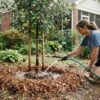
For a newly planted tree, spread natural mulch in a 2- to 4-inch layer across a 3- to 4-foot-wide ring. Keep wood chips at least 4 to 6 inches from the trunk, leaving the trunk flare visible and uncovered. This clear space helps prevent persistent moisture against the bark, which can contribute to decay and disease.
Mulch helps retain soil moisture and moderate soil temperature around developing roots. It also suppresses weeds, reducing competition for water and nutrients. Spread it evenly in a ring, keeping it away from the trunk. Piling mulch against the bark, sometimes called a mulch volcano, can trap moisture and hide the trunk flare.
Remove grass within a 3-foot area around a newly planted tree before adding mulch. For a larger tree, the cleared area can extend up to 10 feet. Grass roots and a tree’s fine absorbing roots compete in the top four to six inches of soil, so removing turf gives the tree more access to moisture and nutrients. A broad ring also gives mowers more room, reducing the chance of frequent trunk or root-zone damage.
Check mulch depth in spring and fall, and replenish it only where the layer has thinned. Keep the finished depth within 2 to 4 inches; adding fresh material over an already thick layer can bury the root flare. These simple techniques reduce weed pressure and help limit stress while the tree becomes established.
Stake a newly planted tree only if it cannot stand straight on its own or its root ball is unstable. If support is needed, use 2 to 3 stakes near the mulch-ring edge, then remove them after one growing season so the trunk can move naturally.
2. Watering during the establishment period
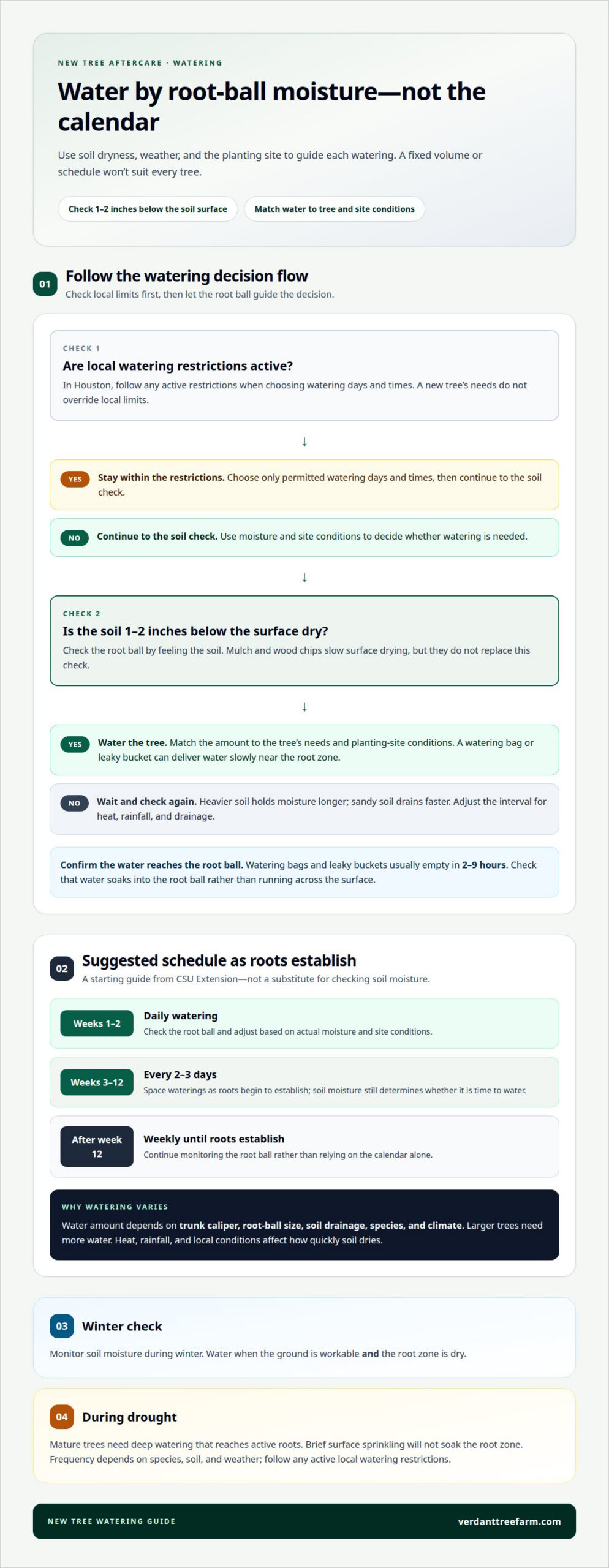
Newly planted trees need consistent moisture while roots adjust to their new surroundings. Water amounts depend on trunk caliper, root-ball size, soil drainage, species, and climate. Water each tree according to its needs and the conditions at the planting site. Larger trees need more, so match the amount to the tree rather than using one fixed volume. These aftercare instructions for new trees work best when tailored to the planting site.
Check the root ball before watering. Feel the soil 1 or 2 inches below its surface; water when it feels dry. Sandy soil drains faster, while heavier soil holds moisture longer. Organic mulch and wood chips slow surface drying, but they don’t replace checking the root ball. Adjust intervals for local heat, rainfall, and drainage around the planting area.
Use a frequent schedule at first, then space waterings as roots establish. CSU Extension recommends daily watering for 1 to 2 weeks after planting, then every 2 to 3 days from weeks 3 through 12. After 12 weeks, water weekly until roots establish. Houston’s heat and dry spells can affect how quickly soil dries, so base each watering on moisture, not the calendar alone. This moisture-based approach is central to aftercare instructions for new trees.
A watering bag or leaky bucket delivers water slowly near the root zone. These devices usually empty in 2 to 9 hours; check that water reaches the root ball rather than running across the surface. During winter, monitor soil moisture and water when the ground is workable and the root zone is dry.
During drought, mature trees also need deep watering that reaches active roots. Brief surface sprinkling won’t soak the root zone. Watering frequency depends on the species, soil, and weather. In Houston, follow any active local watering restrictions when choosing watering days and times. A newly planted tree’s needs don’t override local limits.
Follow any active local watering restrictions when choosing watering days and times. A newly planted tree’s watering needs don’t override those limits.
3. Pruning during establishment
At planting, remove only dead or broken branches and keep healthy foliage on the canopy. A transplanted tree needs its leaves to produce energy while the roots recover. Pruning to compensate for root loss isn’t recommended. Avoid shaping cuts that remove healthy branches during this early adjustment period.
Build sound structure gradually. During the next few years, remove suckers growing from the base and branches that cross or rub against one another. These competing limbs can damage bark and disrupt the tree’s form. Begin structural pruning after 2 years, focusing on clear defects rather than changing the tree’s natural shape. Inspect the canopy before each cut, and use clean, sharp tools for precise cuts.
A young tree’s canopy should occupy at least two-thirds of its total height. As the tree grows, lower branches can be removed gradually during its first 5 to 10 years. Take lower limbs off while they’re 1 to 2 inches in diameter or less; smaller cuts are easier for the tree to close. Keep enough healthy foliage for growth, since leaves help the tree make energy, not merely provide shade.
Inspect the trunk, branch unions, and canopy while watering. Wilting, yellow leaves, or early leaf drop can signal transplant stress, but these symptoms alone don’t reveal the cause. Check soil moisture and drainage before changing care, since overly wet soil can also contribute to stress. Corrective pruning means removing dead, broken, crossing, or rubbing branches, not cutting healthy growth without a clear reason. Proper pruning supports a newly planted tree’s structure while its roots and leaves manage nutrients and soil moisture.
4. Fertilizing new trees
A newly planted tree typically doesn’t need fertilizer unless a soil test shows a nutrient deficiency. Extra fertilizer won’t correct dry soil, poor drainage, or a damaged root system. Too much can encourage canopy growth before roots are established. First identify what is limiting growth rather than treating every slow-growing tree with fertilizer.
If a tree grows poorly 2 to 3 years after planting, fertilization may be beneficial when soil fertility is low and water and other growth factors aren’t limiting. A soil test helps distinguish a nutrient shortage from stress caused by moisture conditions or other site problems. Check for healthy branches and new growth, too. Broken branches alone don’t indicate that fertilizer is needed.
If a newly planted tree needs nutrients, begin fertilizing at the start of its second growing season. During establishment, a half-rate application of a time-release product may be appropriate when soil fertility is low and other growth factors are adequate. Follow the product label, and distribute fertilizer over the root zone rather than piling it against the trunk or trunk flare.
Mulch helps conserve soil moisture, but it doesn’t replace a soil test or mean fertilizer is needed. Keep mulch away from the trunk and don’t bury the root flare with fresh material. Use the fertilizer label and soil test results to guide placement. If the test shows no deficiency, skip fertilizer and focus on watering and careful observation.
For help interpreting a tree’s needs, get guidance on tree care before adding fertilizer.
Verdant Tree Farm
Verdant Tree Farm offers maintenance consultations for homeowners who want help applying aftercare to a newly planted tree. A consultation can help connect practical care decisions, such as watering, pruning, and whether a soil test points to a nutrient deficiency, with the tree and its planting conditions.
Choosing a tree that suits its site also supports long-term growth. Verdant Tree Farm offers options including Shumard Oak, Mexican White Oak, Drummond Red Maple, October Glory Maple, and Mexican Redbud. The right choice depends on the planting location and your landscape goals.
For guidance on your tree’s care or selection, contact Verdant Tree Farm.
Give your tree room to grow
A tree’s position in the landscape shapes how it develops and fits your property over time. As the canopy grows, consider how its mature form will relate to nearby buildings, paths, and other plantings. Planning ahead can make ongoing care more practical and help create a cohesive landscape.
Use these aftercare instructions for new trees as a starting point, then watch how your tree responds through changing seasons. A maintenance consultation from Verdant Tree Farm can help connect your tree’s condition and site to a practical care plan. If you’re planning another planting, Verdant offers choices such as Live Oak, Shumard Oak, and Mexican White Oak.
Ready to plan the next step for your landscape? Contact Verdant Tree Farm today to discuss your tree care needs. With thoughtful planning and steady attention, your landscape can keep growing into a place you’re proud to call your own.
Frequently Asked Questions
How deep should my mulch be?
Keep mulch about 2 to 4 inches deep, with the trunk flare visible and uncovered. As part of aftercare instructions for new trees, check the combined depth before adding fresh wood chips over an older layer. A broad, even ring is more useful than a mound at the base. Refresh thin spots rather than covering the whole ring with another full layer.
What about lawn sprinklers and rainfall?
Count rainfall and sprinkler water as moisture, but don’t assume either has reached the tree’s root ball. Lawn irrigation may wet the grass while leaving the root ball dry, especially if the spray misses it. After rain or a sprinkler cycle, feel the soil near the root ball. Water only if it’s dry, and avoid leaving the soil saturated.
How often should newly planted trees be watered?
Water frequently at first, then adjust the schedule as roots establish. These aftercare instructions for new trees include daily watering for the first 1 to 2 weeks, every 2 to 3 days from weeks 3 through 12, then weekly until roots establish. Hot, dry weather can dry soil faster, while rainfall and heavier soils can extend the interval. Use root-ball moisture to guide each watering.
How long should you water a tree after planting?
Continue regular watering through establishment, not just for the first few days after planting. Small trees need water for at least one growing season and often two; young trees may need periodic watering for 3 to 5 years during dry conditions. Reduce watering only as roots establish and soil moisture supports the tree between waterings. A fixed end date doesn’t suit every planting site.
When and how should you prune a newly planted tree?
At planting, remove only dead or broken branches and retain healthy foliage. In later seasons, inspect for suckers and branches that cross or rub, then make selective corrective cuts. For example, remove a rubbing branch before friction damages the bark. Don’t cut back healthy canopy to compensate for transplanting. The leaves help support the tree as its root system recovers.
Should you fertilize a new tree in its first year?
Usually, no. New trees typically don’t need fertilizer unless a soil test shows a deficiency. Fertilizer won’t fix poor drainage or inadequate moisture, so address those conditions first. If a test shows low soil fertility and other growth factors are adequate, a half-rate, time-release application may be appropriate during establishment. For a poorly growing tree, begin fertilizing at the start of its second growing season.