Start a tree warranty claim with your order number and clear photos showing the damage or decline. Knowing how to claim a tree warranty also means keeping your receipt or order confirmation and any care records, such as a watering log. Thirty days is a common minimum coverage period, but the warranty’s terms determine what qualifies.
It’s understandable to expect a warranty to cover a tree that struggles after planting. Coverage depends on the warranty terms, including what conditions qualify and how to report them. Verdant Tree Farm’s three-month tree warranty includes replacement for defective or transplant-shocked trees at no cost. Report a problem promptly and keep the purchase details and photos ready.
This guide explains what tree warranties typically cover, what information and documents to gather, and how to present a clear claim. You’ll also learn why photos, purchase records, and notes about watering can help show what happened, plus what to look for in the warranty’s rules for disease or insect damage.
Key Takeaways
- Learn what replacement terms may say about professionally planted trees and shrubs, and which details affect eligibility.
- Understand how warranty exclusions and non-refundable claims can shape your options before you submit a request.
- See why disease or insect symptoms should be reported promptly and how the warranty’s deadline affects a claim.
- Gather the purchase record, order details, photos, and care notes that can help document what happened.
What does a typical tree guarantee cover?
A tree warranty sets out which plants and problems qualify for coverage. Its written terms define the coverage period, claim conditions, and available remedy.
Eligible Plants and Covered Issues
Eligible plants are the trees or shrubs specifically included in a warranty. Coverage depends on the written terms, not simply on whether a plant was professionally planted or customer-planted.
A one-year guarantee can cover a full first establishment season, including winter dormancy. A 30-day guarantee is a common minimum and may focus on early transplant failure or establishment shock. Look for terms identifying eligible species, damage on arrival, and covered defects. Disease, insects, improper care, and planting conditions can be treated differently, so the warranty’s exclusions matter. A pre-lit tree light-set or PowerConnect reference concerns a separate product feature; it doesn’t establish coverage for living trees or shrubs.
Available Warranty Remedies
A warranty remedy is the action offered when a claim meets its coverage terms. Replacement is one possible remedy, but the written warranty determines whether it applies to a professionally planted tree, a customer-planted tree, or both.
Check whether the warranty covers only the tree or also labor and removal costs. Those expenses aren’t automatically included with a replacement. Keep the warranty and purchase record together, then compare the reported issue with the remedy terms. Verdant Tree Farm’s three-month tree warranty covers replacement of a defective or transplant-shocked tree at no cost, so review the terms and report the issue promptly.
Nursery and Tree-Service Warranties
A nursery warranty generally describes coverage tied to the plant sale, while a tree-service warranty concerns work performed during planting or care. The written terms show which relationship applies.
For a nursery purchase, focus on the tree, coverage period, and reporting conditions. For professional installation, read whether the terms address planting work as well as the tree’s condition. A customer-planted tree and a professionally planted tree can have different requirements. Consumer-protection rules vary by state and transaction; the written warranty describes stated coverage, while applicable law determines legal protections. For Houston homeowners, compare the warranty language with the specific tree and service named in the purchase documents.
What do I need to process my warranty claim?
A warranty exclusion is a condition that removes a plant or type of damage from coverage. The written terms determine whether a claim qualifies, whether a remedy applies, and whether any refund is available.
Review the warranty for eligible species, growing-zone limits, care requirements, and reporting deadlines. A USDA hardiness zone describes a location’s climate range; a warranty may use zone eligibility to define where a plant is covered. Don’t assume a zone alone voids coverage. The terms must state how location affects eligibility.
Damage can fall outside coverage if the warranty excludes its cause or product type. Look for terms about delivery damage, disease, insects, watering, or planting conditions. These can distinguish a covered tree defect from a problem tied to care or site conditions. Follow the stated reporting steps, especially for arrival damage, which may require prompt notice.
A claim denial doesn’t automatically mean a purchase refund is due. The warranty defines whether an eligible claim receives a replacement, another remedy, or no remedy. A claim isn’t the same as a refund request, so identify the outcome the terms provide before submitting paperwork.
Use this exclusion check before filing:
- Match the plant species and purchase to the warranty’s eligibility terms.
- Compare the planting location with any stated growing-zone conditions.
- Find care instructions, excluded damage, and reporting deadlines.
- Separate a replacement request from a request for a refund.
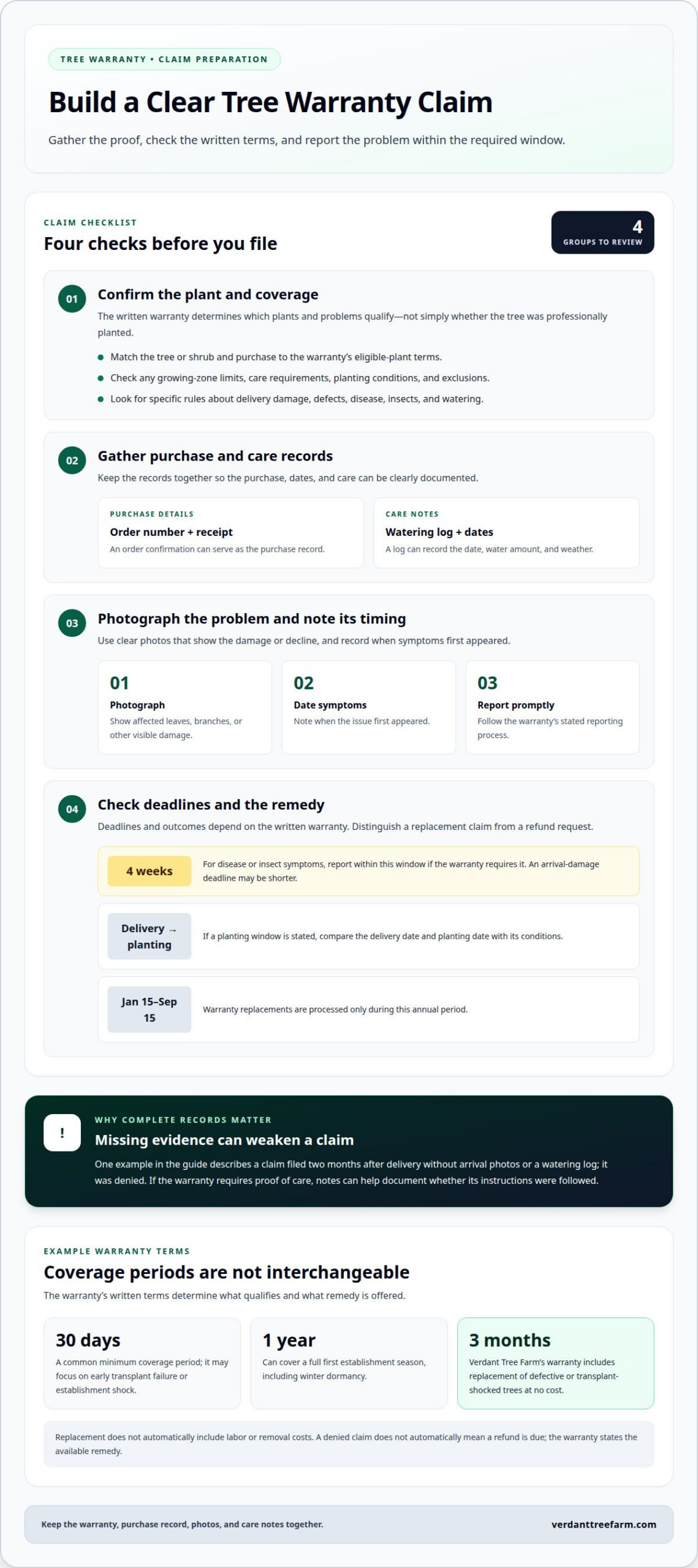
One example shows why records matter: a claim filed two months after delivery, without arrival photos or a watering log, was denied. A watering log can record the date, water amount, and weather. If terms require proof of care, those notes help document whether you followed them.
Conditions that void coverage depend on the written warranty. Common triggers are failing a stated care or reporting condition, or claiming for an excluded plant or damage type. For future plantings, review tree selection and planting considerations alongside the warranty terms.
Four-week deadline for disease and insect claims
A four-week deadline matters only when the warranty terms set that period for reporting disease or insect damage. Check the required reporting window and planting conditions before deciding when to file.
Claim Filing Deadlines
A claim filing deadline is the final time allowed to report a covered problem. The warranty determines whether the clock starts at delivery, planting, or when symptoms appear.
For disease or insect symptoms, report the issue within the stated four-week window if the warranty requires it. Don’t wait to see whether the tree will recover. Record the date symptoms first appeared, photograph the affected leaves or branches, and submit the claim through the stated process. A separate arrival-damage deadline may be shorter, so distinguish delivery problems from later decline.
Planting eligibility can also depend on timing. If the warranty sets a planting window after delivery, a tree planted outside that period may not qualify. Keep the delivery date and planting date together, then compare them with the warranty’s conditions. Replacement-related claims may be submitted at any time, but warranty replacements are processed only from January 15 to September 15 annually.
Weather, Pest, and Disease Damage
Weather, pest, and disease damage describes decline linked to environmental conditions or living organisms. Coverage depends on whether the warranty includes that cause and whether the report meets its deadline.
Can you claim for weather, pests, or disease? Yes, if the warranty covers the cause and you meet its reporting conditions. A storm-damaged branch, insect-chewed foliage, and spreading leaf spots are distinct examples; document what you observe rather than guessing at the cause. Photos of the whole tree and close-ups of affected areas can show the pattern of damage.
To help a tree thrive, follow the care requirements in its warranty while the claim is reviewed. Keep dated notes about watering and weather, and preserve any relevant purchase or planting records. If symptoms appear near the end of a four-week reporting window, submit the report promptly and include the first-observed date. Clear timing helps connect the symptoms to the warranty period.
Information and receipt required for a claim
A claim file is the purchase and care evidence used to assess a warranty request. Include your order details, receipt or order confirmation, and clear photos showing the tree’s damage or decline. Add the tree species, delivery or planting date, and a concise description of the symptoms. These details connect the affected tree to the original purchase and warranty terms.
A receipt establishes the transaction, while dated photos document the tree’s condition. Take one image showing the entire tree and closer views of affected leaves, branches, or trunk. Keep the original files so their dates remain available. If symptoms change over several days, photographs from different dates can show how the damage developed.
Care records add context to the visual evidence. A watering log can note the date, amount of water, and weather. Include relevant planting details and any written care instructions, then keep the documents together with the warranty. If you’re learning how to claim a tree warranty, organizing these records by date gives you a clear starting point.
- Purchase proof: receipt or order confirmation and order number.
- Plant identification: species and delivery or planting date.
- Condition evidence: clear photos of the whole tree and affected areas.
- Care history: dated watering notes and relevant instructions.
An indoor-use requirement is a placement condition stated in some product warranties, not a universal tree-claim document. If the terms for your covered item specify indoor use, include where it was kept and describe how that condition was followed. For an outdoor tree, focus your claim on the applicable tree warranty and its stated requirements.
Before submitting, organize the receipt, photos, and care notes by date. Check that the order number and plant details match across the documents. Understanding how to claim a tree warranty also means keeping the file easy to follow. For a future planting project, explore professional tree installation and keep the resulting purchase records with your warranty paperwork.
Verdant Tree Farm
Verdant Tree Farm helps homeowners plan tree purchases and planting through professional installation and maintenance consultations. If you’re choosing a tree for a new project, its selection includes Shumard Oak, Mexican White Oak, and Drummond Red Maple. These options give you a starting point for discussing the right fit for your property and planting plans.
For a newly purchased tree, keep the purchase documents and warranty terms together from the start. Verdant Tree Farm’s trees include a three-month warranty, with replacement at no cost for a defective or transplant-shocked tree. A maintenance consultation can also help you understand care needs as your tree establishes.
For help planning a Houston planting or discussing tree care, contact Verdant Tree Farm.
Take the next step with confidence
Your next planting is a chance to understand the warranty before the tree goes into the ground. As you consider how to claim a tree warranty, review the coverage attached to the purchase and plan for the care that follows. Keeping warranty terms with your planting records makes it easier to act if a problem arises.
For a future landscape, Verdant Tree Farm offers options including Live Oak, Shumard Oak, and Mexican White Oak. The right choice depends on your property and planting goals, so consider how each tree will fit the space and your plans for it. A thoughtful selection and clear records give you a practical foundation for the years ahead.
Contact Verdant Tree Farm about your claim to discuss your tree-related questions and next steps. With a clear plan in hand, you can move forward with confidence.
Frequently Asked Questions
Are there any items that aren’t covered?
Yes. A warranty may exclude trees, damage causes, or expenses outside its stated coverage. For example, it might cover the tree itself but not removal or replanting labor. Check the exclusions and remedy terms before assuming a related cost is included. If an invoice lists multiple trees, match each one to the eligible items in the warranty.
Is a 1-year tree guarantee standard?
No single duration applies to every tree guarantee. A 30-day period is a common minimum, while a one-year guarantee is described as strong coverage through a full establishment season, including winter. Treat these as general market benchmarks, not a promise that every purchase receives the same term. The specific warranty document sets the coverage period for your order.
What qualifies an order to be replaced under a warranty?
An order may qualify for replacement when the affected plant is eligible and the reported problem meets the warranty’s conditions. For example, a tree experiencing transplant shock may be treated differently from one damaged by a cause the policy excludes. Identify the plant on the order, describe the issue clearly, and review the remedy terms to understand whether replacement applies.
What’s the difference between a replacement and a refund under a plant warranty?
A replacement provides another eligible tree, while a refund returns some or all of the purchase payment. They are different remedies, and a warranty may offer one without the other. Check the exact wording before submitting a request. Verdant Tree Farm’s three-month tree warranty provides replacement at no cost for a defective or transplant-shocked tree.
What does a tree warranty typically cover?
Coverage depends on the written terms, which may address arrival damage, transplant shock, or other problems. Verdant Tree Farm’s three-month tree warranty includes replacement at no cost for a defective or transplant-shocked tree. Read the coverage and exclusions together, and report a problem promptly.
How long does a tree warranty last?
The warranty document determines both the coverage period and when it begins, such as the purchase, delivery, or planting date. Terms vary, so use the date and duration stated for your order rather than relying on another seller’s policy. Keep a copy of the document with your purchase record, and note its expiration date so you can report a covered issue promptly.