A landscape that looks finished on installation day isn’t always designed to age well. Building a landscape that matures beautifully means planning for how trees and shrubs will grow, using evergreens for year-round structure, and choosing plants suited to the property and its long-term care needs.
It makes sense to want a garden that feels inviting now without becoming harder to manage as it fills in. The key is to balance year-round foliage with flowering plants, allow room for mature growth, and create layers that keep the landscape interesting through the seasons. This guide explores evergreen choices for privacy and structure, low-care plants for lasting value, ideas to draw from established gardens, and practical ways to plan for long-term growth.
Key Takeaways
- Use evergreens to create year-round structure and privacy, while choosing placements that leave room for future growth.
- Match trees, shrubs, ground covers, and vines to the property so the landscape stays practical as it matures.
- Take design cues from established gardens, then adapt their lasting features to your home and outdoor space.
- Plan layers and plant sizes for the years ahead; Verdant Tree Farm offers trees including Live Oak, Shumard Oak, Mexican White Oak, and Drummond Red Maple.
How professionals use evergreen plants for year-round foliage and privacy
Evergreens keep foliage in view through every season, giving Houston yards a steady backdrop when flowers rest. Use them where year-round screening matters, such as along a property edge or beside a patio, while preserving sightlines from windows and entrances. Layer tall trees, mid-height shrubs, and low plants so privacy feels integrated rather than like a solid wall.
Plant choice follows the scale and function of each location. A narrow planting strip calls for a compact shrub, while an open boundary can accommodate a broader evergreen screen. Professionals assess mature width, nearby structures, and available root space before setting the layout. Holly and golden vicary privet offer examples of shrubs that can contribute foliage and screening; golden vicary privet can reach 10 to 12 feet tall.
To keep the design engaging, combine evergreen structure with perennials and seasonal flowers. Green foliage anchors brighter colors, while varied heights create depth from the house and garden paths. For example, evergreen shrubs can frame a bed of perennials, with flowering plants adding interest at different points in the season. The result feels cohesive as each plant grows into its allotted space.
Deer resistance and resilience can also shape plant selection. Many Arborvitae varieties are frequently damaged by deer, so weigh that risk before choosing them for a screen. Consider site conditions, mature root systems, and expected water needs when selecting plants for Houston properties. Check how each planting area drains and how much sun it receives, then match plants to those conditions and applicable local requirements.
Finally, mature dimensions guide spacing. A plant that fits a small bed at installation may crowd a path or neighboring shrubs as it grows. Professionals leave room for the canopy and root system, then layer smaller perennials in open spaces rather than packing the bed. This planning helps evergreens retain their shape, supports healthy growth, and keeps privacy plantings manageable over time.
How professionals choose low-care trees, shrubs, ground covers, and vines
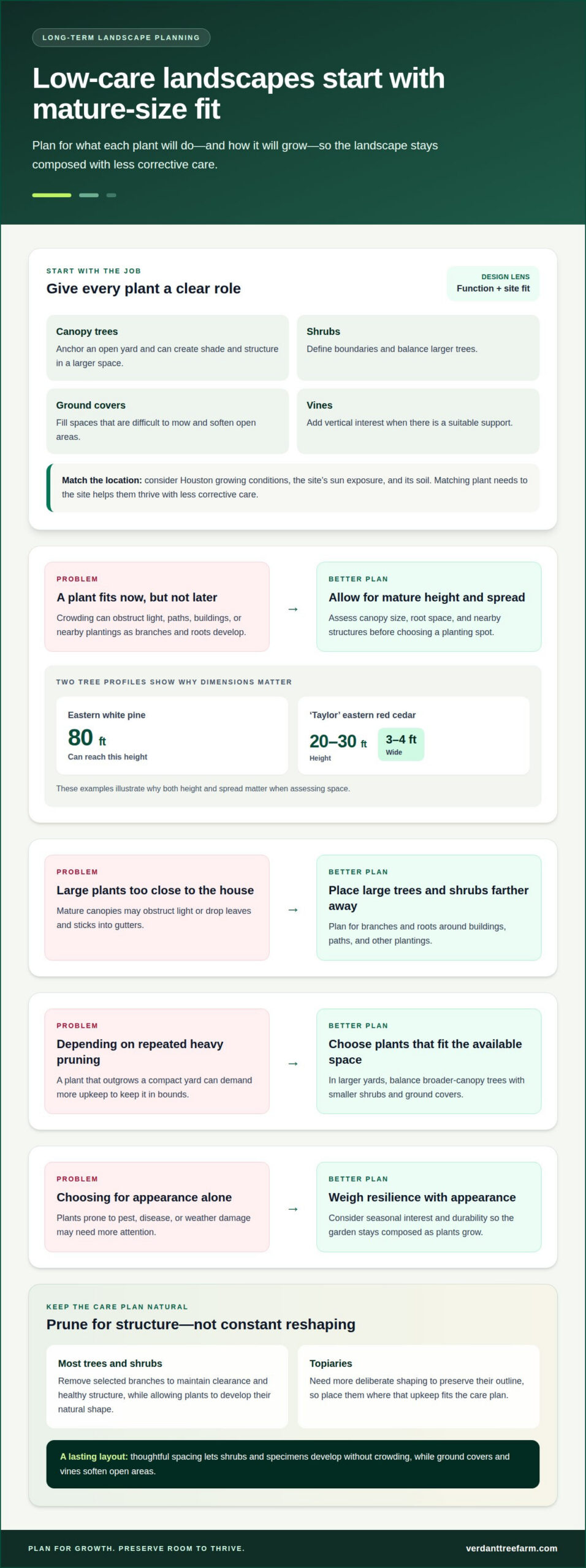
Professionals begin with the job each planting must do. A canopy tree can anchor an open yard, while shrubs define boundaries and ground covers fill spaces that are difficult to mow. Vines add vertical interest to a suitable support. The plant palette also needs to suit Houston’s growing conditions, the site’s sun exposure, and its soil. Matching plant needs to the location helps them thrive with less corrective care and supports longevity.
Placement matters as much as variety. Large trees and shrubs belong farther from the house, where mature canopies won’t obstruct light or drop leaves and sticks into gutters. Professionals consider how branches and roots will develop around buildings, paths, and other plantings. Mature size can vary sharply: Eastern white pine can reach 80 feet, while the ‘Taylor’ eastern red cedar cultivar grows 20 to 30 feet high and only three or four feet wide. These profiles illustrate why height and spread both matter when assessing space.
For a compact yard, prioritize plants that fit the available space instead of relying on repeated heavy pruning. In a larger yard, broader-canopy trees can create shade and structure, balanced by smaller shrubs and ground covers. Also consider durability: plants prone to pest, disease, or weather damage may require more attention. Weigh resilience alongside appearance and seasonal interest, and plan for the garden to remain composed as plants grow.
Pruning is planned around each plant’s natural shape. Professionals remove selected branches to maintain clearance and healthy structure, rather than routinely cutting back every tree. Topiaries need more deliberate shaping to preserve their outline, so they suit areas where that upkeep fits the landscape’s care plan. Thoughtful spacing lets shrubs and specimens develop without crowding, while ground covers and vines soften open areas. For projects that need expert placement and installation, professional landscape installation can bring the planting plan into the yard.
How landscape professionals find garden design inspiration in botanical gardens and historic estates
Professionals study established gardens for ideas that can translate to a home landscape. Middleton Place near Charleston has camellias dating to the 1700s, showing how long-lived plantings can shape a place’s identity. Bunny Mellon redesigned the White House Rose Garden in the 1960s, offering another lesson: a familiar setting can gain a personal aesthetic through thoughtful changes. Landscape design draws from these examples through proportion, repeated forms, and plant combinations, then adapts them to the property and the homeowner’s preferences.
A timeless garden doesn’t need to copy an estate. Professionals identify the features a homeowner values, such as a formal path, a quiet seating area, or a succession of blooms, and scale them to the site. A design can aim to remain appealing 50 years into the future while still reflecting the home’s architecture. Seasonal color can come from perennials returning in the planting scheme, with annuals used selectively where fresh color or a changed display is wanted.
For privacy, a berm can raise a planting area to screen a chosen view. Trees and shrubs along its slope create a layered boundary, while openings preserve access and sightlines where needed. Consider the berm’s shape, plant selection, and relationship to paths so it feels like part of the garden rather than a barrier. This approach adds dimension while addressing privacy.
Native plants and ornamental non-native plants can both contribute to a lasting landscape. Compare each plant’s site needs, growth habit, and maintenance demands with the garden’s conditions. Native choices can suit local settings, while well-matched ornamental plants may offer a particular form or bloom.
Native ferns bring texture to shaded designs. Ferns date back approximately 360 million years, and they can be planted in a brick wall, grouped in a shady spot, or displayed in a hanging basket on a porch. Professionals use these placements to add foliage interest where flowering plants may not be the main feature. A fern grouping beneath established trees and shrubs, for example, can soften the transition from a path into a shaded garden.
How professionals plan landscapes for long-term growth and low maintenance
A lasting plan looks beyond installation day. Professionals consider how trees and shrubs will grow over the next 20 or 30 years, keeping mature canopies, root zones, paths, and buildings in balance. A key part of building a landscape that matures beautifully is assigning each plant enough room for its future form. The landscape plan acts as an outdoor blueprint, placing plants in relation to the home’s foundation, the ground, and other materials. This helps prevent crowded beds and preserves room for leaves, shade, and seasonal growth.
Soil preparation supports that plan from below. For tree and shrub beds, the U.S. Environmental Protection Agency recommends using 2-4 inches of compost tilled at least 12 inches deep. After planting, the U.S. Environmental Protection Agency says a mulch layer three to four inches deep provides suitable coverage for most plants; excessive mulch can restrict water flow to roots. Professionals account for the bed’s soil and drainage when applying these materials.
Planting in layers keeps a design useful as it develops. Place taller trees and shrubs behind smaller plants, with ground covers filling lower spaces. Succession planting pairs plants that bloom at different times, reducing reliance on annuals while keeping the garden interesting. For example, evergreen shrubs can frame flowering perennials without requiring every bed to be replanted each season. This gives building a landscape that matures beautifully a clear purpose: keeping the garden functional as its plants grow.
New plants need frequent, deep watering when first installed and throughout their first season, then less water as they establish. During the first five years, professionals can use maintenance consultations to assess growth and advise on care as the landscape matures. Plants may also pass through an adolescent stage, appearing thin or gangly before they fill out. For support with a planting plan and its establishment, schedule professional installation and maintenance consultations.
Verdant Tree Farm
Verdant Tree Farm helps homeowners turn long-term landscape ideas into practical planting plans through 3D design, professional installation, and maintenance consultations. These services can help align tree placement, mature growth, and the property’s layout from the start.
For a Houston landscape, Shumard Oak, Mexican White Oak, and Drummond Red Maple are tree options to consider. Choose based on available space, desired shade, and how each tree will fit the design as it matures.
When you’re ready to plan the next step, contact Verdant Tree Farm to discuss your landscape.
Give Your Landscape Room to Grow
Turn your ideas into a plan that fits your property, priorities, and future needs. Identify where you want shade, privacy, or a welcoming view, then consider how planting choices can support those goals as the landscape grows. Building a landscape that matures beautifully starts with decisions that work together, from tree placement to the character you want your outdoor space to develop.
Verdant Tree Farm offers Live Oak, Shumard Oak, and Mexican White Oak, along with professional installation and landscape consulting. Its team can help connect tree selection with your property’s layout and the long-term direction of your Houston landscape.
Contact Verdant Tree Farm today to discuss your landscape plans. With a clear direction and thoughtful choices, you can create an outdoor space that feels more like home as it grows.
Frequently Asked Questions
What landscape design principles help a garden mature beautifully over time?
Strong structure, appropriate scale, and a clear relationship between planting and outdoor use help a garden age well. Professionals consider views from key windows, the route from the entrance to the patio, and space for maintenance access. Repeated shapes or materials can connect separate areas, while open ground gives established plants room to become focal points instead of competing with one another.
Which trees and shrubs have attractive long-term growth habits and manageable mature sizes?
For a Houston landscape, consider Live Oak, Shumard Oak, Mexican White Oak, or Drummond Red Maple as tree options, and Savanah Holly or Eagleston Holly as shrubs. Choose based on the planting area, desired form, and expected mature size. Don’t assume a tree or shrub will stay small just because it looks compact when planted.
How do landscape professionals determine how far apart trees and shrubs should be planted based on their mature size?
Use each plant’s expected mature canopy and form to plan spacing, then adjust the layout for the site. Consider whether branches can overlap, whether walkways need clear passage, and how much room is available beside buildings or other plants. Plants can be grouped more closely for a continuous screen; specimens meant to stand alone need room to develop their natural outlines.
How do landscape professionals plan layered planting for year-round interest as a landscape matures?
Map views from patios, paths, and frequently used rooms, then arrange plants so each layer remains visible as it grows. Combine enduring foliage and varied textures with seasonal color, and consider which plants will draw attention at different times of year. A low foreground planting, for example, can leave a taller specimen’s trunk and branches visible as beds fill in.
How can a landscape professional prevent overcrowding, root damage, and costly removals as plants mature?
Coordinate the planting plan with buildings, paving, existing trees, and underground utilities before installation. Assess the usable growing area and avoid choosing a plant based only on its nursery size. Preserve access for routine care and future repairs, too. Keep a record of plant locations and selections to guide later maintenance and reduce guesswork if the landscape changes.