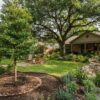
A tree’s greatest value may not be visible in its first season. Over time, it can add shade, habitat, and beauty to a landscape. The long term value of native trees can be substantial, but it isn’t automatic. In Houston, heat, heavy rain, clay soils, and occasional freezes make it especially important to match a tree to its planting site.
It’s reasonable to wonder whether a native tree will suit your property or require more care than you can provide. Native species may be adapted to regional conditions, but each tree has specific needs, and young trees need attention as they establish.
This article explains the landscape, ecological, and practical benefits a tree may provide over time, along with the work involved in planting and early care. You’ll learn how to assess a site, compare tree options, and choose a location that supports healthy growth.
Key Takeaways
- The long term value of native trees depends on site fit, intended function, and establishment care, not just a tree’s origin.
- A growing tree may provide shade, habitat, and landscape benefits, but these take time and depend on healthy growth.
- Compare native and non-native options against your property’s conditions and goals rather than assuming one category is always better.
- Before choosing a tree for a Houston property, assess planting space, soil, drainage, sunlight, and mature size.
- Thoughtful selection, professional installation, and maintenance advice can help you plan for a tree’s long-term performance.
What Is the Long-Term Value of Native Trees in a Houston Landscape?
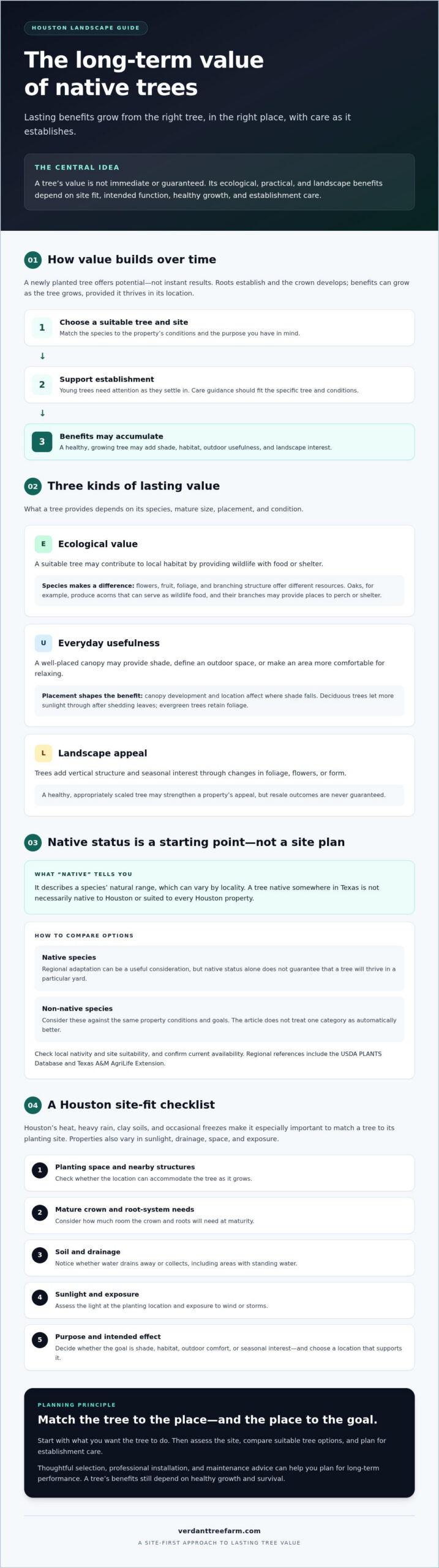
The long term value of native trees is the lasting ecological, practical, and landscape benefit a well-matched tree may provide as it grows. It is not an immediate or guaranteed financial return. That value builds over time and depends on selecting a tree suited to the property, then helping it establish and remain healthy.
What makes a tree native to the Houston area?
“Native” describes a species’ natural range, which can vary by locality. A tree native somewhere in Texas isn’t necessarily native to Houston or suited to every Houston property. Regional climate, soil, drainage, and growing conditions all affect whether a species is a good fit.
Use regional references, such as the USDA PLANTS Database or Texas A&M AgriLife Extension, to check a species’ range and characteristics. The broader idea behind native trees is that indigenous species occur naturally in a particular area and form part of its ecosystem. Still, native status alone doesn’t guarantee that a tree will thrive in a specific yard. Check local nativity and site suitability, and confirm current availability before choosing a tree.
Which kinds of value can a mature tree provide?
Consider value in three categories. Each depends on the species, its mature size, its placement, and its condition.
- Ecological value: A suitable native tree may provide food or shelter for wildlife and contribute to local habitat. Its flowers, fruit, foliage, and structure affect which organisms may benefit.
- Everyday usefulness: A well-placed canopy may provide shade, define an outdoor space, or make an area more comfortable for relaxing. The benefit depends on where the tree grows and how its canopy develops.
- Landscape appeal: Trees add vertical structure and seasonal interest through changes in foliage, flowers, or form. A healthy, appropriately scaled tree may also strengthen a property’s appeal, but resale outcomes are never guaranteed.
For a Houston property, start with the job you want the tree to do, then assess the planting location. Consider available space, nearby structures, soil and drainage, and the tree’s eventual size. A tree intended for shade needs room to develop a useful canopy. A tree chosen for seasonal interest may serve a different purpose. Matching the tree to the site helps its potential benefits become lasting value.
How Native Trees Build Long-Term Value Through Growth and Ecosystem Benefits
A newly planted tree offers potential, not instant results. As its roots establish and its crown develops, it may provide more shade, habitat, and structure. These benefits accumulate over time, but they depend on the tree surviving and growing well in its particular location.
How canopy, shade, and habitat benefits develop
A tree’s crown determines where and how much shade it casts, so placement matters. A tree beside an outdoor seating area may provide useful shade there as it grows. One planted too close to a building may not serve the intended purpose. Deciduous trees let more sunlight through after shedding their leaves, while evergreen trees retain foliage. Choose according to the shade pattern and seasonal effect you want.
Habitat benefits vary by species. Oaks, for example, produce acorns that can serve as food for wildlife, and their branches may provide places for animals to perch or shelter. Other trees offer different resources through flowers, fruit, foliage, or branching structure. The USDA Forest Service’s tree and wildlife resources can help you explore these relationships. Don’t assume every native tree provides the same habitat. Identify the species and the wildlife benefits you hope to support.
Why site fit and establishment determine future value
Houston properties differ in soil, drainage, sunlight, planting space, and exposure to wind or standing water. Heat, humidity, heavy rain, storms, and occasional freezes also affect tree selection. Native status can be a useful starting point, but it doesn’t replace matching a species to the site or caring for it during establishment.
Before planting, check how much room the mature crown and root system will need, whether water drains away or collects, and how much sunlight reaches the site. Texas A&M AgriLife Extension is one resource for regional tree and landscape guidance. A recommendation for a Houston property should account for both the species’ range and the specific planting conditions.
A tree’s long-term benefits depend on successful establishment and survival, so choosing the right site and providing appropriate early care are part of the investment. Young trees need attention as they settle in. Watering needs depend on conditions, so follow guidance for the specific tree rather than relying on a one-size-fits-all schedule. Maintenance consultations can help homeowners understand what to monitor and how to support establishment.
The long term value of native trees is cumulative: growth can expand a tree’s usefulness, but only when it is suited to the place where it grows. For help considering species and placement, explore Houston tree selection and professional installation options.
Do Native Trees Always Offer More Value Than Non-Native Trees?
No. Native status provides useful context, but it doesn’t guarantee success. A native tree may be a poor choice for a cramped planting area or soil that doesn’t suit it. A non-native tree may meet a specific landscape goal if it suits Houston’s conditions and raises no ecological concerns. The best choice is the tree that fits the site and purpose while supporting the kind of landscape you want.
When a native tree may be a strong fit
A locally native species may have ecological relationships with regional wildlife and may be adapted to local growing conditions. Those qualities can make it a strong candidate, but they don’t guarantee survival, rapid growth, or low maintenance. Check authoritative botanical or Texas A&M AgriLife Extension resources for the species’ regional range. Then consider available space, soil, drainage, sunlight, and the job you want the tree to do.
Live Oak and Cedar Elm are trees to investigate when planning a Houston landscape. Before selecting either, confirm whether it is native to the specific locality, suits the planting site, and fits your goals. Mature dimensions and site conditions matter as much as the tree’s label.
When another tree may better meet the site’s needs
A non-native option may be worth considering if a property has a particular design goal or space constraint that available native candidates don’t meet. Assess the exact species, not just its category. Check its likely mature size, growing requirements, maintenance needs, and potential to spread or disrupt local ecosystems. “Non-native” does not automatically mean invasive, just as “native” does not mean suitable everywhere.
Use this comparison as a starting point, not a ranking. Individual species vary, so confirm details for the tree you are considering.
| Decision factor | Native candidate | Non-native candidate |
|---|---|---|
| Site fit | Verify its local range and match its growing needs to the site. | Check that it can handle local conditions and the specific planting location. |
| Intended function | Consider whether its form, canopy, and ecological relationships suit your goals. | Assess whether it provides the desired shade, structure, or seasonal interest. |
| Maintenance | Native status alone doesn’t predict watering, pruning, or establishment needs. | Care requirements depend on the species and site, not simply its origin. |
| Ecological context | May support local relationships, depending on the species and landscape. | Check for potential ecological concerns using reliable local guidance. |
To assess the long term value of native trees, focus on fit rather than labels. If you’re unsure about a tree’s regional range, mature size, or compatibility with your property, consult a qualified local resource before planting. A careful species choice can align your landscape goals with the site’s actual conditions.
How to Choose and Establish a Native Tree for Lasting Value
Start with the planting site, not a favorite tree name. Record the conditions and constraints, then compare candidate species against them. Check mature dimensions and local growing guidance before choosing. A species can be locally native and still be the wrong fit for a particular yard.
Assess the planting site before choosing a species
Walk the area and note how much direct sunlight it receives, where water collects after rain, and whether the soil stays wet or dries quickly. Measure usable planting space. Account for buildings, paving, overhead lines, and underground utilities, along with the tree’s expected mature crown and root area. If drainage is poor or space is limited, ask a local professional to assess the site before narrowing your options.
Use this table to organize your observations. It’s a planning aid, not a substitute for species-specific guidance.
| Site needs | Intended function | Mature size | Care considerations |
|---|---|---|---|
| Sunlight, soil, drainage, and available space | Shade, habitat, screening, or seasonal interest | Confirm expected height and crown spread from an authoritative local source | Check establishment needs and ongoing care for the exact species |
| Nearby structures, paving, and utility lines | Decide where the tree should provide its main benefit | Allow room for mature form, not just the young tree’s current footprint | Plan for conditions at the planting site and monitor the tree as it establishes |
Protect the investment with careful planting and early care
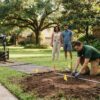
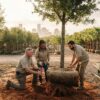
Once you’ve selected a suitable tree, follow reliable, species-specific instructions for planting depth and root handling. Texas A&M AgriLife Extension and knowledgeable local professionals can help you find guidance suited to regional conditions. Avoid improvising with the root ball or planting hole, since poor planting practices can compromise establishment.
Watering needs depend on the tree, soil, weather, and stage of establishment. Follow guidance for the specific species and site. Mulch and staking also require care: follow expert instructions on placement and use rather than assuming they’re needed or applying them the same way to every tree. Watch for signs of stress, such as declining foliage or poor growth, and seek advice if concerns arise.
Planning and follow-through help protect the long term value of native trees. Verdant Tree Farm offers professional installation and maintenance consultations for Houston properties. Plan professional tree installation with the site and the tree’s future needs in mind.
Plan for the Long-Term Value of Native Trees with Houston Expertise
A thoughtful tree plan starts with your property, not a popular species or passing landscape trend. Before choosing, clarify what you want the tree to do and what the site can support. Use this checklist to organize the key decisions:
- Set the purpose: Decide whether you want shade, habitat, screening, seasonal interest, or landscape structure.
- Read the site: Note sunlight, soil conditions, drainage, available planting space, and nearby buildings, paving, and utility lines.
- Plan for mature growth: Verify the tree’s expected dimensions and form through authoritative botanical or extension sources, then make sure the location can accommodate them.
- Confirm local suitability: Check whether the species is native to the Houston-area locality and suitable for your specific conditions. Native status alone doesn’t guarantee a good match.
- Plan for establishment: Understand species-specific planting and early-care needs before you commit.
After those checks, compare candidate trees. Live Oak, Cedar Elm, and other trees in Verdant Tree Farm’s inventory may be options to investigate, but confirm each species’ regional nativity, site fit, and current availability before treating it as a recommendation. This keeps the decision grounded in your property rather than a generic list.
Bring selection, design, and care into one plan
Tree selection, landscape design, installation, and follow-up advice work best when they support the same goals. A design can help you plan placement and consider how a tree fits with the rest of the property. Professional installation can put the plan into practice, while a maintenance consultation can help you monitor a new tree and support its establishment. Together, these steps can turn the potential long term value of native trees into a practical plan for your yard.
Verdant Tree Farm serves Houston residential and commercial customers with trees, 3D landscape design, professional installation, and maintenance consultations. When discussing a project, bring your site observations and questions about mature size, local suitability, and care. Ask which species may fit your conditions and confirm current stock and service details directly. For more context, read about Houston landscaping services and design and choosing a Houston tree nursery.
To connect your goals with your property’s conditions, explore tree and landscaping services for your Houston property.
Make Your Next Tree Planting a Lasting Investment
The long term value of native trees comes from thoughtful choices, not labels alone. Match a tree to your property’s conditions and purpose, confirm its local suitability and mature size, then provide appropriate support as it establishes. Over time, a thriving tree may add shade, habitat, and character to the landscape.
Planning these steps together can make the decision clearer. Verdant Tree Farm is a veteran-owned independent business serving the Houston area, with professional installation, 3D landscape design, and maintenance consultations to help you plan for your property’s needs.
With a well-chosen tree and a sound plan, your landscape can grow with you. Contact Verdant Tree Farm about tree and landscaping services for your Houston property.
Frequently Asked Questions
What is the long-term value of native trees?
The long-term value of native trees includes potential shade, wildlife habitat, and lasting character in a Houston landscape. These benefits build as a tree grows and depend on the species, site conditions, successful establishment, and ongoing care. Value may also include everyday usefulness, such as making an outdoor space more comfortable. It doesn’t automatically mean a guaranteed increase in resale price. Consider your goals and property conditions before choosing a tree.
Do native trees increase property value?
A mature, healthy tree may add to a property’s appeal, shade, and landscape quality, but no specific resale increase can be promised. The effect depends on the tree’s condition and placement, the property, and what potential buyers value. Treat financial appeal as one possible benefit, not a guarantee. For a Houston property, prioritize a tree that fits the site and supports its intended use, then consider its possible effect on future resale.
Are native trees lower maintenance?
Not necessarily. A locally native tree may suit regional conditions, but it still needs appropriate planting and care, especially while its roots establish. Maintenance needs vary with species, soil, drainage, weather, and planting location. Follow reliable local guidance for the specific tree rather than assuming it needs no watering, pruning, or monitoring. Houston’s changing conditions make it important to assess the site and the tree’s needs individually.
How long does it take for a native tree to provide shade?
There’s no single timeline. Shade development depends on the species, the tree’s starting size, growing conditions, and care. A young tree may cast some shade before it develops a mature canopy, but useful coverage takes time. Before selecting a tree, check its expected mature form and growth characteristics. A local professional can help assess whether a candidate suits your Houston property and how its growth may align with your shade goals.
Which native trees are suitable for Houston?
Suitability depends on a tree’s regional range, your property’s soil and drainage, sunlight, available space, and intended use. Verdant Tree Farm lists trees including Live Oak, Shumard Oak, Mexican White Oak, Cedar Elm, Texas Redbud, and Bald Cypress. These examples aren’t automatic recommendations for every Houston site. Verify each species’ local nativity, site fit, and current availability before choosing. Consider mature dimensions and local growing guidance as part of that check.
Do native trees need less water in Houston?
Water needs vary by species, soil, weather, and establishment stage. A tree suited to local conditions may be a sensible choice, but native status doesn’t eliminate watering needs, particularly after planting or during stressful weather. Follow species-specific local guidance and monitor the planting site rather than applying one schedule to every tree. If you’re unsure how to care for a newly planted tree, a maintenance consultation can help clarify its needs.